
Millions of people dutifully buy a travel insurance policy for every trip, or quietly feel guilty about not doing so, without realizing that they are very likely already carrying a bundle of travel protections in their wallet. If you have a decent travel or rewards credit card, there is a good chance it quietly includes trip cancellation cover, delayed-baggage reimbursement, rental car protection, and more, all free, all built in, and all almost entirely unused because most cardholders have no idea it is there. The protections were added to make the card more attractive, then promptly forgotten by nearly everyone who holds one. It is one of the most overlooked perks in personal finance, a genuine safety net you are already paying for in your annual fee and never once claiming on. But it comes with real conditions and one important gap that you must understand before you rely on it. Here is what your credit card’s travel insurance actually covers, how to switch it on, and the one thing it almost certainly will not do.
What follows is the coverage you did not know you had, the single rule that activates it, what it genuinely covers well, the big gap you must not overlook, and how to actually use it. For even cheaper, you can book here with Heymondo discount code
The Coverage You Didn’t Know You Had

The first surprise for most people is simply how much protection can come bundled into an ordinary travel credit card at no extra cost. Depending on the card, the free travel insurance can include trip cancellation and interruption cover, which reimburses your prepaid, non-refundable costs if you have to call off or cut short a trip for a covered reason, trip delay cover for meals and lodging when your flight is badly delayed, baggage cover for luggage that is lost or delayed, travel accident insurance, and rental car collision cover. That is a substantial list, close to what a standalone travel insurance policy provides, and it is sitting unused on cards in millions of wallets. People pay an annual fee for a card partly for exactly these protections and then never think of them again, which is a little like paying for a gym and never once walking in.
The reason so few people use it is that the card companies do not exactly shout about it. These benefits are buried in the dense terms and conditions document that comes with the card, the guide almost nobody reads, so the protections exist but remain invisible, and cardholders who suffer a cancelled trip or a lost bag pay out of pocket or buy separate insurance, never realizing they were already covered. This is genuinely money left on the table, since the coverage is real and the claims are payable, and the only thing standing between a traveler and a reimbursement is the knowledge that the benefit exists at all. Before your next trip, and certainly before you buy a separate policy, it is worth digging out your card’s benefits guide and reading what it actually includes, because you may be pleasantly surprised. It is a dull half hour with a boring document, admittedly, but it is the rare bit of admin that can pay for itself many times over the first time something goes wrong.
Check article below for travel insurance deep dives
Best Travel Insurance: Heymondo vs Genki Travel Insurance: Which is Better?
The Travel Health Insurance Mistake That Could Cost You Thousands
The One Rule That Switches It On
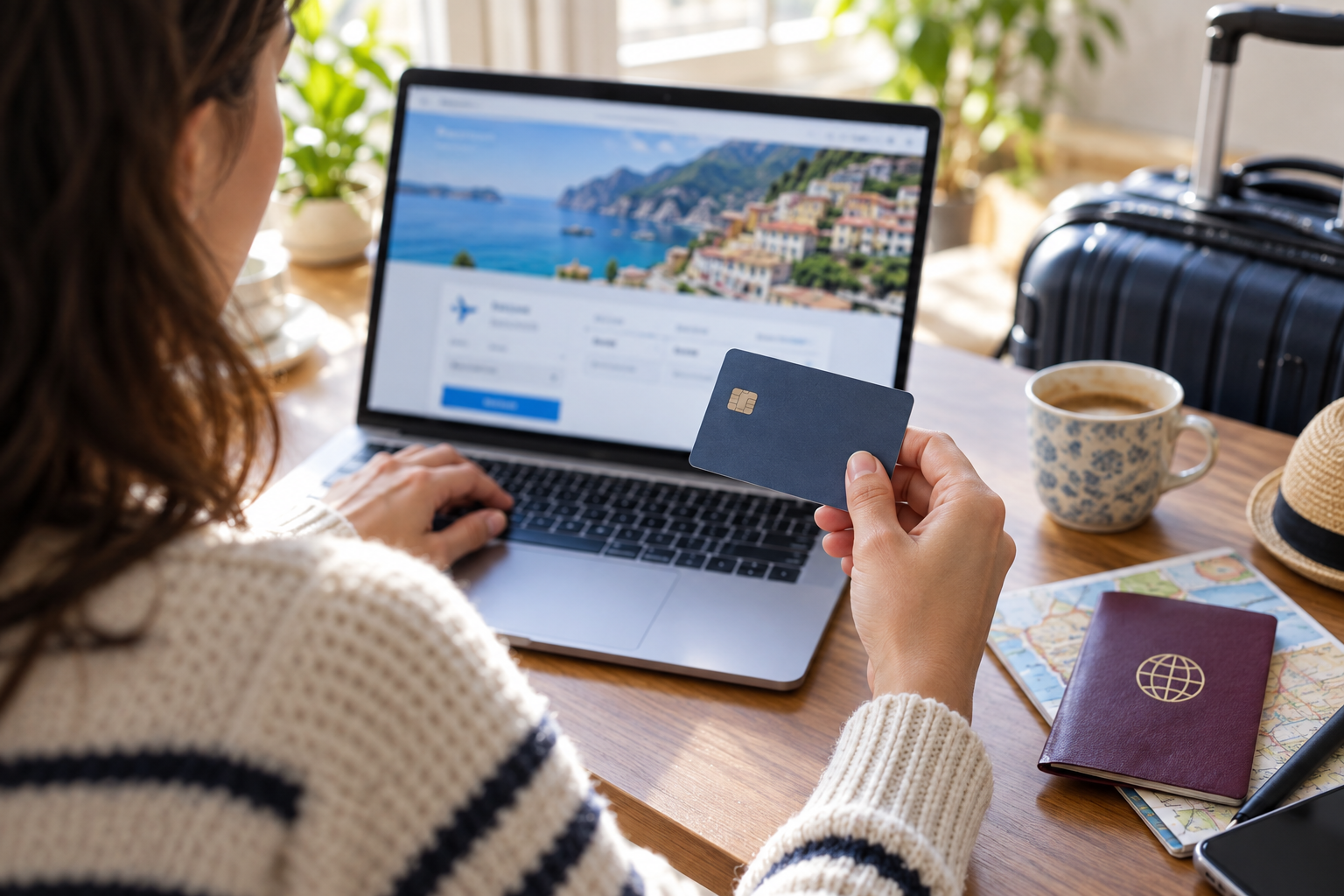
There is one crucial condition that governs nearly all of this, and getting it wrong means getting nothing, so it is worth stating plainly: you must pay for the trip with the card. Credit card travel insurance is activated by using that specific card to book the covered travel, typically the airfare or the major prepaid elements of the trip, and if you paid with a different card, or with cash, or with points on some cards, the coverage may simply not apply. It is a rule that catches people out constantly, since the natural instinct is to book with whichever card is nearest to hand or earns the best rewards, without a thought for which one carries the protections. This is the single most important thing to get right, and it is beautifully simple, since it costs nothing and requires no forms, only that you remember to put the trip on the right card. It is worth making it a firm habit, so that every flight and hotel booking goes automatically onto the card with the best protections, because the coverage you forget to activate is worth exactly nothing when you need it.
There is a second feature of card coverage worth understanding, which is that much of it is secondary rather than primary. Secondary coverage means the card pays only after you have first claimed on any other insurance you have, so for a lost bag you might need to claim on your homeowner’s or renter’s policy first, and for a rental car bump on your own auto insurance, with the card covering what is left over. Some premium cards offer primary coverage, especially for rental cars, which is more valuable because it pays directly without dragging in your other policies and their potential effect on your premiums. Neither is a reason to ignore the benefit, but it does shape how you use it, so it pays to know whether your particular card’s protections are primary or secondary before you need to make a claim. Discovering the order of claims in the middle of a crisis, rather than in advance, is exactly the kind of avoidable stress the coverage was meant to spare you.
What It Genuinely Covers Well

Once you know it is there and how to switch it on, the card coverage turns out to be genuinely useful for a specific and common set of travel mishaps. The standout, and the most valuable benefit on most cards, is the rental car collision damage waiver, which covers theft or collision damage to a rental car when you pay with the card and decline the rental company’s own cover. This one benefit alone can save real money, since rental agencies charge twenty to thirty dollars a day or more for their collision waiver, so relying on the card instead can knock a substantial sum off the cost of any trip involving a rental, sometimes a hundred dollars or more over a week. The rental desk will push their own waiver hard, since it is pure profit for them, and knowing your card already covers it lets you decline with confidence rather than caving under the pressure at the counter. For anyone who rents cars regularly, this single perk can be worth more over a year than the card’s annual fee, quietly turning the fee into a bargain.
The trip protections are the other genuinely useful piece, and they cover the disruptions that are otherwise pure, unrecoverable loss. Trip cancellation and interruption cover can reimburse the prepaid flights and hotels you lose when a covered emergency forces you to cancel, trip delay cover picks up the cost of meals and a hotel when you are stranded overnight, and baggage cover reimburses you for essentials and replacements when your luggage is lost or badly delayed. These are not exotic risks but the ordinary stuff of travel, the delayed flight and the missing suitcase that happen to someone on almost every busy travel day, which is what makes the coverage genuinely worth having. These are exactly the ordinary disasters that befall travelers, and having them covered for free is a real benefit. The one caveat to understand is that the covered reasons for cancellation are usually narrow, things like serious illness, a death in the family, severe weather, or jury duty, and simply changing your mind or deciding not to travel is not covered, so the protection is for genuine emergencies rather than a general refund on any cancelled plan.
The Big Gap You Must Not Overlook

Here is the single most important warning in all of this, the gap that can turn a reliance on card coverage into a genuine disaster: most credit cards do not include meaningful emergency medical insurance. The trip, delay, baggage, and rental protections are good, but if you fall seriously ill or are injured abroad and need hospital treatment or an emergency evacuation home, your ordinary travel card very likely will not cover it, or will offer only a small and secondary amount that falls far short of what a real medical emergency abroad can cost. This is the one area where card coverage is weakest and where the consequences of assuming you are protected can be catastrophic.
This gap matters most for exactly the people most likely to face a medical problem, older travelers and anyone with health conditions, and it becomes critical for Americans traveling in particular because their regular health insurance, including Medicare, generally does not cover them outside the United States either.
So an American relying on their credit card for travel protection can find themselves facing a five-figure hospital bill abroad with no coverage at all, having assumed the card had them protected. It is precisely the kind of nasty surprise that arrives at the worst possible moment, when someone is already frightened and unwell in a foreign hospital, which is exactly why it is worth understanding the gap long before you travel. The lesson is not that the card coverage is worthless, since it is genuinely valuable for the things it does cover, but that it is not a substitute for proper travel medical insurance. The dangerous mistake is not using the card, which is smart, but assuming it does more than it does, and skipping the medical policy in the belief that you are already covered when you are not. The dangerous mistake is not using the card, which is smart, but assuming it does more than it does, and skipping the medical policy because you believe you are already covered when you are not. For any trip where a serious illness or injury would be financially ruinous, and that is most international trips, a separate travel medical policy remains essential, and the card’s protections are a useful supplement to it rather than a replacement.
When to Still Buy a Real Policy

Given the medical gap, it helps to think clearly about when the card is enough and when a proper standalone policy earns its cost, because the answer is not the same for every trip. For a short domestic trip, or one where your losses would be limited and your own health insurance still applies, the card’s protections may genuinely be all you need, covering the realistic risks of a cancellation, a delay, a lost bag, or a rental bump without you spending another cent. In that case, buying a separate policy on top can be money wasted on coverage you already have, paying twice for the same protection out of a vague sense that you ought to be insured.
The calculation flips, though, as the stakes rise. For international travel, for expensive trips with a lot of non-refundable money at risk, for anyone older or with health conditions, for adventurous activities the card excludes, and above all for the medical risk of falling seriously ill far from home, a full travel insurance policy is worth every penny and the card is simply no substitute for it. Getting that division right, the card for the disruptions and a real policy for the emergencies, is the whole art of insuring a trip sensibly. The sensible approach is to treat the two as layers rather than alternatives, leaning on the card for the everyday disruptions it handles well and buying a standalone policy, chosen mainly for its medical and evacuation cover, for the trips where a real emergency would be financially devastating. Knowing which trip you are taking, and therefore which layer you need, is the whole skill, and it saves you both from paying twice for the same cancellation cover and from being dangerously underinsured against a hospital bill abroad.
How to Actually Use It

Putting all this together, getting value from your card’s hidden travel insurance comes down to a few simple, deliberate habits. The first is to actually find out what you have, by digging out the benefits guide for each of your cards, or looking it up online, and reading which travel protections it includes and at what limits, so that you know before a trip rather than after a disaster. Cards vary enormously, from basic ones with almost nothing to premium ones with a rich set of protections, so the only way to know your coverage is to check your specific card. Do not assume that because a friend’s card covered their cancelled trip, yours will too, since two cards from the same bank can carry wildly different benefits.
From there it is about using it correctly. Pay for your trips, especially the flights and major prepaid bookings, with the card that carries the best protections, since that is what switches the coverage on. When you rent a car, pay with the card and decline the rental company’s expensive collision waiver, relying on the card’s instead, which is where the biggest easy savings are.
Keep your receipts and documentation, since claims require proof, and understand whether your coverage is primary or secondary so you know the order in which to claim. And crucially, plug the medical gap with a separate travel medical policy, treating the card as your cover for cancellations, delays, baggage, and rentals, and the standalone policy as your cover for your health. Do all that, and you turn an invisible, unused perk into a genuine layer of protection you have already paid for, which is exactly what it was meant to be. It is a small piece of admin that quietly derisks every trip you take, and once the habits are in place they cost you nothing and run themselves. This is general information rather than financial advice, and card benefits and terms vary and change, so always confirm the specifics of your own card before relying on any of it.

About the Author: Ruben, co-founder of Gamintraveler.com since 2014, is a seasoned traveler from Spain who has explored over 100 countries since 2009. Known for his extensive travel adventures across South America, Europe, the US, Australia, New Zealand, Asia, and Africa, Ruben combines his passion for adventurous yet sustainable living with his love for cycling, highlighted by his remarkable 5-month bicycle journey from Spain to Norway. He currently resides in Spain, where he continues sharing his travel experiences with his partner, Rachel, and their son, Han.