
Last updated on November 16th, 2026 at 08:22 pm
And What It Reveals About Proximity, Politeness, and Unspoken Cultural Rules
Greeting someone in Spain can look deceptively simple from the outside, but the social choreography behind it is more nuanced than many American visitors expect. A handshake, a hug, or two cheek kisses may all appear within the same social setting, and the correct choice often depends on age, familiarity, region, gender, and whether the interaction is social or professional. Americans who are used to a relatively straightforward “Hi, nice to meet you” can suddenly find themselves hesitating over whether to lean in, extend a hand, or wait for the other person to make the first move. That hesitation is completely understandable, because Spanish greetings are less about memorizing one universal rule and more about reading the relationship and the setting.
The famous two-kiss greeting is probably the part that causes the most confusion. Visitors often imagine that people are literally kissing each other on both cheeks, but in many cases it is more of a cheek-to-cheek gesture accompanied by a light kissing sound. The movement can happen quickly, and someone unfamiliar with it may accidentally turn the wrong way, bump noses, overcommit to an actual kiss, or freeze at the exact moment the other person leans in. These awkward moments are rarely serious, but they reveal how deeply automatic greetings become when you grow up within a particular culture.
Another difference is that Spaniards may use physical warmth earlier in a relationship than many Americans expect. A greeting that feels surprisingly intimate to an American can be completely ordinary in Spain and carry very little romantic meaning. At the same time, that does not mean everyone greets everyone with kisses. Professional meetings, formal situations, generational differences, and personal preference can all change the interaction. The mistake is not failing to perform the ritual perfectly; it is assuming that one style applies everywhere.
American greetings can create their own misunderstandings too. A strong handshake, an enthusiastic hug, or an immediate use of someone’s first name may feel natural and friendly in the United States, but social cues can be interpreted differently in Spain depending on the setting. Likewise, the American tendency to move quickly through introductions can contrast with a Spanish style that may give more attention to the greeting itself, especially in social settings where acknowledging everyone present matters.
The most useful way to understand Spanish greetings is to see them as part of a broader emphasis on social presence. The greeting is not merely a prelude before the “real” conversation begins. It establishes warmth, respect, familiarity, and the tone of the interaction. Once you stop treating it like a complicated rule to pass or fail and start treating it as a social cue to observe, Spanish greetings become much easier to navigate.
Want More Deep Dives into Everyday European Culture?
– Why Europeans Walk Everywhere (And Americans Should Too)
– How Europeans Actually Afford Living in Cities Without Six-Figure Salaries
– 9 ‘Luxury’ Items in America That Europeans Consider Basic Necessities
Quick Easy Tips
Plan travel outside peak summer months to avoid extreme heat and overcrowding.
Learn a few basic Spanish phrases to make daily interactions smoother.
Research local customs and cultural norms to avoid misunderstandings.
Book accommodations and transport early if traveling during high season.
Explore beyond the major tourist hubs to experience authentic Spanish culture.
One controversial truth is that Americans often assume their own greeting style is neutral when it is just as culturally specific as the Spanish one. A firm handshake, a quick smile, and immediate personal space can feel professional and respectful in the United States, but none of those behaviors are universal standards. Spaniards may interpret warmth, proximity, and physical contact differently, which means the American instinct to keep a little more distance is not inherently more polite. It is simply one cultural language among many.
Another uncomfortable point is that Americans sometimes oversexualize the two-kiss greeting. Because cheek kissing is less common in mainstream American social life, it can feel unusually intimate when first encountered. In Spain, however, the gesture is often routine and socially coded rather than romantic. Treating it as flirtatious, provocative, or strangely personal can say more about American assumptions around physical contact than about what the greeting actually means locally.
There is also a tendency to turn Spanish etiquette into a rigid list of rules that even Spaniards themselves do not follow consistently. Articles sometimes imply that every woman kisses every person twice, that every man shakes hands, or that one wrong movement immediately marks someone as rude. Real life is much messier. Age, region, friendship level, workplace culture, and individual personality matter, and younger Spaniards may behave differently from older generations. A useful guideline is not the same thing as a universal law.
Another controversial issue is that Spanish warmth can sometimes be misread in the opposite direction. Americans may interpret a close greeting, sustained eye contact, or animated conversation as evidence of instant friendship or personal interest when it may simply be normal social behavior. This matters because cross-cultural misunderstanding works both ways: what feels unusually warm to you may not carry the same significance to the other person.
The broader lesson is that greetings expose how quickly people confuse familiarity with correctness. When someone says, “That greeting feels weird,” what they often mean is, “That greeting is not what I am used to.” Once you recognize that distinction, it becomes easier to approach Spanish social behavior without ranking it against your own.
1. The Double Cheek Kiss Is Standard Not Optional

Let’s start with the most visible part: the two cheek kisses, one on each side.
- Not on the lips
- Not a real kiss just a light touch of cheeks, often air-kissed
- Always starting on your right cheek (their left)
This is how Spaniards greet:
- Friends
- Acquaintances
- New people introduced through others
- Family members
It’s not romantic. It’s not intimate in the American sense.
It’s simply standard etiquette.
Americans often:
- Go in for a hug
- Offer a stiff handshake
- Pull away awkwardly
- Ask “do we kiss?” (which immediately reveals you’re not from here)
To a Spaniard, dodging the kiss feels like rejection not just of the person, but of the entire cultural rhythm.
2. Men Don’t Kiss Men Usually
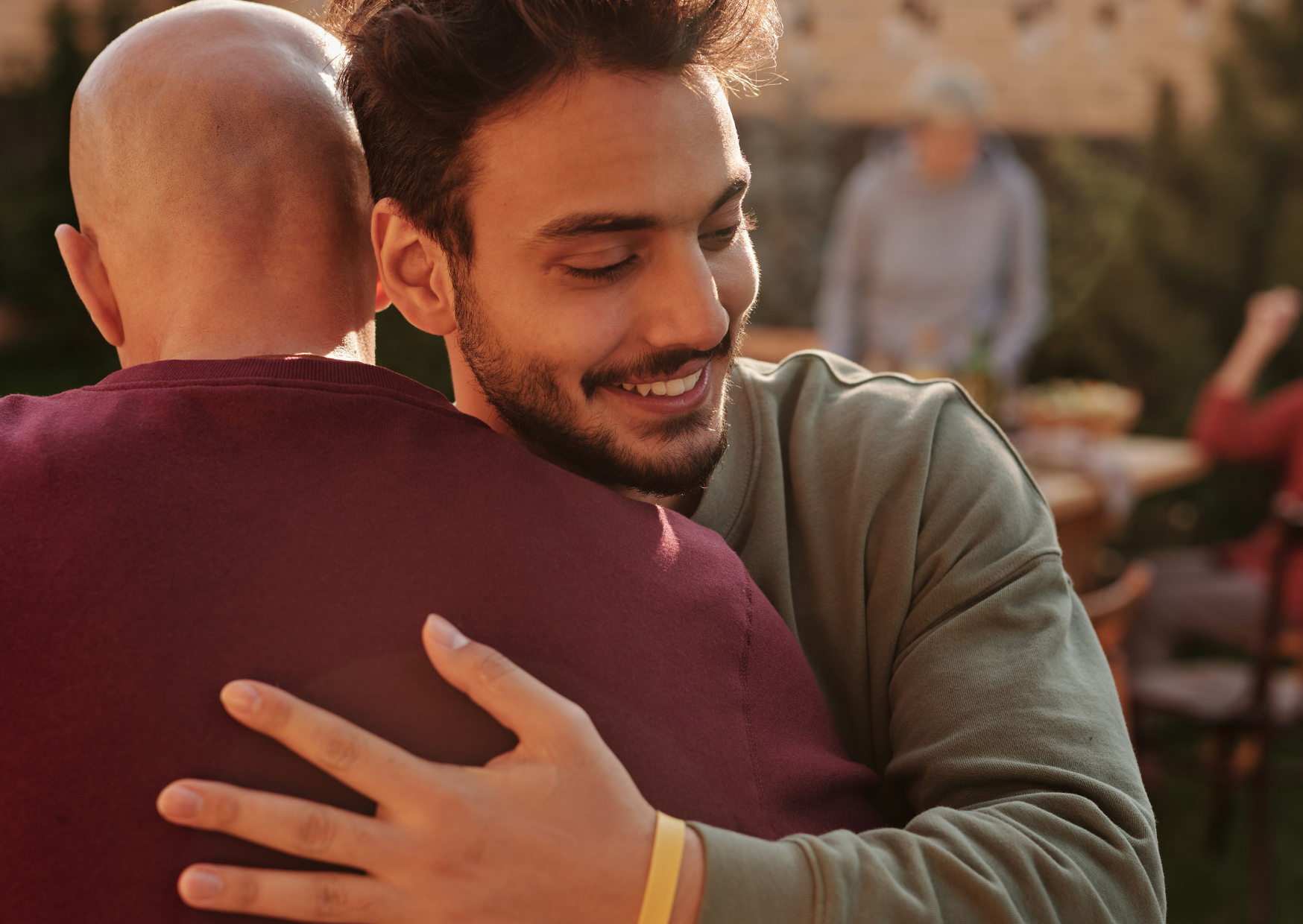
In most of Spain, male-to-male greetings are still shaped by social norms:
- A firm handshake between men is common
- Among close friends or family, a hug or cheek kiss may happen
- But it’s less automatic than between women, or between men and women
Americans often misjudge this:
- Offering kisses to men who don’t expect it
- Holding back when a local clearly leans in
The trick is to follow the lead of the other person but know that a lack of kissing doesn’t mean a lack of warmth. It’s just one of the few gendered dynamics that still lingers.
3. You Greet Every Individual Not Just “The Group”

One of the most telling cultural missteps Americans make is walking into a room and saying:
- “Hey everyone!”
- “What’s up, guys?”
- A wave from the door, followed by sitting down
In Spain, this feels cold. Detached. Even rude.
Why? Because greeting people one by one even if there are 8 of them is considered a mark of respect and equality.
You don’t walk into a group.
You join it by acknowledging each member with:
- A kiss or handshake
- A verbal greeting (“Hola,” “¿Qué tal?”)
- Eye contact and often a smile
Skipping this step means you’ve signaled, perhaps unknowingly:
I don’t see you. I’m just here for the group dynamic.
And in Spain, that doesn’t fly.
4. Skipping the Goodbye Is Just as Bad
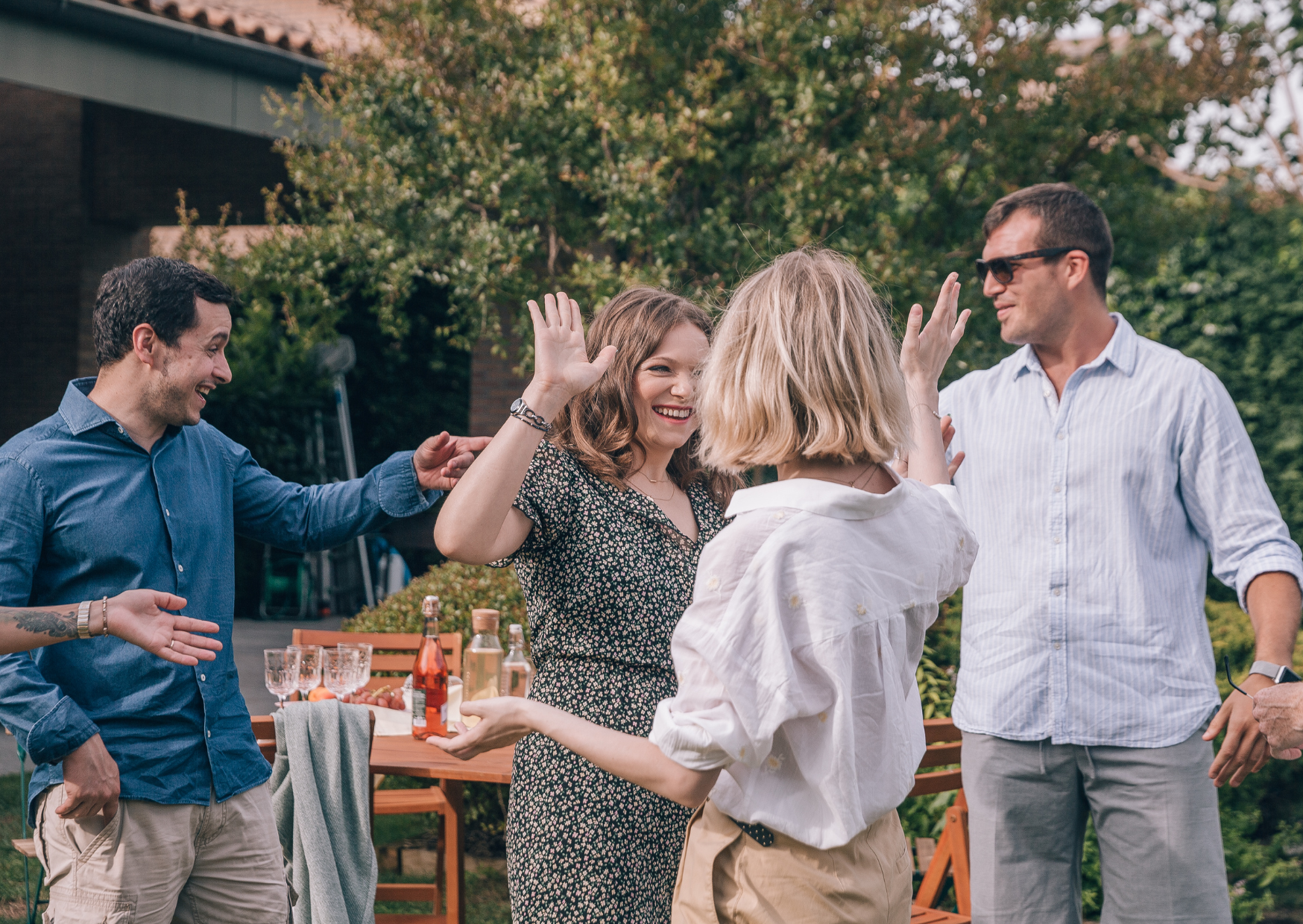
If greetings are a ritual, so are farewells.
When leaving, Spaniards:
- Say goodbye to everyone
- Often give another round of kisses or handshakes
- May linger at the door with short conversations
Americans, especially from casual or fast-paced cultures, often:
- Wave from across the room
- Sneak out quietly
- Say goodbye only to the host
To Spaniards, this feels dismissive as if the people you met didn’t matter.
Saying goodbye is about closing the loop.
You entered the social space with acknowledgment. You exit with the same care.
5. Touch Is Expected But Controlled
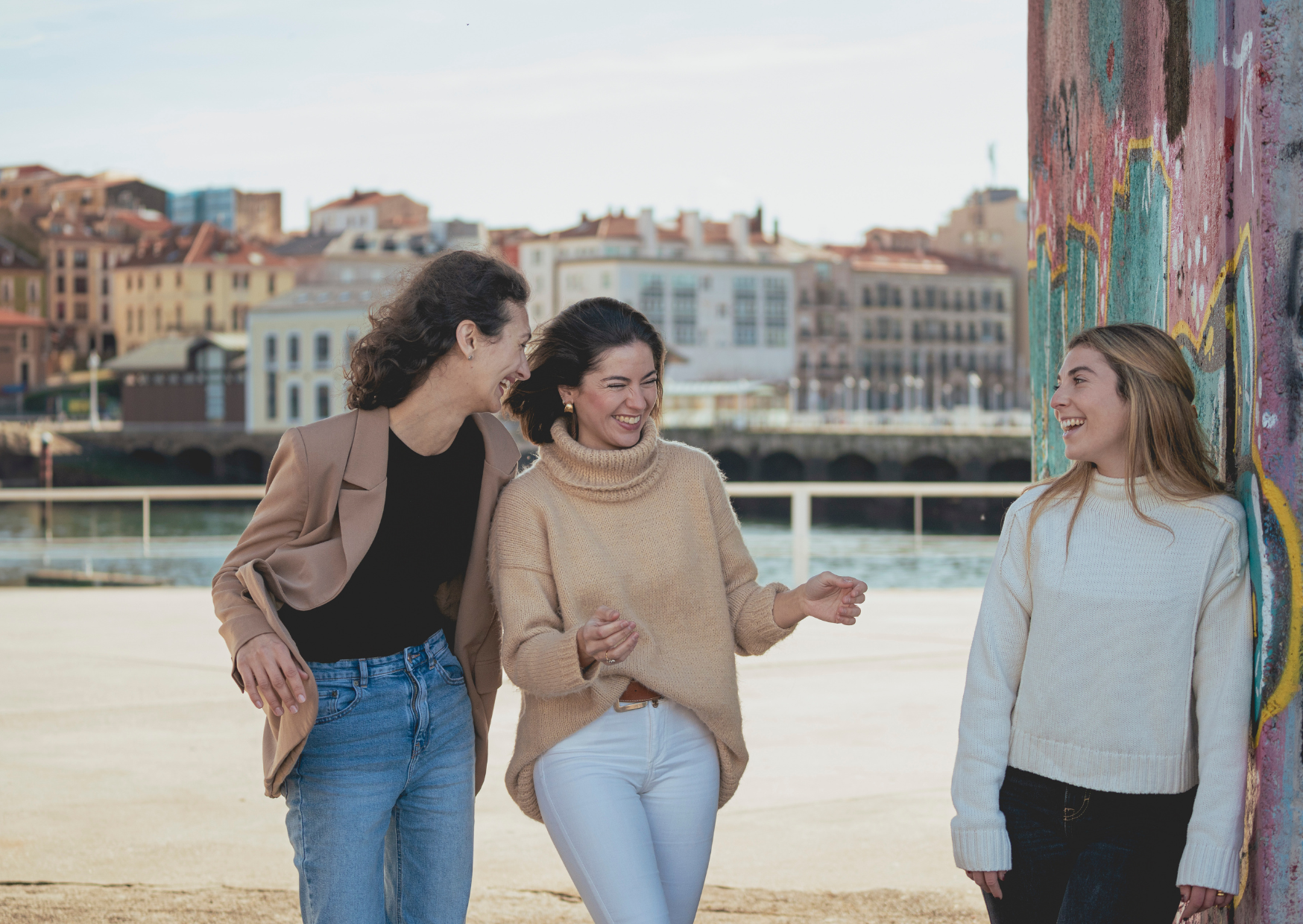
American travelers often assume Europe is a land of exaggerated affection.
But Spanish physical touch is not excessive it’s calibrated.
A light hand on the arm.
A cheek kiss.
Occasional proximity in conversation.
That’s it.
What Spaniards dislike is:
- Stiffness
- Overly formal distance
- Flinching or pulling back at a kiss
- Loud declarations like “I’m not a hugger”
It’s not about how “touchy” you are. It’s about being socially fluent in a place where the body speaks gently.
6. Smiling Without Engaging Feels Hollow
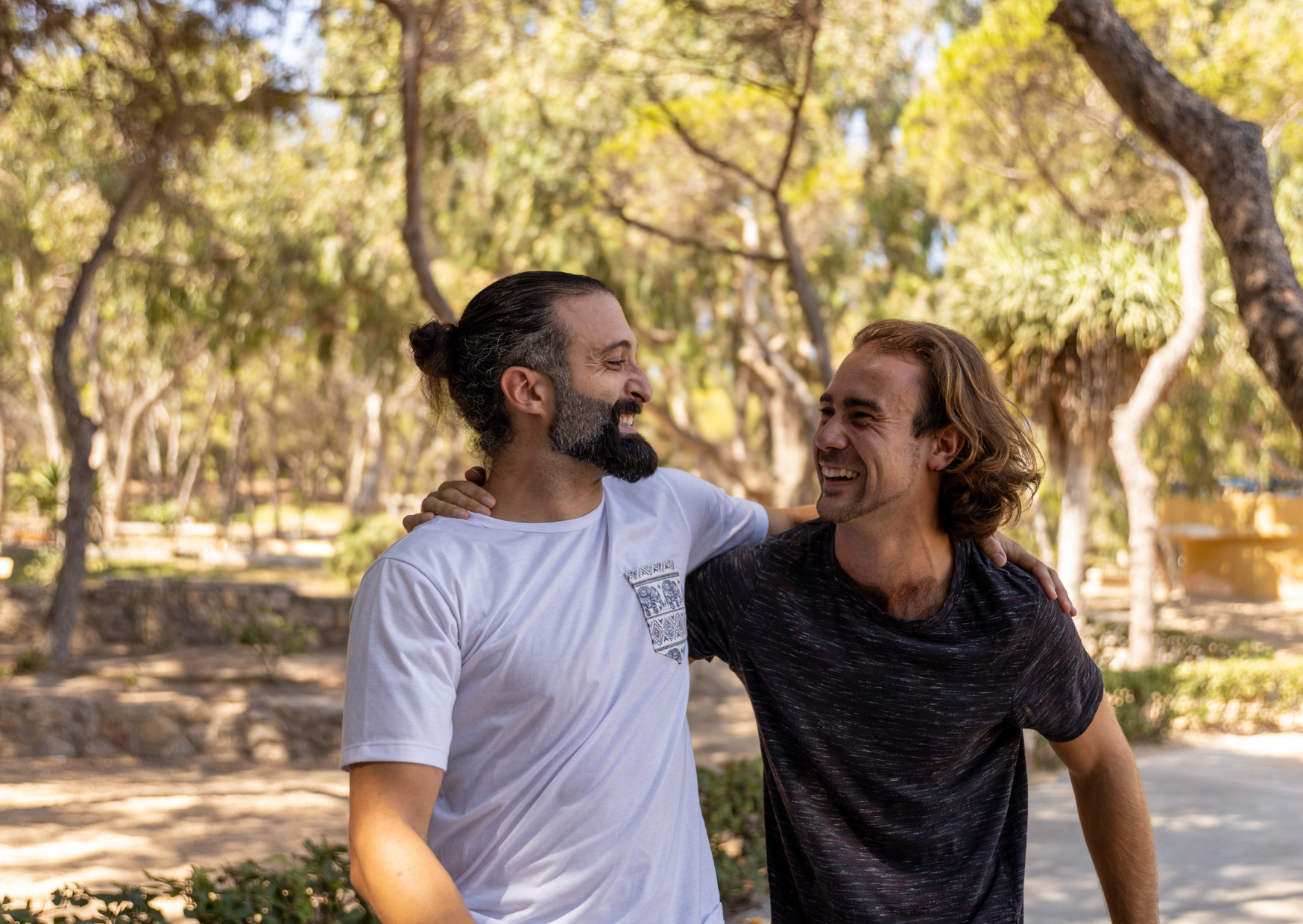
Americans are known for big, friendly smiles.
But in Spain, a smile without full engagement without a greeting, name, or touch can feel fake or impersonal.
Spaniards often smile after they’ve made a connection.
Not before.
If you smile broadly but don’t:
- Greet people individually
- Show warmth with your tone
- Make eye contact and follow the proper ritual
Then your smile won’t register as sincerity.
It will register as surface friendliness without depth.
7. Being “Low Maintenance” Isn’t a Compliment Here
In American social culture, being the person who says:
- “Oh, don’t worry about me!”
- “I’m just here to hang out.”
- “You don’t have to introduce me.”
…is often seen as polite or humble.
In Spain, it’s confusing. You’re in a social setting. Of course you’re meant to be acknowledged.
Refusing a greeting doesn’t make you easygoing — it makes you invisible.
Spaniards value shared presence, not quiet independence.
You don’t downplay your role in the room. You lean in softly, but completely.
8. You Don’t Need an Excuse to Greet People
In the U.S., greetings are often linked to purpose:
- Meeting someone new
- Starting a conversation
- Reconnecting after time apart
In Spain, greetings are expected regardless of purpose.
Whether you’re:
- Seeing someone you already know
- Arriving at a dinner late
- Entering a room where no one notices you right away
You still make your rounds.
You still kiss cheeks, shake hands, or say hello.
You don’t wait for an invitation to be social.
It’s not about making an entrance. It’s about showing presence and inclusion.
9. Locals Won’t Always Correct You But They’ll Remember
Here’s the tricky part:
Spaniards are warm, patient, and generous with foreigners. They won’t correct your greeting mistakes outright.
But they’ll notice:
- That you skipped the kiss
- That you didn’t greet the full group
- That you left without saying goodbye
- That your physicality felt hesitant or performative
They won’t say anything but they’ll quietly categorize you as someone who doesn’t fully get it.
It’s not cruel. It’s just cultural pattern recognition.
And it means that if you want to be welcomed as a local, learning this ritual matters more than your Spanish grammar ever will.
Why You Should Care and Follow
You should care because first impressions happen quickly, and greetings are one of the simplest ways to show that you are paying attention to the culture around you. You do not need to perform every gesture perfectly, but being willing to follow the other person’s lead can make the interaction feel smoother from the beginning. If someone extends a hand, respond to the handshake. If someone leans in socially for two cheek kisses, follow their pace rather than backing away in alarm. That small adaptability communicates openness without requiring you to become an expert.
Understanding the greeting ritual can also reduce unnecessary awkwardness. Many tourists become uncomfortable because they are trying to decide too late what they are supposed to do. Knowing that different settings may call for different greetings helps you stay relaxed. In a business context, a handshake may be more appropriate. In a social introduction among friends or family, cheek kisses may be more common. Observing the people around you is often more useful than memorizing a fixed rule.
Following local cues can also help you integrate into group situations more naturally. In Spain, greeting everyone present can matter, particularly in smaller social gatherings. Walking into a room and acknowledging only the person you came with may feel abrupt in a context where individual greetings are part of the social rhythm. Taking the extra moment to say hello to the group can make you appear more considerate and engaged.
There is also a broader cultural benefit. Paying attention to greetings teaches you to notice subtleties in body language, distance, tone, and timing. Those skills transfer to many other parts of travel, from dining and conversation to professional meetings and family interactions. Learning how people greet each other is often one of the first steps toward understanding how they relate to one another more generally.
Most importantly, following the local rhythm helps you stop treating every interaction as a comparison with home. Once you become comfortable allowing another person to set the tone, the experience feels less like a test and more like a natural exchange. That flexibility is one of the most useful habits any traveler can develop.
Why You Should Not Care and Follow Too Much
At the same time, you should not become so focused on getting the greeting right that you make yourself anxious. Most Spaniards are familiar with international visitors and understand that someone from another country may not instinctively know when to shake hands, hug, or lean in for cheek kisses. A moment of hesitation is usually far less noticeable than tourists imagine, and a friendly smile can smooth over almost any small mistake.
You should also avoid forcing physical contact if you are genuinely uncomfortable with it. Cultural awareness does not require ignoring your own boundaries. You can still be warm, polite, and respectful while choosing a handshake or verbal greeting instead. The goal is to understand what another person may expect, not to make yourself participate in something that feels deeply uncomfortable.
It is equally important not to overgeneralize Spain. Greeting habits can vary by region, generation, workplace, and social circle, and not everyone enjoys the same level of physical familiarity. What feels routine in one family may be uncommon in another. A rigid rule like “always do two kisses” can create just as many awkward moments as having no idea what to do.
You should also resist the temptation to read too much into the interaction afterward. If someone greeted you with kisses, that does not necessarily mean they felt unusually close to you. If someone offered only a handshake, that does not necessarily mean they were cold. Social gestures carry meaning, but not every difference deserves deep interpretation.
Ultimately, the best approach is to be attentive without becoming obsessive. Learn the common patterns, follow the other person’s lead, and accept that occasional awkwardness is part of traveling. Social confidence comes from flexibility, not perfection.
One Gesture, Two Interpretations
To Americans, greetings are casual.
To Spaniards, they’re a ceremony of connection.
One culture says: Just smile and wave.
The other says: Look me in the eyes, say my name, kiss me on the cheek.
One thinks: I’ll talk to them when we start chatting.
The other thinks: If you don’t greet me now, we’ll never be close.
And in that space those 15 seconds when you arrive the tone for everything that follows is set.
The Spanish greeting ritual is interesting precisely because it reveals how much meaning can be packed into a few seconds of social contact. A handshake, cheek kiss, hug, smile, or simple verbal greeting can communicate familiarity, respect, warmth, or formality long before the actual conversation begins. For Americans, the biggest adjustment is often realizing that physical closeness does not automatically carry the same meaning it does at home.
What seems awkward at first often becomes surprisingly natural after a little exposure. Once you understand that the two-kiss greeting is usually a social convention rather than an intimate act, much of the tension disappears. You stop worrying about performing it perfectly and start noticing when it naturally fits the setting.
The smartest strategy is simple: observe first and mirror gently. Let the other person set the distance, pace, and level of familiarity. That removes most of the guesswork and prevents you from turning a normal introduction into a complicated mental checklist.
It is also worth remembering that the point of the greeting is connection, not correctness. Nobody is awarding points for perfect technique, and most people care far more about whether you seem friendly and respectful than whether you leaned toward the correct cheek immediately.
Ultimately, Spanish greetings offer a useful lesson about travel in general. The behaviors that feel most natural to us are often the ones we notice least until another culture does them differently. Learning to recognize that difference without judging it is one of the simplest ways to become a more comfortable, curious, and culturally aware traveler.

About the Author: Ruben, co-founder of Gamintraveler.com since 2014, is a seasoned traveler from Spain who has explored over 100 countries since 2009. Known for his extensive travel adventures across South America, Europe, the US, Australia, New Zealand, Asia, and Africa, Ruben combines his passion for adventurous yet sustainable living with his love for cycling, highlighted by his remarkable 5-month bicycle journey from Spain to Norway. He currently resides in Spain, where he continues sharing his travel experiences with his partner, Rachel, and their son, Han.