

In a city with one of the worst housing shortages in Europe, where young people despair of ever finding an affordable place to live and rents climb year after year, something strange is happening in Madrid. Across the city, tens of thousands of apartments sit empty while people desperate for a home go without. Their owners are not holding them off the market for renovation or sale. Many are keeping them deliberately, indefinitely empty, because they have decided that an empty flat earning nothing is safer than a rented one. Behind that decision lies a single powerful fear, the fear of the okupa, the squatter or non-paying tenant who moves in and, the story goes, cannot be removed for months or years. It is a fear that shapes the behavior of countless small landlords, and it is worth examining closely, because it reveals a great deal about how a housing market can freeze from the inside, and because the fear and the facts do not entirely match.
This is a deeply contested subject, one where people on every side feel strongly and where the evidence cuts in more than one direction. To some, the empty flats are an outrage, homes hoarded out of paranoia while a city suffers a housing emergency. To others, the landlords are simply rational, protecting themselves against a real and frightening risk that the law has long failed to address. Both views contain truth, and understanding the gap between the fear that drives the behavior and the data on how common the danger actually is means taking both seriously in turn.
Here is what the fear really is and why it has such a grip on Madrid’s landlords, what the numbers really show about how often the feared thing happens, why the empty flats and the housing shortage collide so painfully, and what the whole situation reveals about a frozen market. This is a factual look at a contested housing issue rather than advice or advocacy, and reasonable people disagree fiercely about it, but the gap between the fear and the data is where the real story lies.
The Fear That Drives the Decision

To understand why an owner would leave a valuable flat empty in a city crying out for housing, you have to understand the fear as the landlords themselves experience it, because to them it is not paranoia but prudence. In their telling, the danger is real, specific and potentially ruinous.
The nightmare has a name. Spanish landlords fear the okupa, a term covering both the squatter who breaks into an empty property and, more painfully for small owners, and the tenant who moves in legally, then stops paying and refuses to leave, so the word carries a whole cluster of dread about losing control of one’s own property. It is this second figure, the non-paying occupant who cannot easily be evicted, that haunts the small landlord most. The pure squatter breaking into an empty flat is frightening in the abstract, but it is the tenant who signs a contract, pays for a month or two, and then simply stops that keeps owners awake, because that scenario can befall anyone who rents to the wrong person. It turns the ordinary act of letting a flat into what many owners have come to see as a gamble with their own property as the stake.
The heart of the fear is the slowness of the law. The story landlords tell one another is of occupants who stop paying and remain for many months or even years while a slow civil eviction grinds on, during which the owner receives no rent, cannot use the flat, and may face legal costs and even utility bills, so the fear is not just of lost income but of being trapped, unable to reclaim what is legally theirs. For an owner of a single extra flat, perhaps an inheritance or a modest investment, that prospect can feel catastrophic, enough to make an empty, silent flat seem like the safer choice.
Why the Fear Feels So Real
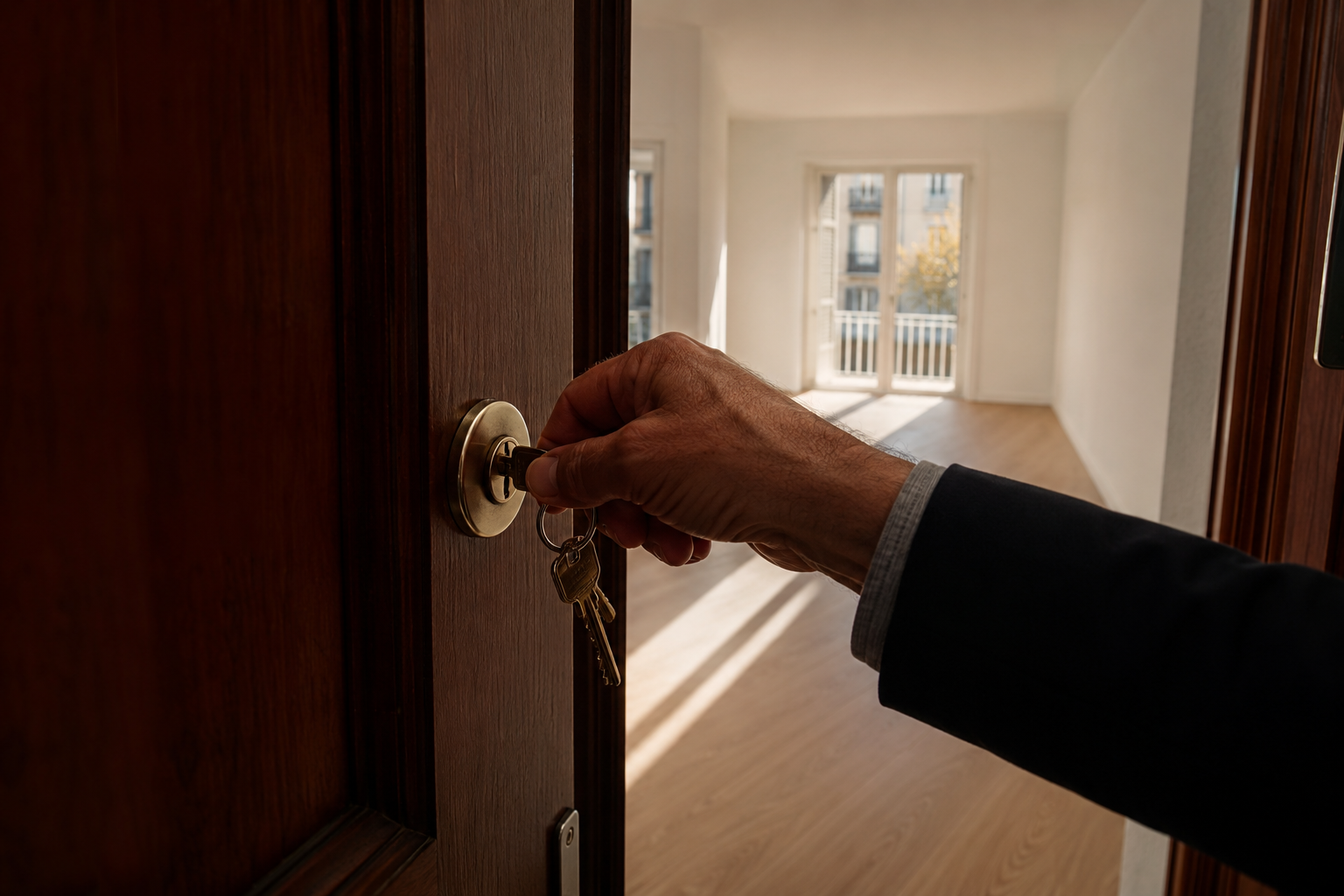
The fear would not have such power if it were pure invention, and it is important to acknowledge the genuine kernel of truth at its center, because the landlords are not simply imagining things. Some of what they dread does happen, and the system did for a long time make it worse.
There is a real problem underneath. The distinction that matters is between the criminal squatter who breaks into an empty home and the tenant who entered legally and then defaulted, and while the law has recently moved to deal quickly with the former, the latter, the non-paying legal tenant, remains a civil matter that can drag through the courts slowly, so the landlords are pointing at something that truly exists. An owner really can end up with an occupant who pays nothing and takes a long time to remove.
Stories travel and harden into certainty. High-profile media coverage, alarming anecdotes, and companies selling anti-squatter services all keep the fear vivid and top of mind, so even an uncommon event comes to feel like an ever-present threat lurking behind every rental contract. The fear is amplified far beyond its statistical footprint, but it is built on a real foundation, which is exactly what makes it so resistant to reassurance.
What the Numbers Actually Show

Set against the intensity of the fear, the data on how often squatting really happens tells a strikingly different and much calmer story, and this is where many readers will feel their assumptions challenged. The feared event is, statistically, rare.
The scale is smaller than the fear suggests. Official figures record on the order of sixteen thousand cases of illegal occupation across all of Spain in a year, which set against the country’s roughly twenty-six million dwellings works out to something like six hundredths of one percent of homes annually, so the chance of any given property being occupied is very low. The number is not zero, and it is not trivial for those affected, but it is a far cry from the epidemic the fear imagines. It is worth sitting with that gap for a moment, because it is the crux of the whole story. A risk that materializes in roughly one in every seventeen hundred homes a year is real, and no comfort at all to the unlucky owner it happens to, yet it is nowhere near common enough to justify withdrawing tens of thousands of flats from a market in crisis. The fear behaves as though the danger were routine, when the numbers describe something closer to a rare misfortune.
And the risk is highly concentrated. The occupations that happen fall overwhelmingly on empty, anonymous, or bank-owned properties, not lived-in homes, because a furnished, occupied home enjoys strong and fast legal protection that an empty flat does not, so the profile of a genuinely at-risk property is quite specific. The typical target is precisely the kind of empty, unwatched flat that a fearful landlord creates by leaving it vacant, not the lived-in, actively managed rental the landlord is afraid to create. This mismatch between the shape of the fear and the shape of the actual risk is one of the most revealing features of the whole phenomenon. The fear attaches itself to the act of renting, when the data suggest the real vulnerability attaches to the act of leaving empty, which means the protective instinct and the protective reality point in opposite directions.
The Irony at the Center
This points to a painful irony that sits at the very heart of the whole phenomenon, one that neither side of the argument tends to dwell on. The very act meant to avoid the risk may in some ways invite it.
Empty is the vulnerable state, not occupied. Because squatters overwhelmingly target empty properties, and because an occupied, furnished home is far better protected by law and far easier to defend, a flat left deliberately empty is arguably more exposed than one rented to a paying tenant, so the fear can be quietly self-defeating. The landlord who leaves a flat empty to keep the okupa out has created exactly the sort of vacant, unwatched property that squatters prefer.
The legal picture has also shifted. Recent reforms have created faster procedures for clear cases of criminal squatting, and a lived-in home has always enjoyed protections that allow police to act quickly, so the legal environment in 2026 is not the same one that shaped the fear years ago. The reforms do not solve every case, particularly the slow civil evictions of non-paying legal tenants, but they have changed the landscape in ways the fear has not fully caught up with. Fear, once established, tends to lag behind the facts that first justified it, persisting on the strength of old stories long after the conditions that produced them have shifted. Many of the owners keeping flats empty today are protecting themselves against a version of the legal system that has already, in part, been reformed, which is one more way the fear and the present reality have drifted apart.
Where the Empty Flats and the Shortage Collide

Whatever the truth of the fear, its consequences collide head-on with one of the most severe housing shortages in Europe, and this is what makes the empty flats so explosive as a public issue. The vacancy and the scarcity exist side by side, feeding a bitter argument.
The numbers frame the collision. Spain has millions of empty homes, about fourteen percent of its entire housing stock, and Madrid holds more empty dwellings in absolute terms than any other Spanish city, even as the same city suffers a housing shortage so acute that housing has become the public’s single greatest concern, so the empty flats sit in the middle of a genuine emergency. Every shuttered apartment is, to those who cannot find a home, a provocation. The arithmetic is stark enough to make the anger understandable. A young person paying a punishing share of their income for a cramped shared flat, or unable to move out of a family home at all, walks past darkened windows every day and knows that behind some of them are perfectly habitable homes being kept deliberately empty. Whatever the owners’ reasons, that daily juxtaposition of scarcity and waste is precisely the kind of thing that turns a housing shortage into a political firestorm.
This fuels a furious political debate. To housing campaigners and many ordinary residents, landlords sitting on empty flats amid a shortage are hoarding a scarce social good out of exaggerated fear, which is why governments have begun taxing empty homes more heavily to push them onto the market, while to landlords, the empty flats are a rational and lawful response to a real risk the state failed to protect them from, so each side sees the other as the villain. The empty flat becomes a symbol onto which both sides project their anger.
Why Both Sides Are Furious
What makes this issue so combustible is that both of the main narratives are partly right, which means each side can point to real truths the other seems to ignore, and the result is a debate in which everyone feels unheard. The facts do not fully vindicate anyone.
Each camp holds a genuine truth. The landlords are right that the danger they fear is real and that the slow eviction of non-paying tenants remains a genuine problem, while the critics are right that the feared event is statistically uncommon and that the mass of empty flats worsens a real housing emergency, so both sides are arguing from something true. The fury comes precisely because neither narrative is simply false, and each side experiences the other’s truth as a denial of its own.
Neither the fear nor the debunking is the whole story. To tell landlords their fear is irrational ignores the real cases that do happen and the real slowness that remains, while to treat the fear as fully justified ignores how rare the event is and how the empty flats deepen the crisis, so any honest account has to hold both at once, which is uncomfortable for everyone. That discomfort is why the topic generates such heat, and why simple versions of it, from either direction, tend to be wrong.
A Market Frozen by Fear
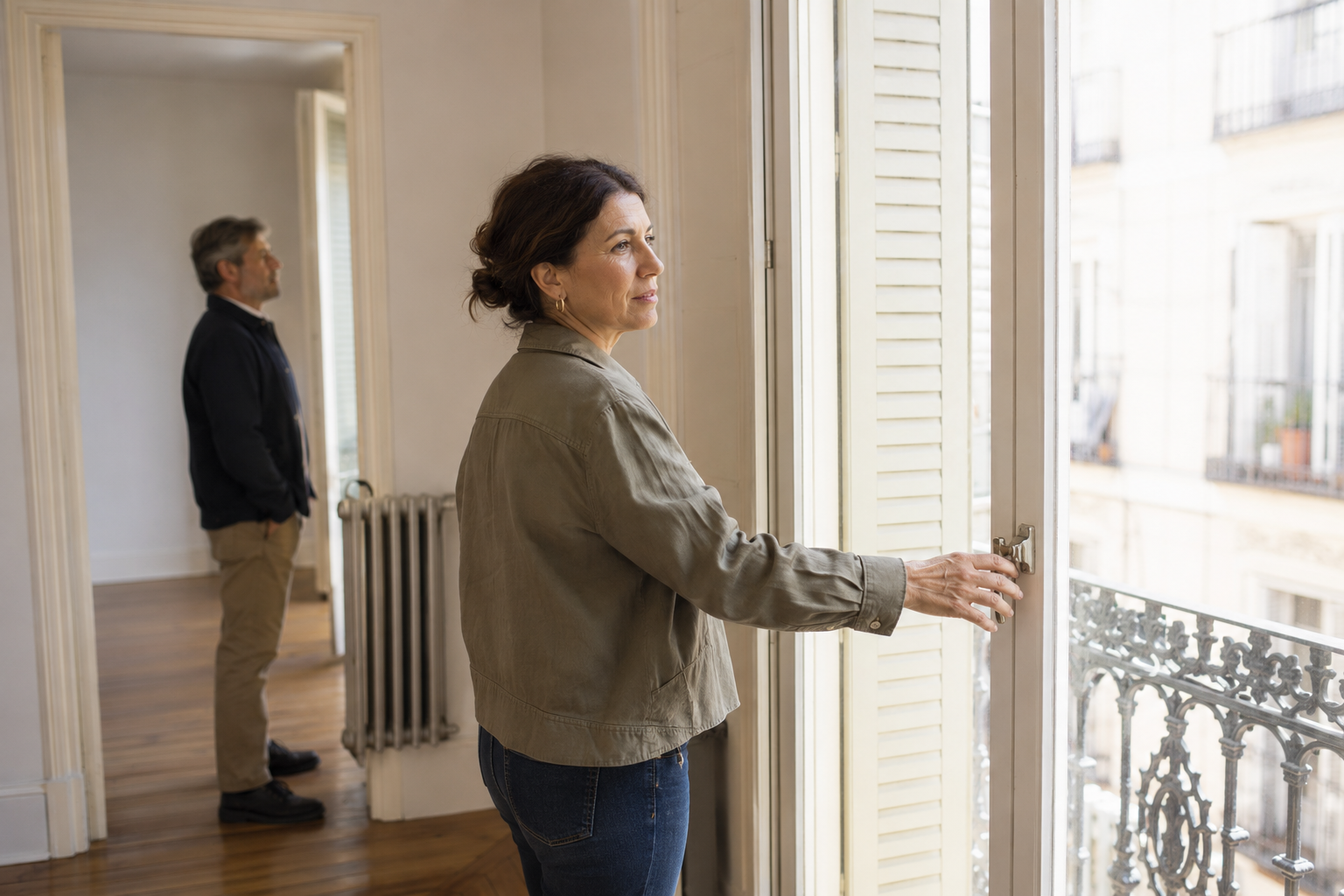
The lasting lesson of Madrid’s empty flats is that a market can be frozen not only by prices or laws but by fear itself, by a widely shared perception of risk that shapes behavior far more powerfully than the underlying statistics would justify. Whatever the true probability of an occupation, the fear of it is real enough to keep tens of thousands of homes off the market, and that is a fact with consequences no argument about statistics can wish away.
What makes the situation so hard to resolve is exactly that mixture of real risk and amplified fear, of genuine grievance on both sides, that resists any simple fix. Reassuring landlords with statistics does not dissolve a fear built partly on real cases, and taxing empty flats does not address the underlying worry that keeps them empty, so the frozen market persists, held in place by a fear that is neither wholly rational nor wholly imaginary. Understanding that is the beginning of any serious conversation about it.
So when you see, amid Madrid’s housing emergency, the shuttered windows of flats that could house the people searching so desperately for a home, understand that you are looking at the physical trace of a fear, a fear with a real kernel and an exaggerated reach, powerful enough to freeze a market in place. The empty flats are neither simple proof of landlord greed nor simple evidence of a squatting epidemic, but the visible result of a gap between what people fear and what really happens, a gap wide enough to swallow tens of thousands of homes.

About the Author: Ruben, co-founder of Gamintraveler.com since 2014, is a seasoned traveler from Spain who has explored over 100 countries since 2009. Known for his extensive travel adventures across South America, Europe, the US, Australia, New Zealand, Asia, and Africa, Ruben combines his passion for adventurous yet sustainable living with his love for cycling, highlighted by his remarkable 5-month bicycle journey from Spain to Norway. He currently resides in Spain, where he continues sharing his travel experiences with his partner, Rachel, and their son, Han.