
An American sits down to write a will and quietly assumes the most basic thing in the world: that they can leave what they own to whomever they please. Everything to the spouse, or split among the children, or all of it to one child and nothing to another, or the whole lot to a charity or a favorite friend, it is your property and your choice to make, and that freedom feels less like a mere law than like a kind of birthright. Then that very same American moves to Spain or France, buys themselves a home, and discovers something that genuinely stuns them, which is that the country has already decided who inherits a large chunk of their estate, and no will they write can fully change it. In much of Europe, your children are legally entitled to a fixed share of what you leave behind, whether you like it or not, and the sweeping testamentary freedom Americans take entirely for granted simply does not exist there. It is genuinely one of the strangest and most consequential surprises of expat life, and it is genuinely worth understanding well before it ever comes to matter, which is to say long before anyone has died and the choices have narrowed to none.
What follows is the law Americans can hardly believe, how much of your estate is actually locked up, why Europe does it this way, the one legal escape hatch that changes everything, and what an expat should actually do about it.
The Law Americans Can Hardly Believe

The concept at the heart of this is called forced heirship, and to an American it sounds almost made up. Under the civil law that governs much of continental Europe, certain close relatives, above all your children, are entitled by law to a reserved portion of your estate, a guaranteed minimum share that you cannot take away from them no matter what your will says.
This reserved share goes by different names in different countries, the legitima in Spain, the reserve hereditaire in France, the Pflichtteil in Germany, the riserva in Italy, but the principle is the same everywhere, that a chunk of your estate belongs to your children by right and is simply not yours to give away freely.
This is the precise opposite of the American tradition of testamentary freedom, the idea that a person can dispose of their property however they wish. In the common-law world, you can, in most cases, disinherit an adult child entirely, leave everything to your spouse, or give it all away, because the law treats your estate as yours to direct. Continental Europe rejects that premise outright, holding that family, and children in particular, have a claim on the family wealth that overrides the individual’s wishes. For an American expat, the collision between these two worldviews is jarring, because a document they have always thought of as the final word on their wishes, their will, turns out to be subordinate to a law that quietly reserves part of the estate for people they may or may not have chosen. The will proposes, but the law disposes.
How Much Is Actually Locked Up

The natural next question is how much of an estate is affected, and the answer, which surprises people all over again, is that it is often the majority of it. The shares are not small. In Spain, the rules reserve fully two-thirds of the estate for the children, split into portions, with only the remaining third left to the parent’s completely free choice. That means a Spanish resident cannot freely direct most of what they own, since the law has already spoken for the bulk of it on behalf of the children. Within that reserved two-thirds there is a little flexibility in how it is shared among the children, and Spain’s regions complicate the picture further, with Catalonia, the Basque Country, Navarra, and Aragon each keeping their own distinct rules, but the core principle that most of the estate belongs to the children holds across the country.
France is, if anything, stricter, scaling the reserved share to the number of children. With one child, half the estate is reserved; with two children, two-thirds is reserved and split between them; with three or more children, three-quarters of the estate is locked up for them, leaving the parent free to direct only the final quarter.
Germany, Italy, Belgium, and much of the rest of the continent have their own versions of the same idea, each guaranteeing children and sometimes the spouse a protected slice. The exact fractions vary from country to country, but the shock for the newcomer is the same everywhere, the discovery that a will is not the final word they always assumed it to be. The practical upshot is stark: across much of Europe, a parent with children can freely will away only a minority of their estate, sometimes as little as a quarter, with the rest reserved by law for the children regardless of the relationship, the circumstances, or the parent’s own wishes. For an American used to controlling one hundred percent of their estate, discovering they may control only twenty-five percent of it is a genuine shock. The estate they thought of as entirely theirs to direct turns out to be mostly spoken for before they have written a single line.
Why Europe Does It This Way

Before dismissing this as an absurd overreach, it helps to understand the thinking behind it, because forced heirship is not an accident or a bureaucratic quirk but a deliberate and very old philosophy. Its roots run back through the Napoleonic Code to Roman law, and it reflects a fundamentally different idea of what an estate is and whom it is for. Where the Anglo-American tradition sees property as belonging to the individual to dispose of freely, the continental tradition sees family wealth as something that passes down the bloodline across generations, with each generation more a steward of it than an absolute owner.
From that view, the logic of forced heirship makes real sense. It exists to protect children from being disinherited on a whim, to prevent a vulnerable family from being cut out in favor of a new spouse or a manipulative outsider, and to preserve a basic fairness and continuity within families across generations. It is, in its own terms, a system designed to protect the family as an institution against the caprice of any single member, and many Europeans regard it not as an intrusion but as a sensible safeguard, a guarantee that children cannot be arbitrarily stripped of their inheritance by a parent’s late-life decisions. Whether you find it protective or paternalistic depends largely on which tradition raised you, but it is a coherent and principled position rather than mere red tape, and understanding that it comes from a genuine concern for family continuity makes it far less baffling, even to someone who disagrees with it. To a European it can seem the Americans are the strange ones, so casually willing to let a parent cut a child off entirely on a whim, and there is something to that view too.
The Spouse Problem
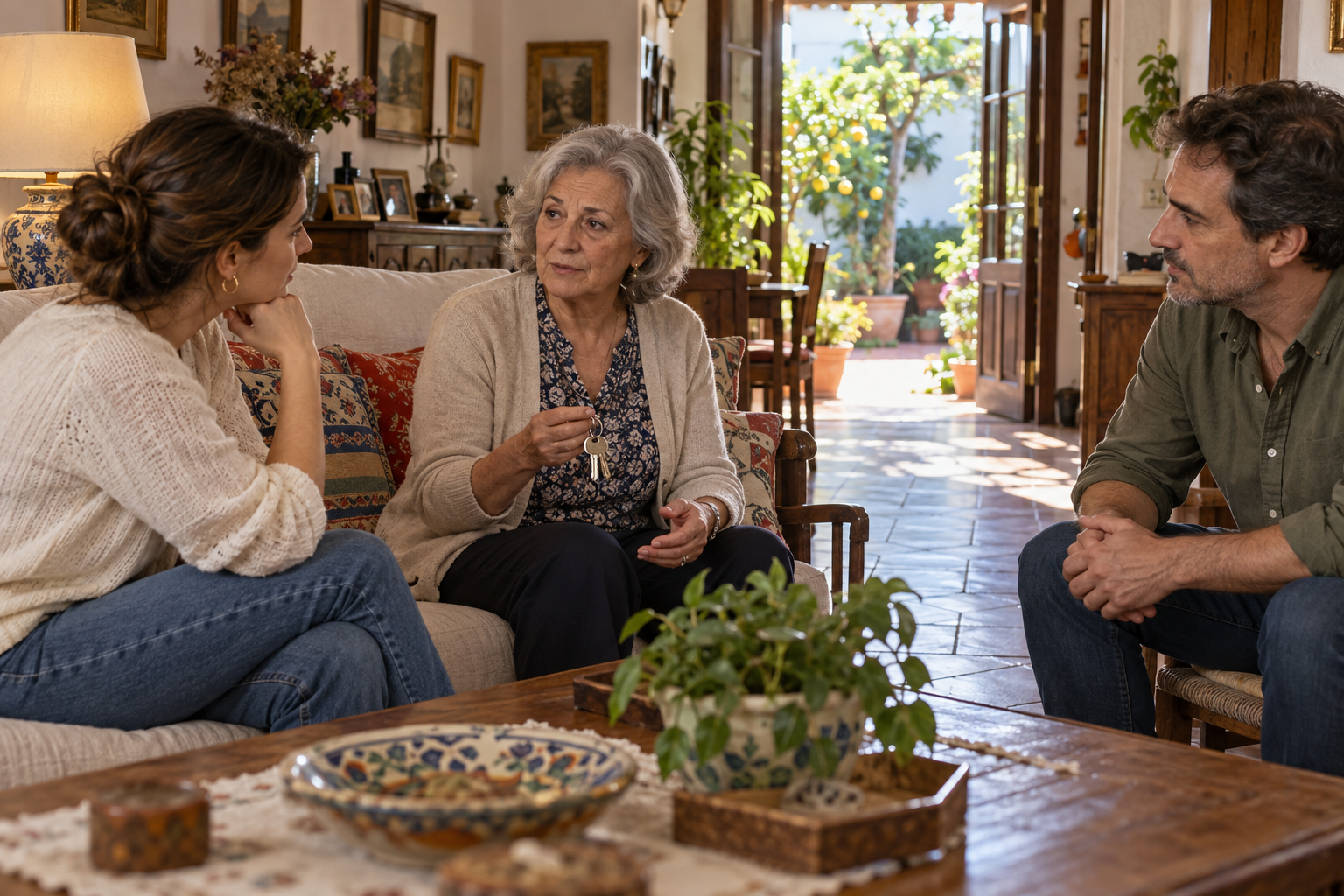
There is a further twist that catches expat couples off guard, and it is worth spelling out because it upends an American assumption about who a will is really meant to protect. In the United States, most people write a will primarily to look after their spouse, leaving everything, or nearly everything, to their husband or wife with the children inheriting only later, after both parents are gone. Forced heirship can quietly frustrate exactly that intention, because the children’s reserved share comes out of the estate immediately, on the first death, which means a surviving spouse may not simply inherit the family home and assets outright the way an American couple would expect.
Instead, the children can become part-owners of the estate straight away, sometimes even of the family home, with the surviving spouse left holding only a partial interest or a right to use the property rather than full ownership. For a long, settled first marriage this may cause little friction, since the children are usually happy to leave a surviving parent in peace, but it can become genuinely fraught in the situations modern families increasingly involve, second marriages, stepchildren, blended families, or simply children who do not get along with a stepparent. An American who moves to Europe assuming their spouse is fully protected by a will leaving everything to them may be quietly wrong, because the local law can hand the children a claim the moment the first partner dies. This is one of the most important and least understood consequences of forced heirship for couples, and it is a large part of why getting proper advice, and using the escape hatch that follows, matters so much.
The One Escape Hatch That Changes Everything
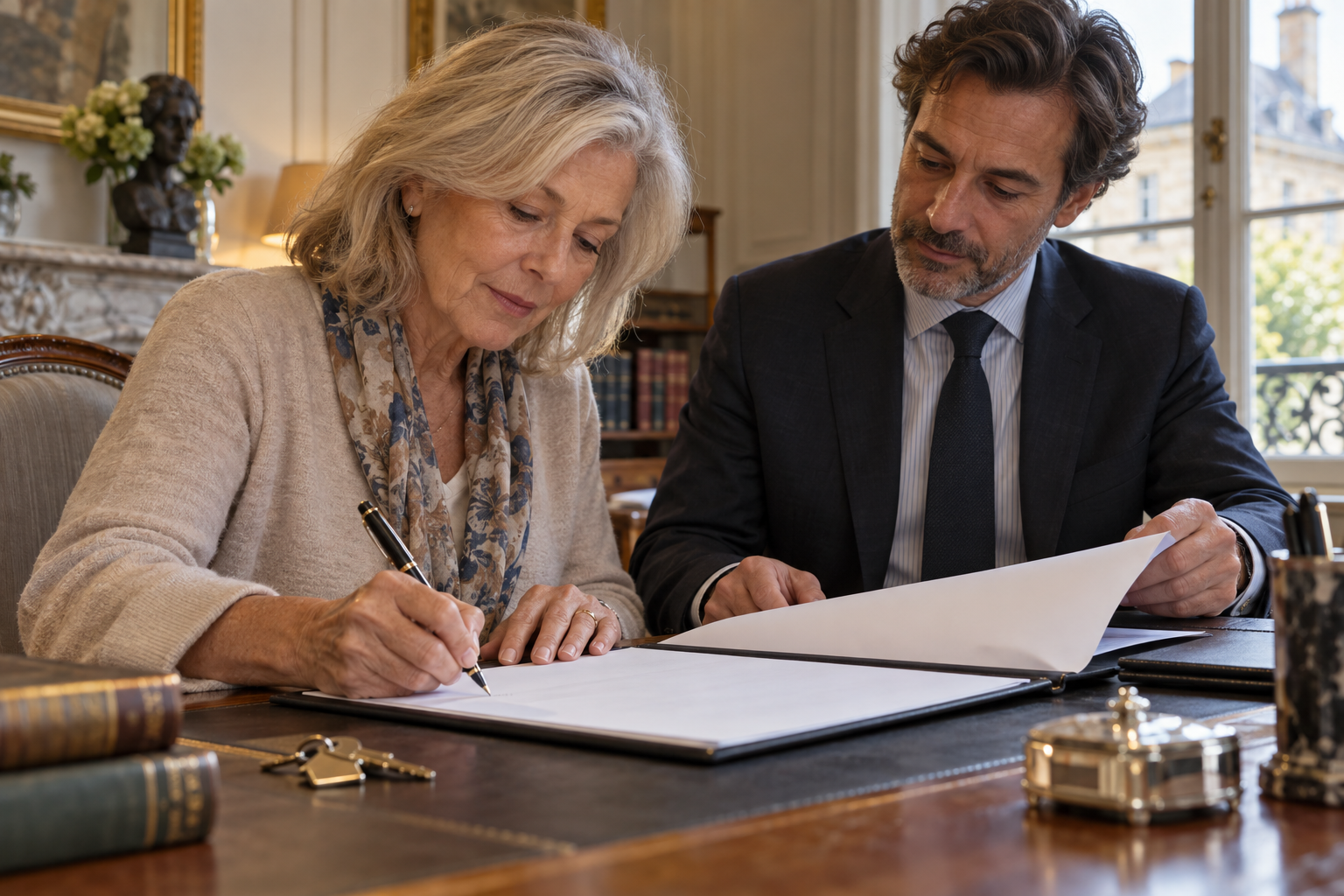
Here is the part that every American expat in Europe genuinely needs to know, because it can restore the freedom they assumed they had, and missing it is the real danger. Since 2015, a European Union rule commonly known as Brussels IV has given foreign nationals living in Europe a way out of forced heirship. The rule lets you make an explicit choice in your will to have the law of your nationality govern your entire estate, rather than the law of the country you live in, through a clause lawyers call a choice-of-law election. Because most American states and the rest of the common-law world have full testamentary freedom and no forced heirship, an American who elects the law of their home state can, in effect, opt out of the European reserved-share rules and regain complete control over who inherits. It is an elegant solution in principle, a single clause that swaps one country’s succession law for another’s, and for the well-advised expat it dissolves the whole problem at a stroke.
But there is a crucial catch that turns this from a comfort into a trap for the unwary. The escape only works if you actually make it, explicitly, in a valid will, and if you do nothing, the default rule applies, which is that the law of your country of residence governs your estate, forced heirship and all.
In other words, an American who moves to Spain or France and simply never writes a proper local will, or writes one without the choice-of-law clause, will have their estate carved up according to the reserved-share rules by default, precisely the outcome they would have been horrified by. The freedom is available, but only to those who claim it deliberately. It is a quietly cruel design for the unprepared, since the people most horrified by forced heirship are exactly the ones who, by failing to write the right will, are most likely to have it applied to them.
A few further wrinkles apply, since France in particular has recently tried to claw back some protection for disinherited children even under a foreign-law election, a move the EU is contesting, and the election governs who inherits but not the separate matter of inheritance tax, which the local country still charges. But the headline is simple and vital: the escape hatch exists, and using it is a deliberate act you must not neglect.
What an Expat Should Actually Do

The practical takeaway from all this is refreshingly clear, even if the law behind it is not. If you are an American living in, or even just owning property in, a European country with forced heirship, the single most important thing you can do is make a proper will that includes an explicit clause electing the law of your nationality to govern your succession. That one document, correctly drafted, is what stands between your actual wishes and a default carve-up you never intended, and it is not something to leave to a generic template or to put off indefinitely. It is precisely the kind of task that feels easy to postpone, since nothing bad happens while you delay, right up until the single moment when it is too late to fix. Getting it right is genuinely worth professional help.
This is emphatically an area for a qualified cross-border estate lawyer rather than do-it-yourself guesswork, because the interaction of two countries’ laws, the exact wording of the election, the regional variations within countries like Spain, the recent French wrinkle, and the separate question of inheritance tax all combine into something too complex and too consequential to improvise. A relatively modest investment in proper advice now can spare your heirs an expensive, painful, and possibly unwinnable fight later, at the worst possible time, when they are grieving and least equipped to untangle two countries’ laws. The cost of getting it right is small and one-time; the cost of getting it wrong lands on the people you most wanted to protect.
It also pays to understand that these rules can reach you even if you think of yourself as just a part-time resident or a holiday-home owner, since owning property in a country can be enough to bring its succession rules into play. None of this is a reason to avoid building a life or buying a home in Europe, which millions of people happily do, but it is a powerful reason to handle your estate carefully and deliberately, rather than assuming that the freedoms of home simply travel with you. This is general information rather than legal advice, and the rules are intricate, regional, and changing, so treat it as a prompt to go and get proper counsel rather than as any kind of substitute for it. The one thing you must not do is assume it will sort itself out, because in much of Europe, if you do nothing, the law has already decided. A morning with the right lawyer, and one carefully worded will, is all that stands between the estate you intend and the one the state will impose in your silence.

About the Author: Ruben, co-founder of Gamintraveler.com since 2014, is a seasoned traveler from Spain who has explored over 100 countries since 2009. Known for his extensive travel adventures across South America, Europe, the US, Australia, New Zealand, Asia, and Africa, Ruben combines his passion for adventurous yet sustainable living with his love for cycling, highlighted by his remarkable 5-month bicycle journey from Spain to Norway. He currently resides in Spain, where he continues sharing his travel experiences with his partner, Rachel, and their son, Han.