
There is a moment when an American first watches a Hungarian grandmother make chicken paprikash, reaches the point in the cooking where the paprika finally goes in, and quietly panics, because she does not shake in a modest little pinch the way a nervous, cautious cook might. She tips in spoonful after spoonful, a small red drift of it building in the pan, until the whole pan glows a deep, rusty crimson, and only then, when the sauce is properly red, is she satisfied.
This is the single most important thing to understand about the dish, and it is the one thing that separates a real chicken paprikash from a sad, pale imitation: paprika here is a measurement, not a sprinkle, the main event rather than a garnish. The timid cook, trained to treat paprika as a dusting of color on deviled eggs, has to unlearn everything and pour it in like flour, and that mental leap is most of the battle. Get that one idea into your bones, along with a couple of small techniques the grandmothers guard, and you can make one of the great comfort dishes of Central Europe, tender chicken in a rich, rosy, sour-cream-softened sauce, at home. It is humble, cheap, and made from a handful of ordinary ingredients, which is exactly why getting the few details right matters so much. Here is how to do it properly, the way the grandmothers insist it be done.
What follows is why paprikash is not the goulash you may be thinking of, why the paprika really is a measurement, the one mistake that ruins the whole thing, the trick to a sauce that never curdles, and the full recipe.
It Is Not Goulash
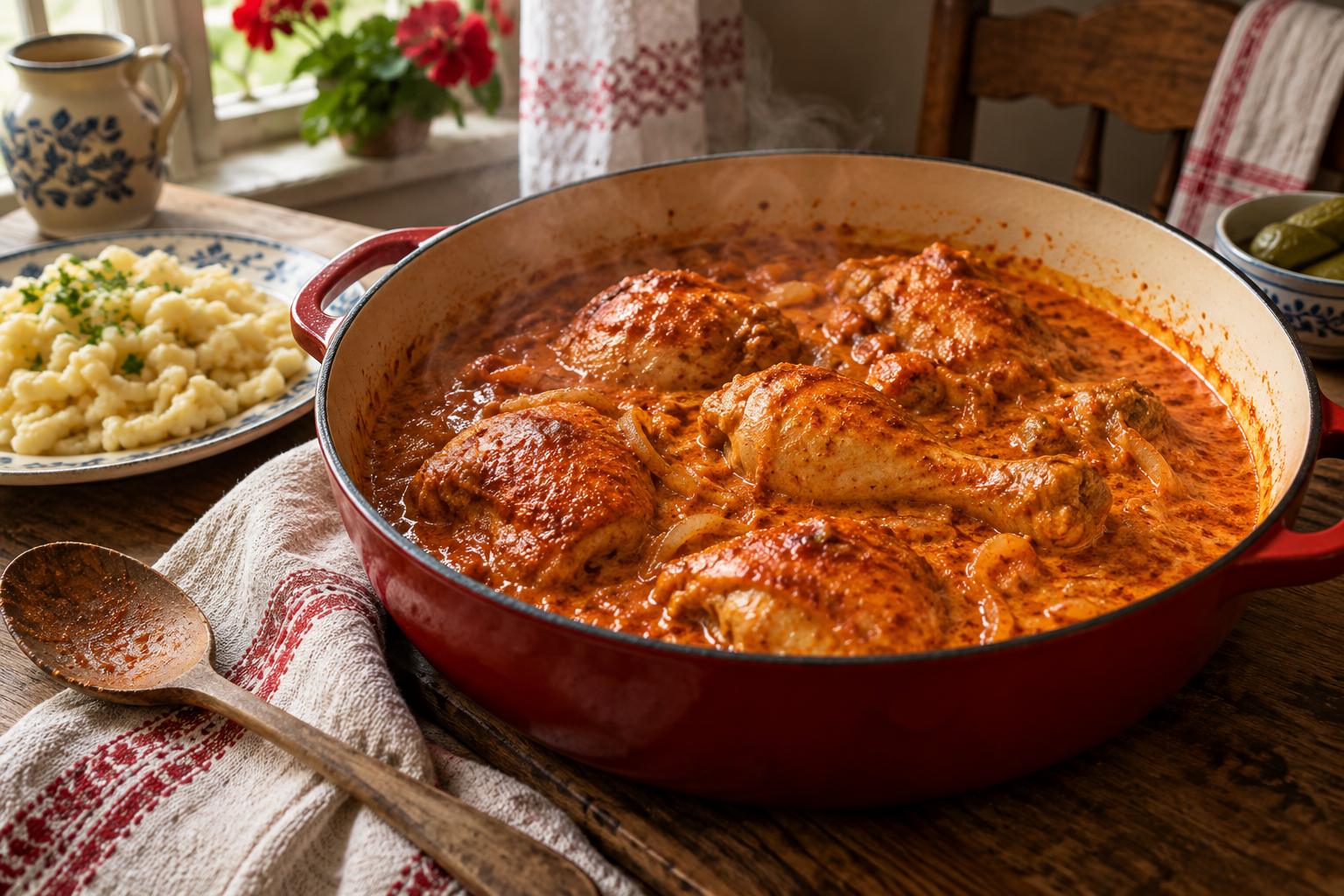
The first confusion to clear up, because it trips up almost everyone, is that chicken paprikash is not the same thing as goulash, even though the two Hungarian classics are cousins and both lean hard on paprika. Goulash, gulyas in Hungarian, is essentially a hearty soup or stew, traditionally made with beef, potatoes, and vegetables in a paprika-scented broth, a big, brothy, rib-sticking bowl of a thing. It is wonderful, but it is a different dish with a different texture and purpose.
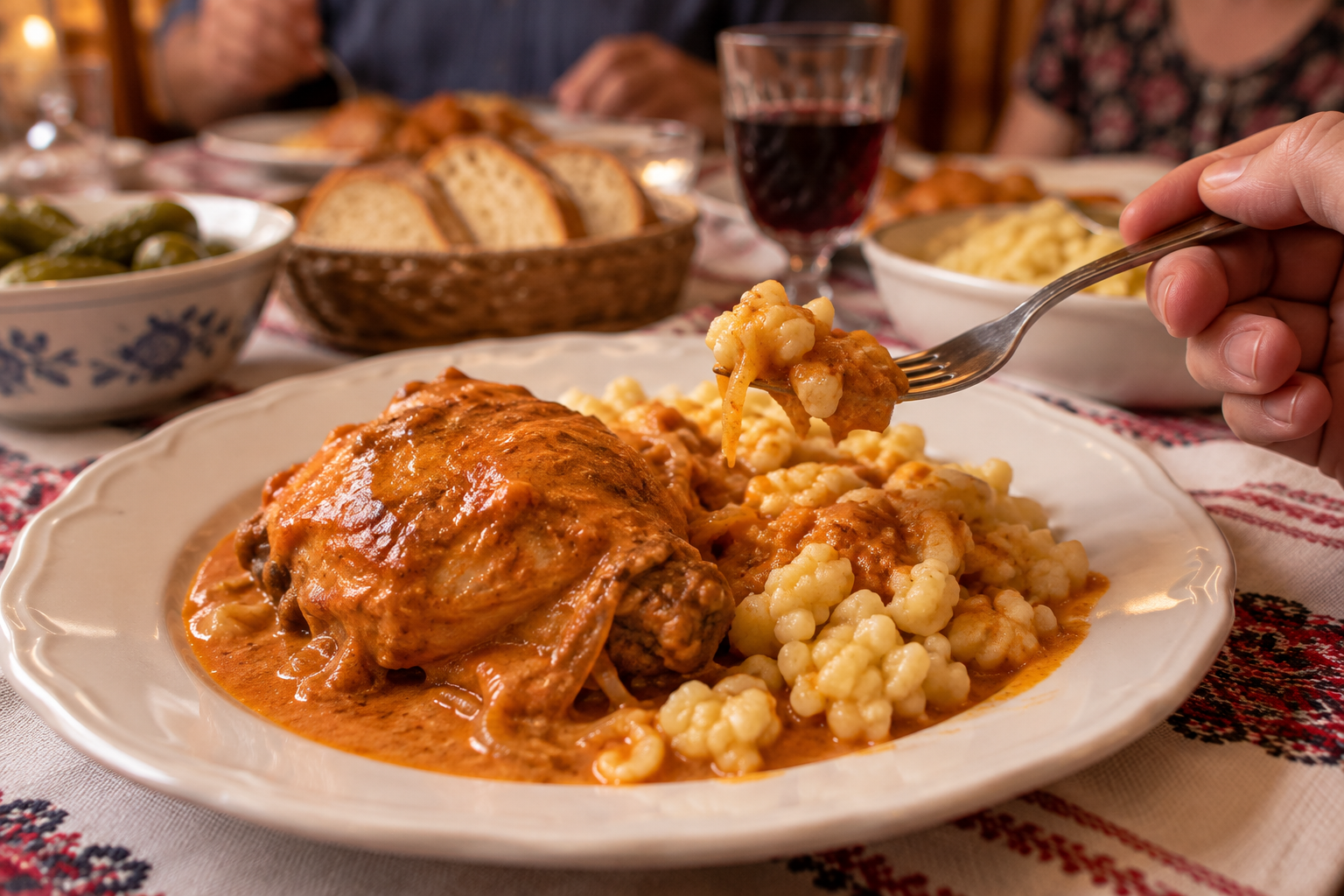
Paprikash is the creamier, more delicate relation. Where goulash is a soup built on broth, paprikash is a braise finished with sour cream, which gives it a completely different character, a thick, velvety, tangy sauce rather than a thin savory broth, clinging to pieces of tender chicken rather than swimming in liquid. It is traditionally made with chicken, though other meats appear in regional versions, and it is served ladled over little Hungarian egg dumplings called nokedli, close cousins of German spatzle, which soak up the rich sauce beautifully.
If you cannot face making the little dumplings from scratch, wide egg noodles or even rice do the job of catching the sauce perfectly well, so the dumplings, lovely as they are, need not stand between you and the dish. Keep the distinction clear in your head as you cook, because it shapes everything: you are not making a soup to be spooned but a creamy braise to be draped over dumplings, and that finish of sour cream is the signature that makes paprikash itself rather than a thinner cousin. If someone serves you a brothy bowl and calls it paprikash, they have quietly made goulash instead, and while both are delicious, they are not the same thing.
Paprika Really Is a Measurement
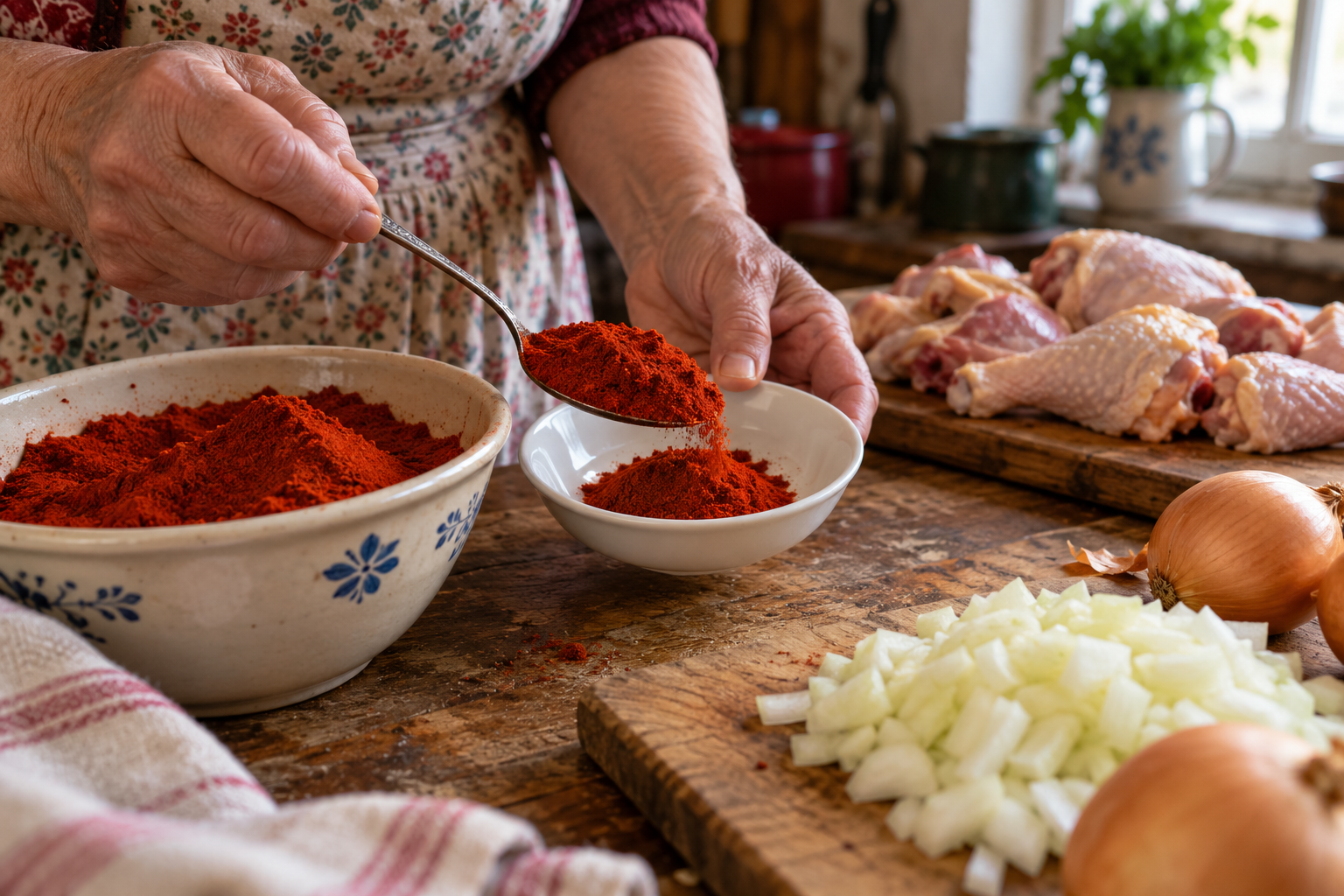
Now to the heart of it, the paprika, because the name of the dish is the recipe’s whole thesis and it is not exaggerating. Paprika is not a background spice in chicken paprikash but the defining flavor, the thing the entire dish is built around, and it goes in by the generous spoonful rather than the timid shake. Where an American recipe might call for a teaspoon of paprika as a mild seasoning, a real paprikash wants tablespoons of it, enough to turn the whole sauce a deep, glowing red and to carry the flavor through every bite. If your finished dish is a pale orange rather than a rich rust, you did not use enough, and the fix is simply to be braver with the jar next time.
Because you are using so much of it, and because there are so few other ingredients competing, the quality of the paprika matters enormously, and this is where grandmothers are uncompromising. You want genuine sweet Hungarian paprika, the real imported stuff, which has a depth and a vivid color that ordinary supermarket paprika simply cannot match, and getting good paprika is not a nicety here but the difference between a great dish and a dull one. Note the word sweet, since this is not about heat, and using a hot or heavily smoked paprika in place of the sweet Hungarian kind will throw the whole balance off. In a dish with this few components, chicken, onion, fat, paprika, and sour cream, there is nowhere for a weak or wrong spice to hide, so the paprika you choose is very nearly the whole dish. Buy the best you can find, and use it with a generous hand, exactly as the name instructs. A jar of good Hungarian paprika is not expensive and it keeps, so it is one of the easiest upgrades in all of home cooking, and it will improve everything else you use it in too.
The One Mistake That Ruins It
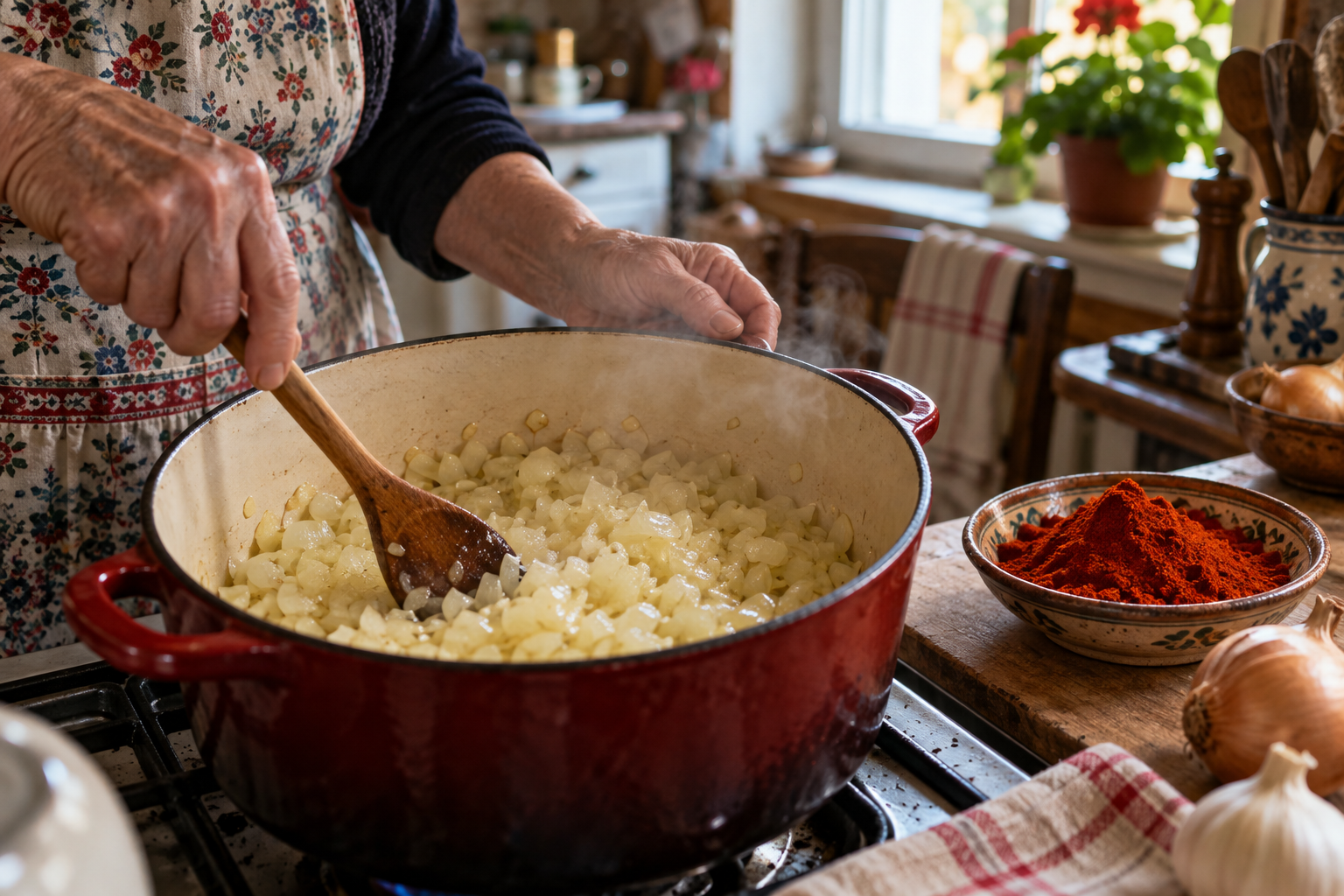
Here is the single technical pitfall that turns a promising paprikash bitter, and every Hungarian cook learns to fear it: burning the paprika. Paprika is a delicate spice with a lot of natural sugar, which means it scorches very easily, and scorched paprika turns acrid and bitter in an instant, taking the whole dish down with it. Because you are using so much of it, there is a great deal at stake, and a pan that is too hot when the paprika goes in can ruin everything in a matter of seconds.
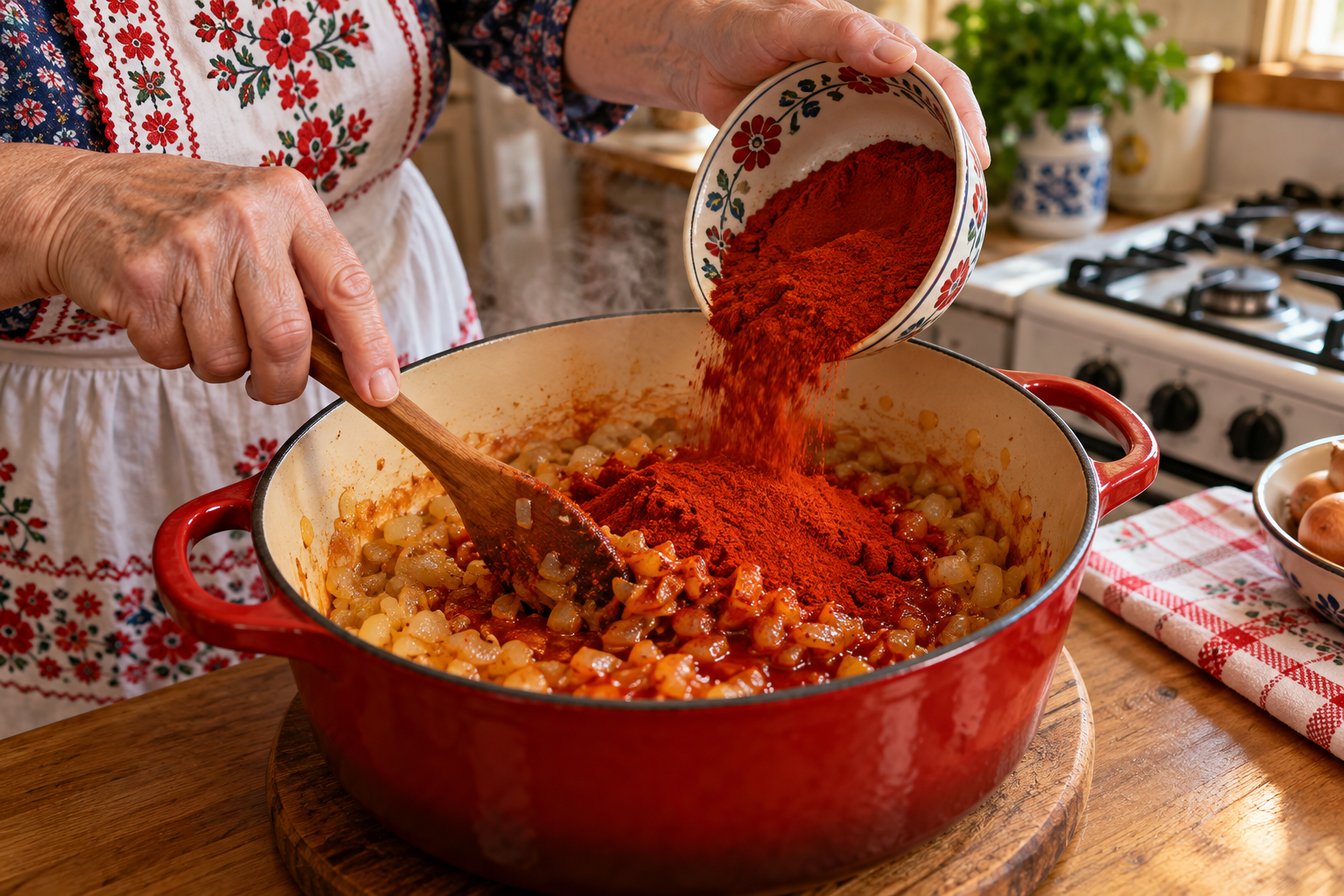
The technique that prevents this is simple once you know it, and it is the mark of someone who understands the dish. After you have softened your onions in the fat, you take the pan off the heat before you stir the paprika in, letting the spice bloom gently in the warm fat and onions without ever hitting a scorching surface. Only once the paprika is stirred through and coating everything in a fragrant red paste do you return the pan to the heat and carry on. You will smell the difference immediately, a deep, sweet, earthy aroma rather than the sharp bitter note of a spice that has caught, and that fragrance is how you know you have done it right. That brief, deliberate pause, pan off the flame, paprika in, stir, is the quiet secret behind every good paprikash, and skipping it is the most common way home cooks accidentally wreck the dish. Respect the paprika’s fragility, give it that off-heat moment to release its flavor safely, and you have cleared the one real hurdle between you and a beautiful sauce.
The Sour Cream That Cannot Curdle
The final flourish, the sour cream that transforms the braise into true paprikash, has its own small trap, and clearing it is the last thing standing between you and the finished dish. Sour cream, stirred straight into a hot, simmering sauce, has an unfortunate tendency to split and curdle, breaking into unappetizing little curds instead of melting into a smooth, velvety whole. Drop a cold dollop into a bubbling pan and you risk exactly that, a grainy sauce that no amount of stirring will rescue.
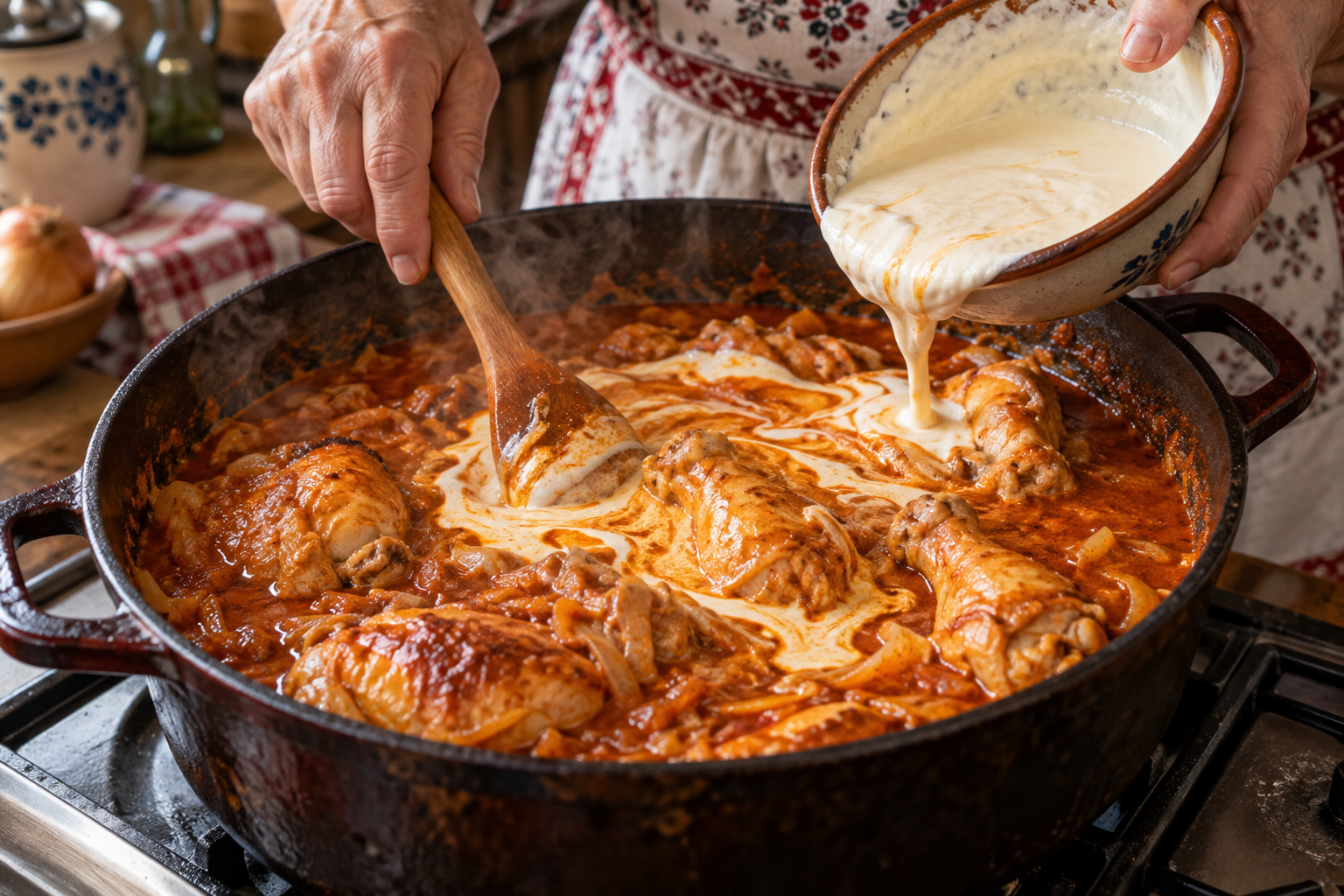
The solution is a gentle technique called tempering, and it is worth doing every time. Rather than adding the cold sour cream directly to the hot pan, you first spoon a few ladles of the hot cooking liquid into the sour cream in a separate bowl, stirring as you go to warm it up gradually and bring it closer to the temperature of the pan.
Once the sour cream is warmed and loosened this way, you stir the whole smooth mixture back into the sauce off or on very low heat, and it melds in without a hint of curdling, leaving you with the thick, glossy, tangy sauce that defines the dish. Some cooks whisk a little flour into the sour cream as well, which both thickens the sauce and further guards against splitting, a small extra insurance that many grandmothers swear by. Get this last step right, and the transformation is complete, the rusty paprika braise turning creamy and rich in the pan, ready to be spooned over a mound of nokedli exactly as generations of Hungarian grandmothers have served it. It is a genuinely satisfying moment to watch, the sauce going from red to rosy and glossy in seconds, and it never stops feeling a little like a small piece of kitchen magic.
Making Chicken Paprikash
Here is a classic chicken paprikash, serving four. Use real sweet Hungarian paprika, and plenty of it, and remember to take the pan off the heat before it goes in.
Ingredients
- 8 bone-in, skin-on chicken thighs or drumsticks
- 2 large onions, finely chopped
- 3 tablespoons lard or oil
- 3 to 4 tablespoons sweet Hungarian paprika
- 1 tomato, chopped, and 1 green pepper, sliced, optional
- 250 ml chicken stock
- 200 ml sour cream
- 1 tablespoon flour, optional
- Salt and pepper
- Nokedli or egg noodles, to serve
Instructions
- Season the chicken with salt. Heat the lard or oil in a heavy pot and brown the chicken pieces, then set them aside.
- In the same fat, cook the chopped onions gently until soft and golden, about 10 minutes, adding the green pepper and tomato if using.
- Take the pot off the heat. Stir in the sweet paprika until everything is coated in a fragrant red paste, being careful not to let it burn.
- Return to low heat, return the chicken to the pot, add the stock, and season. Cover and simmer gently until the chicken is very tender, about 40 minutes.
- Whisk the flour, if using, into the sour cream. Temper the sour cream by stirring in a few ladles of the hot sauce, then stir the warmed mixture back into the pot off the heat.
- Warm through very gently without boiling, and adjust the seasoning.
- Serve hot over nokedli or egg noodles, with an extra dollop of sour cream and a scatter of parsley if you like.
And do treat the paprika with the respect it deserves, since it is the whole soul of the dish, so buy the real Hungarian sweet kind, measure it in spoonfuls rather than shakes, and always take the pan off the heat before it goes in, and you will have made chicken paprikash the way the grandmothers insist it must be done.

About the Author: Ruben, co-founder of Gamintraveler.com since 2014, is a seasoned traveler from Spain who has explored over 100 countries since 2009. Known for his extensive travel adventures across South America, Europe, the US, Australia, New Zealand, Asia, and Africa, Ruben combines his passion for adventurous yet sustainable living with his love for cycling, highlighted by his remarkable 5-month bicycle journey from Spain to Norway. He currently resides in Spain, where he continues sharing his travel experiences with his partner, Rachel, and their son, Han.