
Cut a slice of castagnaccio and you get something that looks nothing like the cakes most people know: a flat, dense, dark slab of a thing, barely an inch or two tall, its top a cracked and crackled crust studded with pine nuts and needles of rosemary. Taste it and the surprise deepens, because there is no sugar in it at all, and yet it is gently, earthily sweet, the sweetness coming entirely, improbably, from the chestnut flour it is made of.
This is Tuscany’s ancient chestnut cake, a rustic autumn dessert made from little more than chestnut flour, water, olive oil, and a handful of nuts, and it is one of the oldest things in the Italian kitchen, with roots reaching back many centuries and a full thousand years of families arguing over exactly how it should be made. It is humble, unusual, ancient, and completely unlike anything in the American cake tradition, and it is genuinely worth making precisely because it is so different from everything else. Here is what castagnaccio is, why it has no sugar, and how to make it yourself. It is one of those recipes that feels less like baking and more like joining a very old conversation, and all the more rewarding for it.
What follows is why there is no sugar and no butter in it, the centuries of opinions about how to make it, why the flour matters more than anything, the rosemary and the crackled top that define it, and the recipe.
No Sugar, No Butter, No Apology
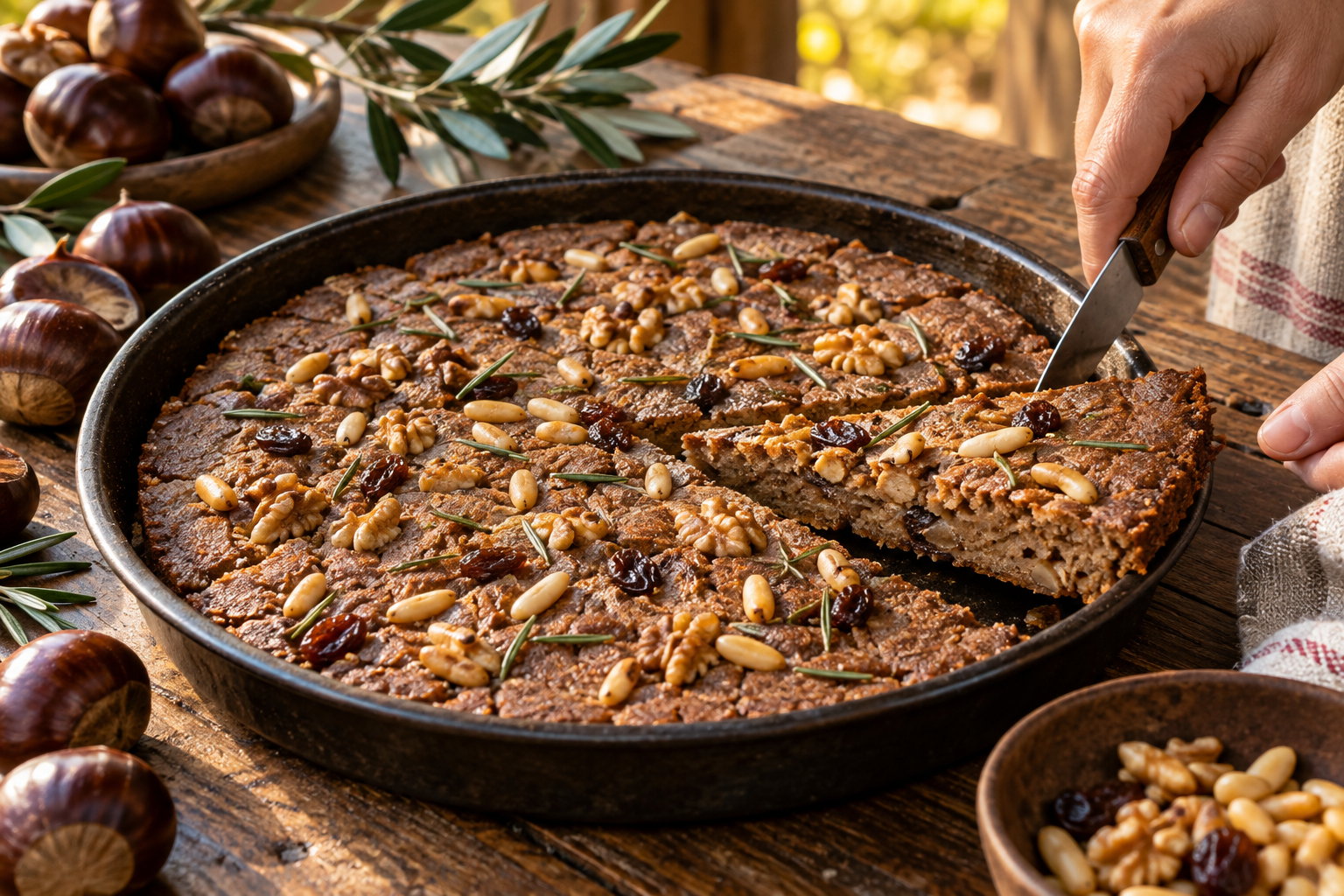
The first thing to understand about castagnaccio is everything it is not, because it breaks nearly every rule an American associates with cake. There is no added sugar, none, and this is not a modern health twist but the original, traditional recipe, which relies entirely on the natural sweetness of the chestnut flour. Chestnut flour is so naturally sweet that in Italy it is called farina dolce, sweet flour, and a genuinely good one carries all the gentle sweetness the cake could ever need, so adding sugar would simply be missing the entire point. There is no butter either, since the fat is olive oil, Tuscany’s green gold, which gives the cake a savory, fruity richness completely different from a buttery sponge. And there is no leavening, no baking powder or yeast, so the cake does not rise but stays flat and dense.
What you end up with, then, is a cake that is really a kind of rustic flatcake, dense and moist with a texture some compare to bread pudding, earthy and nutty and only lightly sweet, with the herbal note of rosemary running through it. It is emphatically not a light, fluffy, sugary dessert, and someone expecting a birthday-cake experience will be thoroughly startled. But taken on its own terms it is wonderful, a grown-up, savory-leaning sweet that pairs beautifully with a coffee or a glass of wine and tastes unmistakably of autumn. It is the kind of dessert that grows on you slice by slice, quietly and then completely, until the sugary cakes you grew up with start to seem a little one-note by comparison. This refusal to be an ordinary cake is not a shortcoming but the whole character of the thing, a dessert from a time and place where sugar and butter were expensive luxuries and a good chestnut flour was the real treasure, and it makes no apology for being exactly what it is.
A Thousand Years of Opinions
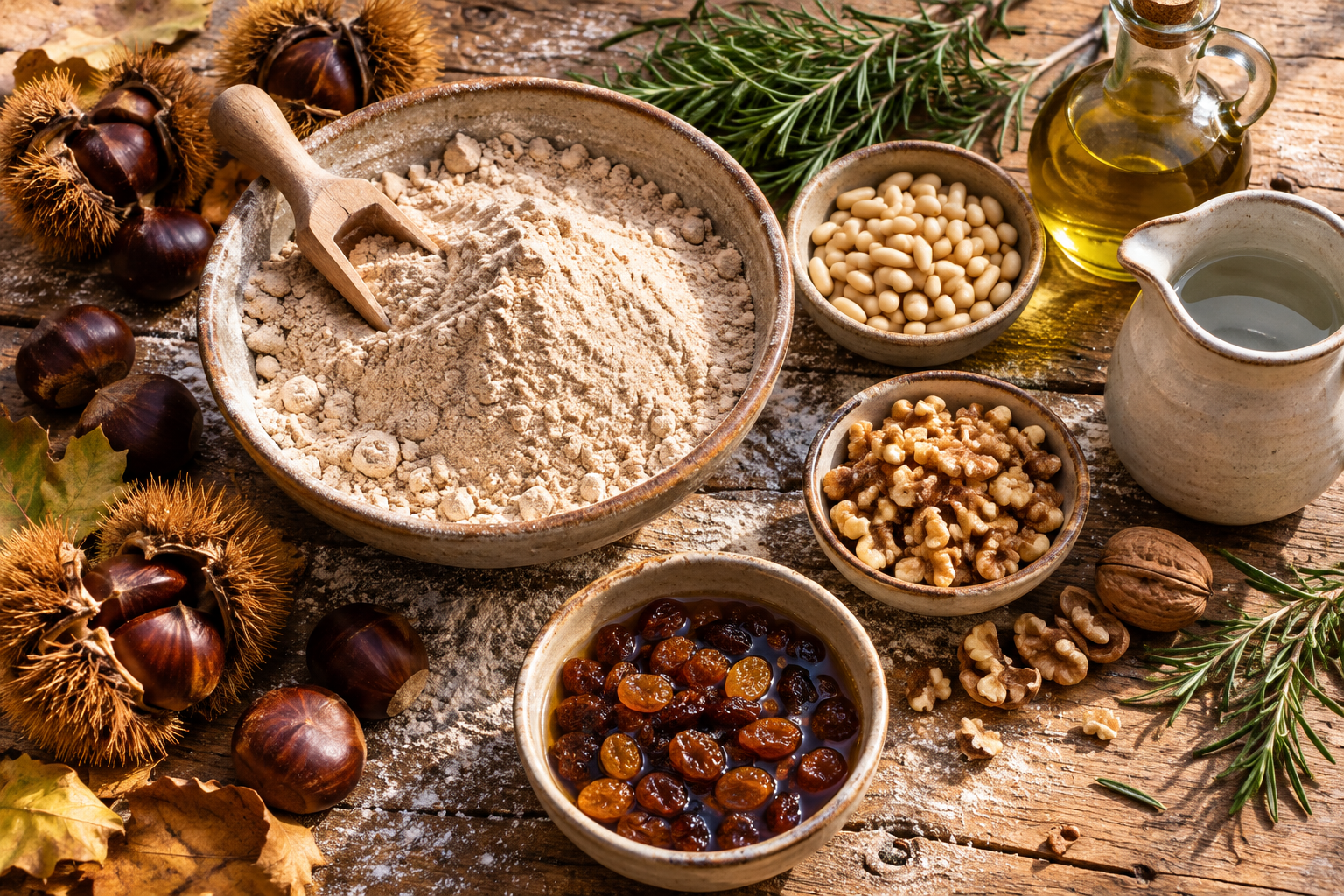
Castagnaccio is genuinely old, one of the most ancient recipes in the Italian repertoire, and that long history is written right into its rustic simplicity. Chestnuts were for centuries the staple food of poor mountain communities across Tuscany and beyond, ground into flour to make bread, porridge, and this cake, so castagnaccio was born of necessity rather than indulgence, a way to turn the free harvest of the chestnut woods into something worth sitting down to. It is documented back into the sixteenth century, when a writer credited a man from Lucca with inventing it, and its real roots run deeper still, which means people have been making and eating this cake for a very long time.
A recipe that old, made in countless home kitchens across many regions, inevitably comes with fierce disagreements about the correct way to make it, and this is where the thousand years of opinions come in.
The basic trinity of chestnut flour, water, and olive oil is agreed, but almost everything else is contested. Should there be rosemary, and how much? Raisins, or not? Pine nuts alone, or walnuts too? Should the nuts be mixed into the batter or scattered only on top? How thick should it be, a thin crisp sheet or a taller, softer slab?
Some add orange zest or fennel seeds; some a splash of milk instead of water; some a little sugar in defiance of tradition. Every Tuscan grandmother has her version and her firm views, and part of the charm of the dish is that there is no single right answer, only a family of closely related cakes that all answer to the same name. You are joining a very old argument the moment you make one, which is part of the fun. Make it once your own way and you will find you already have opinions of your own to defend, which is exactly how a thousand-year-old recipe stays alive.
The Flour Is Everything
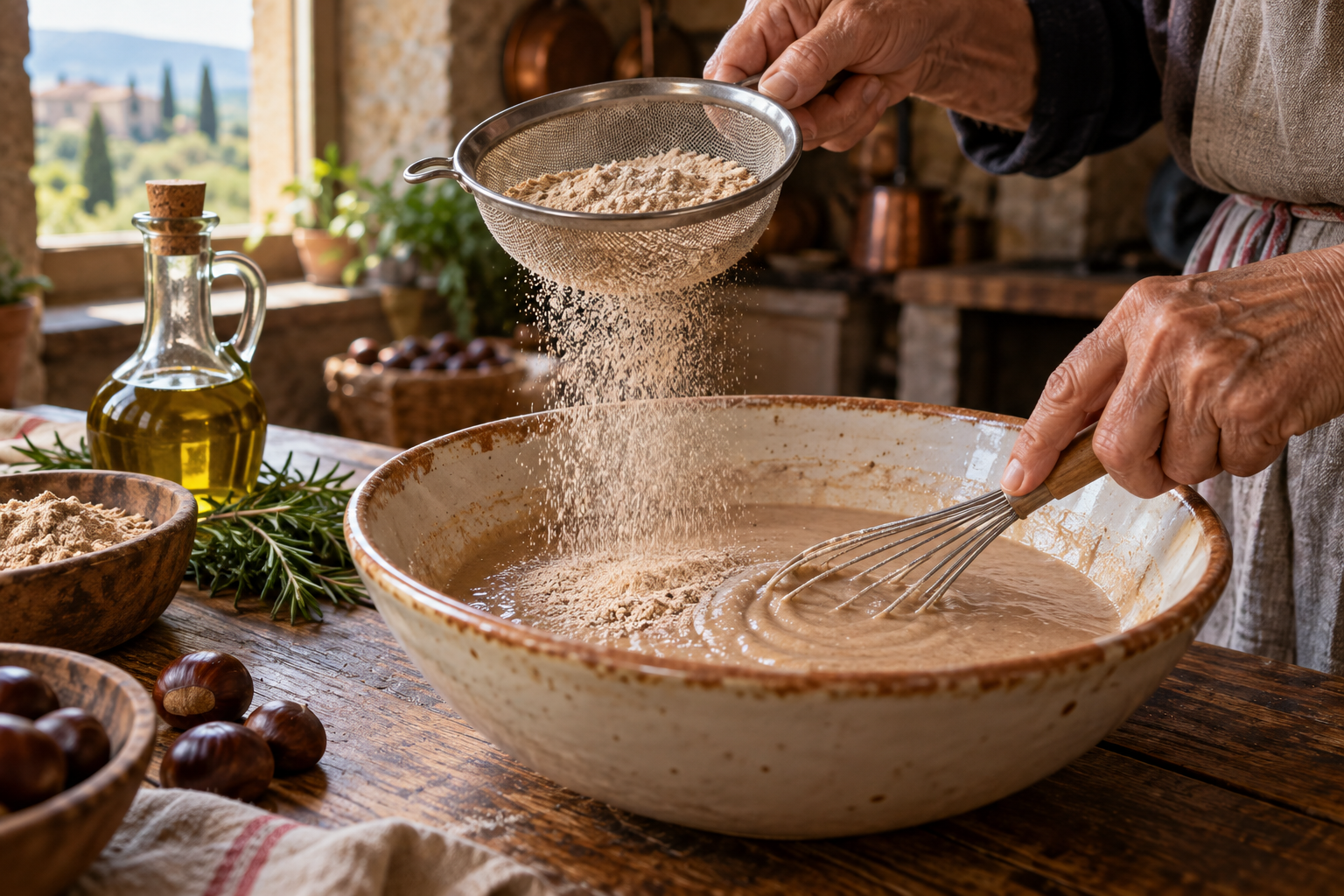
Because castagnaccio is made of so few ingredients and has no sugar to lean on, its whole success rests on one thing above all others: the chestnut flour. This is not a cake where a mediocre main ingredient can be rescued by everything around it, since there is almost nothing around it, so the flour is not just important but very nearly the entire flavor of the finished cake. A good, fresh, sweet chestnut flour makes a lovely castagnaccio; a poor, stale, or bitter one makes a disappointing one, and no amount of pine nuts and rosemary will fix it.
This means the one piece of shopping advice matters more than any technique: buy the best chestnut flour you can find, and buy it fresh. Chestnut flour is a seasonal product, at its best in autumn and winter after the chestnut harvest, and it does not keep indefinitely, gradually losing its sweetness and turning musty or even bitter with age. Look for a fine, good-quality flour, ideally a fresh one from the current season, and if you can find a genuine Italian chestnut flour, all the better. It is also worth sifting the flour before you use it, since it tends to clump, and a smooth, lump-free batter makes a better cake. Get the flour right and castagnaccio is almost impossible to ruin; get it wrong and no skill will save it. In a dish this pure, the shopping is most of the cooking, and the half hour with a whisk and an oven is the easy part.
Rosemary and the Crackled Top
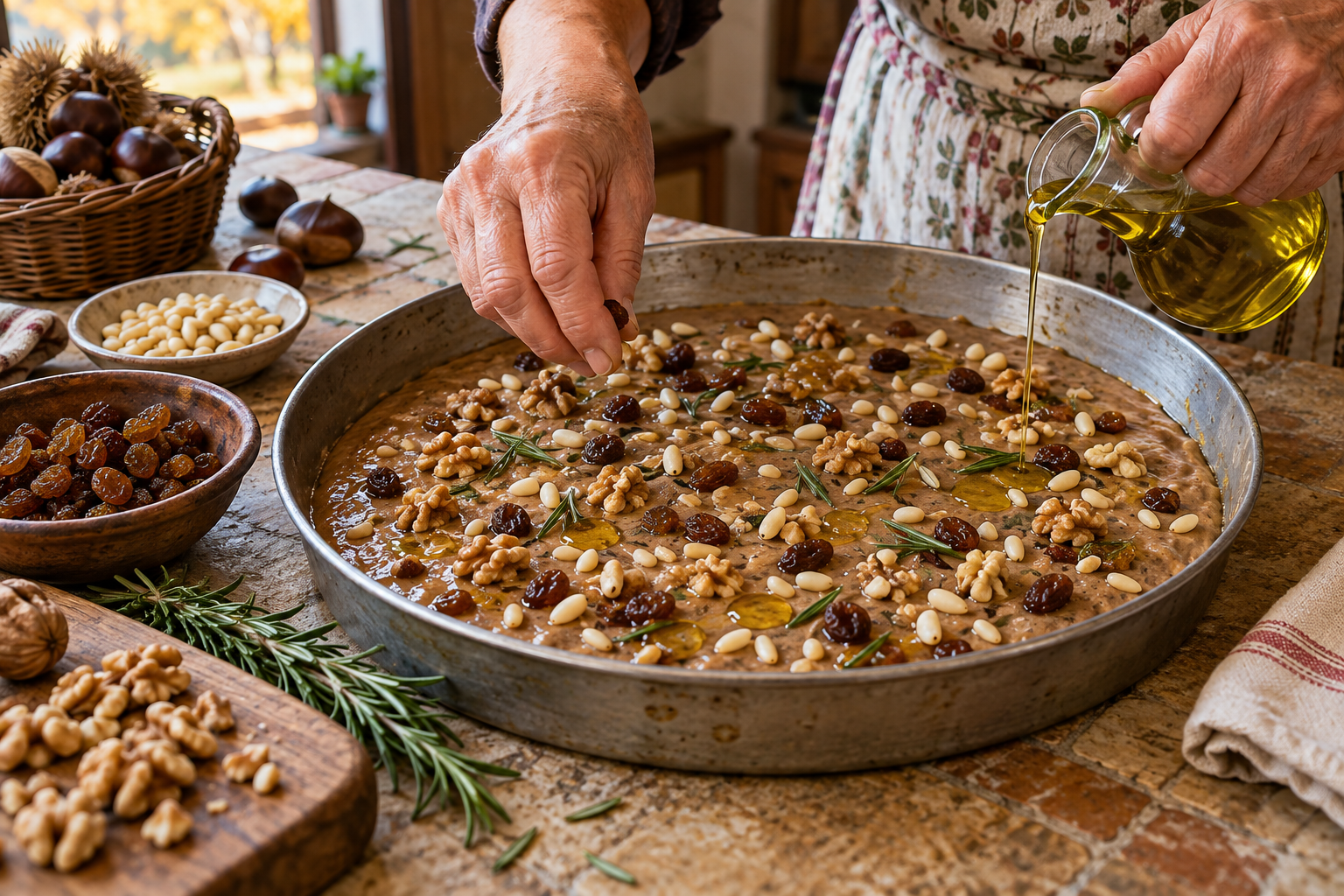
Making castagnaccio is genuinely simple once you have good flour, and it comes together with no special skill or equipment. You sift the chestnut flour into a bowl with a pinch of salt, then whisk in cold water little by little until you have a smooth, lump-free batter about the consistency of a thin pancake batter, stir in a little olive oil, and often some of the pine nuts, walnuts, and soaked raisins. Then you pour the batter thin into a wide pan generously greased with olive oil, so the cake bakes flat rather than tall.
The top is where castagnaccio gets its distinctive look and its signature check for doneness. Before baking you scatter over the remaining pine nuts, walnuts, and raisins, lay on the needles of fresh rosemary, and drizzle the whole surface with olive oil, and then it goes into a hot oven for roughly twenty-five to thirty-five minutes.
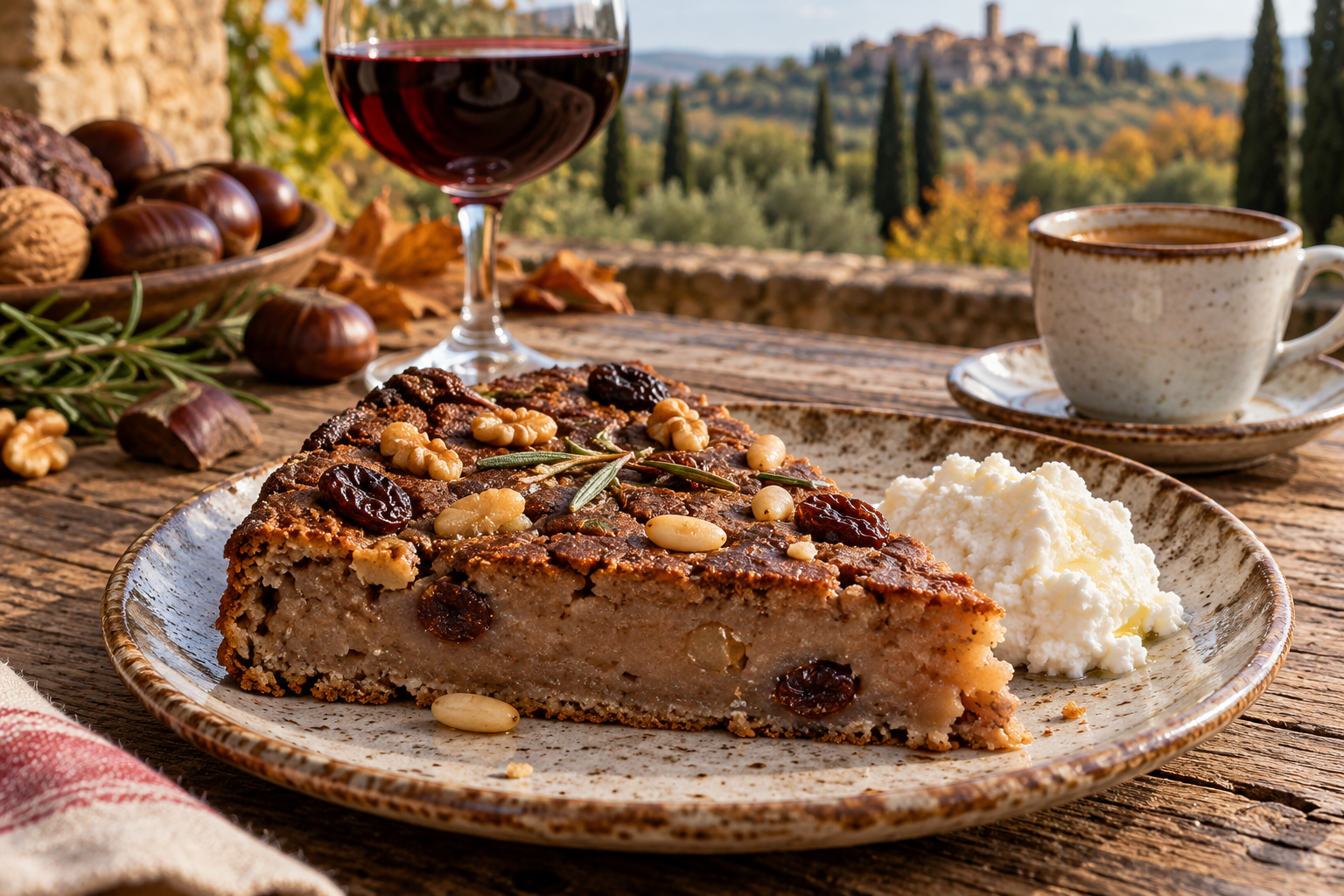
You know it is ready not by a clock alone but by the top, which dries out and forms a network of fine cracks across the surface, the characteristic crackled crust that tells you the cake is done, while the inside stays moist. That combination of a dry, cracked, nut-studded top and a dense, moist, earthy interior is the whole textural pleasure of the dish, the contrast that makes each bite interesting despite how few ingredients went into it. The rosemary, by the way, is not just for flavor: a lovely old legend holds that the rosemary in castagnaccio was a love potion, and that a young man who ate a slice offered by a girl would fall for her on the spot. Serve it plain, or in the Tuscan way with a spoonful of fresh ricotta, and you have a genuine taste of a thousand-year-old autumn. It is the kind of thing that tastes of the season and the place at once, earthy and honest, and quietly unlike anything else on the dessert table.
Making Castagnaccio
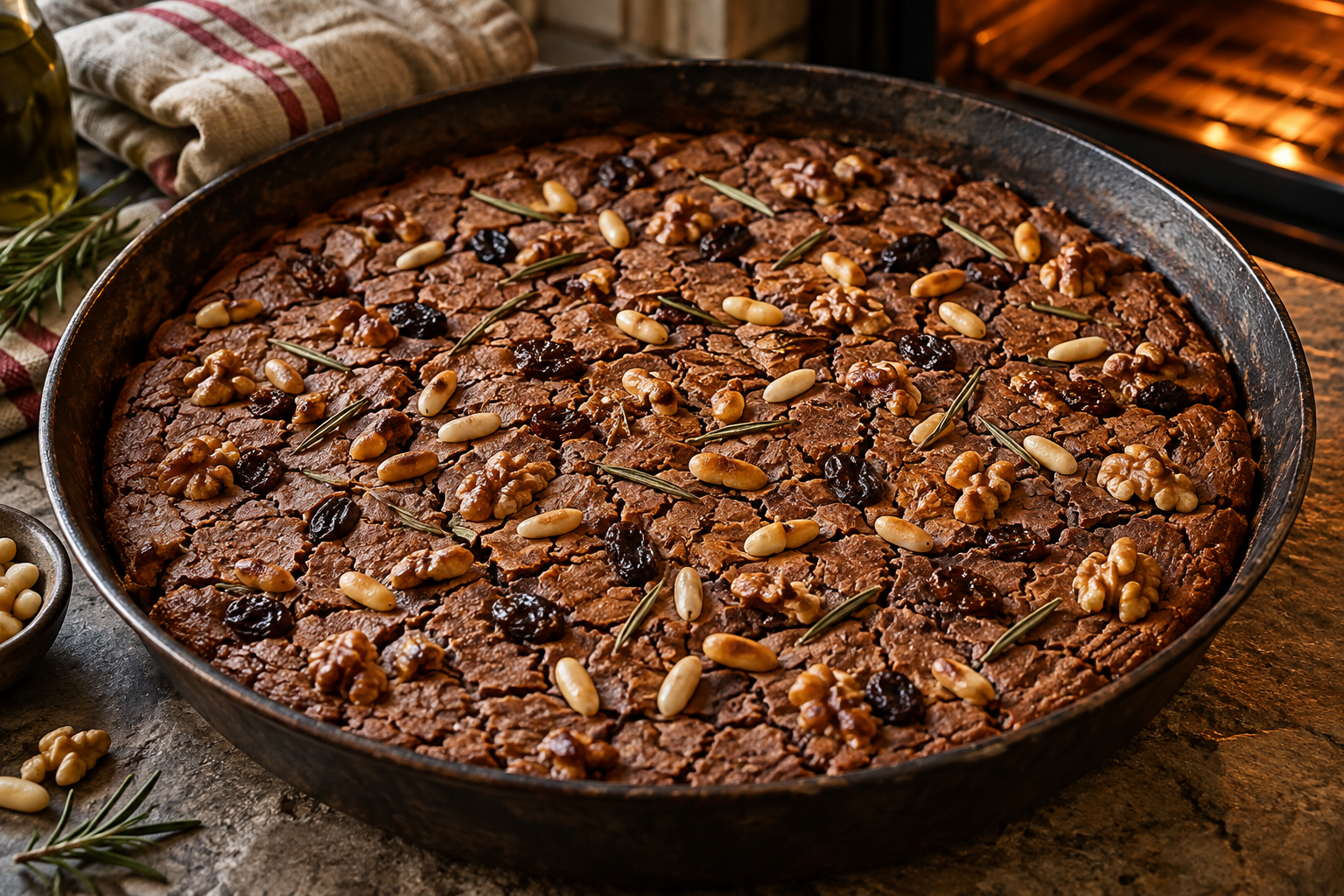
Here is a classic Tuscan castagnaccio, for one wide, thin cake. Use the best fresh chestnut flour you can find, and no sugar.
Ingredients
- 300 g chestnut flour, sifted
- About 400 ml cold water
- 3 tablespoons extra virgin olive oil, plus more for the pan and top
- A pinch of salt
- 50 g pine nuts
- 50 g walnuts, roughly chopped
- 50 g raisins, soaked in warm water and drained
- Needles from a sprig of fresh rosemary
Instructions
- Sift the chestnut flour into a large bowl with the salt. Whisk in the cold water a little at a time until you have a smooth, lump-free batter about the consistency of thin pancake batter.
- Stir in the olive oil, along with half of the pine nuts, walnuts, and soaked raisins.
- Generously grease a wide, shallow pan or baking tin with olive oil, then pour in the batter so it sits thin, no more than an inch or so deep.
- Scatter the remaining pine nuts, walnuts, and raisins over the top, lay on the rosemary needles, and drizzle the surface with a little more olive oil.
- Bake in a hot oven, around 190 to 200 C or 375 to 390 F, for about 25 to 35 minutes, until the top is dry and covered in fine cracks and the nuts are golden.
- Let it cool to room temperature before slicing.
- Serve plain, or in the Tuscan style with a spoonful of fresh ricotta, alongside a coffee or a glass of wine.
And do not be tempted to add sugar to make it more like the cake you are used to, since the whole point of castagnaccio is the natural, gentle sweetness of good chestnut flour, so find the best flour you can, keep it simple, and taste a dessert that has changed remarkably little in a thousand years.

About the Author: Ruben, co-founder of Gamintraveler.com since 2014, is a seasoned traveler from Spain who has explored over 100 countries since 2009. Known for his extensive travel adventures across South America, Europe, the US, Australia, New Zealand, Asia, and Africa, Ruben combines his passion for adventurous yet sustainable living with his love for cycling, highlighted by his remarkable 5-month bicycle journey from Spain to Norway. He currently resides in Spain, where he continues sharing his travel experiences with his partner, Rachel, and their son, Han.