
Buying groceries is such a basic, automatic task that you never think about how you do it, until you try to do it somewhere else. Step into a European supermarket for the first time and a series of small, unexpected obstacles appears between you and your dinner, from a shopping cart that simply will not budge to a checkout that moves alarmingly, comically fast and expects you to keep up. None of it is difficult once you know the system, but almost every American who shops in Europe gets tripped up by at least a few of these differences, usually with a moment of quiet confusion somewhere in the middle of the store. This is a companion to the habits Europeans quietly judge Americans for, looked at from the other direction: here are nine things about European grocery stores themselves that confuse American shoppers, and exactly how each one actually works. Learn them all and you go from fumbling tourist to someone who moves through the aisles and the checkout like a local.
What follows is the chained-up cart, the produce you have to weigh yourself, the frantic self-bagging, the bags you pay for, the unrefrigerated eggs, the milk on the shelf, the missing baggers, the smaller store, and the closed doors on Sunday.
1. The Cart Is Chained Up
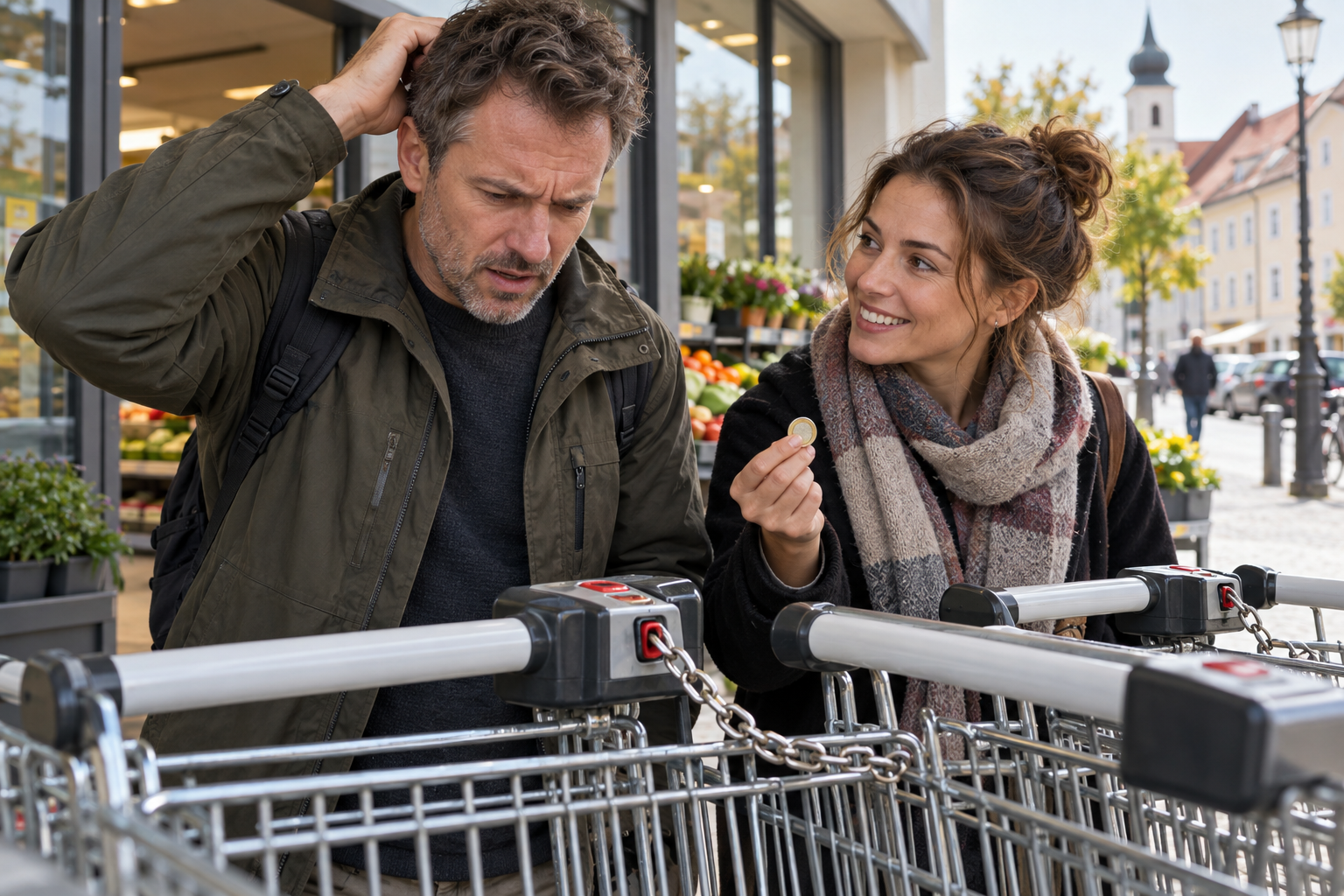
Your first obstacle appears before you have even entered the store, at the row of shopping carts that refuse to come loose. In much of Europe, the carts are locked together with a coin mechanism, and to free one you have to insert a coin, commonly a euro or a special token, into a slot on the handle, which releases the chain connecting it to the next cart. Your coin stays locked in the slot until you return the cart to the rack and reconnect the chain, at which point you get it back.
For an American used to grabbing a cart freely at the door, standing there yanking uselessly at a chained cart while digging for a coin is a classic first-visit moment of confusion. The logic, though, is neat: because you only get your coin back by returning the cart properly, everyone returns their cart, and stores do not need staff to round up strays from the parking lot. The practical lesson is simply to keep a coin or a cart token on you whenever you shop, since being caught without one leaves you either wrestling a basket or begging change from a stranger. Many regular shoppers keep a dedicated token clipped to their keys for exactly this reason, and once you have one, the chained cart stops being a hurdle and becomes just another small, sensible piece of the system. Some stores sell little plastic tokens at the till precisely so you are never caught without a coin.
2. You Weigh Your Own Produce
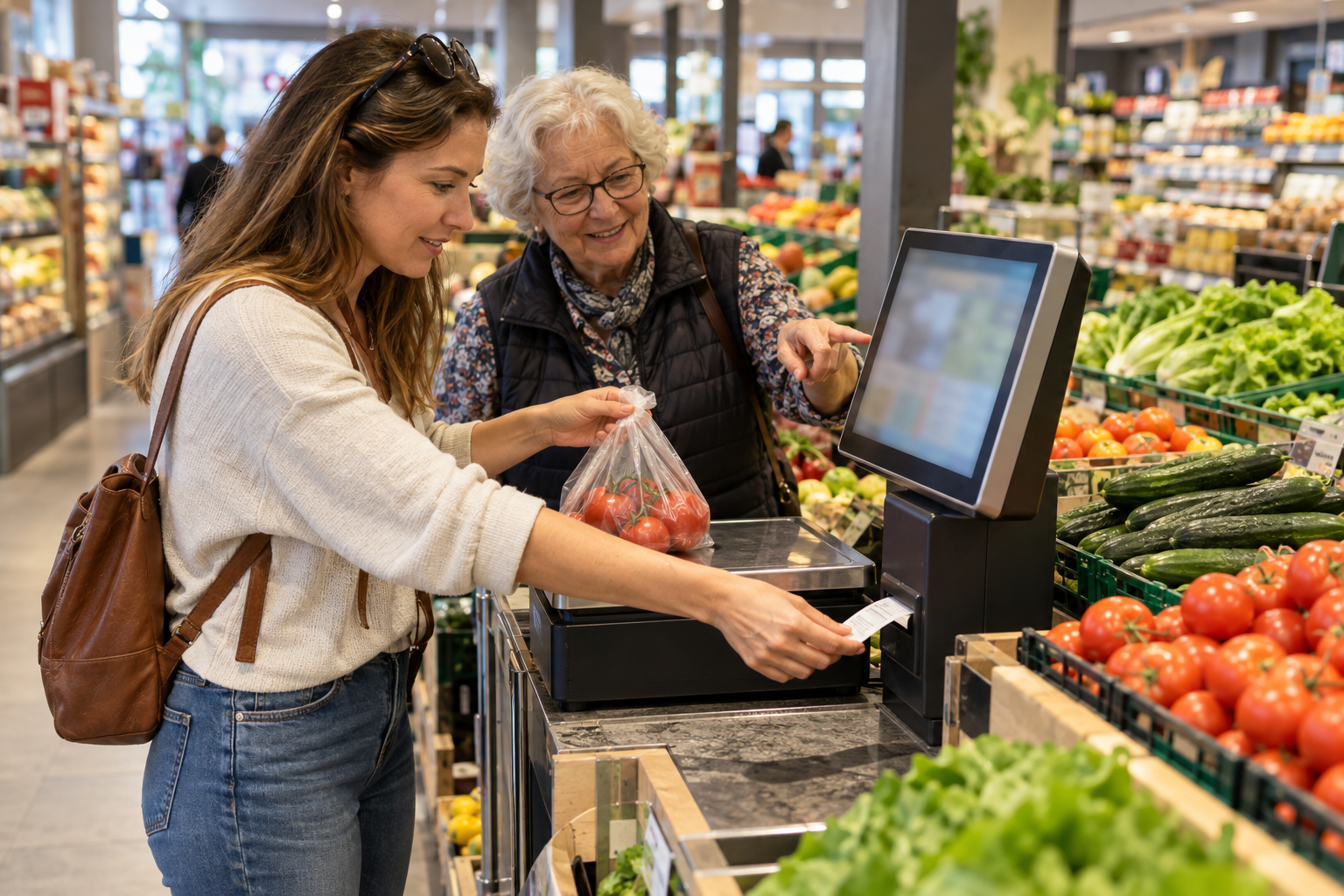
The next surprise waits in the fruit and vegetable section, and it catches Americans out constantly, sometimes not until the checkout. In many European stores, you are expected to weigh and price your own produce before the till, at a small scale station in the produce area. You put your apples or tomatoes on the scale, select the right item from a list of names or pictures or punch in its code, and the machine prints a barcoded sticker with the price, which you stick to the bag.
Skip this step, as an American who has always let the cashier weigh things naturally does, and you can be sent back to the produce section at the checkout to weigh your items while the line waits, which is exactly the sort of small public embarrassment that makes a newcomer flush. The system is not universal, since some stores and some countries still weigh at the till and others price produce by the piece, so the real skill is simply to watch what other shoppers do and look for the scales in the produce area. If you see them, weigh and label as you go; if you do not, the cashier will handle it. Either way, knowing that self-weighing exists means you will never again be the person marched back to the vegetables mid-transaction.
3. You Bag Your Own Groceries, Fast
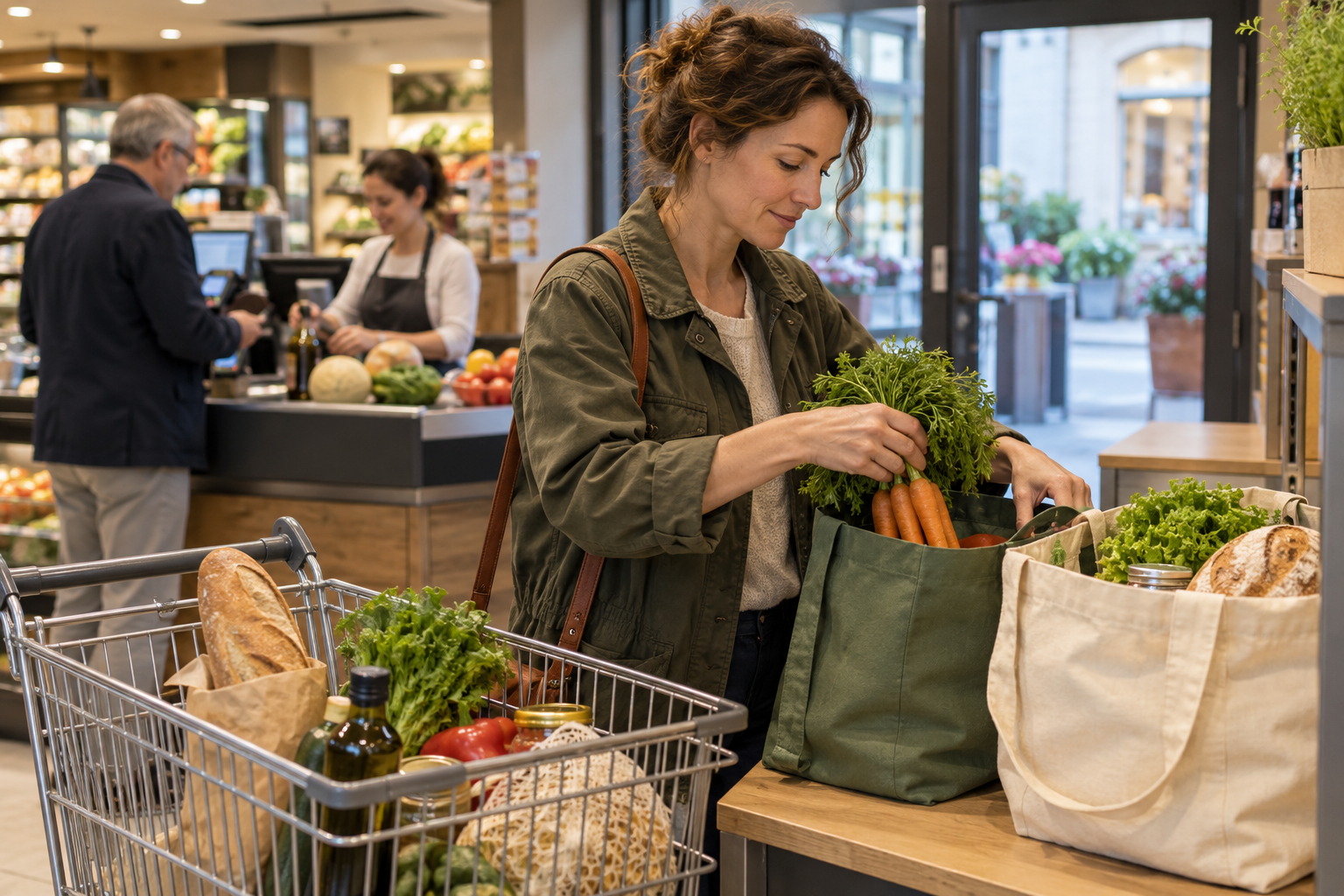
The European checkout is where the real culture shock lands, because it moves at a speed that can genuinely fluster an unprepared American. There are no baggers, so you pack your own groceries, and the cashier scans your items rapidly and without pause, sending them piling up in the small bagging area faster than you may be ready for. You are expected to bag at speed, keep up with the scanning, and pay all at more or less the same time, and then clear your things out of the way promptly for the next customer, who is already unloading behind you.
At the fast-discounter chains especially, the sheer pace of the scanning is legendary, and a fumbling tourist trying to carefully arrange their bags can hold up a whole line of impatient locals. There is, however, a neat trick that seasoned shoppers use and that removes all the pressure: rather than bag at the till, pile everything loose back into your cart, pay, then bag at the packing shelf or bench near the exit and bag it all at your own pace, out of everyone’s way. Do that and the frantic European checkout, the single most intimidating part of the whole experience for many Americans, becomes completely relaxed. There is no rule that says you must bag at the belt, and the moment you realize that, the whole pressure of the fast-moving till simply evaporates. The key is to know it is coming and to have a plan, rather than freezing at the belt as the groceries pile up.
4. The Bags Cost Money
Part of what makes the self-bagging stressful for the unprepared is that the bags themselves are not free and not always offered, so an American who arrives empty-handed expecting a stack of free plastic bags can be caught short. Across most of Europe, single-use bags are charged for or not provided at all, as part of a strong and long-standing push to cut down on plastic waste.
Europeans respond to this the obvious way: they bring their own bags. Reusable cloth or sturdy plastic bags are an everyday essential that people carry with them or keep in a daypack, and grabbing your bags on the way out of the house is as automatic as taking your keys. For the visitor, the lesson is simply to travel with a reusable tote or two, or to be ready to buy a bag at the checkout if you forget, rather than expecting the free bags of an American store. It is a small thing, but arriving at that fast-moving checkout with no bag and no plan is one of the most common ways to end up flustered, so a folded tote in your day bag saves a good deal of trouble.
5. The Eggs Aren’t in the Fridge
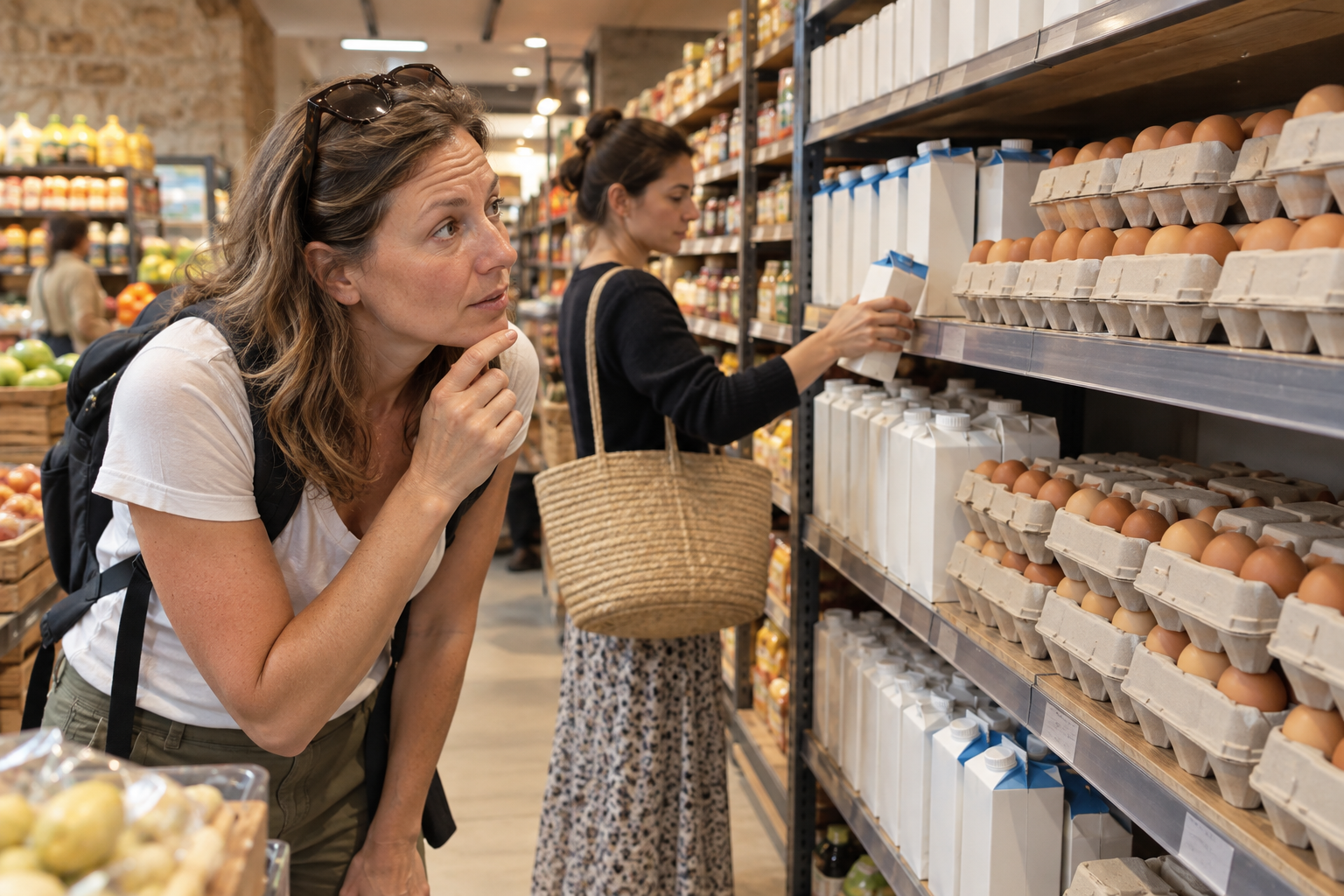
Wandering the aisles, an American gets a genuine jolt on finding the eggs sitting on an ordinary shelf at room temperature, right there among the dry goods, rather than in a refrigerated case. Everything an American has been taught says eggs must be kept cold, so unrefrigerated eggs can look alarming, even unsafe, but they are perfectly fine, and the difference comes down to how eggs are handled before they reach the store.
In Europe, eggs are not washed before sale, leaving the natural protective coating intact on the shell, the cuticle, that keeps bacteria out and moisture in. That natural barrier means European eggs can safely sit at room temperature, so stores keep them on the shelf. In America, by contrast, eggs are washed and sanitized, which removes that coating and means they must then be refrigerated. Neither system is wrong; they are just two different approaches, one relying on the egg’s natural defenses and the other on washing plus refrigeration. So the shelf-stored eggs are safe, though the habit does mean you may find the odd feather or fleck still on a European egg, another small sign of the less-processed approach. Once home, refrigerating them is fine and common, but on the store shelf they belong exactly where they are.
6. The Milk Might Not Be Either
Close cousin to the room-temperature eggs is the discovery, equally startling at first, that a great deal of the milk is also sitting unrefrigerated, stacked on shelves in cartons in the aisle. This is long-life or UHT milk, which has been heat-treated at ultra-high temperatures that let it keep, unopened and unrefrigerated, for months, and it is enormously popular across much of Europe in a way it never became in the United States.
To an American accustomed to buying only fresh, refrigerated milk, shelves of ambient milk are a real curiosity, and the taste of UHT milk is subtly different, which some people notice and dislike and others do not mind at all. Fresh refrigerated milk exists in Europe too, in the chilled section as you would expect, so you are not forced onto the long-life kind, but the prominence of shelf-stable milk is a genuine difference worth understanding rather than being baffled by. For a traveler in a self-catering apartment, the long-life milk is actually rather convenient, keeping in the cupboard without taking up precious space in a tiny fridge, which, along with those small European refrigerators, is a large part of why it caught on there in the first place.
7. Nobody Is There to Help You Pack
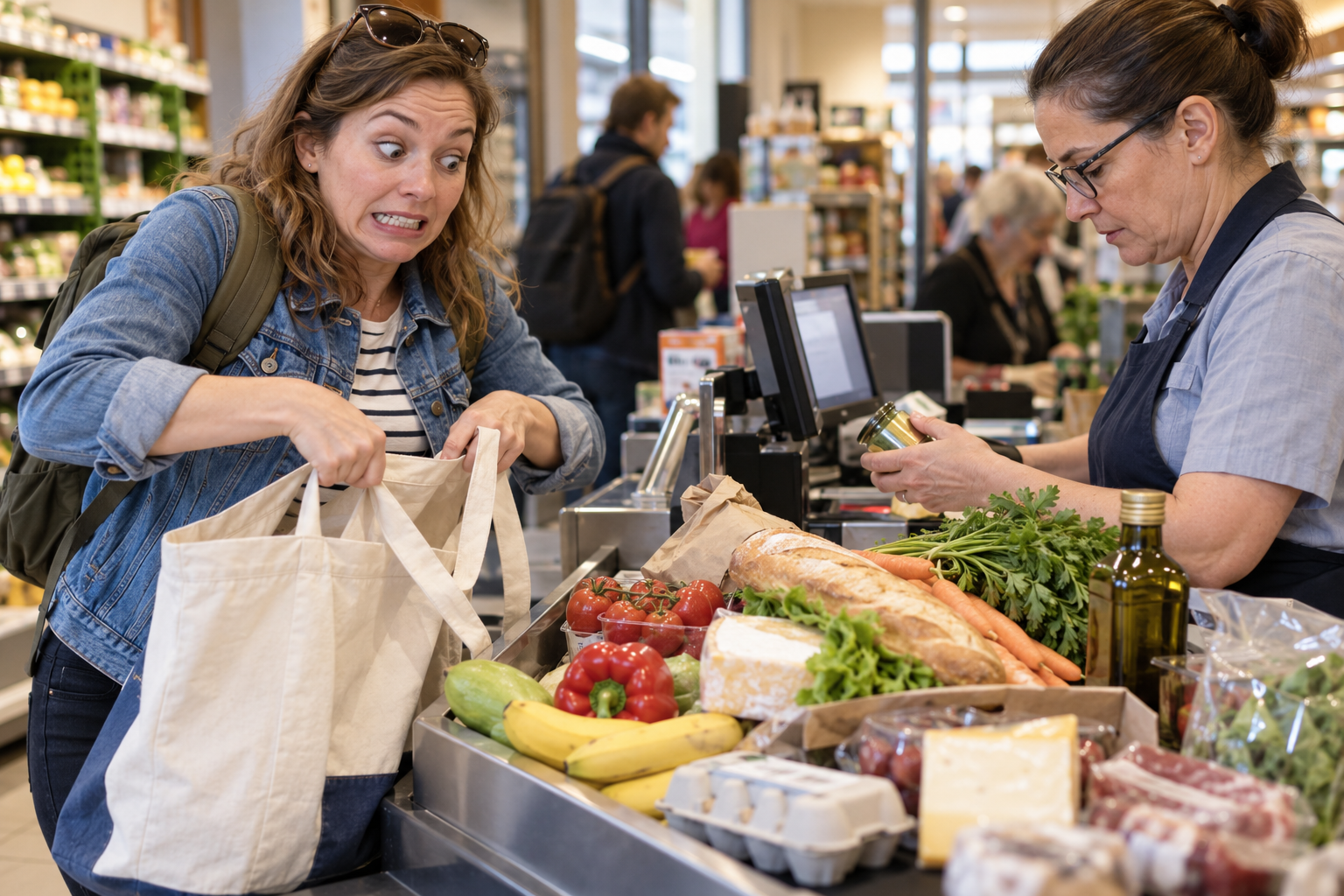
Running through several of these differences is a single underlying one that surprises Americans in its own right: the near-total absence of store staff, above all the bagger. In the United States, a courtesy clerk bagging your groceries and often wheeling them to your car is a normal part of the experience, a small piece of service built into the price. In Europe, that role essentially does not exist; grocery shopping is self-service from cart to bag to car, and the idea of someone else packing your bags for you would strike most Europeans as slightly odd, even unnecessary.
This is partly cultural and partly about cost, since fewer staff mean lower prices, which is precisely the model the big discount chains have built their success on. It extends beyond bagging, too, with European stores generally running leaner on floor staff than their American counterparts, so you are more on your own to find things and get yourself through the process. None of this is unfriendly, just a different expectation of what a shop provides, and it fits the broader European pattern of self-reliance in the supermarket. For the American shopper, the thing to internalize is simply that no help is coming at the checkout, so you are the bagger now, which loops back to having your own bags and a plan for packing at your own pace.
8. The Store Is Smaller and You Go More Often
Step back from the individual quirks and a larger difference frames them all: the typical European store is smaller than the American supermarket, with a more limited selection, and it is built around a different rhythm of shopping. Where an American might make one enormous weekly trip to a vast supermarket and load up a huge cart to fill a large fridge and pantry, Europeans shop more often, in smaller quantities, buying fresh for the next day or two rather than stockpiling for the week.
This is not merely habit but a response to real conditions: European homes and kitchens are smaller, refrigerators are compact, and storage space is limited, so buying two weeks of groceries at once is neither practical nor necessary when a well-stocked shop is a short walk away. There is a genuine upside, since shopping little and often means eating fresher food and wasting less of it, and the daily or near-daily grocery run is woven into the rhythm of European life in a way that can feel, to an American used to the big weekly haul, both inefficient and rather pleasant once you settle into it. For the visitor, the practical effect is that the store may not have the sheer overwhelming variety of an American supermarket, and that shopping like a local means smaller, more frequent trips rather than one monumental expedition.
9. The Doors May Be Locked on Sunday
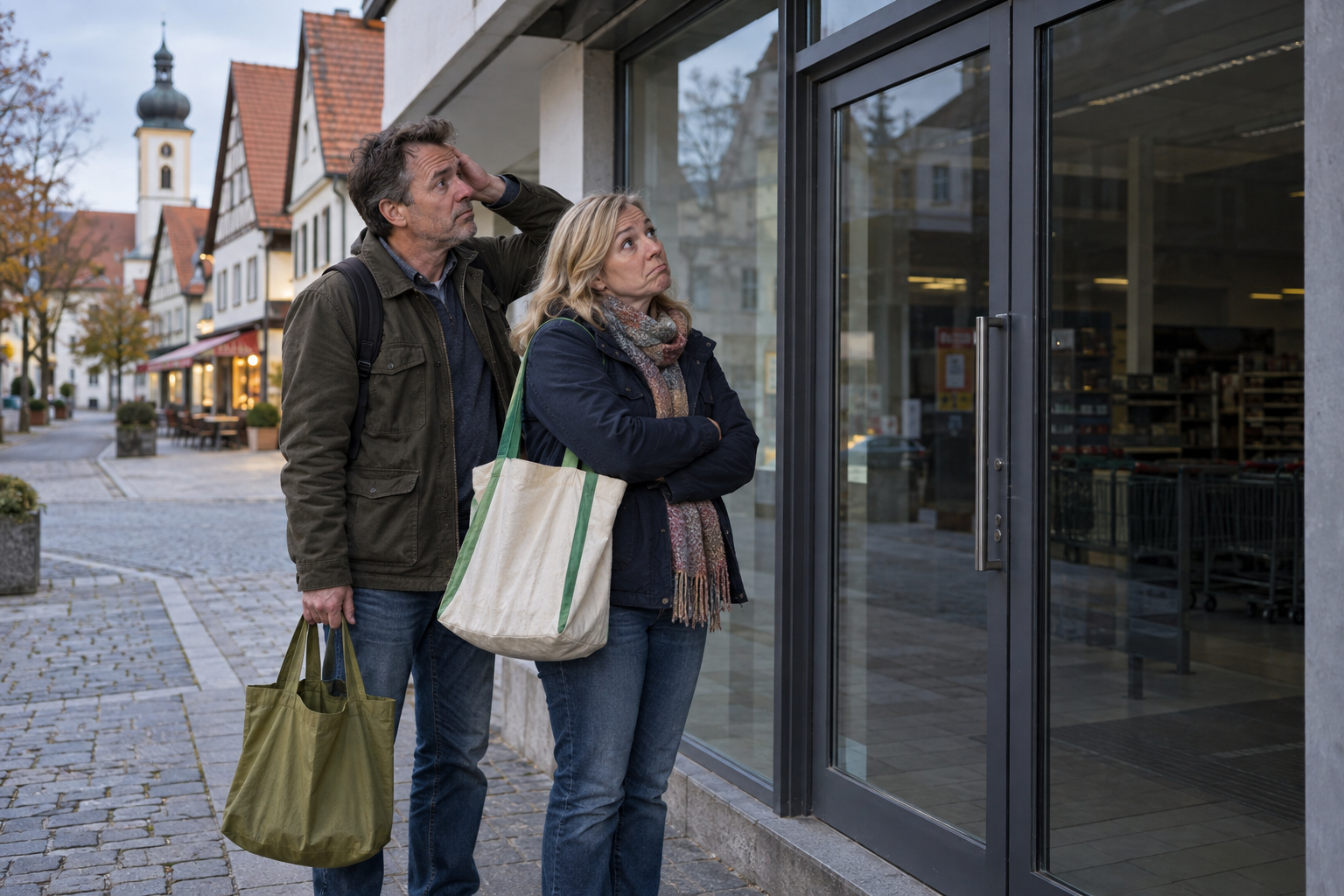
The final confusion often strikes at the worst possible moment, when a hungry American heads out for groceries on a Sunday and finds the supermarket dark and locked. In much of Europe, and Germany above all, shops including grocery stores are closed on Sundays, by law or by deep custom, as part of a long tradition of keeping the day as one of rest rather than commerce. To an American used to shopping at any hour on any day, a country where you simply cannot buy groceries on a Sunday is a genuine shock.
The degree varies a great deal, with some countries and cities far stricter than others and tourist areas and transport-hub shops often exempt, so it is not universal, but it is common enough that assuming Sunday shopping will be possible is a real risk. The practical habit is to check local opening hours and, crucially, to do your shopping on Saturday if you are somewhere that closes on Sundays, since running out of food on a Sunday morning in a strictly observant town can leave you genuinely stuck until Monday.
It is one more way the European supermarket runs on a different logic from the American one, prioritizing rest and rhythm over round-the-clock convenience, and once you know it is coming, it is easily planned around. A little forward planning on Saturday is a small price for living in a place that still, remarkably, protects a day off. Taken together, all nine of these differences add up to the same lesson: the European grocery store works perfectly well, just not the way an American expects, and a little foreknowledge turns every one of its small surprises into something you handle without a second thought.

About the Author: Ruben, co-founder of Gamintraveler.com since 2014, is a seasoned traveler from Spain who has explored over 100 countries since 2009. Known for his extensive travel adventures across South America, Europe, the US, Australia, New Zealand, Asia, and Africa, Ruben combines his passion for adventurous yet sustainable living with his love for cycling, highlighted by his remarkable 5-month bicycle journey from Spain to Norway. He currently resides in Spain, where he continues sharing his travel experiences with his partner, Rachel, and their son, Han.