
When the weather turns and the first proper chill arrives, Spanish kitchens reach for a soup so simple that it barely even counts as a recipe, and yet it is one of the most comforting things you can possibly put in a bowl. It is crema de calabaza, a silky pumpkin cream that a Spanish cook can make almost without thinking, from just four humble ingredients and a blender, and it is the soup that quietly opens the Spanish autumn every single year. There is no cream in it despite the name, no long list of spices, and no fuss of any kind, just pumpkin, onion, a good generous glug of olive oil, and stock, all blended together until velvety and finished with a bright thread of oil on top. It is the everyday, unshowy, dependable face of Spanish autumn cooking, the pot that simmers quietly on a weeknight rather than the centerpiece of a feast, and its whole appeal lies in how much genuine comfort it delivers for how astonishingly little it asks of the cook. This is the four-ingredient soup that says October has arrived. Where a grander pumpkin dish might be saved for a dinner party, this one belongs to ordinary life, the first warm bowl of the cooling year, made and eaten without ceremony.
What follows is why this soup is the essence of Spanish simplicity, the four ingredients that are genuinely all you need, how it gets so silky without any cream, the ways Spaniards dress it up, and exactly how to make it.
The Essence of Spanish Simplicity
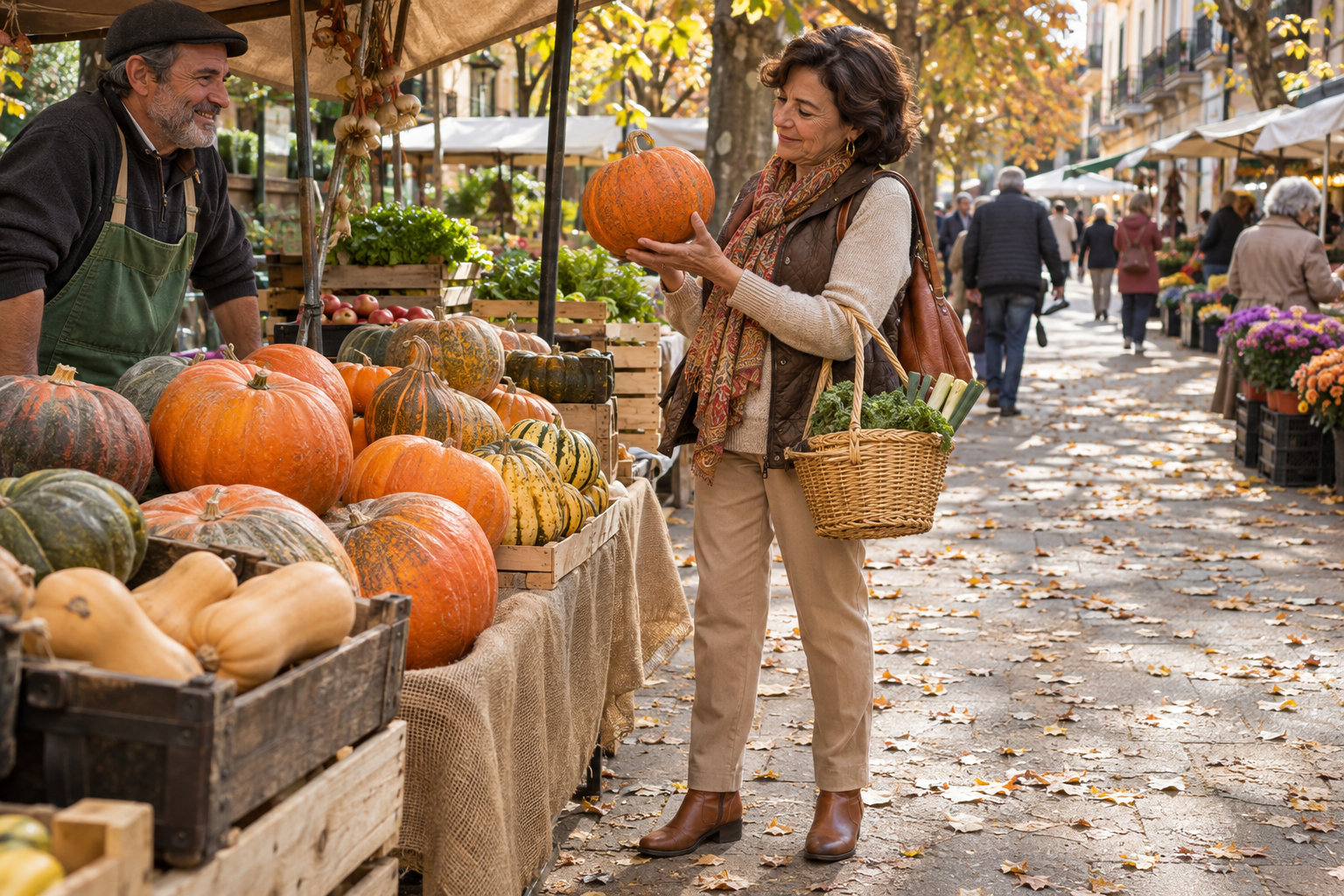
Crema de calabaza belongs to a very Spanish idea of cooking, the conviction that a few good ingredients, treated simply, need almost nothing done to them. Where some pumpkin soups pile in cream, warming spices, apples, coconut milk, and a long list of aromatics, the Spanish version strips the whole thing back to its essentials and trusts the pumpkin to carry it, which it does with ease. This is not a soup trying to impress you with complexity; it is a soup confident enough to be plain, and that plainness is precisely the point rather than any kind of shortcoming.
That restraint is what makes it an everyday food rather than an occasion. It is the soup a Spanish parent throws together on a cold Tuesday, cheap and quick and genuinely nourishing, using a wedge of the big autumn pumpkins that fill the markets from October onward.
It asks for no special skill and no hard-to-find ingredients, which is exactly why it appears on so many tables the moment the season turns, a reliable, humble, warming start to the colder months. Every Spanish home cook seems to carry it in their head, no recipe needed, the way you carry the way to make tea, which is the surest sign a dish has truly become part of everyday life rather than a special occasion. The whole spirit of it is captured in that four-ingredient list, a soup defined at least as much by what it leaves out as by what it puts in, and understanding that restraint is genuinely the key to making it well. You are not building a complicated dish; you are letting a good pumpkin taste like itself. That is a genuinely different way of cooking from the more-is-more instinct many of us bring to the kitchen, and it takes a little confidence to trust that four things really are enough, but the result proves the point every time.
Four Ingredients and No More
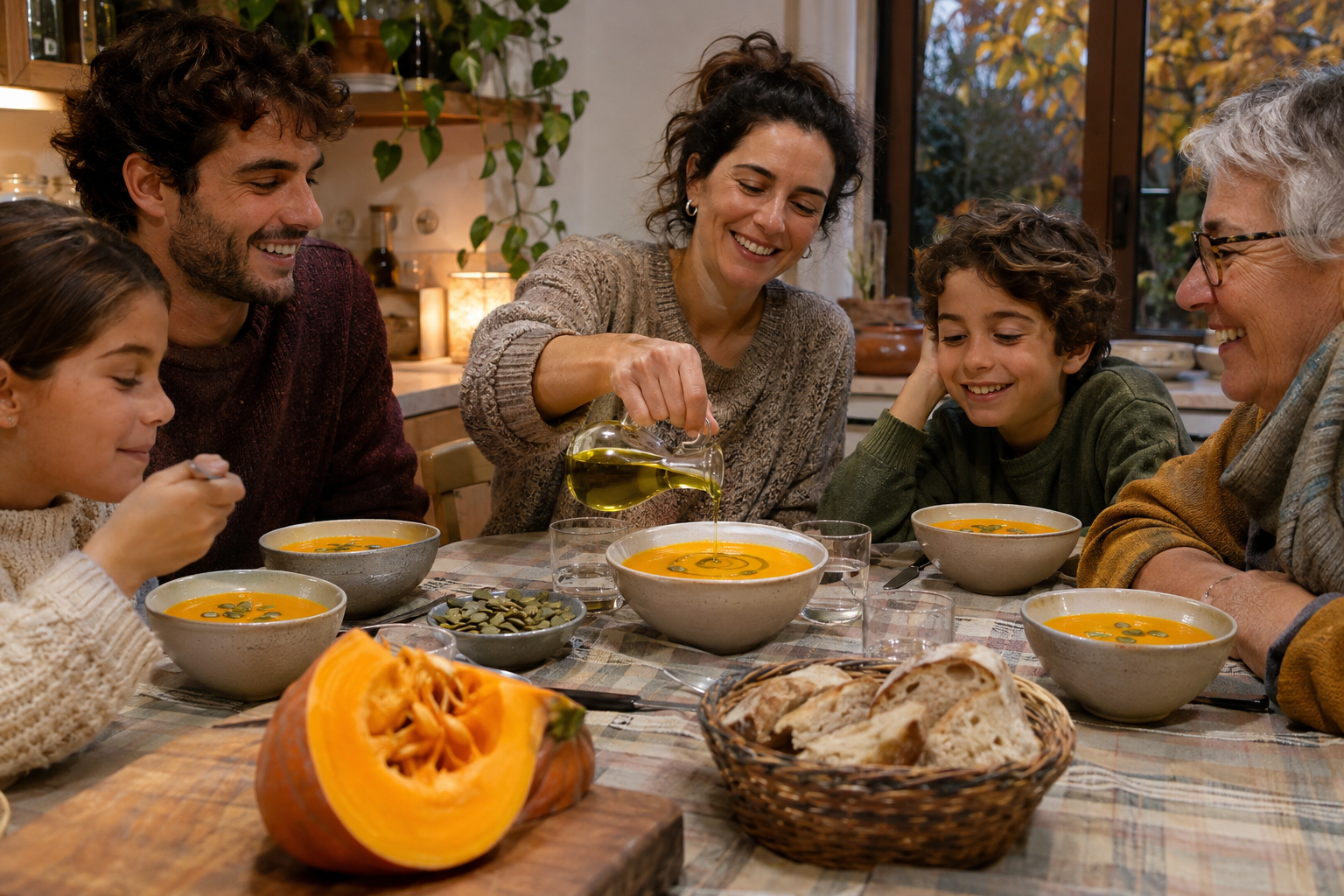
The heart of the recipe really is those four ingredients, and it is worth being clear about each because there is nowhere for a weak one to hide. First and most obviously, the pumpkin, and a sweet, dense autumn pumpkin is what gives the soup its color, its body, and its gently sweet flavor, so this is the ingredient to choose well. Second, an onion, softened slowly to build a savory base beneath the pumpkin’s sweetness, and some cooks reach for a leek instead for a milder, subtler foundation, either of which does the job.
Third, and never to be skimped, olive oil, which in a Spanish kitchen is not a mere cooking fat but a flavor in its own right, used both to soften the onion at the start and drizzled generously over the finished soup, where a good peppery Spanish oil lifts the whole bowl. And fourth, stock or simply water, the liquid the vegetables cook in and that thins the blended soup to the silkiness you want, with a good vegetable or chicken stock adding depth and plain water letting the pumpkin speak entirely for itself. Many Spanish cooks use water precisely because they trust the pumpkin and the oil to provide all the flavor the soup needs, which is the four-ingredient philosophy taken to its logical, confident end. Salt, of course, and pepper to taste, but those are seasoning rather than ingredients. That genuinely is the whole cast, and the discipline of the dish is resisting the urge to add more, because the magic is in how much those four simple things become when you treat them right.
Silky Without a Drop of Cream
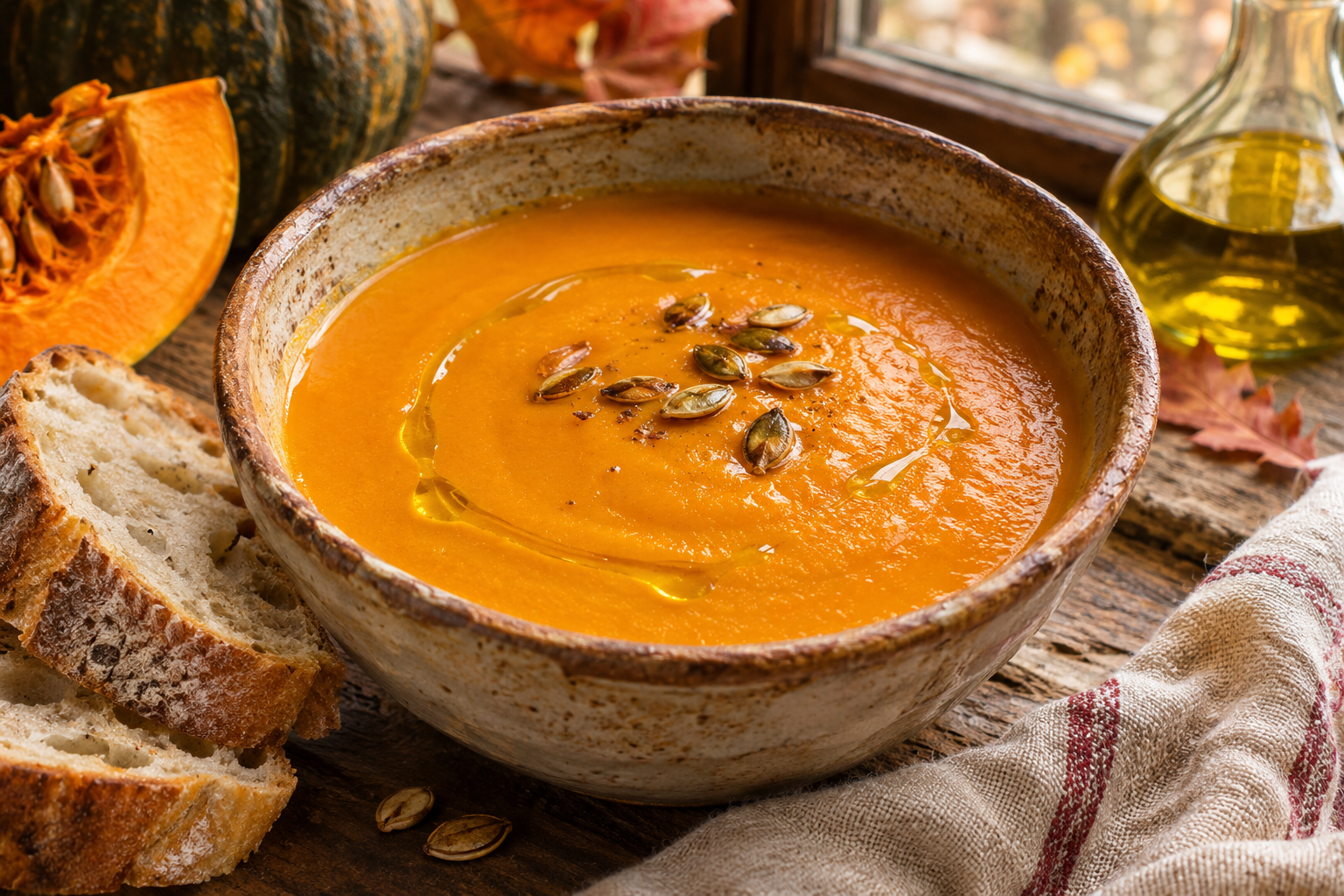
The word cream in crema de calabaza refers to the texture, not to any dairy, and one of the small delights of the soup is discovering how luxuriously smooth it becomes with no cream in it at all. The silkiness comes from two things working together. The first is the pumpkin itself, which, cooked until completely soft and then blended, breaks down into a naturally thick, velvety puree, since its flesh is starchy and dense enough to give real body without any help. A ripe autumn pumpkin practically wants to become a cream. This is why choosing the pumpkin well matters more than anything else you do, since a watery or bland squash can never be rescued into silkiness, while a sweet, dense one does most of the work for you before you have even reached for the blender.
The second is the blending and the olive oil. Once the pumpkin and onion are soft, you blend the soup thoroughly, ideally with a hand blender right in the pot, until it is completely smooth with no lumps at all, and that thorough blitzing is what turns a pot of cooked vegetables into a glossy cream. The olive oil, both what was cooked in and what is stirred through, emulsifies into the blended soup and adds a richness that stands in perfectly for dairy, giving the same rounded, satisfying mouthfeel that cream would without muting the pumpkin’s flavor. If you want it thinner, you loosen it with a little more stock; if thicker, you simmer it down. That is the entire technique, cook until soft, blend until smooth, enrich with good oil, and you have a cream with no cream, exactly as Spain intends. It is worth blending for longer than you think you need to, since the difference between a nearly-smooth soup and a truly silky one is a minute or two more with the blender running, and that silkiness is much of the pleasure.
Dressing It Up
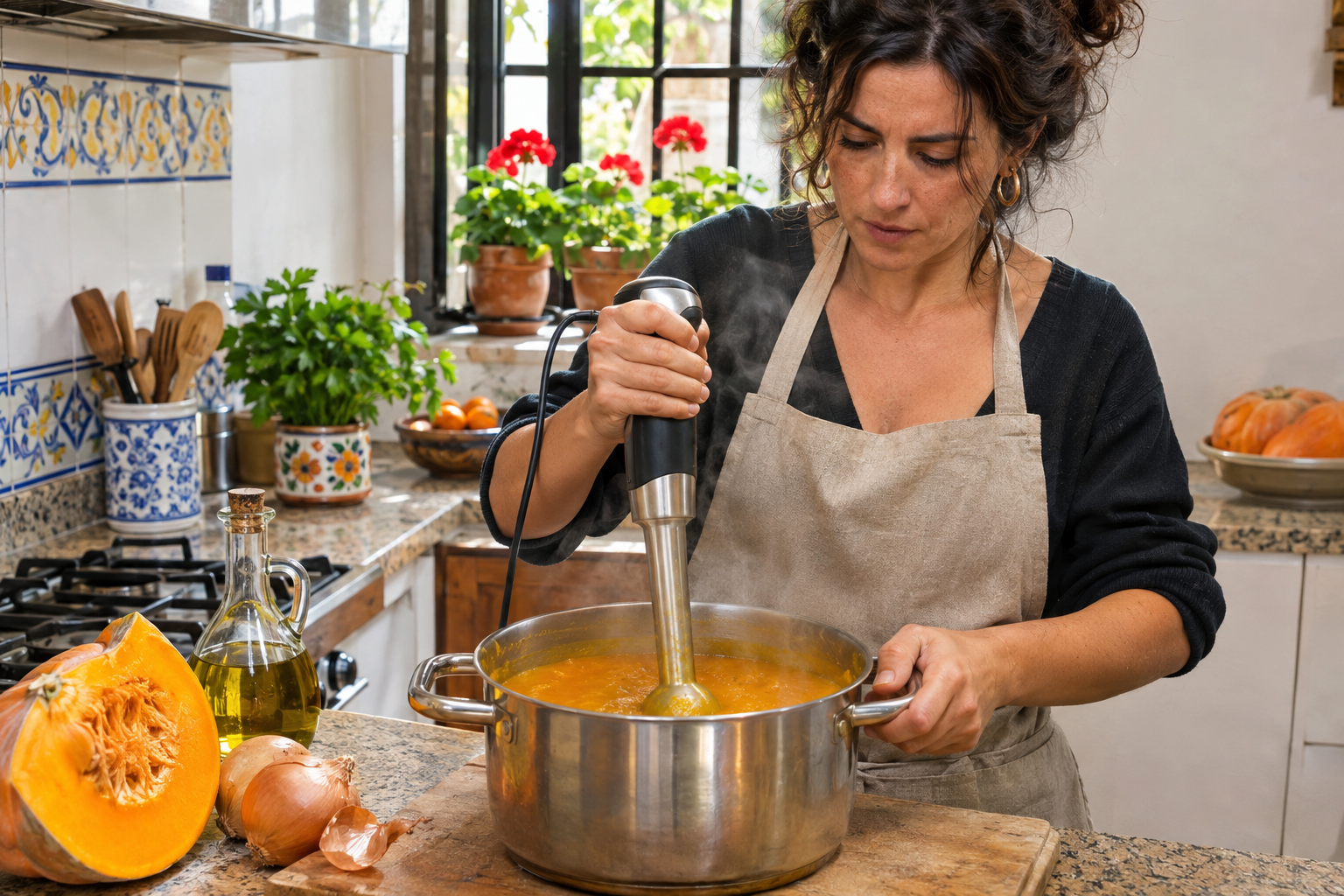
For all its four-ingredient purity, crema de calabaza is a generous base that welcomes a little finishing, and while the soup needs nothing, a few simple touches make it lovely without betraying its simplicity. The most traditional and satisfying is the finish it already calls for, a swirl of good olive oil over the top just before serving, which adds both flavor and a handsome ribbon of gold against the orange. A few toasted pumpkin seeds scattered over the surface are a natural and pleasing addition, echoing the soup itself and adding a welcome crunch against all that smoothness.
From there you can go as far as you like while keeping it honest. A grating of nutmeg or a pinch of cumin adds a gentle warmth many Spanish cooks like, croutons or a shard of toasted bread bring texture, and a little crumbled cheese or a few drops of cream on top, for those who want it richer, turn the everyday soup into something a touch more special for guests. None of these are required, and the beauty of the dish is that it is complete and delicious with nothing but its drizzle of oil, but they show how forgiving and adaptable the humble base is. It is the kind of soup you can make the same way a hundred times and never tire of, or vary endlessly with a different topping each time, and it accepts both approaches with equal grace. Start with the pure four-ingredient version, and add only what pleases you, because the soup is happy either way, plain on a weeknight or dressed up on a Sunday. That flexibility is the quiet gift of a simple base, since a soup that is complete on its own can become almost anything you like without ever losing its footing.
Making Crema de Calabaza
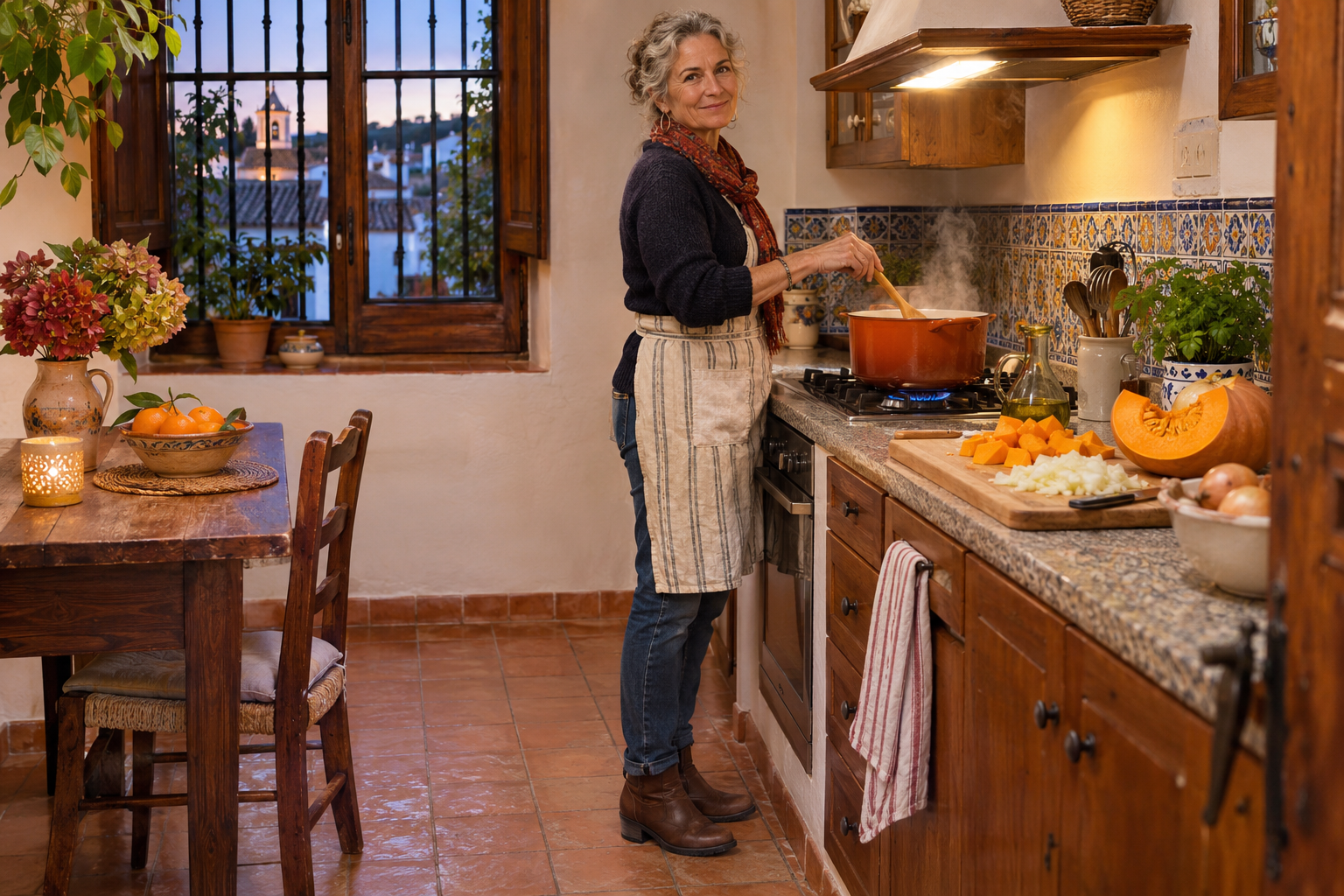
Here is a classic crema de calabaza, serving four. Choose a good sweet pumpkin, blend it thoroughly, and finish every bowl with olive oil.
Ingredients
- 1 kg pumpkin or winter squash, peeled, seeded, and cubed
- 1 onion, chopped, or 1 leek, sliced
- 4 tablespoons olive oil, plus more to finish
- About 750 ml vegetable or chicken stock, or water
- Salt and pepper, to taste
- Toasted pumpkin seeds, to serve, optional
Instructions
- Warm 3 tablespoons of the olive oil in a pot over medium heat and cook the onion or leek gently until soft and translucent, without browning, about 8 minutes.
- Add the cubed pumpkin and stir for a couple of minutes to coat it in the oil.
- Pour in the stock or water, just to cover, add a good pinch of salt, and bring to a boil.
- Simmer gently until the pumpkin is completely soft and easily crushed, about 20 minutes.
- Blend the soup until perfectly smooth and velvety, using a hand blender in the pot or a jug blender in batches.
- Return to low heat, stir in the remaining olive oil, and adjust the thickness with a little more stock or water if needed. Season with salt and pepper.
- Serve hot, finishing each bowl with a generous drizzle of olive oil and a scatter of toasted pumpkin seeds if you like.
And do not be tempted to complicate it, since the whole point of crema de calabaza is its restraint, so make the pure four-ingredient version first, finish it with good oil, and only then decide whether it needs a single thing more, which, more often than not, it does not.

About the Author: Ruben, co-founder of Gamintraveler.com since 2014, is a seasoned traveler from Spain who has explored over 100 countries since 2009. Known for his extensive travel adventures across South America, Europe, the US, Australia, New Zealand, Asia, and Africa, Ruben combines his passion for adventurous yet sustainable living with his love for cycling, highlighted by his remarkable 5-month bicycle journey from Spain to Norway. He currently resides in Spain, where he continues sharing his travel experiences with his partner, Rachel, and their son, Han.