
Every American who tries to make pumpkin pie for their first Thanksgiving in Europe hits the same wall, usually in a panic sometime in late November. They go to the supermarket for a can of pumpkin puree, that orange-labeled staple of every American pantry, and it is simply not there. Not in that shop, not in the next one, not anywhere. Canned pumpkin, it turns out, is an American thing, and Europe does not do it.
After the initial despair comes a happy discovery: you do not need the can, and the pie you make without it is better. Fresh pumpkin, or rather the right kind of winter squash, roasted and pureed the way French cooks have always done it, makes a pumpkin pie with deeper, sweeter, more honest flavor than the flat orange stuff from the tin ever could. The forced workaround is an upgrade.
Here is why there is no canned pumpkin in Europe, which squash to use instead, the French fresh-pumpkin method, the one crucial step that makes it work, and a recipe for a fresh pumpkin pie that may ruin canned pumpkin for you forever. It is less trouble than you fear and more delicious than you expect.
No Can in Sight

Let us start with the shock itself, because it genuinely rattles people. In the United States, canned pumpkin puree is a kitchen staple, a reliable, consistent, year-round product that makes pumpkin pie a simple matter of opening a tin. Most American home cooks have never made the filling any other way, and the can is woven into the whole tradition.
In Europe, it basically does not exist. Walk the aisles of a Spanish, French, or Italian supermarket in November and you will find no canned pumpkin puree at all, because it is simply not part of the food culture here, where squash is bought fresh and cooked from scratch. For the expat used to reaching for the can, this is a real moment of Thanksgiving crisis, the sudden realization that the easy path to pumpkin pie is closed and you are going to have to do something you have never done: start with an actual pumpkin.
But this apparent disaster is, in truth, an invitation to make a better pie, and the people around you have been making it the better way all along. European cooks do not miss canned pumpkin because they never had it; they cook their squash fresh, and their results are wonderful. The can was never essential, only convenient, and doing without it opens the door to a depth of flavor the tin cannot match. The panic, in other words, is the beginning of something good.
Use the Right Squash

The single most important thing to know, and the thing that trips up first-timers, is that not every pumpkin makes a good pie. The giant pumpkins sold for carving are watery, stringy, and bland, and a pie made from one will be disappointing. The secret is to choose a dense, sweet, deeply flavored variety of winter squash instead.
In France, the classic choice is the potimarron, the small orange squash known in English as red kuri, prized for its sweet, chestnutty, dense flesh, and French cooks reach for it precisely because it makes everything from soup to pie taste richer. Just as good, and easy to find across Europe, is butternut squash, calabaza, with its smooth, sweet, dense orange flesh that purees beautifully. The Japanese-style Hokkaido squash, essentially the same as potimarron, is another excellent option. What these all share is what matters: dense, sweet, flavorful, deep-orange flesh, rather than the pale, wet stringiness of a carving pumpkin.
So when you set out to make your pie, ignore the decorative giants and seek out one of these good eating squashes, which any European market will have in autumn. Ask the vendor for a squash for cooking, a potimarron or a good butternut, and you are halfway to a superior pie before you have done anything else. The quality of your squash determines the quality of your pie far more than any other factor, and choosing well here is the whole foundation. Get this right and the rest is easy.
The French Fresh-Pumpkin Method
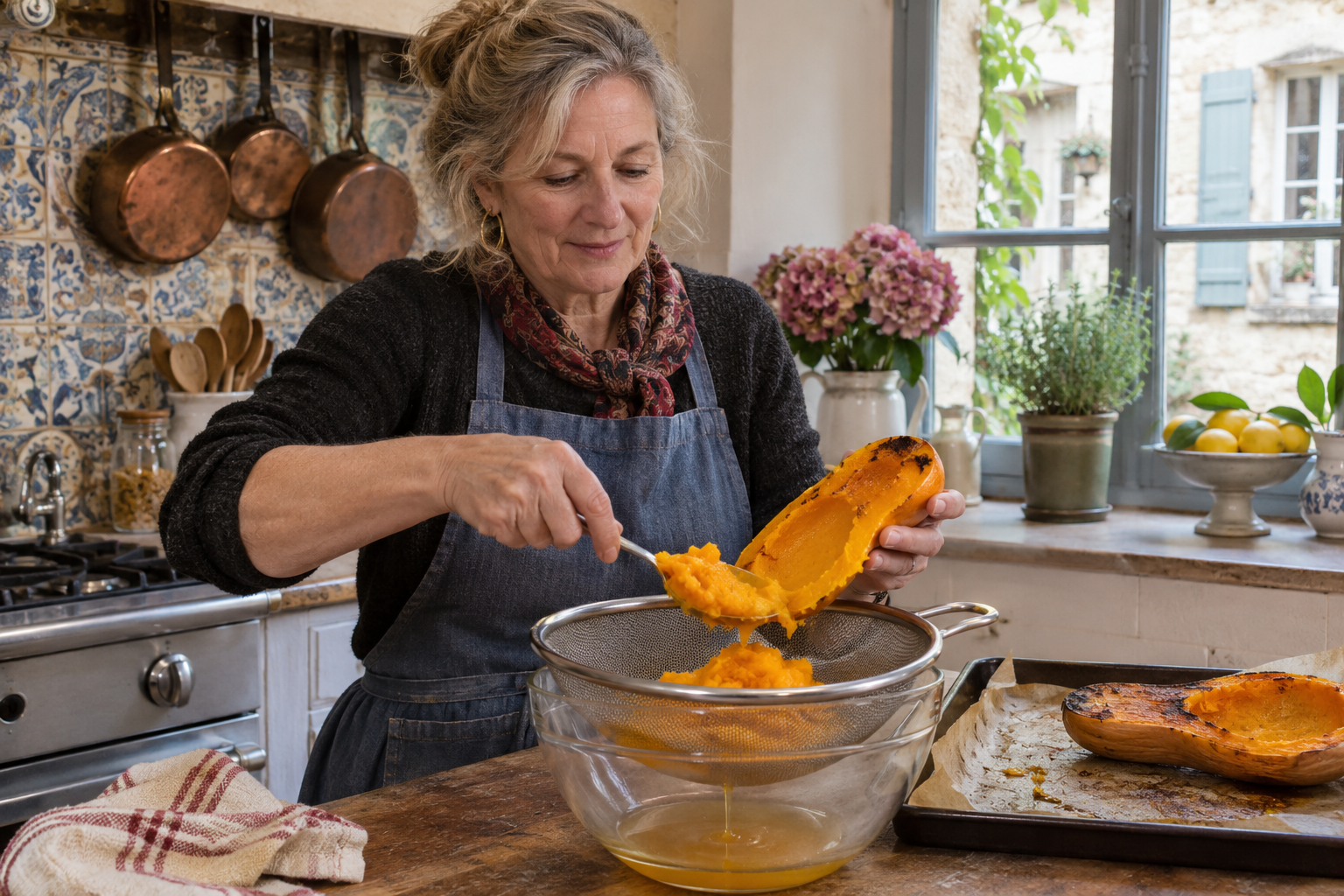
With the right squash in hand, the method French cooks use is simple and centers on one key decision: roast it, do not boil it. How you cook the squash before pureeing makes an enormous difference to the final pie, and roasting is the path to flavor.
The logic is about water and flavor. When you roast a squash, cut in half and placed cut-side down in a hot oven until soft, the dry heat concentrates its flavor and caramelizes its natural sugars while allowing moisture to escape rather than soak in.
Boiling or steaming the squash, by contrast, waterlogs it, diluting the flavor and leaving you with a wet, bland puree that will not set well in a pie. The French roast their squash as a matter of course, and that roasting is a large part of why their purees taste so good. Once roasted and cooled, the soft flesh scoops easily away from the skin and mashes or blends into a smooth puree.
This is the step that turns a bland fresh pie into a spectacular one, and it costs you nothing but oven time. Roasting rather than boiling is the difference between a watery, flavorless filling and a rich, caramelized, intensely pumpkin-flavored one, and it is the heart of the French method. You can roast the squash a day or two ahead and keep the puree in the fridge, which makes the whole thing manageable even on a busy Thanksgiving. The roasting is where the magic happens, and it is genuinely easy.
Drain the Water, This Is the Secret
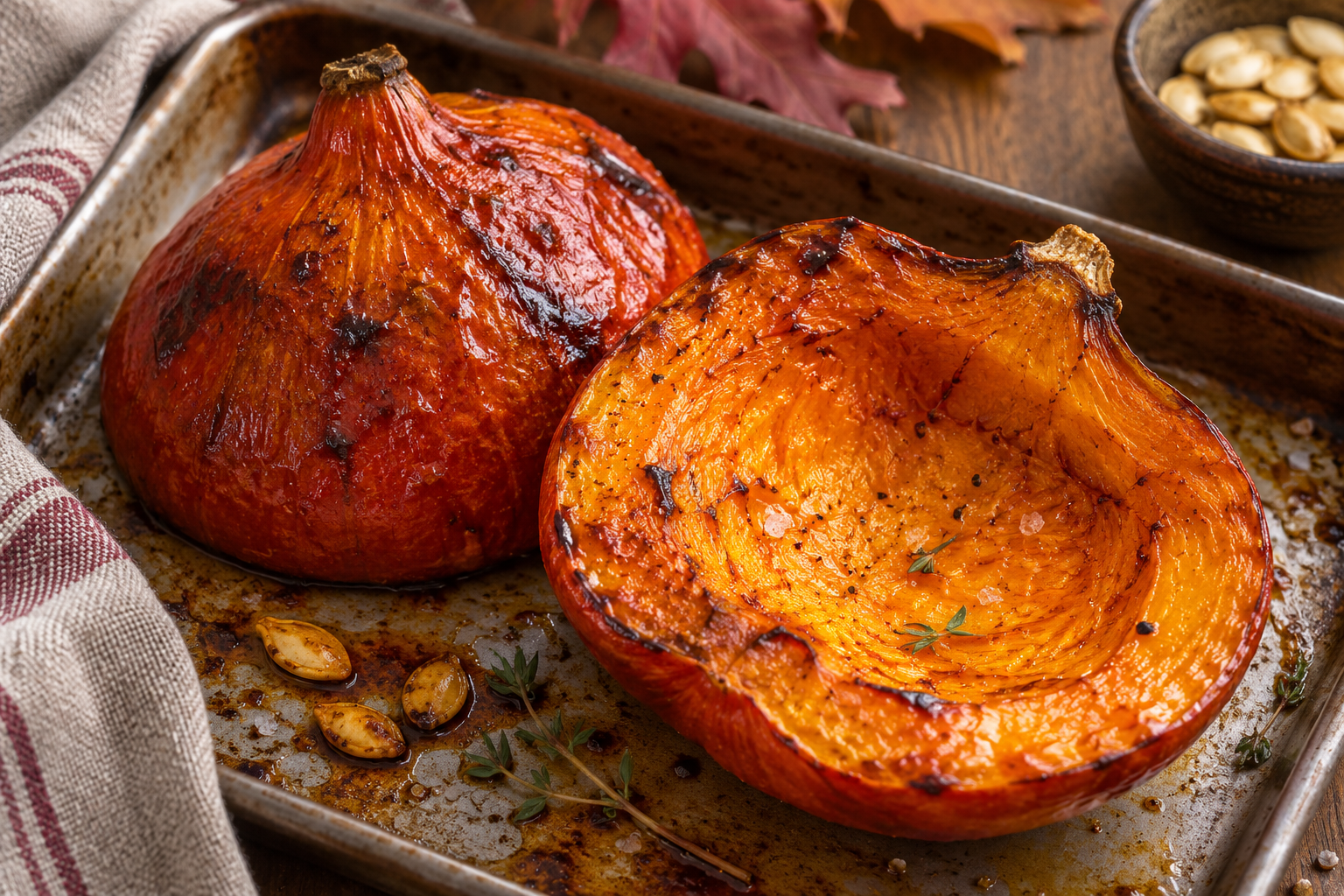
There is one more step that is absolutely crucial, the single thing that separates a successful fresh pumpkin pie from a soggy failure, and it is the step beginners most often skip: you must drain the excess water from your fresh puree. This one move is the make-or-break of the whole endeavor.
Here is why it matters so much. Fresh squash puree, even roasted, contains far more moisture than the thick, concentrated canned pumpkin that American recipes are written for, and if you use it as-is, that extra water will keep your custard from setting, leaving you with a soggy pie that never firms up.
Canned pumpkin is already reduced and thick; fresh is not, so you have to reduce it yourself. You do this by straining the puree in a fine sieve or a cloth-lined colander, or by cooking it down gently in a pan to drive off the excess moisture, until it reaches the thick, dense consistency of canned pumpkin. Only then is it ready for your pie.
Skip this step and even the best squash will betray you with a sad, watery pie; do it, and your fresh puree behaves exactly like canned, only with far better flavor. This is the piece of knowledge that fresh-pumpkin-pie beginners most need and most often lack, and it is the reason some people’s first attempt fails and sours them on the whole idea. Drain or reduce your puree to a thick consistency, and fresh pumpkin will reward you every time. It is the secret hiding behind every great fresh pumpkin pie.
Why Fresh Wins
With the squash chosen, roasted, and drained, the payoff is a pie that is simply better than the canned version in every way that matters, which is the whole reason this is worth doing. Fresh roasted squash puree has a depth, sweetness, and complexity of flavor that canned pumpkin, flat and one-dimensional by comparison, cannot touch.
The difference is real and noticeable. Where a canned-pumpkin pie tastes mostly of the spices you added, because the pumpkin itself contributes little, a fresh roasted-squash pie tastes genuinely of pumpkin, rich, caramelized, nutty, and sweet, with the spices supporting rather than carrying the flavor. The filling is more luxurious, the taste more honest and more satisfying, and the whole pie feels like a real autumn dessert rather than a vehicle for cinnamon. Once you have tasted a pie made from properly roasted potimarron or butternut, the canned version tastes thin and artificial by comparison.
This is why so many expats, having been forced into fresh pumpkin by the absence of the can, never willingly go back. What began as a Thanksgiving emergency becomes a permanent upgrade, a better pie discovered by necessity and kept by choice. The European absence of canned pumpkin, far from being a hardship, pushes you into a method that produces a demonstrably superior result, which is a theme that runs through the whole expat Thanksgiving. Fresh wins, and once you know it, there is no going back.
It Is Less Work Than You Fear
The one thing that stops people trying fresh pumpkin is the assumption that it must be a huge amount of work, and it is worth putting that fear to rest, because it really is not. Yes, it is a few steps more than opening a can, but each step is simple, and the whole thing is far more manageable than it sounds.
Realistically, the extra effort amounts to roasting a squash, scooping and pureeing the soft flesh, and draining the puree, none of which is difficult or demanding. Better still, you can do all of it a day or two in advance, making your thick fresh puree ahead of time and keeping it in the fridge, so that on Thanksgiving itself you are simply mixing a filling and baking a pie, exactly as you would with canned. The fresh method front-loads a little easy work onto an earlier day and leaves the actual pie-making just as simple as always.
So do not let the absence of the can, or the fear of extra work, rob you of what might be the best pumpkin pie you have ever made. The method is easy, the steps are few, and the result is genuinely superior, which is about the best trade a cook can ask for. Here is how to make it. This piece is general cooking guidance; adjust to your squash and your oven, and taste as you go.
Make It: Fresh Pumpkin Pie
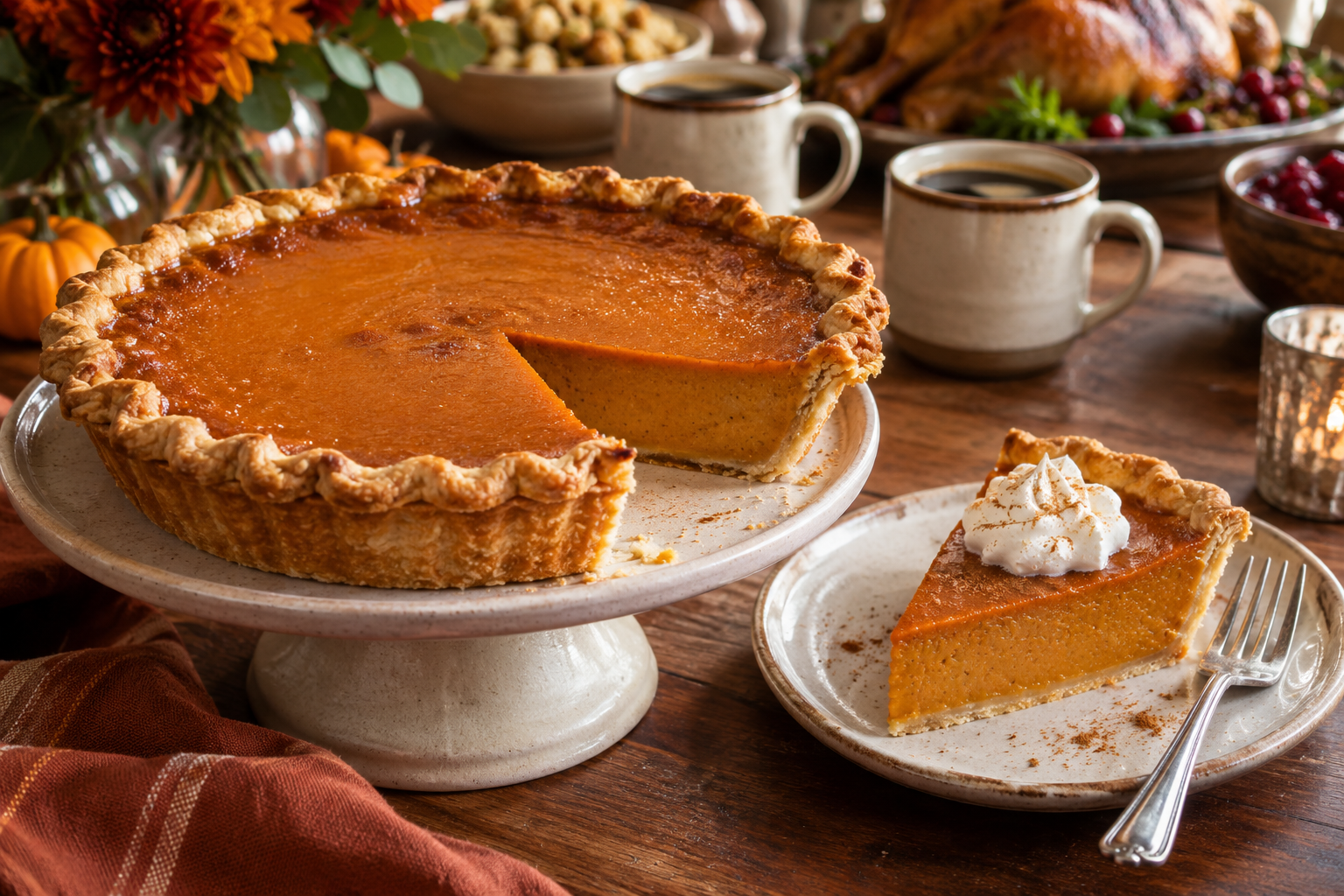
Here is a pumpkin pie made from fresh roasted squash, the French way, for one standard pie. Roast and drain the puree ahead if you like, so it is thick before you begin.
Ingredients
- 1 small potimarron (red kuri) or about 1kg butternut squash (calabaza), to yield around 400g thick puree
- 1 pre-made or homemade shortcrust pastry case
- 3 eggs
- 200ml cream (or evaporated milk)
- 150g brown sugar
- 1 teaspoon ground cinnamon
- half a teaspoon ground ginger
- a quarter teaspoon each ground nutmeg and ground cloves
- a pinch of salt
Instructions
- Heat the oven to about 200 degrees Celsius (400 Fahrenheit). Halve the squash, scoop out the seeds, and place the halves cut-side down on a lined tray. Roast for 40 to 50 minutes, until the flesh is completely soft.
- Let the squash cool, then scoop the flesh from the skin and blend or mash it into a smooth puree.
- Drain the puree: let it sit in a fine sieve or cloth-lined colander for 20 to 30 minutes, or cook it gently in a pan, until it is thick and dense like canned pumpkin. This step is essential, or the pie will not set. You want about 400g of thick puree.
- Lower the oven to about 180 degrees Celsius (350 Fahrenheit). In a bowl, whisk together the thick puree, eggs, cream, brown sugar, spices, and salt until completely smooth.
- Pour the filling into the pastry case and smooth the top. Bake for about 45 to 55 minutes, until the filling is set around the edges but still has a slight wobble in the center.
- Let the pie cool completely, then chill it for a few hours before serving; it firms up as it cools. Serve with whipped cream.

About the Author: Ruben, co-founder of Gamintraveler.com since 2014, is a seasoned traveler from Spain who has explored over 100 countries since 2009. Known for his extensive travel adventures across South America, Europe, the US, Australia, New Zealand, Asia, and Africa, Ruben combines his passion for adventurous yet sustainable living with his love for cycling, highlighted by his remarkable 5-month bicycle journey from Spain to Norway. He currently resides in Spain, where he continues sharing his travel experiences with his partner, Rachel, and their son, Han.