
An American walks through a European city, sightseeing, and in one hand is a giant insulated water bottle. Forty ounces, maybe more, in brushed steel or a bright color, with a straw lid and a carrying handle, the kind that has become a fixture of American life. They might as well be carrying a small flag, because to every European who glances their way, that enormous water bottle says, as loudly as an accent, American.
It is one of the great accidental tells of the American abroad, right up there with the white sneakers and the baseball cap. Europeans do not, as a rule, walk around clutching huge bottles of water, and the sight of someone who does, sipping constantly from a vessel the size of a small fire extinguisher, marks them instantly and unmistakably as a visitor from across the Atlantic. The giant water bottle is, quite possibly, the single most American object you can carry through Europe.
Here is why the big bottle is such a dead giveaway, where the American hydration obsession comes from, why Europeans do not share it, and whether any of it actually matters. It is a small and slightly comic cultural difference, but like all these things, it opens a little window onto two different ways of living, and a genuinely useful one for anyone who would rather not stand out quite so much.
The Object Itself
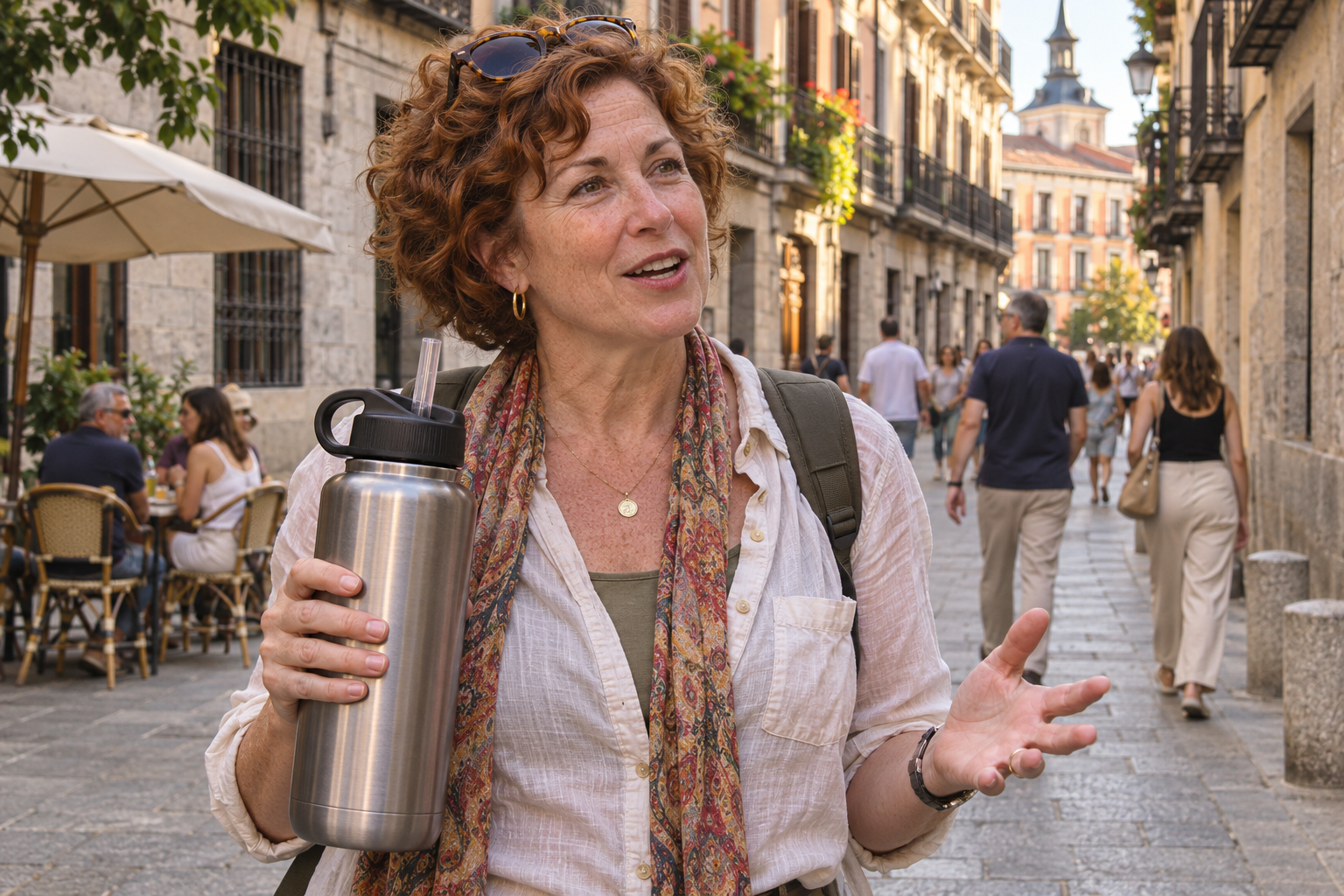
Let us start with the object, because it has become genuinely iconic. The large insulated water bottle, in its various fashionable brands, is a ubiquitous feature of contemporary American life, a thirty-two or forty-ounce vessel that many Americans carry with them essentially everywhere they go, refilling it throughout the day and rarely letting it out of reach.
It is more than a container; it is practically an accessory and, for some, an identity. The big bottle comes in a rainbow of colors and a hierarchy of trendy brands, it gets decorated and personalized, it has its own cultural moment and its own devoted following, and it travels with its owner from home to car to office to gym and everywhere else. The constant presence of this large bottle, and the constant sipping from it, is simply part of how a great many Americans move through their day, so automatic that they do not even notice they are doing it. For a lot of people it has become a genuine comfort object, something the hands reach for without thought, as much a security blanket as a source of water.
Naturally, it comes to Europe with them, and that is where it stops being invisible. The same bottle that blends seamlessly into the American landscape stands out sharply on a European street, where almost no one is carrying anything like it, and the American hauling their giant hydration vessel through a European old town suddenly becomes very conspicuous indeed. The object that is utterly unremarkable at home becomes, abroad, a beacon, and most Americans have no idea it is doing the broadcasting. It is a strange feeling, when you realize it, to learn that something you carried without a second thought has been quietly announcing you the whole time.
Europeans Do Not Carry Water
The reason the bottle stands out so sharply is simple: Europeans mostly do not walk around carrying water at all. The whole habit of toting a personal water supply everywhere and drinking from it continuously throughout the day is distinctively American, and it is largely absent from European daily life.
This does not mean Europeans are wandering around parched, of course. They drink water, obviously, but they tend to drink it differently: at the table with meals, poured from a bottle or a jug into a glass, or when they are actually thirsty, or from the public drinking fountains that many European cities provide. What they generally do not do is carry a large bottle around all day as a constant companion, sipping from it between sips, treating hydration as an ongoing project to be managed at every moment. Drinking water, for them, is something you do at certain times and places rather than continuously and everywhere, and so there is no need to haul a personal reservoir around.
This different rhythm of drinking is why the giant bottle looks so odd in a European setting. To a European eye, the sight of someone constantly drinking from an enormous bottle while walking down the street reads as strange and faintly excessive, because it simply is not how water is consumed there. The American is not doing anything wrong, but they are doing something culturally specific and visibly foreign, enacting an American relationship with hydration in a place that has a quite different one. The bottle is a tell precisely because the behavior behind it is so recognizably not European.
The American Hydration Obsession
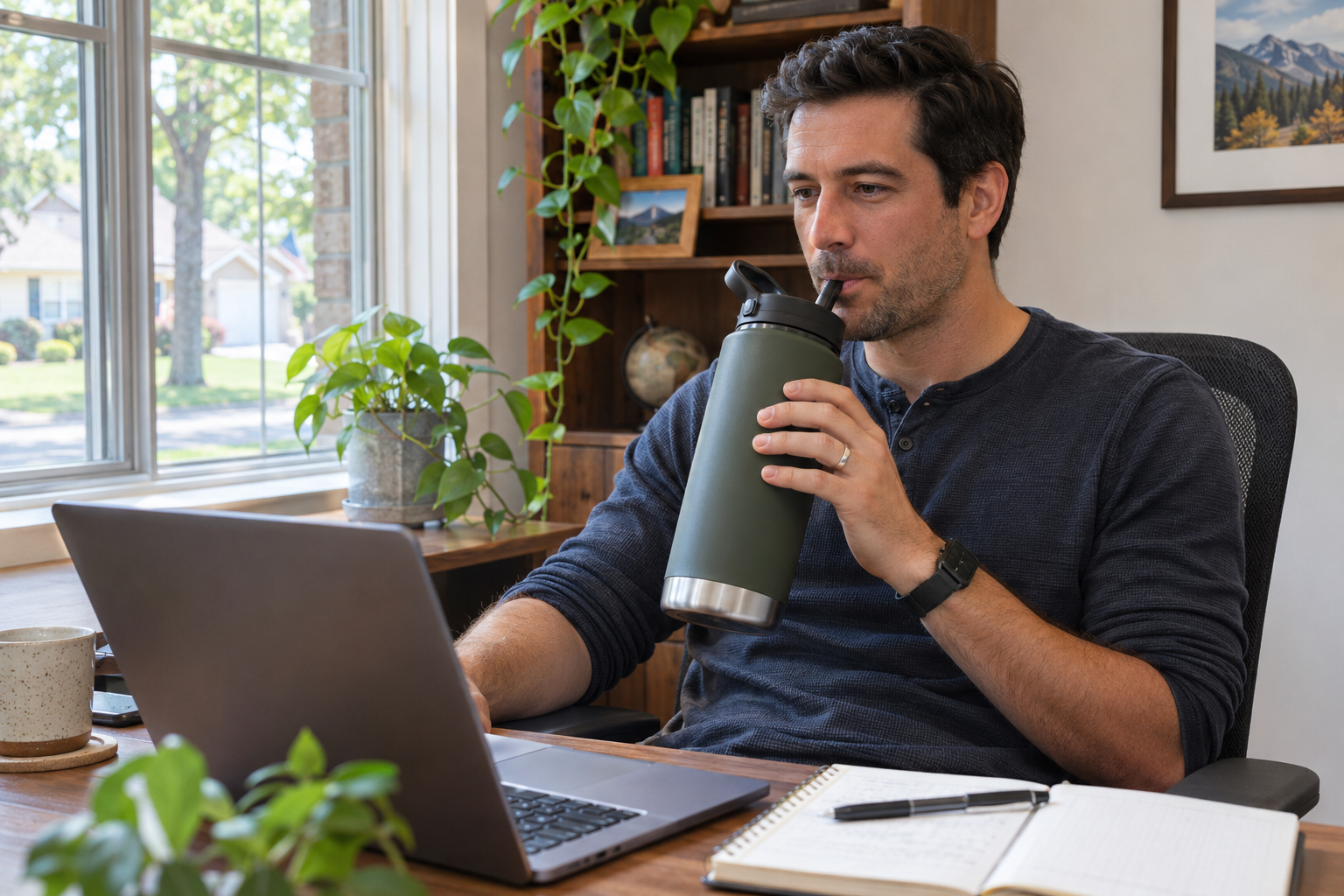
To understand the bottle, you have to understand the preoccupation behind it, because America has developed a genuine cultural obsession with hydration, and the big bottle is its most visible symbol. Staying hydrated has become, in American life, something close to a wellness imperative and even a minor identity.
The signs of it are everywhere. There is the famous and much-repeated advice to drink eight glasses of water a day, the trend of ambitious daily water goals and gallon-a-day challenges, the framing of constant hydration as essential to health, energy, clear skin, and general wellbeing, and the general sense that one should always be drinking water and always be slightly worried about not drinking enough. Carrying a large bottle and sipping from it all day is the practical expression of this whole mindset, a way of ensuring you are always hydrating and always have water to hand, and the bottle has become a badge of belonging to a health-conscious, self-optimizing culture.
This preoccupation is genuinely American in its intensity, and Europeans tend to find it curious. The idea that one must consciously drink large quantities of water all day long, track one’s intake, and never be without a supply strikes many Europeans as a peculiar American anxiety, an over-engineering of something their bodies handle perfectly well on their own. The giant bottle, to them, is not just a container but a small monument to a very American way of turning an ordinary bodily function into a project, a wellness pursuit, and a consumer trend all at once. It is hydration as lifestyle, and it is unmistakably from the United States.
Why Europeans Do Not
In fairness, it is worth being clear that the European approach is not some wiser or more disciplined relationship with water; it is just a more casual one. Europeans are not deliberately drinking less out of principle, nor are they walking around dehydrated and toughing it out. They simply relate to drinking water more offhandedly.
The European pattern is to drink when thirsty and at meals, and otherwise not to think about it much, trusting the body’s own signals rather than monitoring and managing intake as a conscious task. Water appears on the table at meals, fountains are there when you need them, a small bottle might be bought on a hot day, and that is generally that; the whole thing is handled without ceremony or constant attention. This is not a considered philosophy of hydration so much as the simple absence of the American preoccupation, a culture that never turned drinking water into a project and so feels no need to carry a reservoir around or track every ounce.
So the difference is not that one culture has hydration right and the other wrong, but that America made a conscious, somewhat anxious ritual out of something Europe leaves casual and unexamined. Neither population is suffering; both drink enough water to live perfectly well, by different routes. The American carries the big bottle because American culture taught them to treat hydration as a deliberate, ongoing task; the European carries nothing because their culture never did. It is a difference of attention and ritual, not of health, and recognizing that keeps the whole thing in its properly light perspective.
The Giant Bottle as a Tell
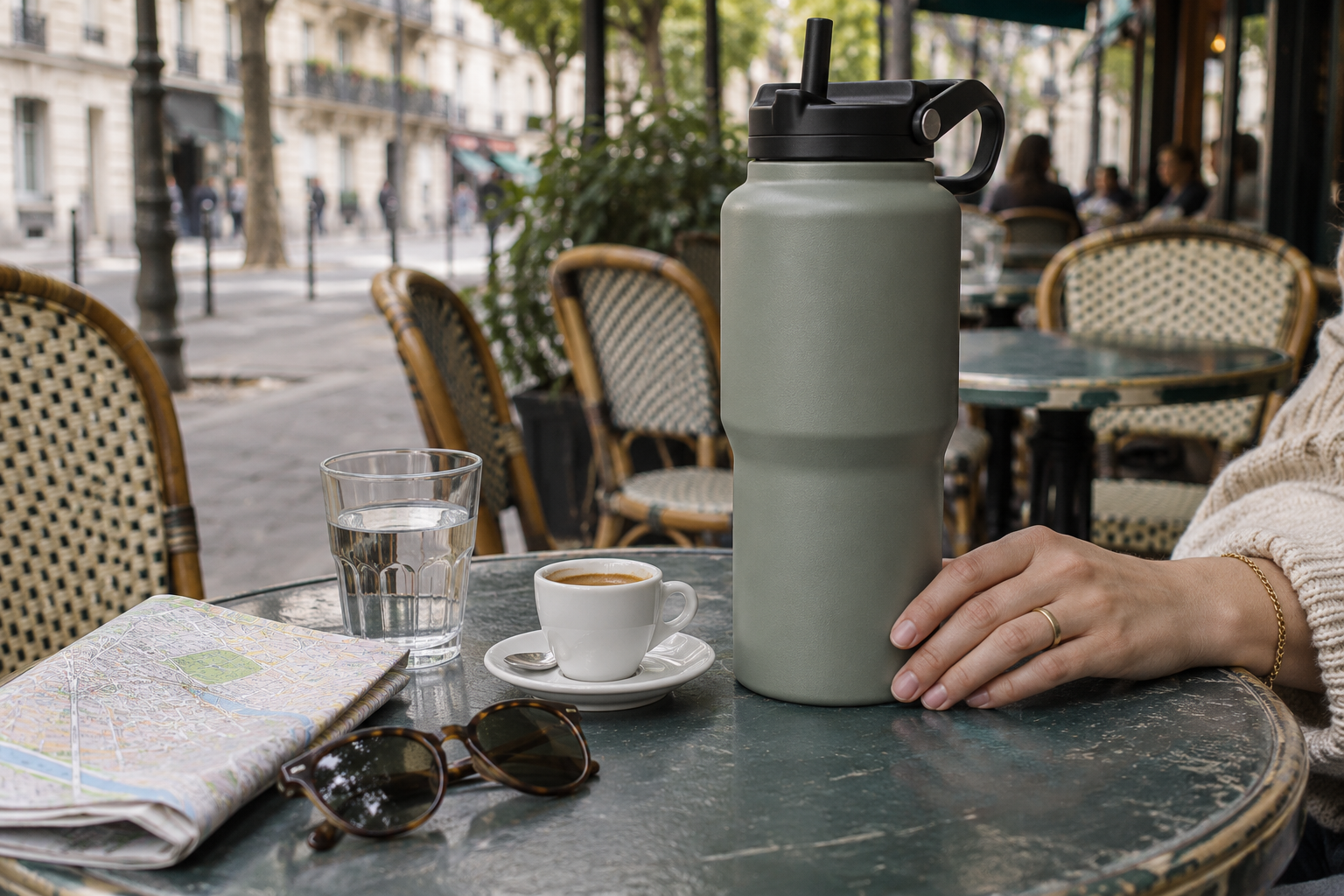
What all this adds up to, practically, is that the giant water bottle has become one of the most reliable signals of an American tourist in Europe, joining a familiar little constellation of giveaways. Along with the bright white athletic sneakers, the baseball cap, the backpack, and the athleisure, the big bottle is part of the unofficial uniform that marks a visitor from the United States at a glance.
It functions as a tell for exactly the reasons we have seen: it is an object Europeans do not carry, enacting a behavior Europeans do not share, so it stands out immediately and points clearly to its owner’s origins. A local would no more walk around sipping from a forty-ounce steel bottle than wear a foam finger, so when that bottle appears, everyone around registers, correctly, that here is an American abroad. The bottle announces nationality across a plaza more efficiently than almost anything else a person could carry, and most of the Americans carrying it have absolutely no idea that it is doing so. Locals and seasoned travelers learn to spot it without thinking, the way you might clock an accent in the first few words.
None of this is a problem, exactly, since being recognizable as a tourist is harmless and common. But it is worth knowing, both for the mild amusement of it and for anyone who would prefer to blend in a little more. The giant bottle is a friendly, slightly funny flag of Americanness, and whether you keep flying it is entirely up to you, but you may as well know that you are flying it. Awareness, here as with the sneakers and the backpack, simply lets you choose on purpose rather than by habit.
Is the American Way Wrong?

Before this turns into a pile-on against the humble water bottle, it deserves a genuine defense, because there is nothing actually wrong with the American approach, and in some respects it is admirable. Staying well hydrated is a perfectly sensible thing to care about, and the big reusable bottle has real virtues.
Consider the case for it. Carrying your own water means you are hydrated and comfortable on a long, hot day of sightseeing, never caught thirsty far from a shop or fountain, which is genuinely practical for the demanding mileage of a tourist’s day.
The reusable bottle is also environmentally sound, sparing you from buying and discarding a stream of single-use plastic bottles, which is a real virtue the casual European habit of grabbing a plastic bottle when thirsty does not share. And there is nothing unhealthy about drinking plenty of water; if the big bottle keeps you well hydrated and out of the overpriced tourist cafes buying drinks, it is doing you a quiet favor. The American habit, in other words, has sensible and even virtuous things going for it.
So the honest verdict is that this is a cultural difference, not a hierarchy, and the European casualness about water is not superior to the American diligence about it. The big bottle is practical, green, and healthy, and the only thing against it is that it marks you as a foreigner, which is a matter of blending in rather than of right and wrong. Neither the American who carries water everywhere nor the European who barely thinks about it is making a mistake; they are simply living out two different cultural attitudes toward a basic human need, and both get through the day perfectly well.
Carry It or Don’t

So what should the traveling American do with the famous bottle? The answer, as with so many of these tells, is simply to decide on purpose rather than by default, knowing what the object says and weighing that against what you want. There is no wrong choice here, only an informed one.
If you value the hydration and the environmental benefit, and you do not mind reading as a tourist, then carry your big bottle with a clear conscience; it is practical and sensible, and blending in is not everyone’s priority. If, on the other hand, you would rather not broadcast your nationality quite so loudly, you have easy options: carry a smaller, less conspicuous bottle, or adopt the European rhythm of drinking water at cafes and meals and from the city’s fountains rather than hauling a reservoir around. The genuinely useful middle path for many travelers is a modest bottle that handles a hot afternoon without announcing itself, giving you the practicality without the full flag-waving effect. A slim half-litre bottle tucked in a bag does the same job as the enormous one for most ordinary days, and nobody gives it a second glance.
In the end, the giant water bottle is one of the most endearing and harmless of the American tells, a small, funny, slightly over-engineered expression of a culture that worries charmingly about staying hydrated. There is nothing to be embarrassed about in it, and nothing you must change; there is only the small pleasure of understanding what your own habits signal in a foreign place, and the freedom to keep them or adjust them as you like. Carry the bottle or leave it, drink like an American or like a European, but do it knowingly, and raise a sip to the fact that even a water bottle, it turns out, has a nationality.

About the Author: Ruben, co-founder of Gamintraveler.com since 2014, is a seasoned traveler from Spain who has explored over 100 countries since 2009. Known for his extensive travel adventures across South America, Europe, the US, Australia, New Zealand, Asia, and Africa, Ruben combines his passion for adventurous yet sustainable living with his love for cycling, highlighted by his remarkable 5-month bicycle journey from Spain to Norway. He currently resides in Spain, where he continues sharing his travel experiences with his partner, Rachel, and their son, Han.