
An American living in Europe notices it sooner or later, usually with a small jolt of surprise. A colleague, a friend, a neighbor wears the same outfit two days running, and then a third: the same coat, the same sweater, the same trousers, worn again and again as though nothing could be more natural. And the strangest part is not that they do it, but that nobody around them seems to notice or care in the slightest.
To an American, this is faintly scandalous. Back home there is a strong, if unspoken, rule against being seen in the same outfit too soon, a sense that repeating what you wore earlier in the week is a small embarrassment, something to be tracked and avoided. We keep a quiet mental log of what we have worn and when, anxious not to be caught in a repeat. Europeans, by and large, do no such thing, and the freedom of it is one of the quietly liberating things about how they dress.
Here is the outfit-repeating divide, why nobody in Europe notices or minds, where the American anxiety about it comes from, and why the European way turns out to be better for your wallet, your closet, the planet, and your peace of mind. It may be the easiest and most freeing style lesson Europe has to offer, because it asks you to do less rather than more, and hands you back money, time, and peace of mind in exchange.
The Repeat That Shocks Americans

The behavior itself is simple and, to European eyes, utterly unremarkable: people wear the same clothes repeatedly, often several days in a row, and repeat their outfits freely throughout the week and month without a second thought. A good coat is worn every day it is cold. A favorite sweater reappears again and again, and a reliable pair of trousers does the same. There is no sense that an outfit, once worn, must be retired for a decent interval before it can be shown in public again, and the person wearing it would be puzzled by the very idea that it should.
To an American raised on the opposite instinct, this takes some getting used to. American culture carries a real, if rarely stated, norm against repeating outfits too quickly, a feeling that being seen in the same thing twice in a short span is a minor social failing, especially in professional or social settings where people might notice. Many Americans keep careful, half-conscious track of what they wore to work or to an event, specifically to avoid being caught in a repeat, and the idea of wearing the exact same outfit three days running would strike a lot of people back home as mildly mortifying.
So the European habit lands as a genuine culture clash. The visitor watches people cheerfully re-wear their clothes day after day, waits for someone to remark on it or for the wearer to seem self-conscious, and it never happens, because the whole anxiety simply does not exist here. What would be a small embarrassment in America is, in Europe, just getting dressed, and the gap between those two attitudes is wider and more revealing than it first appears.
Why Nobody Notices
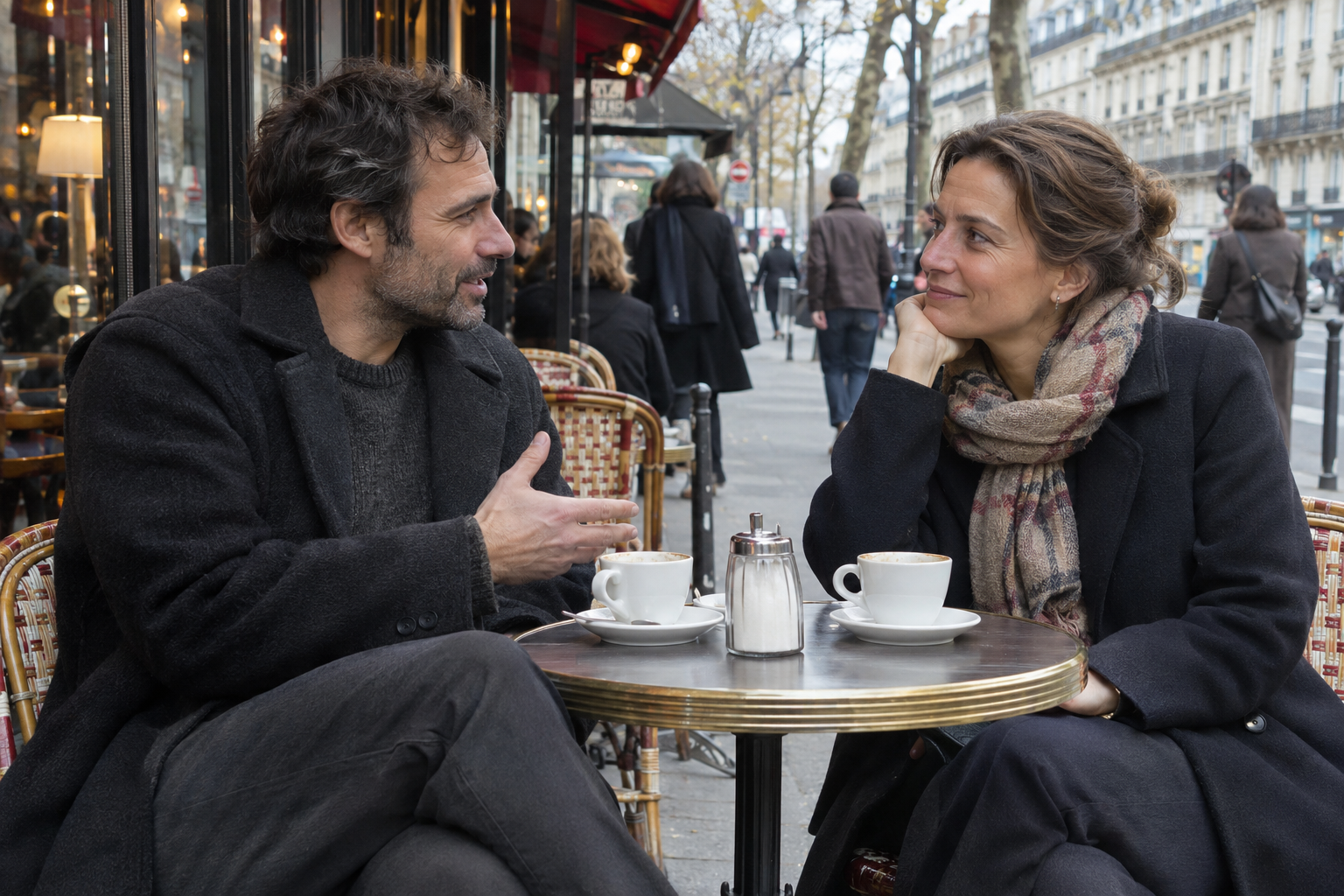
The heart of the matter is that in Europe, nobody is keeping track, and that changes everything. The reason you can wear the same outfit three days in a row without consequence is that no one around you is maintaining a mental log of your wardrobe, because the culture is simply not organized around outfit novelty the way American culture is.
This is the crucial difference. In America, there is enough collective attention paid to what people wear, and enough expectation of variety, that repeats get noticed and quietly registered; the surveillance is real, even if it is polite.
In Europe, that attention largely is not there. People wear their good clothes repeatedly as a matter of course, everyone does it, and so it is completely normal and completely invisible; there is no one thinking did he already wear that sweater this week, because the answer is obviously yes and nobody considers it worth a thought. The behavior is unremarkable precisely because it is universal, and universal behavior is invisible.
This is genuinely freeing once you absorb it. The American habit of tracking and varying outfits is a low-grade daily burden, a small ongoing anxiety about being caught in a repeat, and in Europe that burden simply lifts, because the thing you were anxious about is not something anyone cares about. You stop curating a rotation to avoid detection and simply wear your clothes, the good ones, often, because that is what everyone does and no one notices. The absence of the surveillance is the whole gift.
Fewer, Better Clothes
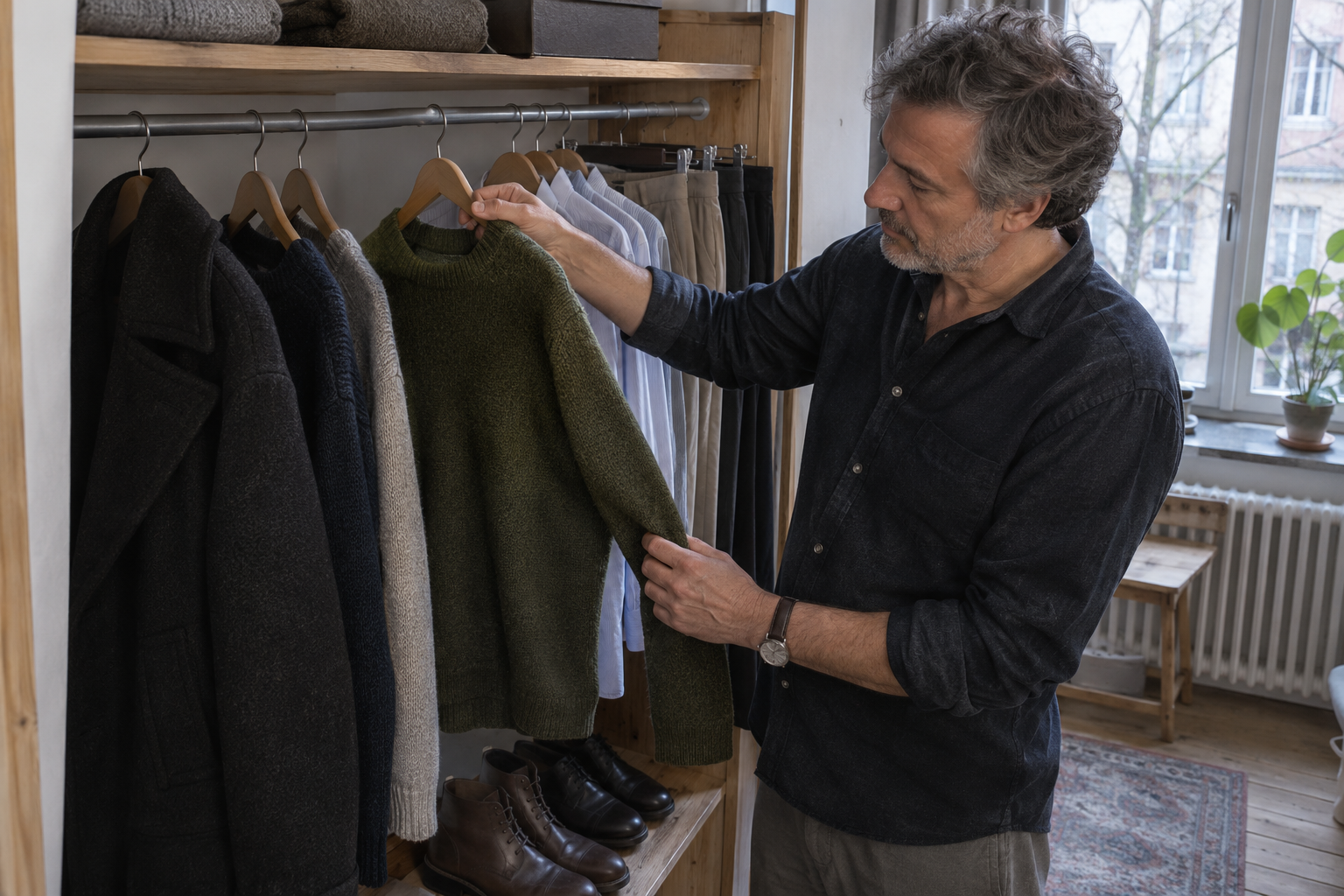
Underneath the relaxed attitude to repeating outfits lies a different way of owning clothes altogether, and it is the real foundation of the whole thing. Europeans, broadly, keep smaller wardrobes built from fewer, better pieces, and they wear those pieces often, which both explains and enables the repeating.
The logic is coherent and sensible. If your wardrobe consists of a handful of good, well-chosen, quality garments, a fine wool coat, a few excellent sweaters, well-made trousers, rather than a vast closet of cheap and trendy items, then wearing them repeatedly is simply the natural result; you have fewer things, each one is good, and you use them a lot. The European capsule, a small collection of quality basics worn in constant rotation, makes outfit-repeating not a failing but the whole point, because the clothes are good enough to be worn again and again and were bought to be. This is the same instinct that runs through so much of European dressing, the preference for a few fine things over many disposable ones, applied to the question of how often you wear them.
So the repeating is not laziness or poverty; it is the visible consequence of owning good clothes and using them. A European wears the same beautiful coat every day because it is a beautiful coat and that is what it is for, and the idea of leaving it in the closet to avoid being seen in it twice would strike them as bizarre, a waste of a good coat for the sake of an anxiety they do not have. Fewer, better, worn more: that is the European wardrobe, and the comfortable repeating of outfits is simply what it looks like in practice.
The American Novelty Treadmill

The American instinct runs the opposite way, and it is worth understanding where it comes from, because it is not a personal failing but a whole cultural machine. American fashion culture prizes newness and variety to a degree that Europe does not, and the never-repeat anxiety is one symptom of a much larger system built around constant consumption.
The machinery is familiar once you see it. American dressing leans heavily on novelty, on having new things, on variety for its own sake, fed by a fast-fashion industry that produces cheap, trendy clothing designed to be bought constantly, worn a handful of times, and replaced.
The closet full of many inexpensive items, each worn rarely, is the natural product of that system, and the pressure not to repeat outfits is both a cause and a consequence of it: you avoid repeating because the culture expects variety, and you can avoid repeating because you own so many cheap things. The whole arrangement keeps people buying, which is precisely what it is designed to do. The never-repeat rule, in this light, is less a matter of personal vanity than a small gear in a vast consumption engine.
This is the treadmill the European approach steps off. Where the American system pushes toward owning much and wearing each thing little, in an endless churn of acquisition and novelty, the European habit of owning little and wearing each thing much is a quiet refusal of the whole cycle. Neither is a moral judgment on the people caught in it, since both are cultural defaults absorbed rather than chosen, but they lead to very different closets and very different relationships with clothes. The American novelty treadmill is exhausting and expensive, and most people on it never quite notice they are running.
It Is Better for Almost Everything
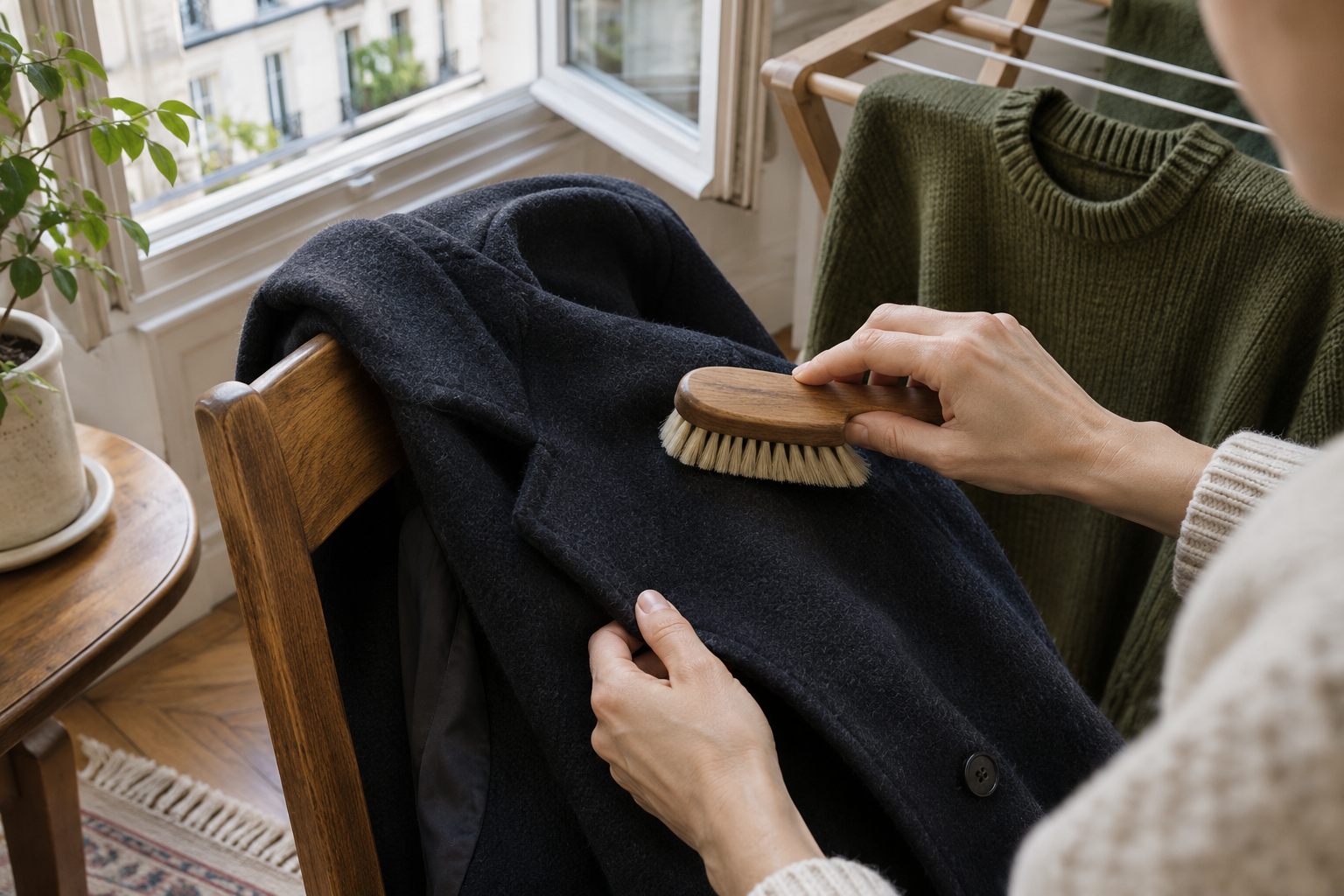
Once you compare the two approaches honestly, the European way of owning fewer clothes and wearing them often turns out to be better on nearly every measure that matters, which is the quietly persuasive part of the whole thing. This is not merely a different taste; it is, in most respects, simply the wiser arrangement.
Consider the advantages. It is better for your wallet, since buying a few good things and wearing them for years costs far less over time than a constant churn of cheap purchases, and it is far better for the planet, since it means vastly less consumption and far less of the environmental damage that fast fashion inflicts.
It is better for your closet and your home, which stay uncluttered rather than overflowing with barely-worn items. And it is better for your mornings, since a small wardrobe of good things you are happy to repeat removes the daily decision fatigue of assembling a novel outfit from a sea of options, giving you the effortless getting-dressed that well-dressed Europeans seem to manage without trying. Cheaper, greener, tidier, and easier: the repeating life wins on all of them.
That is a remarkable clean sweep for a habit Americans are taught to be slightly ashamed of. The thing we are trained to avoid, being seen in the same outfit repeatedly, turns out to be the sensible, sustainable, economical, and liberating choice, while the thing we are trained to pursue, constant novelty, turns out to be the expensive, wasteful, cluttering, and exhausting one. Once you see the comparison laid out, the European attitude stops looking like indifference to fashion and starts looking like simple good sense, which is exactly what it is.
Freshness, Not Novelty
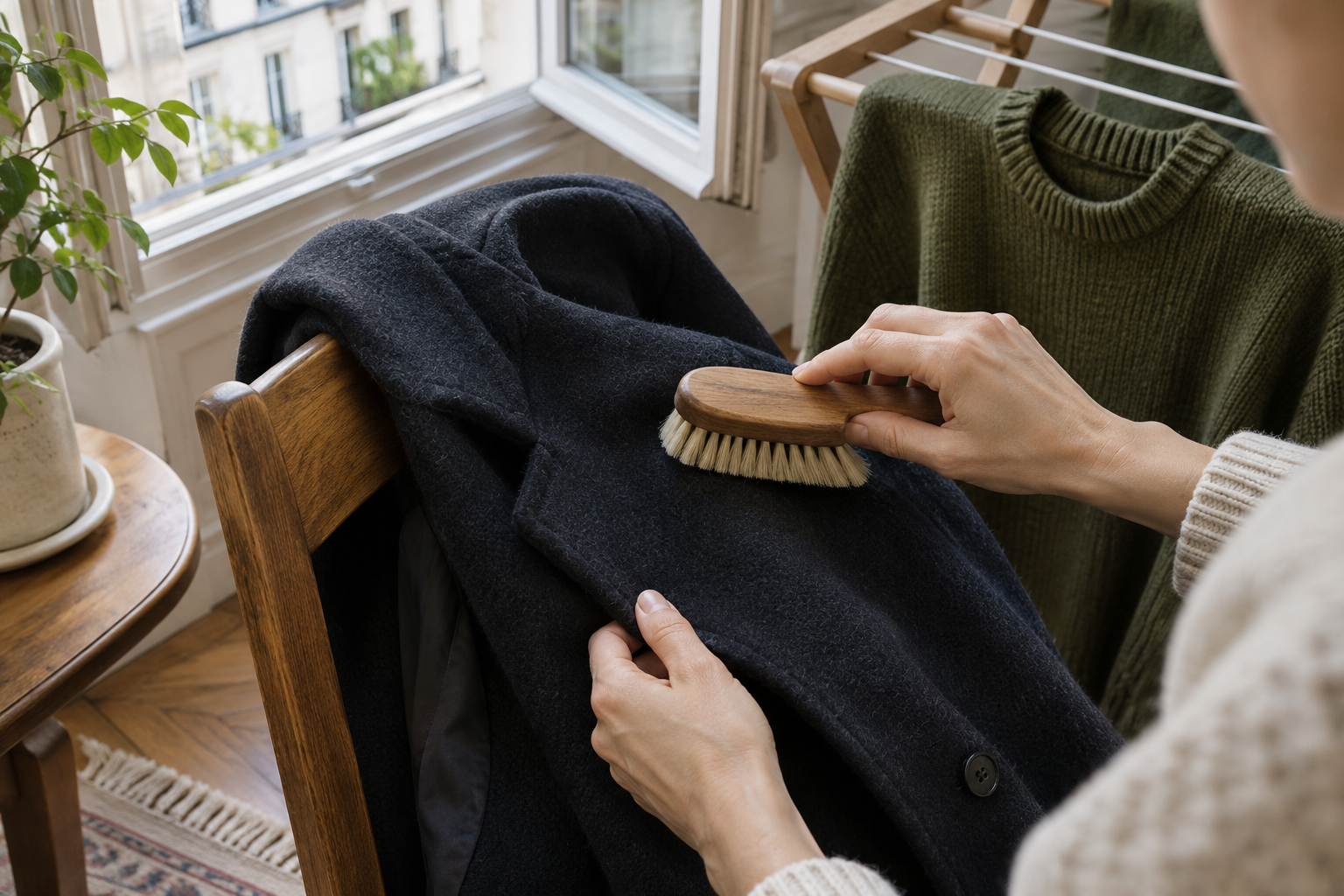
One honest clarification is important here, lest anyone picture Europeans trudging around in dirty clothes: wearing the same outfit repeatedly is not the same as being unhygienic, and the distinction matters. The European habit is about re-wearing clean, good clothes, not about neglecting to wash.
The key is the nature of the clothes. Good quality garments, especially natural fibers like wool, do not need to be washed after every single wearing the way a sweaty cotton t-shirt might; they stay fresh over multiple wears, especially with a little airing between them, and in fact washing them less preserves them better. So a European wearing the same wool sweater or good trousers several days running is not wearing something grubby; they are wearing a quality garment that is perfectly fresh on its third outing, aired out and cared for rather than laundered to death. The repeating applies to the sort of clothes that bear repeating, the outer layers and the good pieces, while the things that do need frequent washing, like underthings and shirts worn close to the skin, are of course changed as normal.
This is a sensible distinction that the American over-washing instinct tends to miss. In the drive to never be seen in the same thing twice, American habits can also tip into washing good clothes far more often than they need, which wears them out faster and wastes water and energy besides. The European approach, re-wearing clean good clothes and airing rather than endlessly laundering them, is gentler on the clothes and on the environment alike. Freshness, in other words, comes from caring for good clothes properly, not from the frantic novelty of a fresh outfit every day, and the two are easily confused only by a culture that has forgotten the difference.
Wear Your Good Clothes

So the lesson Europe offers here is one of the simplest and most freeing in all of dressing: build a small wardrobe of good clothes, and then wear them, often, without a shred of anxiety about repeating. Nobody is counting, nobody cares, and the habit you were taught to avoid is actually the smart one.
The practical shift is easy and entirely liberating. Invest in fewer, better pieces, a good coat, quality knits, well-made basics, rather than a closet full of cheap and trendy things, and then simply wear them as much as you like, repeating outfits freely, re-wearing the good pieces across multiple days, and airing rather than over-washing them. Drop the mental log of what you wore when, and the low-grade worry about being caught in a repeat, because they were never serving you anyway. You will spend less, waste less, own less clutter, and get dressed more easily, and you will look, if anything, more pulled-together, since good clothes worn often beat mediocre clothes worn once.
In the end, the freedom to wear the same outfit three days in a row is a small thing that points at a much larger and better way of living with clothes. It is cheaper, greener, tidier, calmer, and quietly more elegant than the exhausting American pursuit of daily novelty, and all it asks is that you let go of a rule that was only ever making your life harder.
So build your good small wardrobe, wear it with abandon, repeat to your heart’s content, and trust that nobody is keeping score, because in the places worth imitating, nobody is. Wear your good clothes, and wear them often. That is the whole of it.

About the Author: Ruben, co-founder of Gamintraveler.com since 2014, is a seasoned traveler from Spain who has explored over 100 countries since 2009. Known for his extensive travel adventures across South America, Europe, the US, Australia, New Zealand, Asia, and Africa, Ruben combines his passion for adventurous yet sustainable living with his love for cycling, highlighted by his remarkable 5-month bicycle journey from Spain to Norway. He currently resides in Spain, where he continues sharing his travel experiences with his partner, Rachel, and their son, Han.