
Walk down the salad-dressing aisle of any American supermarket and you will find a wall of bottles, dozens of them, in every flavor and brand, most costing four, five, or six dollars, most packed with sugar, gums, stabilizers, and a list of ingredients longer than your arm. Walk into a French kitchen at dinnertime and you will find none of that. What you will find is someone making the dressing in the bottom of the salad bowl, in under a minute, from four things they already have, and then tossing the leaves right on top of it. The French do not buy salad dressing, by and large, because the idea of buying something so simple and so cheap to make strikes them as slightly absurd.
This is one of the small, quietly superior habits of the French table, and it is one of the easiest to steal. A real vinaigrette is mustard, vinegar, oil, and seasoning, whisked together into a glossy, sharp, perfectly balanced dressing that makes a bottled one taste gluey and oversweet by comparison. It costs pennies, it takes sixty seconds, and once you learn it you will wonder why you ever paid six dollars for the inferior version. Here is what a French vinaigrette actually is, why it needs only four ingredients, the one trick that makes it hold together, why the French make it fresh every single time, and the formula to make it yourself forever.
Four Ingredients, Nothing More
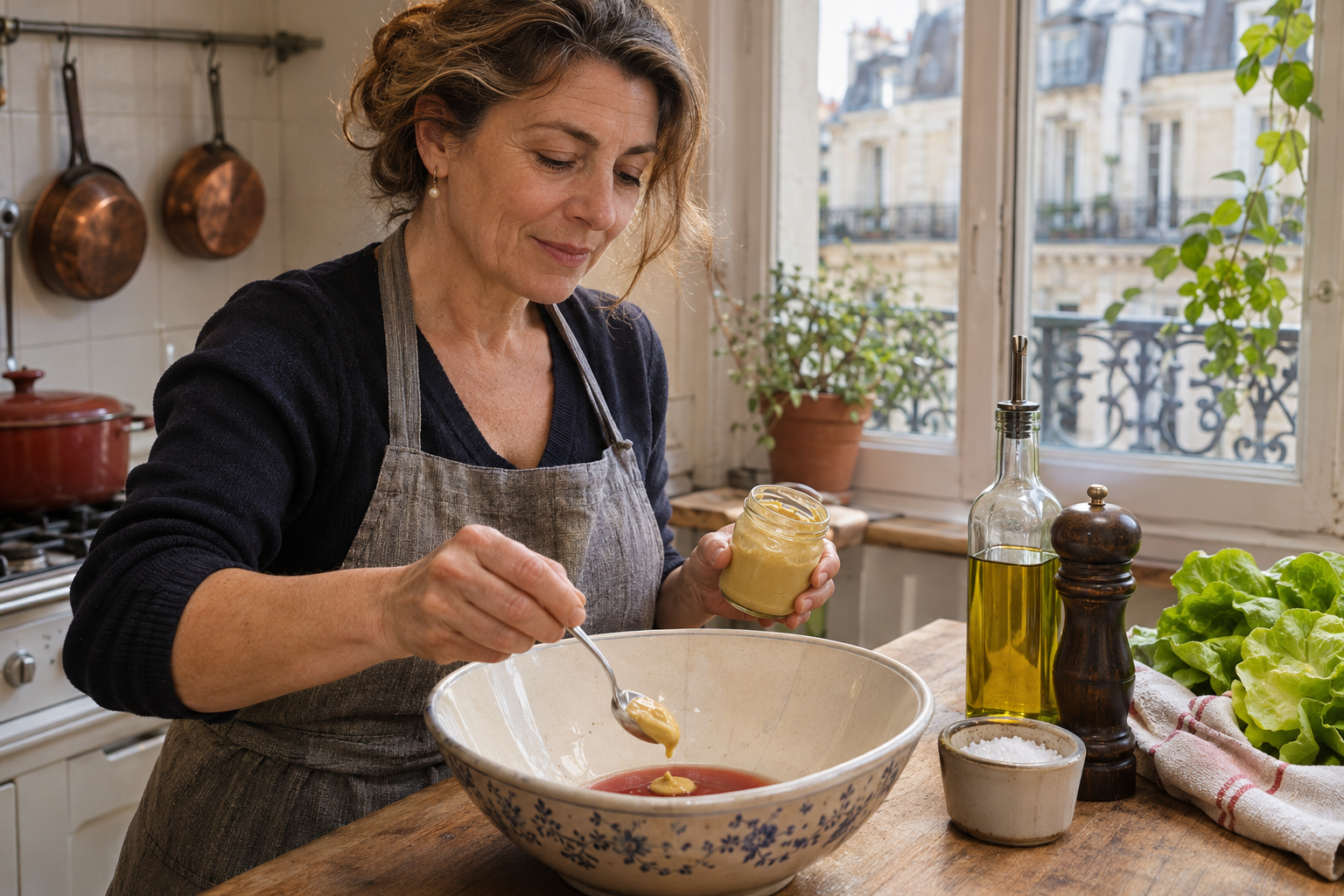
A classic French vinaigrette is built from four basic things, and the austerity is the point. There is mustard, almost always Dijon, which brings sharpness and, crucially, does a job we will come to in a moment. There is an acid, usually red wine vinegar, though lemon juice or another vinegar works. There is oil, a good neutral or olive oil, which makes up the bulk.
And there is seasoning, salt and pepper. That is the whole list. Mustard, vinegar, oil, salt, and pepper, counted generously as four, and from those few staples comes a dressing better than anything in a bottle.
The genius of it is how much those four ingredients can do when they are balanced properly. The mustard and vinegar bring the sharp, bright, tangy punch that wakes up a plate of leaves. The oil carries and softens it, coating the salad and rounding off the acidity.
The salt and pepper tie it together and bring everything into focus. Balanced well, the result is a dressing with real character, sharp but not harsh, rich but not heavy, that tastes clean and alive in a way a sweetened, stabilized bottled dressing never does.
What is not in it is as telling as what is. There is no sugar, no corn syrup, no xanthan gum, no preservatives, no long list of stabilizers to keep it shelf-stable for a year. A French vinaigrette is made to be eaten now, not to sit in a fridge door for months, and that freedom from the demands of bottling is exactly why it tastes so much better. It is real food made fresh, not a manufactured product engineered to survive a supply chain, and your tongue knows the difference immediately.
The Mustard Trick That Holds It Together
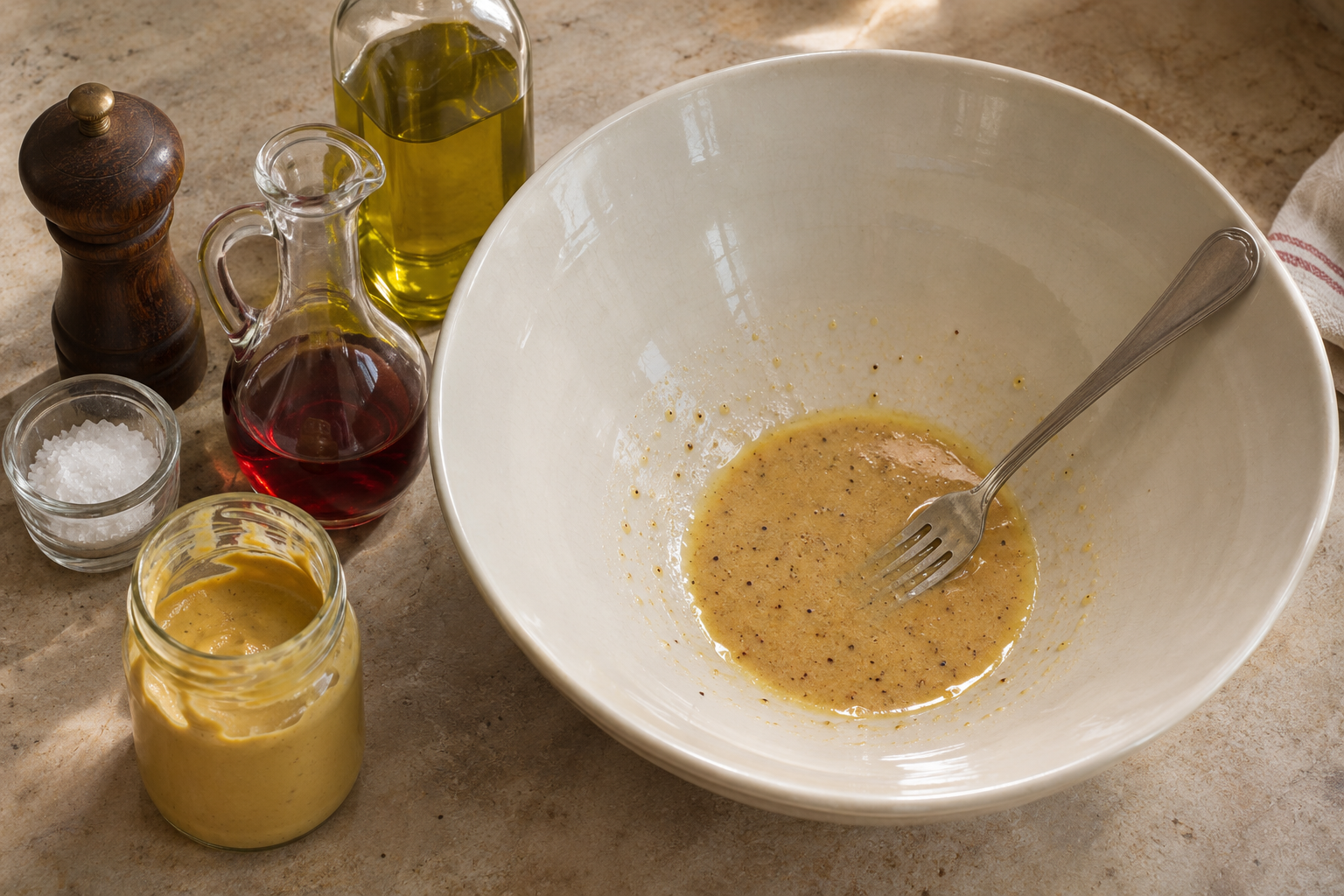
Here is the small piece of kitchen science that makes the whole thing work, the reason the mustard is not just for flavor. Oil and vinegar do not naturally mix. Pour them together and they separate, the oil floating on the water-based vinegar, and no amount of stirring will keep them combined for long. This is the basic problem every salad dressing has to solve, and the French solve it with the mustard.
Mustard is a natural emulsifier, a substance that helps oil and water-based liquids stay mixed together. When you whisk mustard into the vinegar first and then add the oil slowly while whisking, the mustard grabs hold of both and binds them into a smooth, stable, slightly creamy emulsion that does not separate on the plate. The dressing turns glossy and thick, clinging to the leaves instead of sliding off them in a puddle of oil. That is the whole trick, and it is why the mustard goes in at the start, not as a flavoring at the end.
This is also why the order and the method matter more than people expect. You put the mustard and vinegar and seasoning in the bowl first, whisk them together, and then add the oil in a thin stream while whisking continuously, so the emulsion forms properly.
Done this way, a vinaigrette holds together beautifully and coats a salad evenly. Done carelessly, by just dumping everything in at once, it will still taste fine but will separate faster and dress the leaves less evenly. The technique is simple, but it is real, and understanding the emulsion is what turns a splash of oil and vinegar into a proper dressing.
Make It Your Own
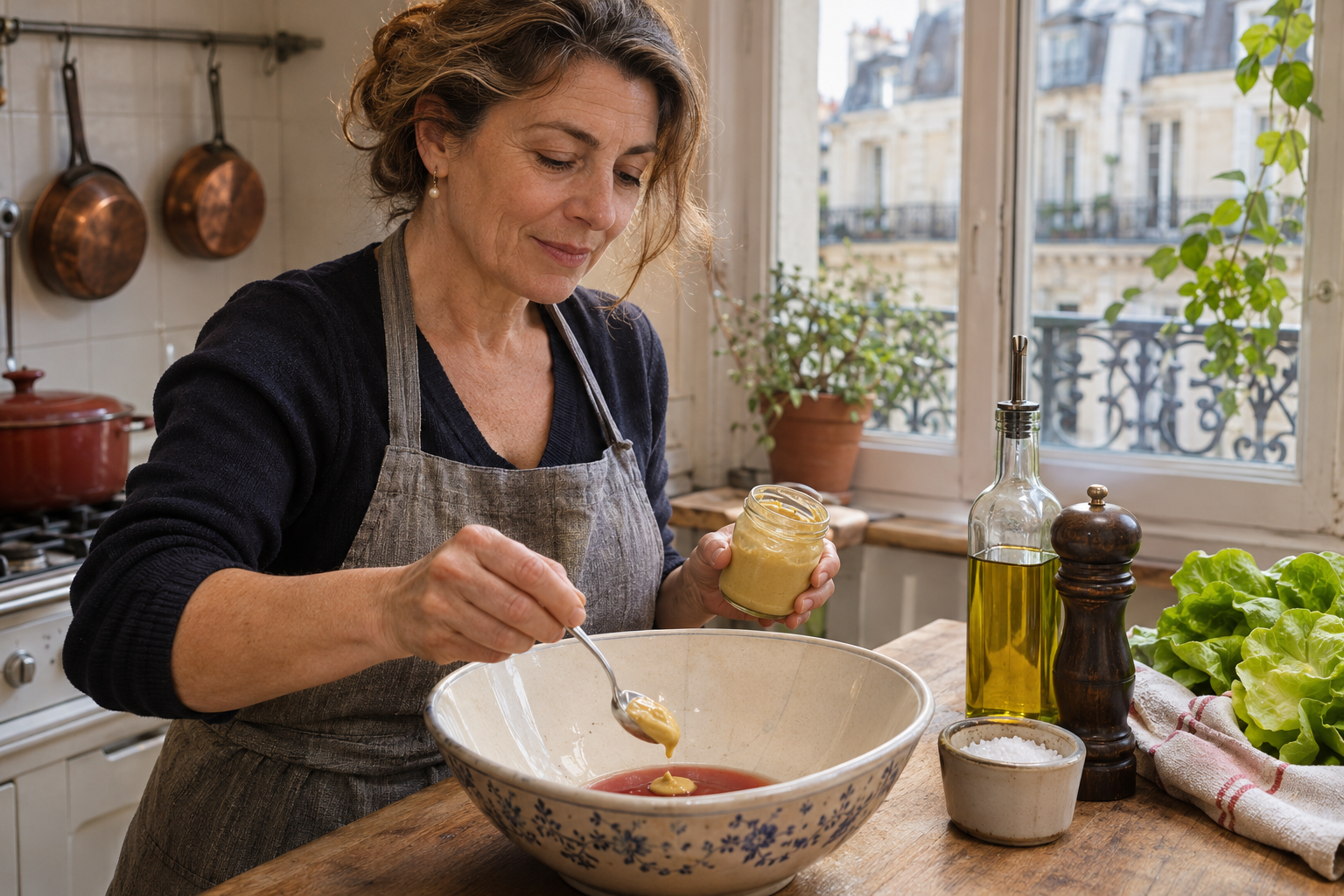
Once you have the base, the four-ingredient vinaigrette is a springboard rather than a fixed recipe, and a few small additions take it in new directions without complicating it. A finely minced shallot, left to soften in the vinegar for a few minutes before you whisk in the oil, is the most classic upgrade, lending a gentle, sweet onion note that suits almost any salad. A handful of chopped fresh herbs, chives, parsley, or tarragon, turns it into something fit for a special lunch.
You can swap the acid to change the whole character, using lemon juice for a brighter, fresher dressing or a sherry or balsamic vinegar for depth. A tiny touch of honey softens a very sharp vinegar, though the French tend to keep sweetness to the barest hint rather than the heavy hand of a bottled dressing. The point is that none of these are new recipes to memorize, just small turns on the same simple formula, which is exactly why learning the base is worth so much.
Why the French Make It Fresh Every Time
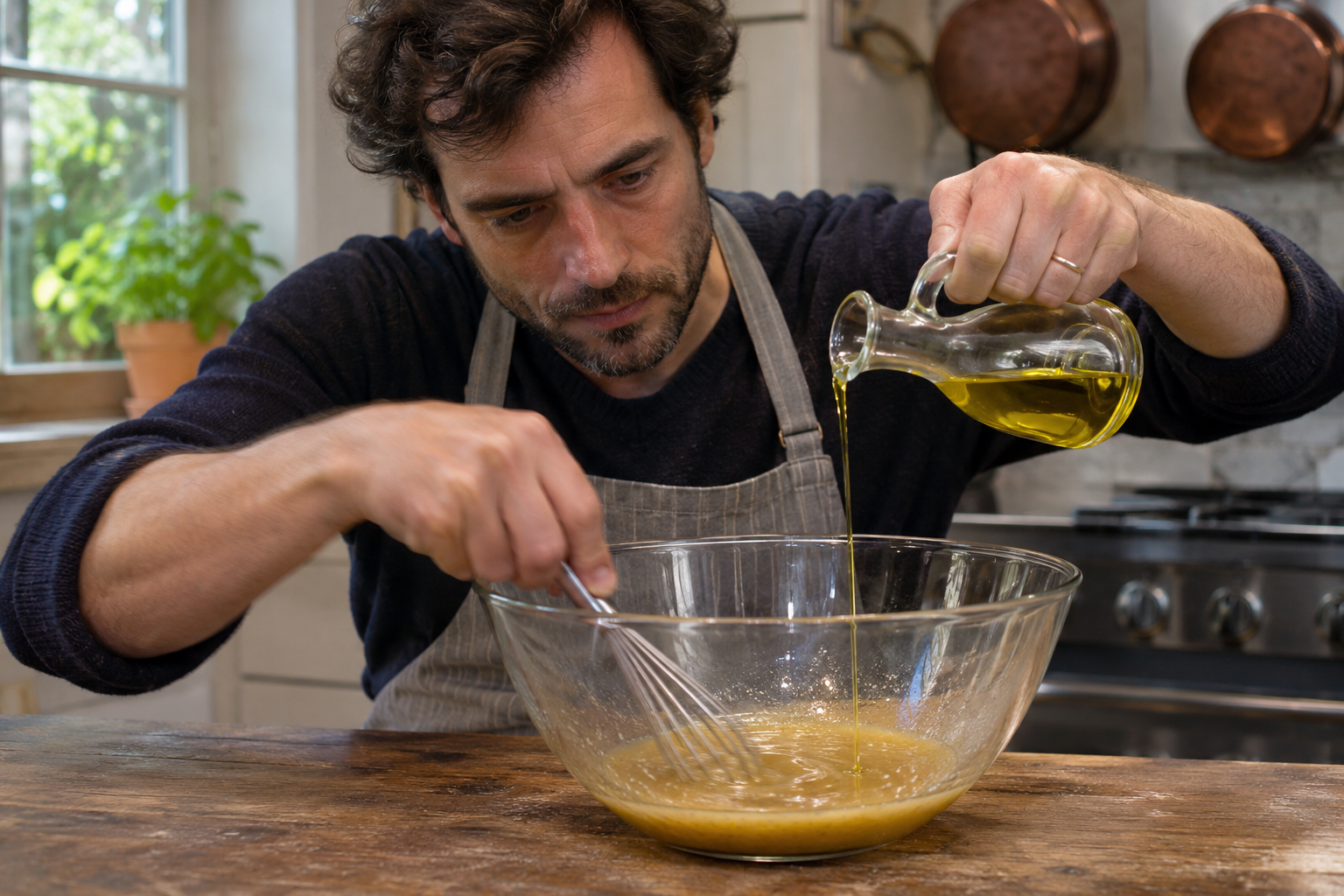
The deepest difference between the French way and the American way is not the ingredients but the timing. The French make vinaigrette fresh, right before the salad is served, often directly in the salad bowl, and this is a genuine philosophical divide from the American habit of keeping a bottle in the fridge for weeks. A freshly made vinaigrette, whisked up minutes before it meets the leaves, is brighter, sharper, and more alive than one that has sat around, however good the recipe.
Making it in the bowl is the most elegant version of the habit. You whisk the vinaigrette in the bottom of the salad bowl, then lay the leaves on top, and toss only at the last second before serving so the leaves are coated but not yet wilted. Some cooks even use the classic trick of rubbing the bowl with a cut clove of garlic first, so a faint garlic note perfumes the whole salad without a single piece of garlic in it. The dressing and the serving happen in the same vessel, with nothing wasted and nothing stored.
This freshness is why the French find the bottled approach so strange. Why keep a jar of stabilized, sweetened dressing for a month, they reason, when a better one takes less time to make than it takes to find the bottle in the fridge and unscrew the cap? The vinaigrette is not treated as a product you buy and hoard but as a small, routine act of cooking, done anew each evening as naturally as salting the water for pasta. That daily freshness, more than any secret ingredient, is the real reason French salad tastes the way it does.
The $6 Bottle, and What It Costs You
It is worth being honest about why Americans buy the bottle, because it is not stupidity but convenience and habit. The bottle is easy, it is familiar, and it removes a small decision at a busy dinnertime. But the convenience comes at a real cost, and not only the four to six dollars on the label. The bottled dressing is almost always sweeter than a French palate would tolerate, often loaded with sugar to make it palatable, and thickened and stabilized with additives that give it a slightly gluey texture quite unlike a fresh emulsion.
The economics are lopsided too. A bottle of dressing costs several dollars and gives you a product of mediocre quality, while the ingredients for a homemade vinaigrette, a jar of Dijon, a bottle of vinegar, and some oil, cost very little per salad and last for dozens of dressings. Made at home, a vinaigrette costs pennies a serving and tastes dramatically better, which makes the bottled version one of the worse deals in the supermarket once you see it clearly. You are paying more for less, in both flavor and quality.
None of this requires any special skill, which is the liberating part. A vinaigrette is genuinely one of the first things any French child learns to make, a sixty-second task with no cooking involved, and the barrier to switching is almost nonexistent. Once you have made it a few times you will stop measuring, do it by eye and taste, and never think about the bottle aisle again. It is one of those small kitchen habits that costs you nothing to adopt and quietly improves every salad you eat for the rest of your life.
Make It: Classic French Vinaigrette
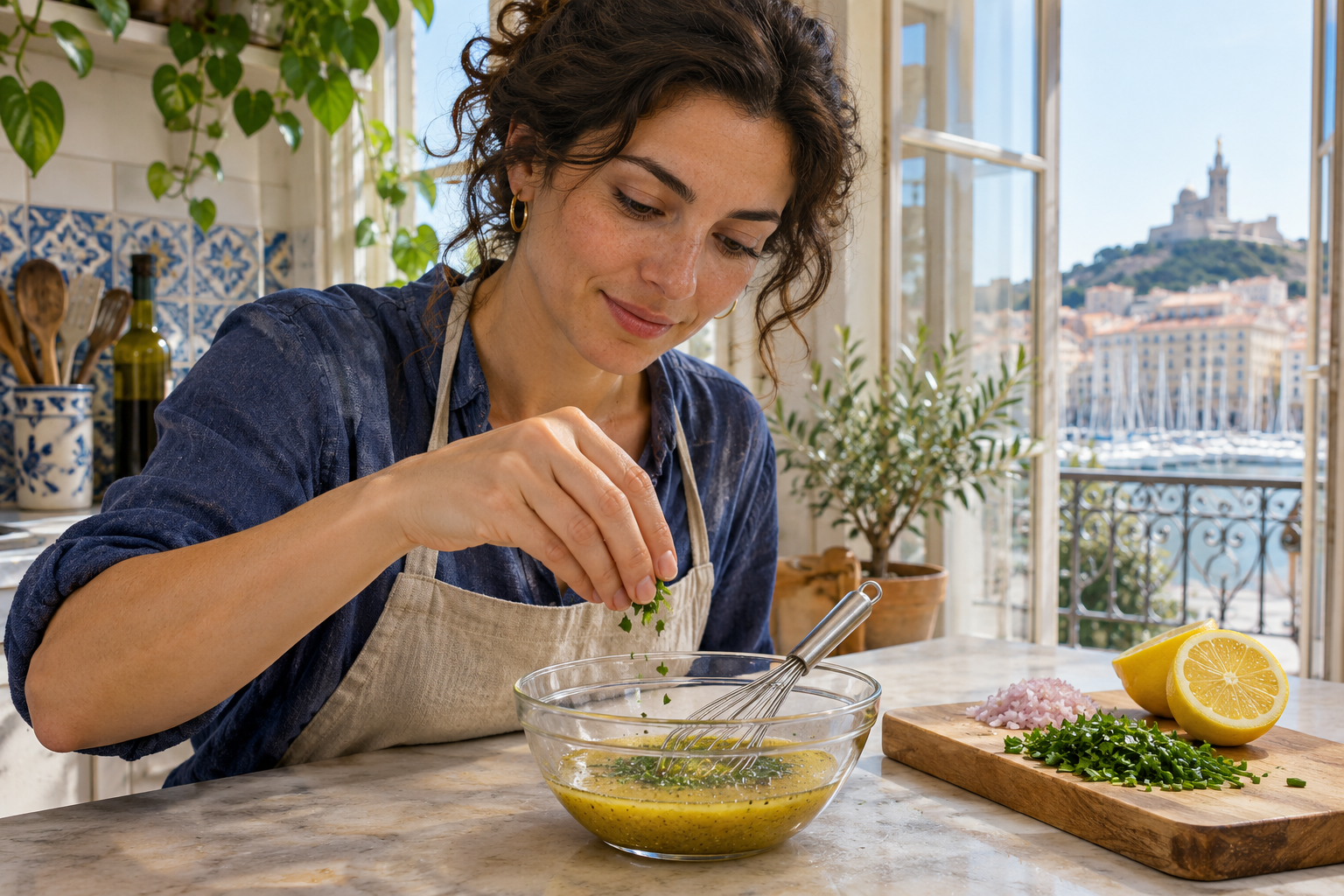
This makes enough to dress a salad for four, and the method matters as much as the measures. Whisk the mustard, vinegar, and seasoning first, then add the oil slowly to form the emulsion. The classic ratio is about one part vinegar to three parts oil, but adjust to your taste.
Ingredients
- 1 teaspoon Dijon mustard
- 1 tablespoon red wine vinegar
- 3 tablespoons olive oil or a neutral oil
- salt and freshly ground black pepper
- 1 clove garlic, optional, for rubbing the bowl
Instructions
If you like a faint garlic note, cut the clove of garlic in half and rub it around the inside of your salad bowl, then discard it. This perfumes the salad gently without any pieces of garlic in the dressing.
Put the Dijon mustard, red wine vinegar, and a good pinch of salt and pepper into the bottom of the bowl. Whisk them together with a fork or small whisk until the salt dissolves and the mixture is smooth. Getting the mustard and vinegar combined first is what lets the emulsion form.
Now add the oil in a thin, steady stream while whisking continuously. As you whisk, the dressing will thicken and turn glossy and slightly creamy as the mustard binds the oil and vinegar into an emulsion. Keep going until all the oil is incorporated and you have a smooth, unified dressing.
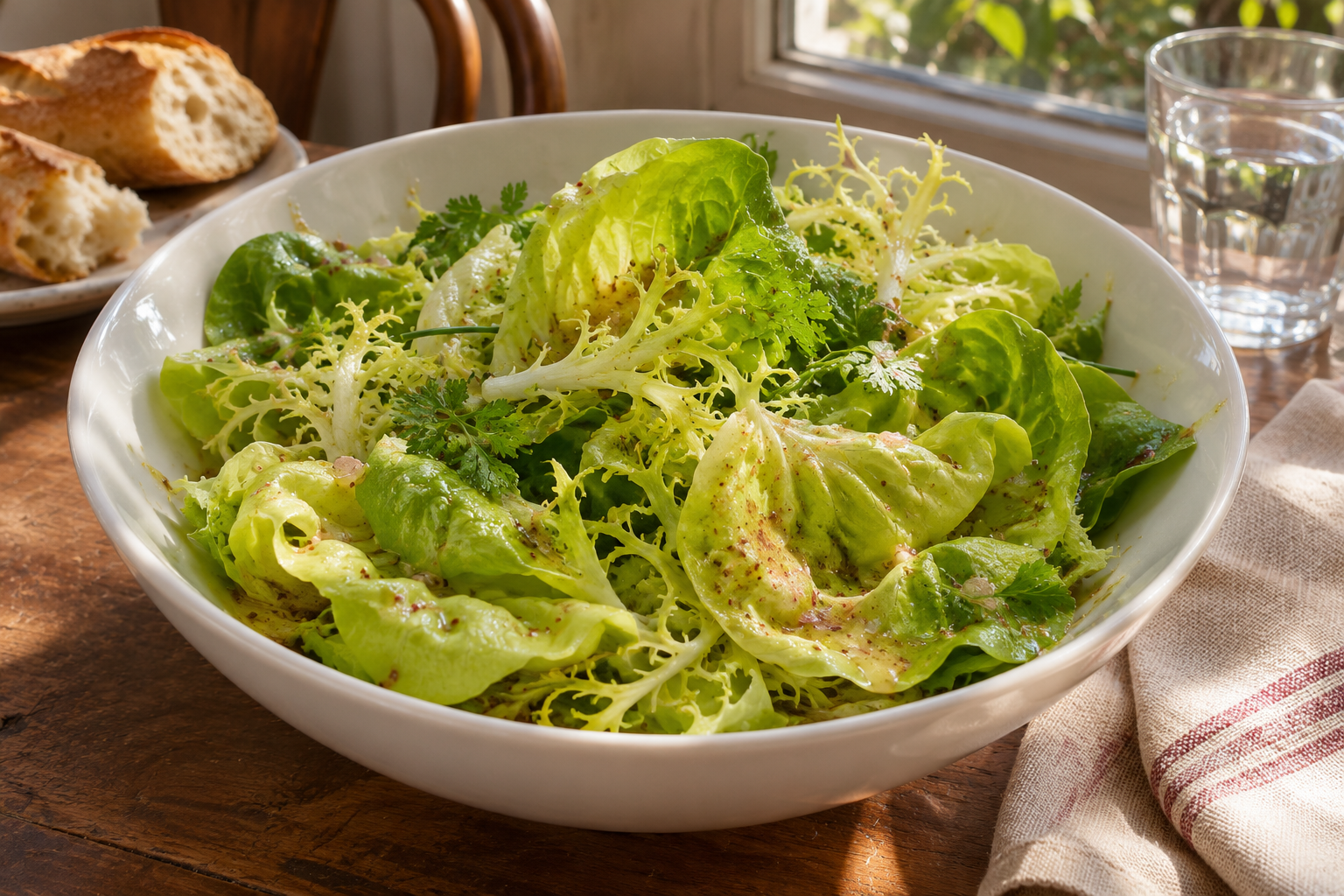
Taste it, on a leaf or a fingertip, and adjust. If it is too sharp, add a little more oil. If it is flat, a touch more vinegar or salt. When it tastes balanced and bright, lay your salad leaves on top of the dressing in the bowl and leave them there, undressed, until the moment you serve.
Just before serving, toss the leaves up through the dressing so they are evenly and lightly coated. Serve at once, while the leaves are still crisp and fresh. Never dress a salad long before it is eaten, or the leaves will wilt, which is the final small rule of doing it the French way.

About the Author: Ruben, co-founder of Gamintraveler.com since 2014, is a seasoned traveler from Spain who has explored over 100 countries since 2009. Known for his extensive travel adventures across South America, Europe, the US, Australia, New Zealand, Asia, and Africa, Ruben combines his passion for adventurous yet sustainable living with his love for cycling, highlighted by his remarkable 5-month bicycle journey from Spain to Norway. He currently resides in Spain, where he continues sharing his travel experiences with his partner, Rachel, and their son, Han.