
An American who tastes pastitsio for the first time usually reaches for the nearest word they have, and the word is lasagna. It makes sense. There is pasta, there is a rich meat sauce, there is a creamy topping, and the whole thing is baked in a dish and cut into generous squares.
But a few bites in, something is clearly different, two things really, and both of them are the point. The pasta is not flat sheets but long tubes, standing up through the layers, and running through the meat sauce is the warm, sweet, utterly un-Italian flavor of cinnamon.
This is Greece’s great baked pasta dish, a cornerstone of the home table and the taverna menu alike, and it is only lasagna’s cousin in the loosest sense. The tube pasta gives it a completely different texture, and the warm spices give it a flavor that stops American diners in their tracks, because cinnamon in a savory meat dish is exactly the kind of thing we are trained to find surprising. Here is what pastitsio actually is, why the tubes matter, where the cinnamon comes from and why it belongs, how the grandmothers of Athens layer it, and how to build one yourself.
Three Layers, Built to Be Cut
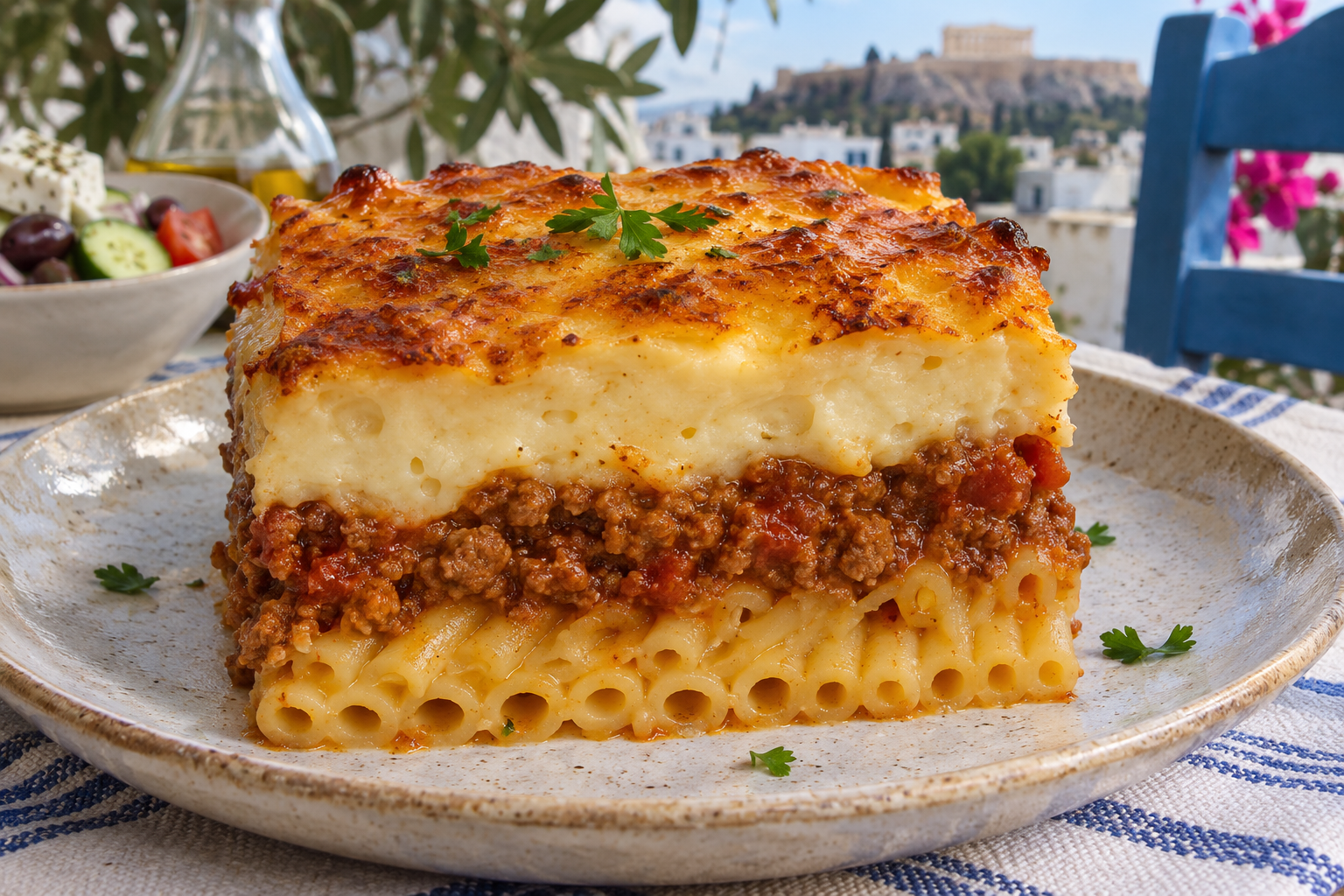
Pastitsio is a layered baked casserole with three distinct parts, and understanding the three is understanding the dish. At the bottom is a layer of tubular pasta, bound lightly with cheese and egg so it sets into a sliceable base. In the middle is a thick, spiced meat sauce, usually ground beef or lamb cooked down with tomato, onion, and warm spices. On top is a thick layer of bechamel, the same butter-flour-milk white sauce the French use, enriched with egg and cheese so it bakes into a golden, custardy crown.
Baked together, these three layers fuse into something that can be cut into neat, tall squares, each one showing its strata like a cross-section, the pale pasta base, the dark band of meat, the golden cap of bechamel. That cuttability is central to what pastitsio is. It is a dish made in a big pan to feed a family or a crowd, portioned out into solid squares, as much a Sunday or holiday centerpiece as a weeknight dinner. It holds its shape, it travels well to the table, and it reheats beautifully, all of which have made it one of the most dependable dishes in the Greek repertoire.
The bechamel is worth pausing on, because it tells you something about Greek cooking. That French white sauce is not an accident. It arrived in Greek cuisine through the influence of French-trained chefs in the early twentieth century, and it became a defining feature of a whole family of Greek baked dishes, pastitsio and moussaka chief among them. So the creamy top of a pastitsio is a small piece of culinary history, a French technique folded permanently into the Greek kitchen and now unthinkable to leave out.
Why the Pasta Is Tubes
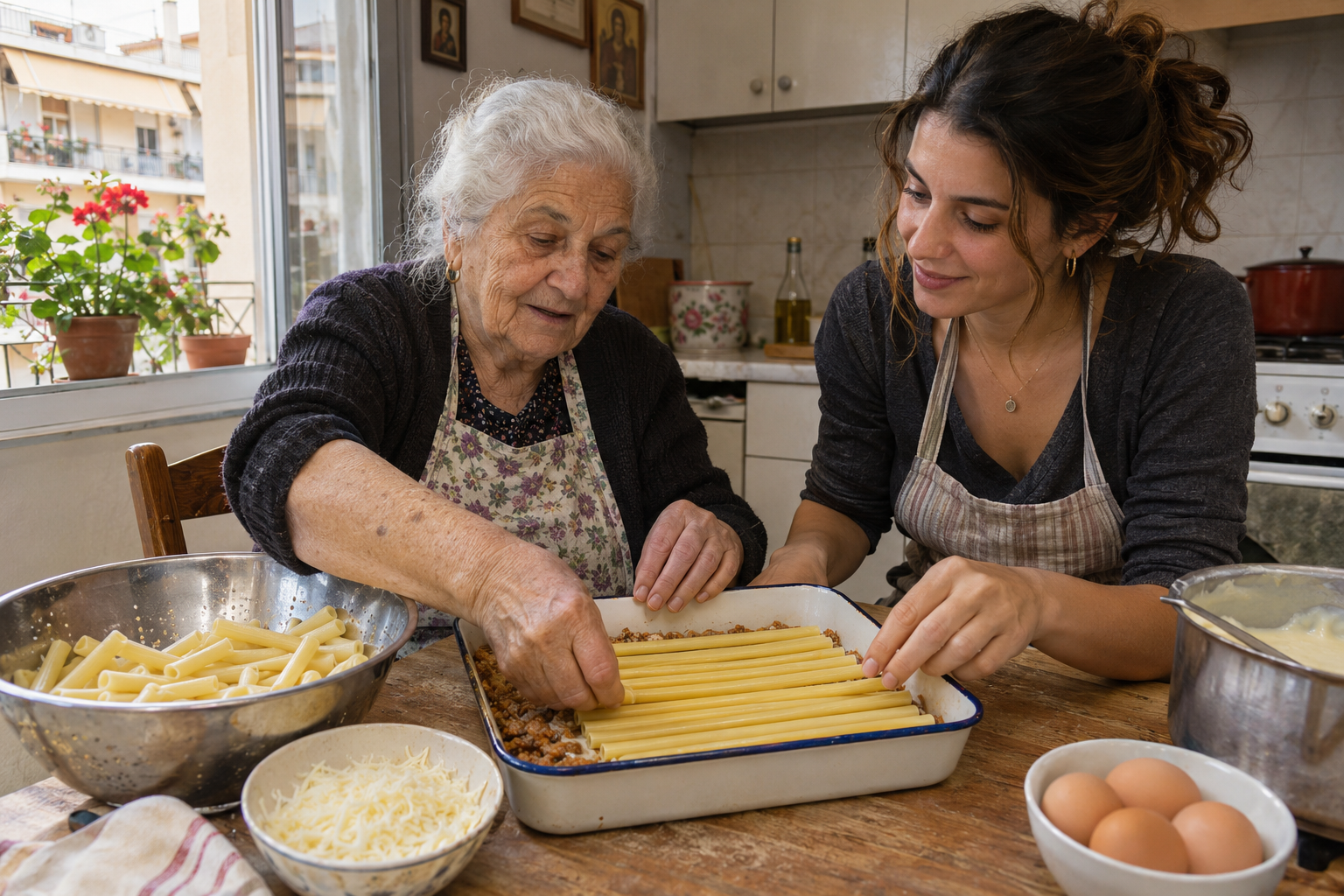
The pasta is the first thing that marks pastitsio as its own thing rather than a Greek lasagna. Instead of flat sheets, the dish uses long, thick, hollow tubes, traditionally a specific pasta sold in Greece precisely for this purpose, often labeled with the dish’s own name and a number. The tubes are thick and sturdy, somewhere between bucatini and ziti, with a hole running through the middle, and they are laid in the dish lengthwise so they run in the same direction through the base layer.
That shape does real work. As the dish bakes, the meat juices and the bechamel seep into and around the hollow tubes, so every forkful carries sauce inside the pasta as well as around it. The tubes also give the base its structure, holding together into a firm, sliceable layer in a way that a softer pasta would not. When you cut a square of pastitsio and see the little round holes of the pasta ends facing up at you, you are looking at the thing that makes it pastitsio and not anything else.
If you cannot find the authentic Greek pastitsio pasta where you live, the usual advice is to reach for bucatini, the thick spaghetti with a hole through it, or failing that a sturdy tube like ziti or penne. The ideal is a long, thick, hollow shape that holds its structure and catches sauce, so any robust tubular pasta will get you most of the way there. What you want to avoid is anything flat or delicate, because the whole architecture of the dish depends on those firm, sauce-catching tubes standing up to a long bake.
The Cinnamon That Stops Americans Cold
Now the flavor that surprises everyone. The meat sauce of a pastitsio is seasoned not just with the usual savory aromatics but with warm, sweet spices, cinnamon above all, often alongside allspice and sometimes a whisper of clove or nutmeg. To an American palate trained to keep cinnamon firmly in the dessert category, cinnamon simmered into a tomato and beef sauce can be genuinely startling the first time, a flavor that seems to have wandered in from the wrong recipe.
But it belongs completely, and it reflects a much older and wider culinary world than the Italian one Americans tend to compare it to. The use of warm spices in savory meat dishes runs right across the eastern Mediterranean and the Middle East, a legacy of centuries of trade and shared cooking traditions, and Greek cuisine sits squarely within that world. The cinnamon in a pastitsio is not a quirk or a mistake. It is a signature, the thing that gives the dish its distinctive warmth and depth and ties it to a whole region’s way of cooking meat.
Used with a light hand, which is how the grandmothers do it, the spice does not make the dish taste sweet or like dessert. It adds a background warmth, a rounded, aromatic depth that makes the meat sauce richer and more interesting than a plain Italian ragu, without ever announcing itself as cinnamon exactly. Many people who taste a good pastitsio cannot immediately name what the warm note is, only that the sauce tastes deeper and more fragrant than they expected. That is the spice doing its quiet work, and it is one of the small revelations of Greek home cooking.
The Way the Grandmothers Layer It
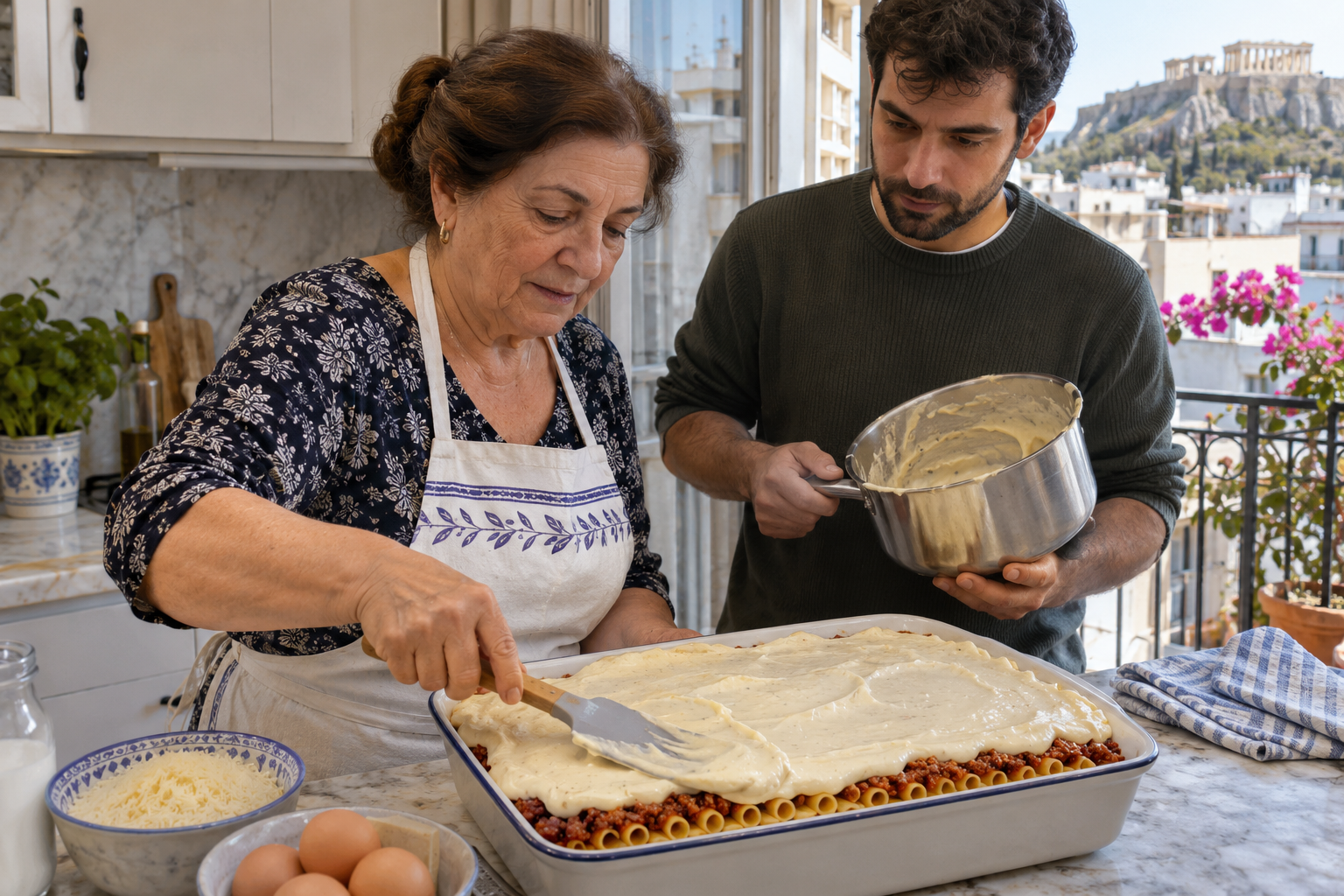
Ask a Greek grandmother about her pastitsio and you will learn that the magic is in the layering and in a few small, careful touches that hold the whole thing together. The base pasta is not just dumped in but bound with a little cheese, sometimes a beaten egg, and often a ladle of the bechamel stirred through, so that it sets into a cohesive layer rather than falling apart when cut. Some cooks sprinkle cheese between every layer, building savory glue throughout.
The meat sauce is cooked down until it is thick and fairly dry, not loose and wet, because a watery sauce would make the finished dish soggy and hard to slice. The grandmothers simmer it patiently until the liquid has reduced and the flavors have concentrated, then let it cool slightly before layering. This patience is the difference between a pastitsio that cuts into clean squares and one that slumps on the plate, and it is the kind of thing passed down by watching rather than by written recipe.
The bechamel goes on thick, a generous blanket rather than a thin smear, because it needs to bake into a substantial golden top that holds the whole structure together. It is often enriched with egg yolks and cheese to make it set firm and turn beautifully browned in the oven.
And then, crucially, the baked pastitsio is left to rest before cutting, given time out of the oven to settle and firm up, because a pastitsio cut straight from the heat will not hold its layers. Rested, cooled a little, and then sliced, it gives you those clean, tall, handsome squares that are the mark of a dish made with care. That final patience, the willingness to wait before cutting, is perhaps the most grandmotherly instruction of all.
Pastitsio and Its Famous Cousin
If pastitsio reminds you of moussaka, you are onto something real, because the two are siblings from the same Greek kitchen. Both are layered, baked, oven-set casseroles crowned with the same golden bechamel, and both carry the same warm-spiced meat sauce underneath. The difference is simply what sits below that sauce. Pastitsio uses the tube pasta, while moussaka uses layers of fried or roasted eggplant, and often potato, in its place.
Knowing they are built on the same template makes both dishes easier to approach, because the skills transfer directly. If you can make a good spiced meat sauce and a thick bechamel, you are most of the way to either one, and the choice between them comes down to whether you feel like pasta or eggplant. Greek home cooks tend to have both in their repertoire, reaching for pastitsio when they want the heartier, pasta-based version and moussaka in late summer when the eggplants are at their best. They are two faces of the same comforting idea.
Make It: Pastitsio
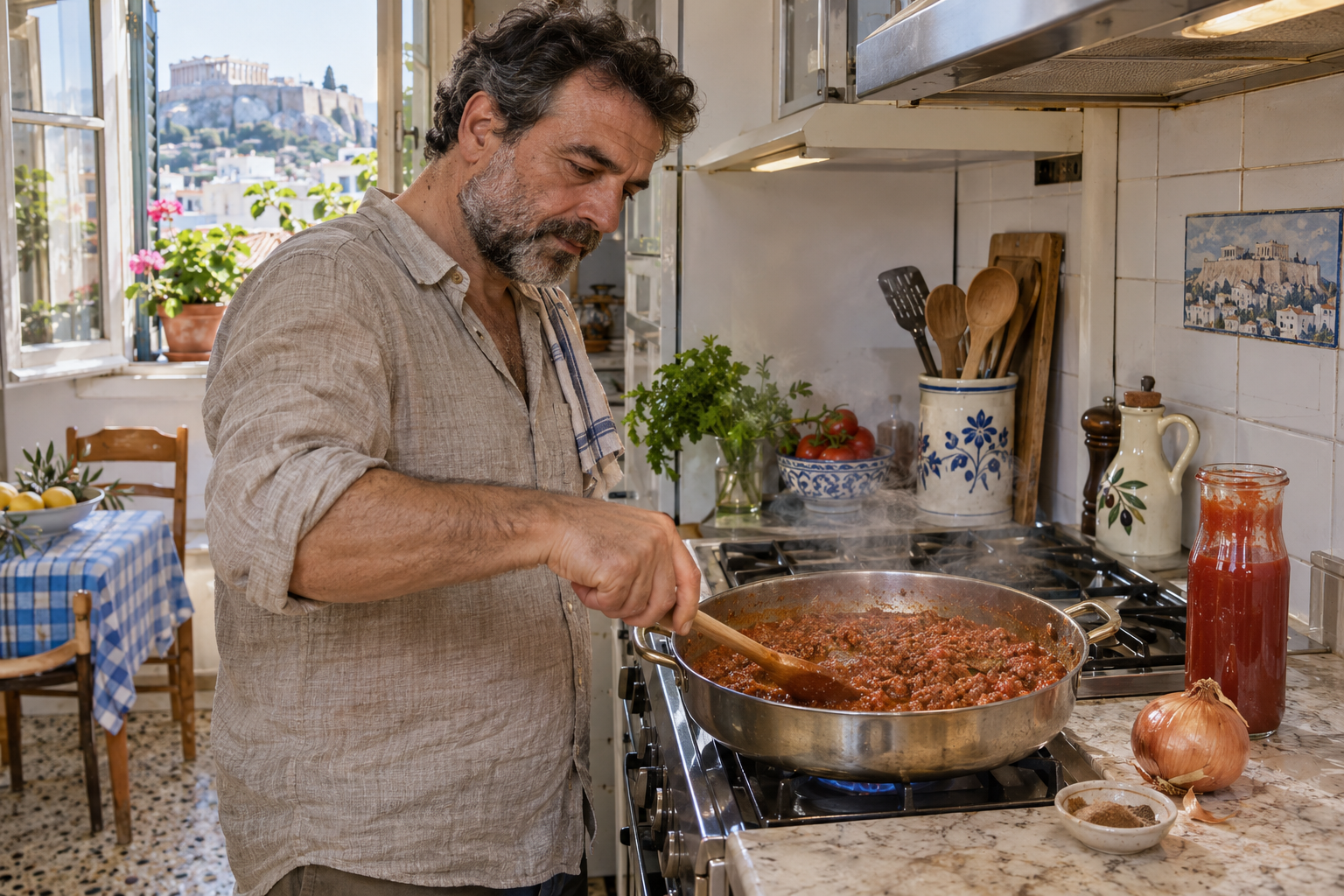
This makes a large pan, enough for six to eight generous squares, and it is a project rather than a quick dinner, best suited to a slow afternoon. Make the meat sauce first, then the pasta, then the bechamel, and layer them up. Let it rest before cutting, however tempting it is to dive in.
Ingredients
For the pasta base:
- 500g pastitsio tubes, bucatini, or ziti
- 2 tablespoons butter
- 100g grated hard cheese (kefalotyri, or parmesan)
- 1 egg, beaten
For the meat sauce:
- 2 tablespoons olive oil
- 1 large onion, finely chopped
- 2 cloves garlic, chopped
- 700g ground beef or lamb
- 1 tablespoon tomato paste
- 400g chopped tomatoes
- 100ml red wine (optional)
- 1 teaspoon ground cinnamon
- half a teaspoon ground allspice
- 1 bay leaf
- salt and pepper
For the bechamel:
- 100g butter
- 100g plain flour
- 1 litre warm milk
- 2 egg yolks
- 100g grated cheese
- a pinch of nutmeg
- salt
Instructions
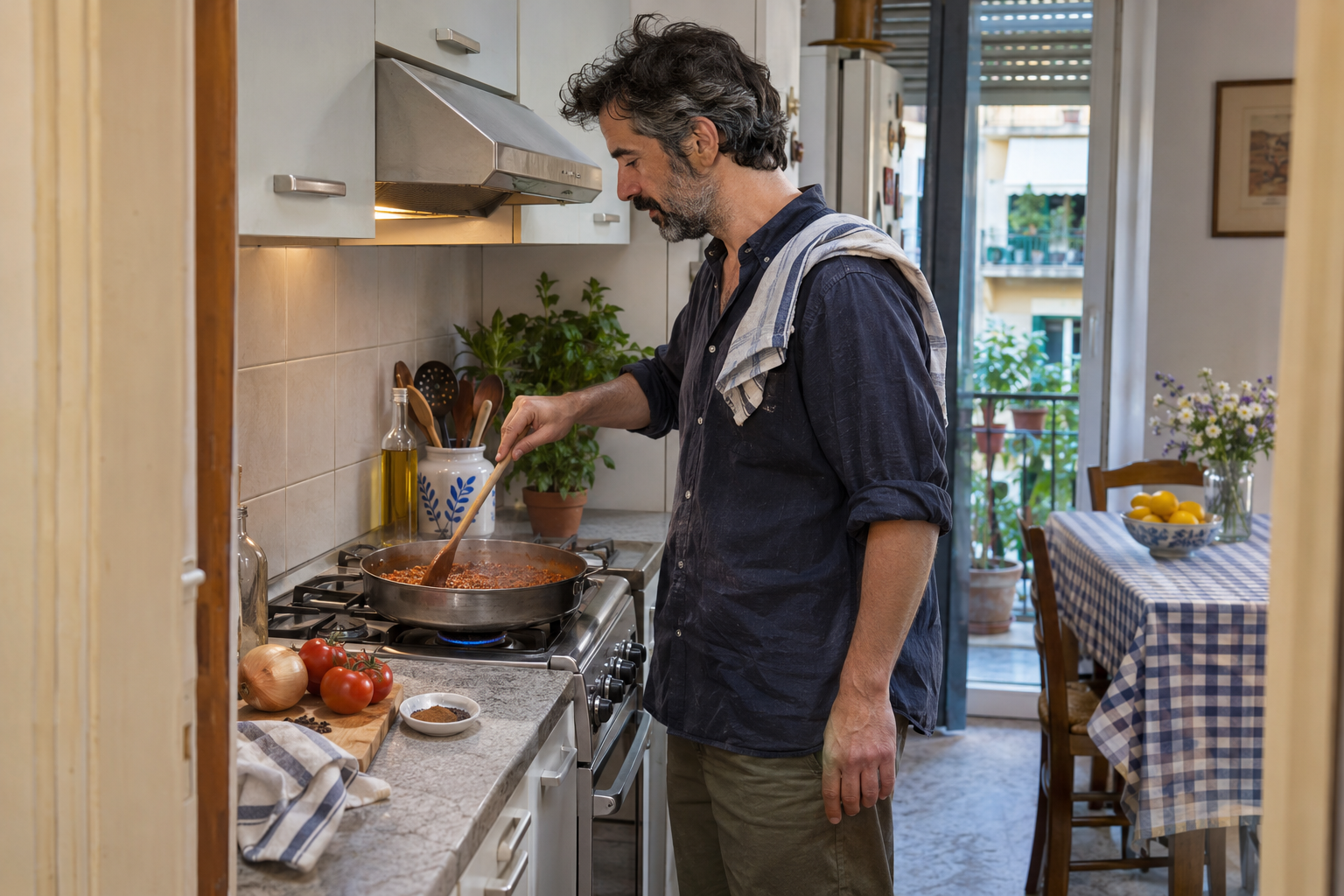
Start with the meat sauce. Heat the olive oil in a large pan and soften the onion gently until translucent, then add the garlic. Add the ground meat and cook, breaking it up, until it has lost its raw color, then stir in the tomato paste and let it cook for a minute.
Add the chopped tomatoes, the wine if using, the cinnamon, allspice, and bay leaf, and season with salt and pepper. Simmer gently, uncovered, for about 30 to 40 minutes, until the sauce is thick and most of the liquid has cooked away. You want it fairly dry, not soupy, so be patient and let it reduce. Remove the bay leaf and set aside to cool slightly.
Meanwhile, cook the pasta in plenty of salted water until just shy of done, a minute or two less than the package suggests, since it will bake further. Drain it well, return it to the pot, and toss through the butter, most of the cheese, and the beaten egg so it is lightly bound. Spread the pasta evenly in a large greased baking dish, pressing it into a firm, level layer.
Now the bechamel. Melt the butter in a saucepan, stir in the flour, and cook gently for a minute or two without coloring. Gradually whisk in the warm milk, a little at a time, until you have a smooth, thick sauce, then simmer for a few minutes to cook out the flour. Take it off the heat, season with salt and a pinch of nutmeg, and beat in the egg yolks and most of the grated cheese. It should be thick and pourable.
Assemble the dish. Spread the meat sauce evenly over the pasta base, then pour the bechamel over the top, smoothing it into a thick, even blanket that covers everything. Scatter the remaining cheese over the top. Bake in an oven heated to 180 degrees Celsius (350 Fahrenheit) for about 45 minutes, until the top is set and deeply golden.
Here is the hardest instruction of all: let it rest. Take the pastitsio out and leave it for at least 20 to 30 minutes before cutting, so the layers settle and firm up. Then cut it into tall squares, each showing its three strata, and serve. It is even better the next day, reheated, once the flavors have had a night to settle together.

About the Author: Ruben, co-founder of Gamintraveler.com since 2014, is a seasoned traveler from Spain who has explored over 100 countries since 2009. Known for his extensive travel adventures across South America, Europe, the US, Australia, New Zealand, Asia, and Africa, Ruben combines his passion for adventurous yet sustainable living with his love for cycling, highlighted by his remarkable 5-month bicycle journey from Spain to Norway. He currently resides in Spain, where he continues sharing his travel experiences with his partner, Rachel, and their son, Han.