
Everything an American home cook has ever been taught about making a stew starts with the same instruction: brown the meat. Get the pan hot, sear the cubes hard on every side until they are deeply colored, because that is where the flavor comes from. It is the first commandment of stew-making, drilled into anyone who has ever read a recipe, and it is correct for most of the stews you know.
And then there is blanquette de veau, the great French veal stew, where the rule is not just ignored but actively forbidden. You are not allowed to brown the meat. If you brown it, you have not made a blanquette.
This confuses American cooks more than almost any other French dish, because it seems to violate the thing they most trust about cooking meat. A stew where the meat stays pale, where there is no searing, no fond, no dark crust, sounds like a stew with the flavor left out. But blanquette is one of the most beloved dishes in the French home repertoire, a tender, creamy, deeply comforting thing, and its whole character depends on that refusal to brown. Here is what blanquette de veau actually is, why the no-browning rule exists, how it builds flavor without a sear, and how to make one yourself without accidentally turning it into something else.
A Stew That Stays White
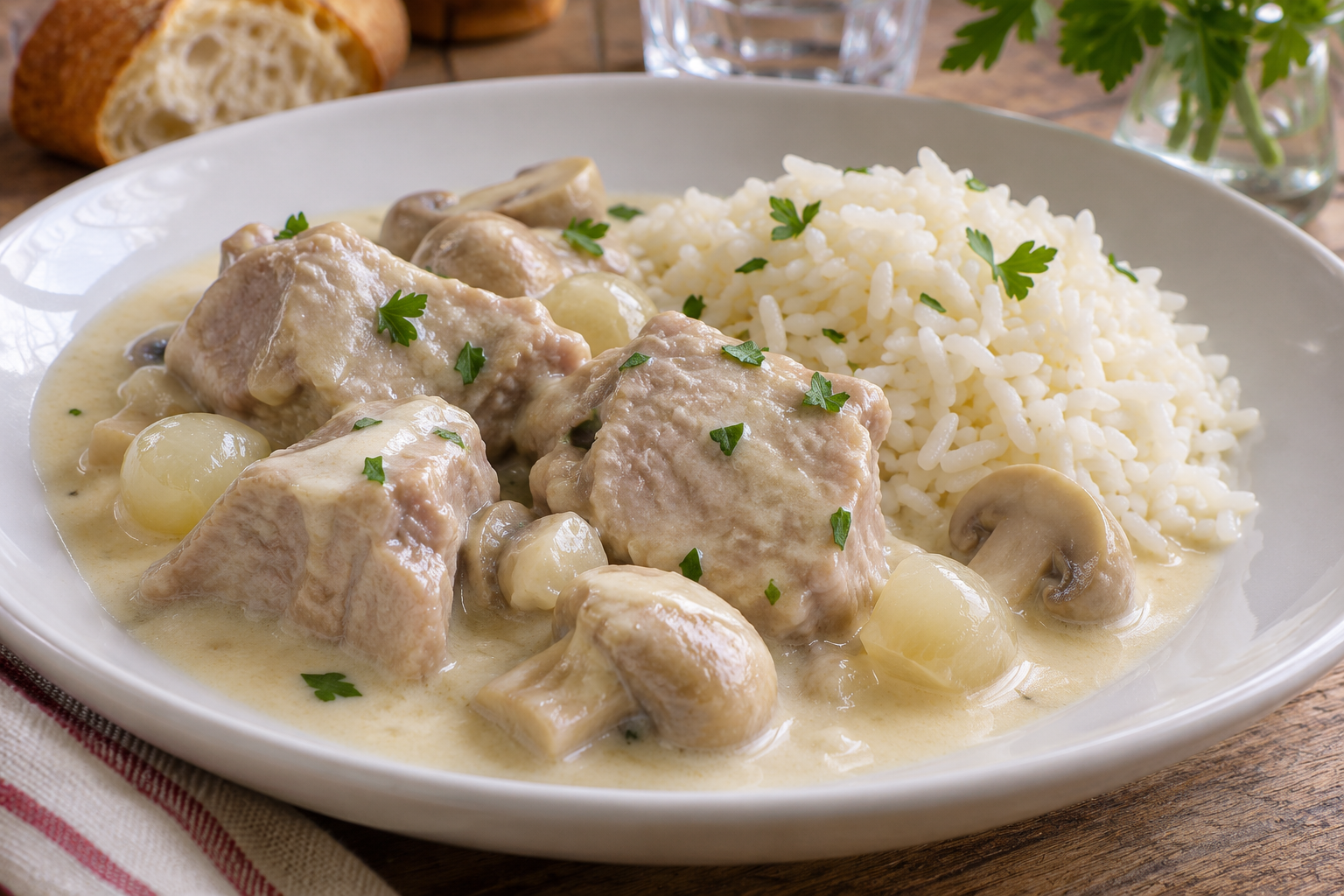
The name tells you the rule. Blanquette comes from blanc, white, and that is exactly what the dish is, a white stew, pale and creamy from start to finish. The veal is gently simmered, never seared, so it stays ivory rather than browning, and the sauce built around it is a pale, velvety white, enriched at the end with cream and egg yolk. Where a beef bourguignon is dark, glossy, and deeply browned, a blanquette is its opposite in every visual way, soft and light and the color of winter.
The classic version is made with veal, cut into chunks from the shoulder or breast, simmered slowly in a light stock with aromatic vegetables, carrots, onion, leek, a bouquet of herbs, until it is meltingly tender. Mushrooms and small pearl onions are cooked and added, kept pale rather than browned, and then the cooking liquid is turned into a sauce by thickening it and finishing it with a liaison of cream and egg yolks. The result is tender meat in a rich, pale, faintly tangy cream sauce, served over rice or with potatoes, and it is the definition of French home comfort.
It is worth saying that blanquette is not a fancy restaurant dish, despite its elegance. It is a classic of the family table, a Sunday dish, the sort of thing a French grandmother makes, humble in its ingredients and gentle in its technique. The elegance comes not from luxury but from care, from the patience of a slow simmer and the softness of a well-made cream sauce. That domesticity is part of why the French love it so much, and part of why getting it right feels so satisfying.
Why You Must Not Brown It
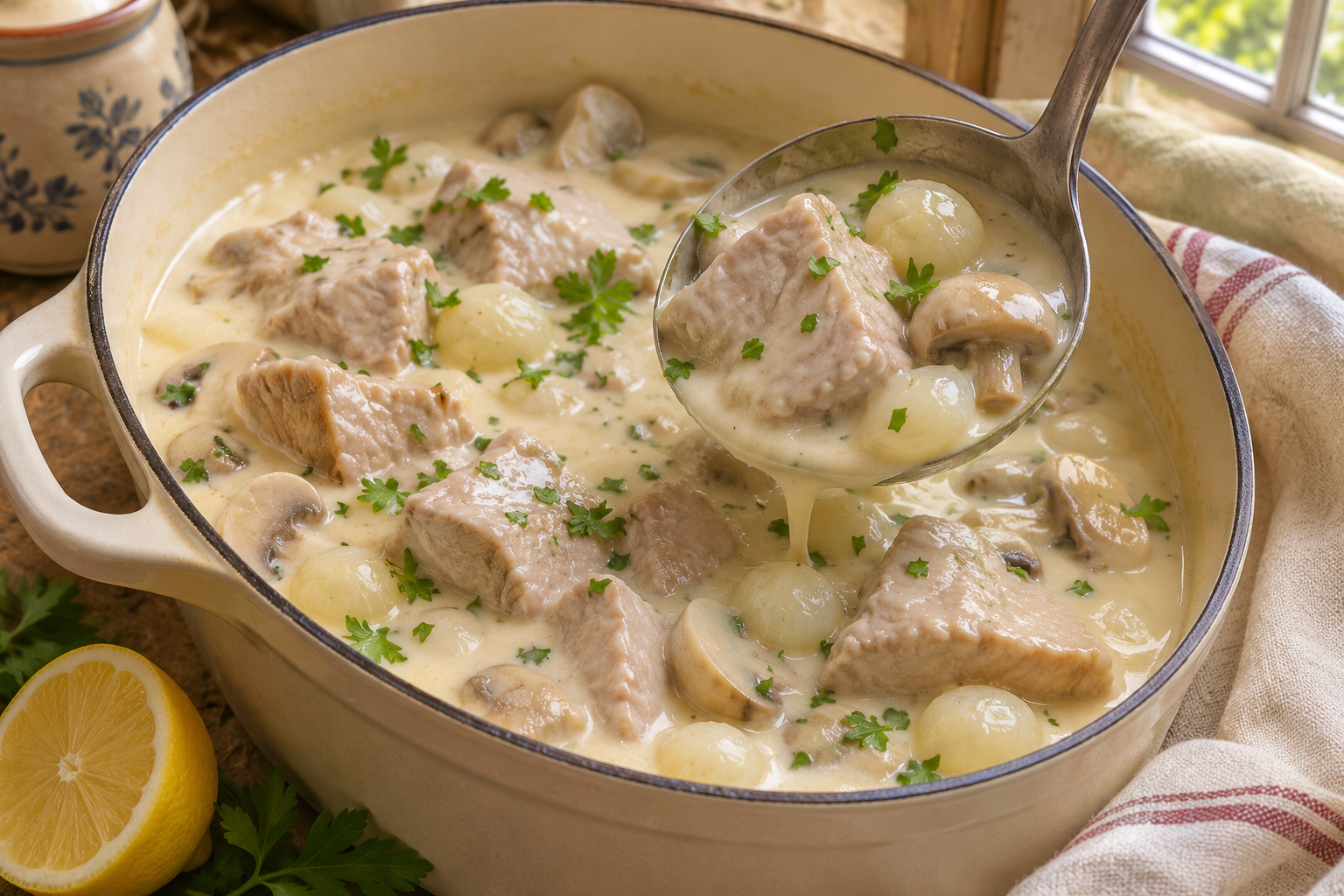
So why the forbidden sear, when browning is supposed to be where flavor lives? The answer is that blanquette is after a completely different kind of flavor from a brown stew, and browning would destroy exactly the thing it is reaching for. The whole point of the dish is delicacy, a clean, gentle, almost milky purity of flavor that lets the sweetness of the veal and the smoothness of the cream come through undisturbed.
Browning the meat would introduce deep, roasted, caramelized notes, the robust savory flavors that make a beef stew taste the way it does. Those flavors are wonderful, but they are loud, and in a blanquette they would trample the quiet, delicate character the dish is built on.
By gently simmering the veal instead of searing it, you keep everything soft and clean, so the finished stew tastes mild, creamy, and subtle rather than dark and roasted. The no-browning rule is not an arbitrary bit of tradition. It is the single technical choice that defines what kind of stew this is.
There is a textural reason too. Veal is a tender, delicate meat, and the gentle poaching treatment keeps it silky and soft, where aggressive searing could toughen the exterior and work against that tenderness. The slow, low simmer in plenty of liquid is exactly the kindest way to cook these cuts, coaxing them to melting softness. So the method serves both the flavor and the texture, and both are pulling in the same direction, toward gentleness, which is the whole personality of the dish.
Where the Flavor Actually Comes From
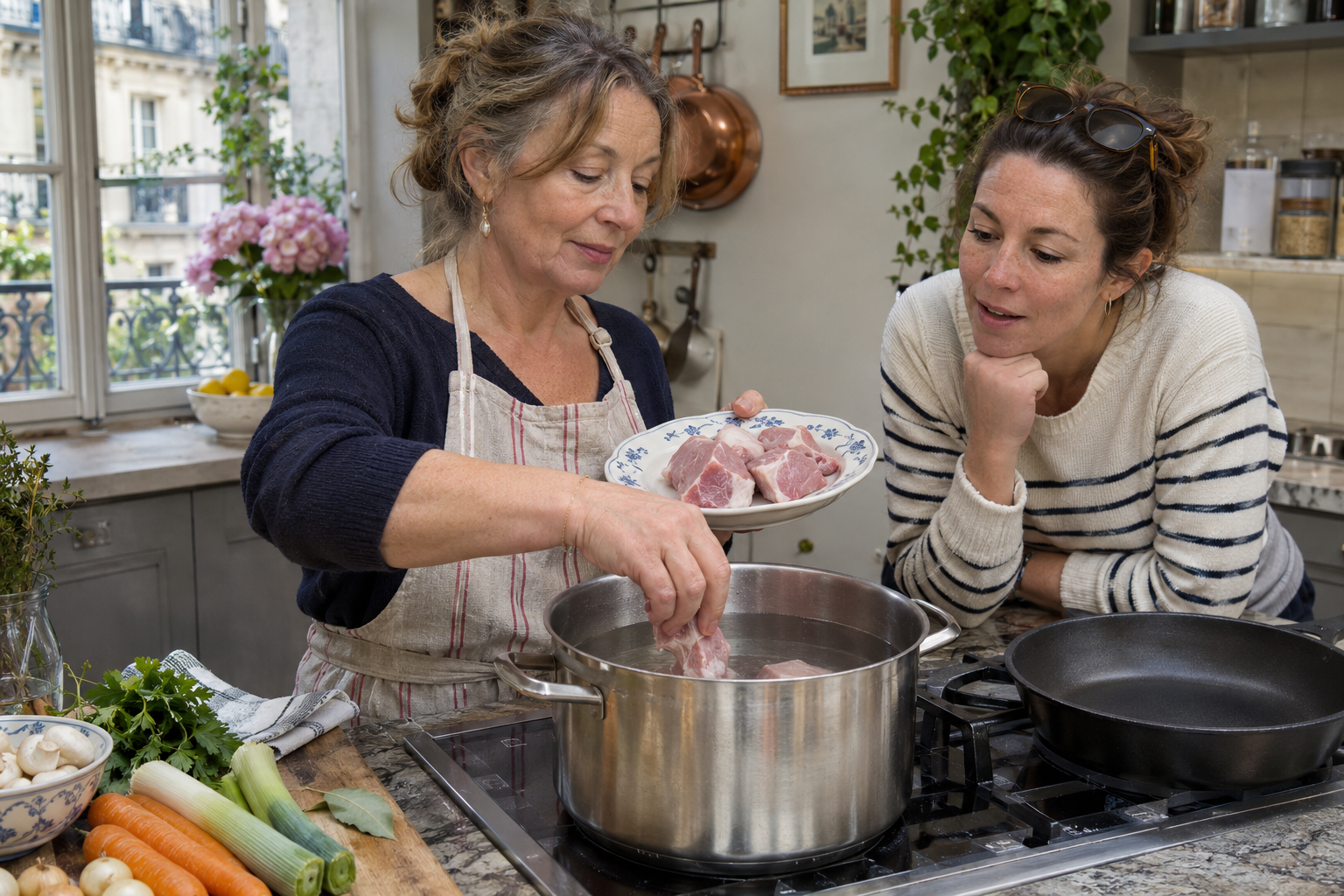
If not from browning, then where does a blanquette get its flavor, because it is far from bland? The answer is in the liquid and the building of the sauce, not in a seared crust. The veal is simmered in a well-made stock with aromatic vegetables and herbs, and over the long gentle cooking, the meat and the aromatics trade flavor with the liquid until the cooking broth itself becomes deeply savory. That broth is the foundation of everything.
The flavor then gets concentrated and enriched in the finishing. The cooking liquid is thickened, traditionally by cooking it with a white roux of butter and flour to make a velvety base, and then the whole thing is finished with the liaison of egg yolks and cream beaten together and stirred in off the heat. That final enrichment is where a good blanquette becomes luxurious, the sauce turning glossy and rich and faintly tangy, often brightened with a squeeze of lemon to cut the richness. It is a sauce built by layering gentleness on gentleness, and it ends up every bit as flavorful as a browned stew, just in a completely different key.
The mushrooms and pearl onions contribute too, and here the discipline continues, because they are cooked gently to stay pale rather than browned, in keeping with the white character of the dish. A classic touch is to cook them in a little water with butter and lemon so they soften without coloring, preserving that ivory palette. Everything, at every stage, is chosen to keep the dish pale, clean, and delicate, and the flavor that results is proof that a sear is not the only road to a stew worth eating.
The Mistake Americans Make
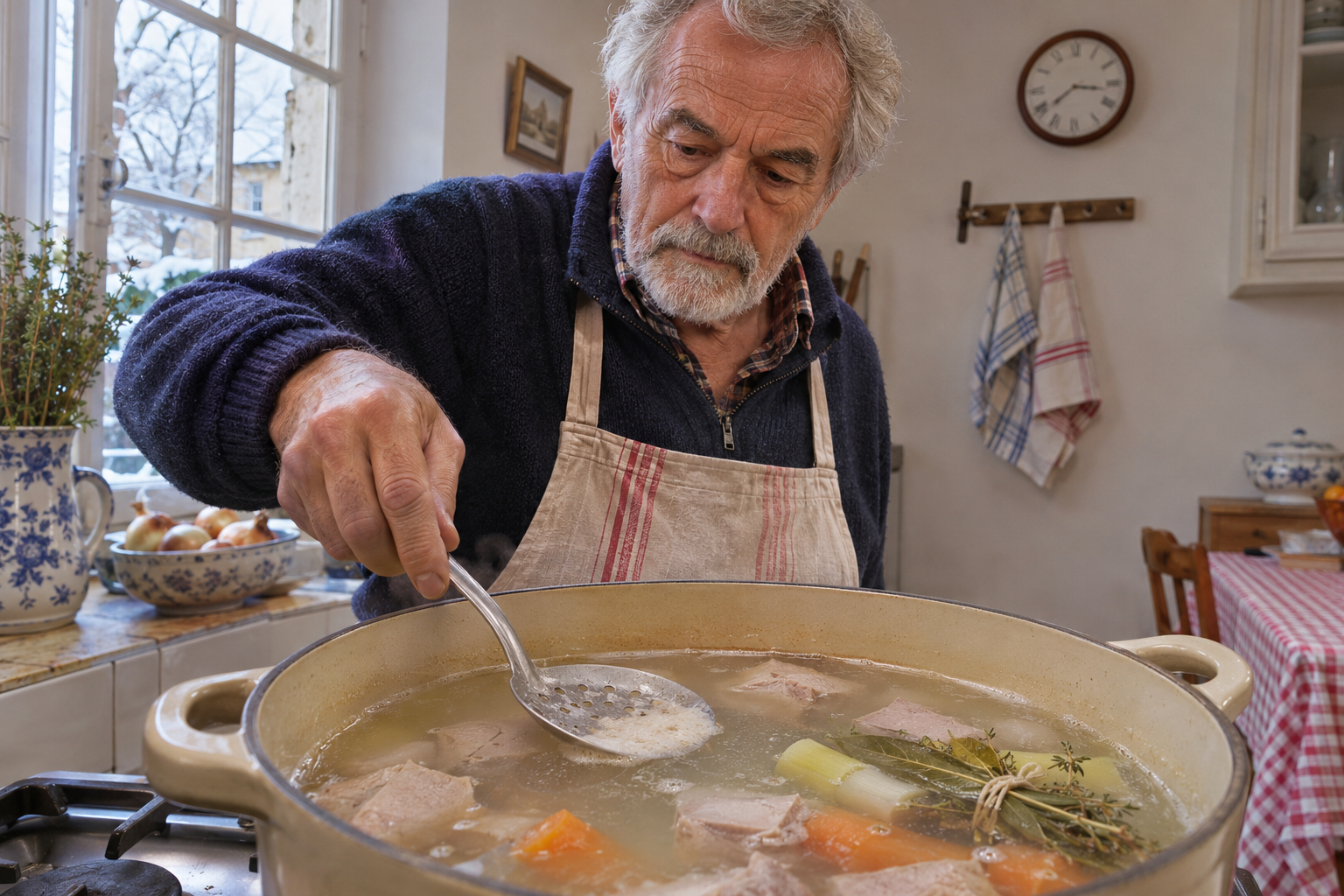
The single most common error, and the one that gives this piece its title, is the reflex to brown. An American cook, working from instinct, will heat the pan, sear the veal out of sheer habit, and only then realize, if they realize at all, that they have made the dish impossible. Once the meat is browned, the broth will darken, the sauce will not be white, and the delicate character is gone. You will have made a perfectly nice veal stew, but you will not have made a blanquette.
The fix is simply to trust the method and resist the trained instinct. When the recipe says to put the veal in cold water or cold stock and bring it gently up to a simmer without any searing, it means exactly that, and the cook’s job is to believe that flavor will arrive by another route. Some versions even call for blanching the veal first, briefly simmering it and discarding that first water along with the scum that rises, to keep the final stock especially clean and pale. That step can feel wasteful to someone trained to preserve every drop of browning, but it is in service of the same goal, a clean white base.
The deeper lesson is that technique follows intention. The browning rule that serves you so well elsewhere exists to build one kind of flavor, and blanquette wants a different kind, so it uses a different technique. Learning to cook a dish on its own terms, rather than imposing the habits of another, is a large part of what cooking in a new country teaches you, and blanquette is one of the clearest and most rewarding lessons in it. Make it once the right way, keeping everything pale, and you understand immediately why the French never brown it.
A Dish With Variations
Veal is the classic, but the same white-stew method travels, and knowing that makes blanquette far more useful in a real kitchen. The French also make a blanquette de volaille with chicken, which is gentler on the budget and faster to cook, following exactly the same no-browning logic and the same cream-and-yolk finish. Lamb and even fish get the blanquette treatment in some regions, always pale, always gently simmered, never seared.
What stays constant across every version is the discipline of the white sauce and the refusal to brown, so once you have the method, you have a whole small family of dishes rather than a single recipe. If veal is hard to find or too expensive where you are, a chicken blanquette made with thighs is a completely legitimate and delicious way in, and it behaves almost identically in the pot. The technique is the dish, far more than the particular animal, which is a freeing thing to understand.
Make It: Blanquette de Veau
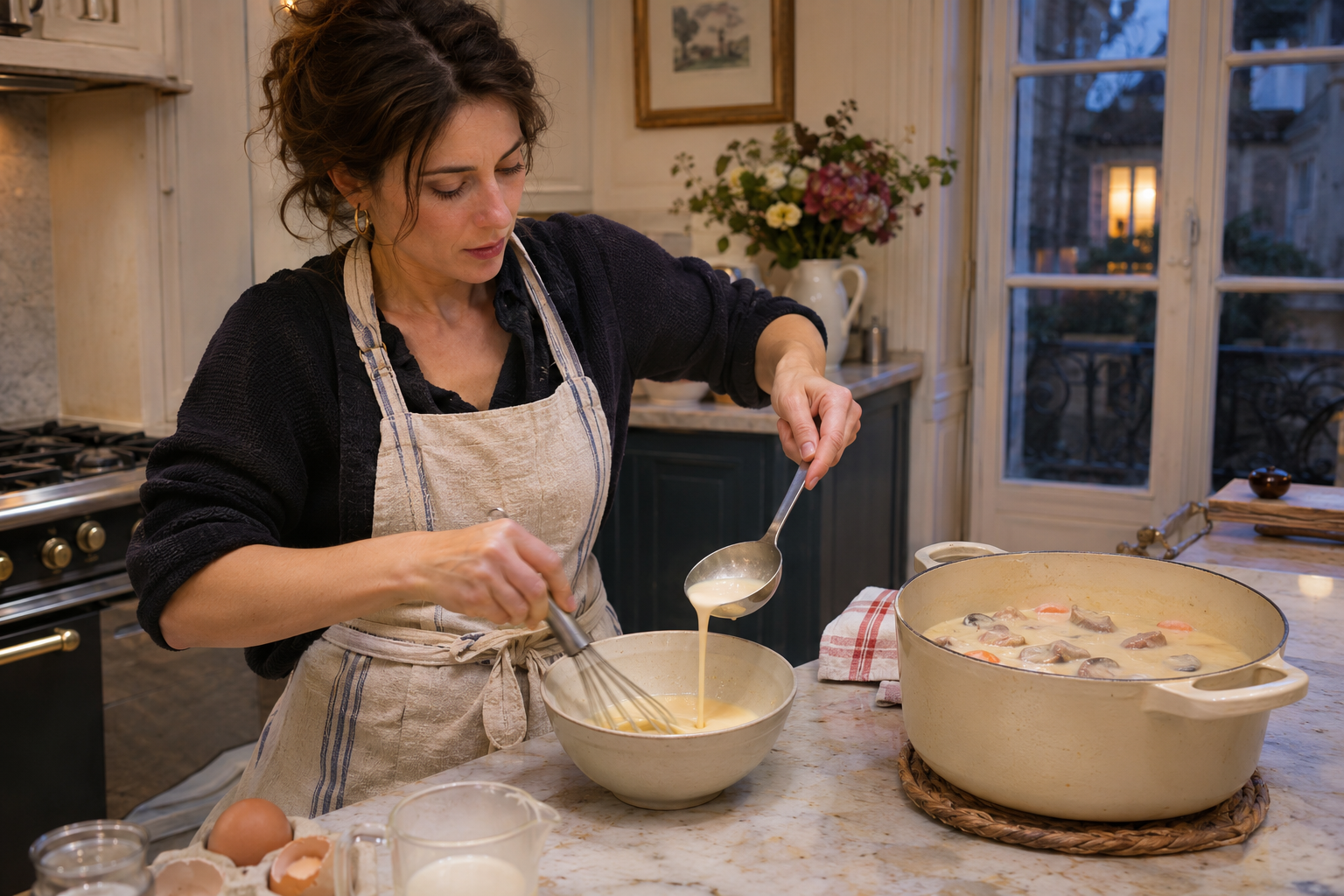
This serves four to six and is a weekend sort of dish, unhurried and gentle. The only firm rule is the one in the title: do not brown anything. Keep it all pale, and let the slow simmer and the cream-and-egg finish do the work. Serve it over white rice or with boiled or steamed potatoes.
Ingredients
For the stew:
- 1kg veal shoulder or breast, cut into large chunks
- 1 onion, peeled, studded with 2 cloves
- 2 carrots, peeled and cut into chunks
- 1 leek, cleaned and cut into lengths
- 1 celery stalk
- 1 bouquet garni (thyme, bay, parsley stalks tied together)
- salt and a few white peppercorns
- water or light chicken or veal stock to cover
For the garnish:
- 250g button mushrooms, halved if large
- 200g small pearl or pickling onions, peeled
- a knob of butter
- a squeeze of lemon
For the sauce:
- 50g butter
- 50g plain flour
- 2 egg yolks
- 150ml cream
- juice of half a lemon
- salt and white pepper
Instructions
Put the veal chunks in a large pot and cover with cold water. Bring slowly to a boil, then let it bubble for a minute or two as grey scum rises, drain the veal, and rinse it briefly. This blanching step keeps the final stew clean and pale, so do not skip it. Do not be tempted to brown the meat at any point.
Return the rinsed veal to the clean pot. Add the clove-studded onion, carrots, leek, celery, and bouquet garni, season lightly with salt and a few white peppercorns, and cover with fresh water or light stock. Bring gently up to a bare simmer, skim any scum that rises, then cover partly and cook very gently for about an hour and a half, until the veal is tender. Keep it at a soft simmer, never a hard boil, to protect the delicate meat.
While the veal cooks, prepare the garnish. Put the pearl onions in a small pan with a knob of butter, a splash of water, and a pinch of salt, and cook gently until soft but still pale, not browned. Do the same with the mushrooms in a little butter, water, and a squeeze of lemon, cooking them just until tender while keeping them light in color. Set both aside.
When the veal is tender, lift the meat out with a slotted spoon and set it aside with the mushrooms and onions. Strain the cooking liquid and discard the aromatic vegetables and bouquet garni, keeping the broth, which is now the heart of your sauce. Measure out roughly 700 to 800ml of it for the sauce.
Make a white roux by melting the 50g butter in a clean pan, stirring in the flour, and cooking gently for a minute or two without letting it color. Gradually whisk in the strained hot broth, a little at a time, until you have a smooth, velvety sauce, then let it simmer gently for a few minutes to thicken and lose any floury taste.
In a bowl, beat together the egg yolks and cream. Take the sauce off the heat, then temper the liaison by whisking a ladle of the hot sauce into the yolk and cream mixture, then pour it all back into the pan, stirring constantly. Warm it through very gently without letting it boil, or the yolks will scramble. Stir in the lemon juice and taste for salt and white pepper.
Return the veal, mushrooms, and pearl onions to the sauce, folding them in gently to warm through in the warm sauce without boiling. The finished blanquette should be pale, creamy, and glossy, the meat meltingly tender in a rich white sauce. Serve at once over rice or with potatoes, and admire a stew that got everything it needed without ever seeing a hot sear.

About the Author: Ruben, co-founder of Gamintraveler.com since 2014, is a seasoned traveler from Spain who has explored over 100 countries since 2009. Known for his extensive travel adventures across South America, Europe, the US, Australia, New Zealand, Asia, and Africa, Ruben combines his passion for adventurous yet sustainable living with his love for cycling, highlighted by his remarkable 5-month bicycle journey from Spain to Norway. He currently resides in Spain, where he continues sharing his travel experiences with his partner, Rachel, and their son, Han.