
Walk past a certain kind of building in any Spanish town in the late afternoon and you will hear it before you see it, a warm roar of conversation, the slap of cards on tables, laughter, maybe music. Look in and you will find it full of people over seventy, and very often a great many women, sitting in groups over coffee, playing cards and dominoes, talking at full volume, some of them dancing.
This is the hogar del jubilado, which translates as the retiree’s home or pensioners’ home, and the single most important thing to understand about it is what it is not. It is not a nursing home. It is a club, a social center, a daily gathering place, and the people in it go home to their own apartments every evening.
To an American, this institution is genuinely foreign, because the United States never really built its equivalent, at least not at this scale or with this spirit. We have senior centers, but they are often thin, underused, and faintly sad, a place you might go to a class once a week, not a vibrant daily clubhouse at the heart of a community. The Spanish hogar del jubilado is something else, a lively, subsidized, everyday institution where old people, and strikingly many old women, spend their afternoons in company rather than alone. Here is what the hogar actually is, what goes on inside it, why it is so different from an American nursing home or senior center, and what its existence says about how two cultures treat their old.
What the Hogar Actually Is
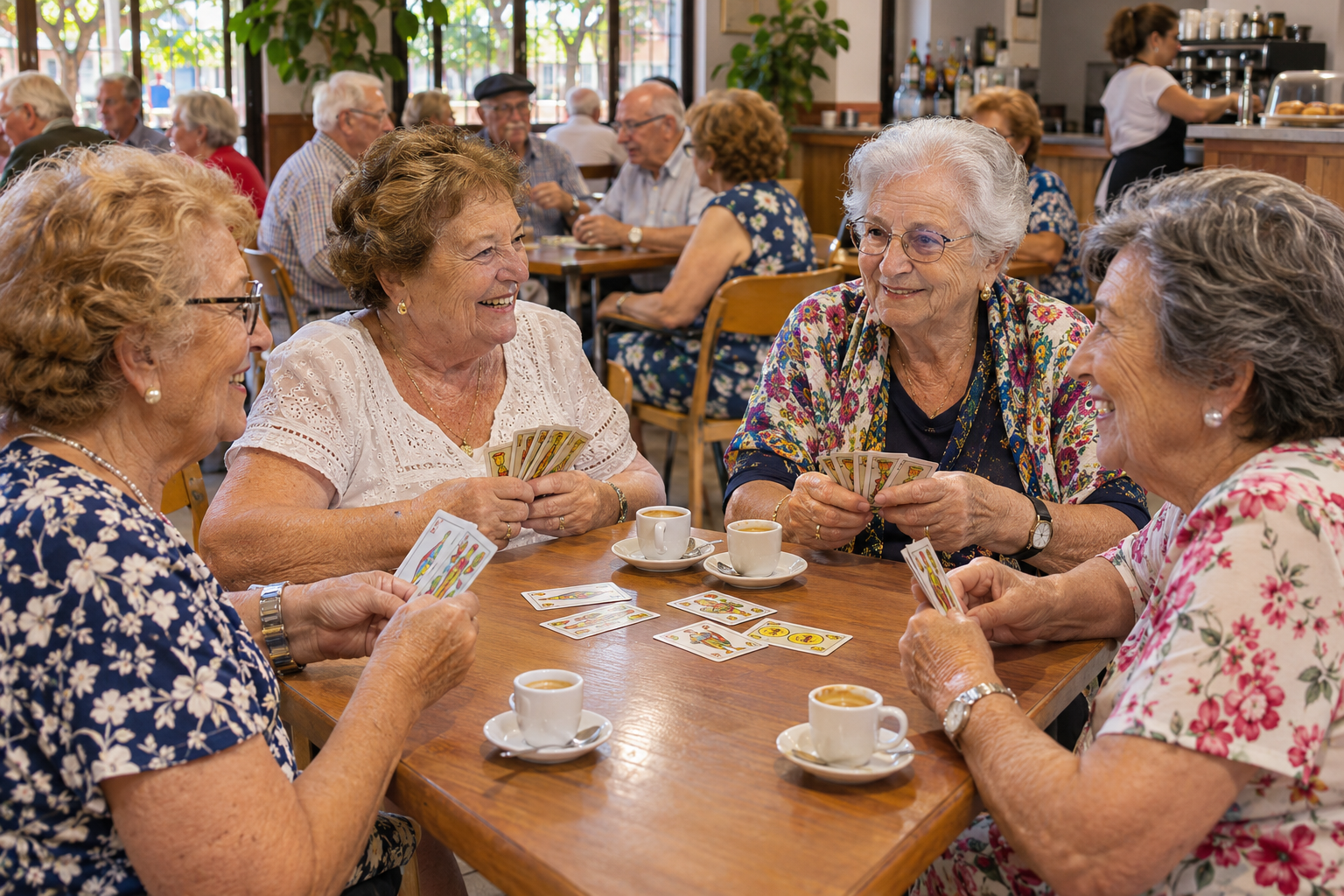
The hogar del jubilado, also called a centro de mayores or centro de dia in various forms, is essentially a social club for pensioners, usually run or subsidized by the local government. It is a physical place, a building with a big common room, tables and chairs, often a small bar or cafe, and it exists for one purpose, to give retired people somewhere to go and something to do in the company of others. Membership is cheap or free for local pensioners, and the whole thing is built around daily, drop-in socializing rather than scheduled care.
The key feature, the one that confuses Americans most, is that it is a day place, not a residence. The people who fill the hogar every afternoon live in their own homes, their own apartments, scattered through the town, and they come to the hogar to socialize and then go home. Nobody sleeps there, nobody is being nursed there, there are no beds and no medical staff in the way an American imagines when they hear retiree’s home. It is the opposite of institutionalization, a place that helps old people stay independent and connected precisely by giving them somewhere lively to go.
The subsidized bar or cafe is a big part of the draw and the character. Pensioners can get a coffee, a glass of wine, a simple snack at prices kept deliberately low, often below what any normal bar would charge, sometimes just a euro or less for a coffee. That cheap bar makes the hogar a genuinely affordable place to spend an afternoon, which matters for people on modest pensions, and it turns the center into a social hub rather than a facility. You go, you buy a cheap coffee, you sit with your friends for hours, and the whole thing costs almost nothing.
What Goes On Inside
The daily life of a hogar is loud, social, and wonderfully ordinary, built around the simple pleasures of company and small competition. Card games are central, with regular tables of players working through Spanish card games, and dominoes clattering on the tables, often with an intensity and a running commentary that makes it clear these are serious, long-standing rivalries. There is a constant hum of conversation, the catching up on news and gossip and family that is the real currency of the place.
Beyond the cards, the hogares run a surprising range of activities, because they are genuine community centers. There are often dances, afternoon tea dances with music where people in their seventies and eighties get up and dance together, there are classes and workshops, there are organized excursions and day trips, bingo, celebrations of saints’ days and holidays, sometimes exercise or physical activity sessions aimed at keeping people mobile. The calendar of a busy hogar can be fuller than that of many younger people, a steady rhythm of things to do and reasons to show up.
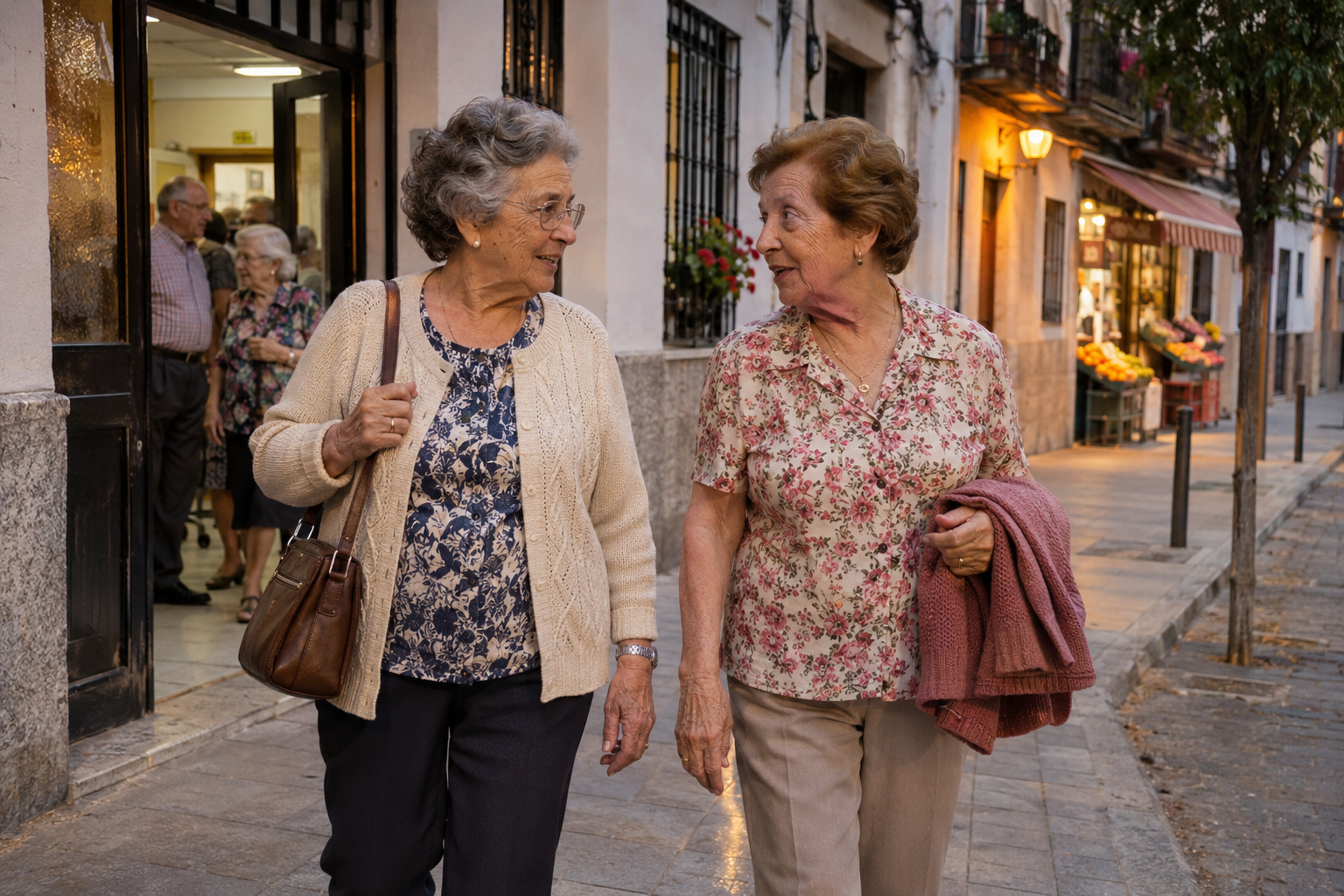
What strikes an outsider is the sheer vitality of it, the fact that this is not a melancholy waiting room but a lively, active, social scene. The people there are not being managed or minded, they are living a social life, with friendships, rivalries, routines, and fun, right into advanced old age. And while the hogares serve both men and women, the afternoon crowd very often skews female, full of women over seventy who have outlived husbands and who find in the hogar a daily community, a place to belong and to be among friends rather than alone at home.
A Day at the Hogar
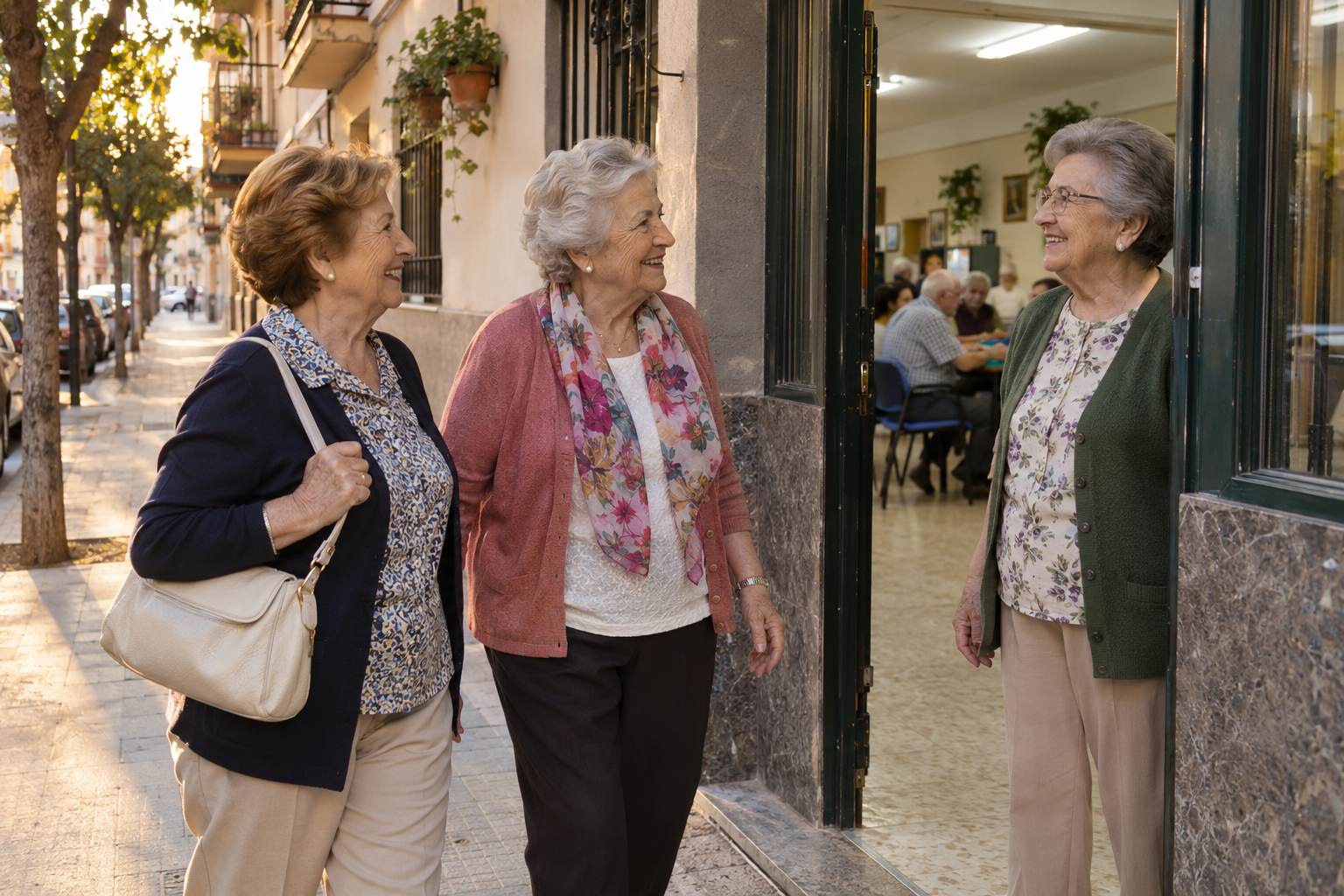
To picture it properly, follow an ordinary afternoon. Lunch in Spain finishes late, and after it, around the time the shops reopen, the hogar begins to fill. People drift in, singly and in pairs, greet the regulars, and head for the bar to get a coffee or a small glass of something before settling at their usual table. The room warms up fast, voices rising as the regulars arrive and the card games form.
By mid-afternoon the place is in full swing, every table occupied, the card players deep in their games, the domino tiles clicking, clusters of women talking over coffee that has long gone cold because the conversation is better. Someone is organizing the next excursion, someone is selling tickets for a holiday meal, and on the right day the music starts and a few couples get up to dance in the open space. It runs like this for hours, unhurried and sociable.
Then, as evening comes, it empties as gently as it filled, people gathering their things, saying their goodbyes, and heading home to their own apartments for the night, ready to come back and do it again tomorrow. There is nothing dramatic about any of it, which is exactly the point. It is simply a good, full, ordinary afternoon spent among friends, repeated day after day, year after year, deep into old age.
Why It Is Not a Nursing Home
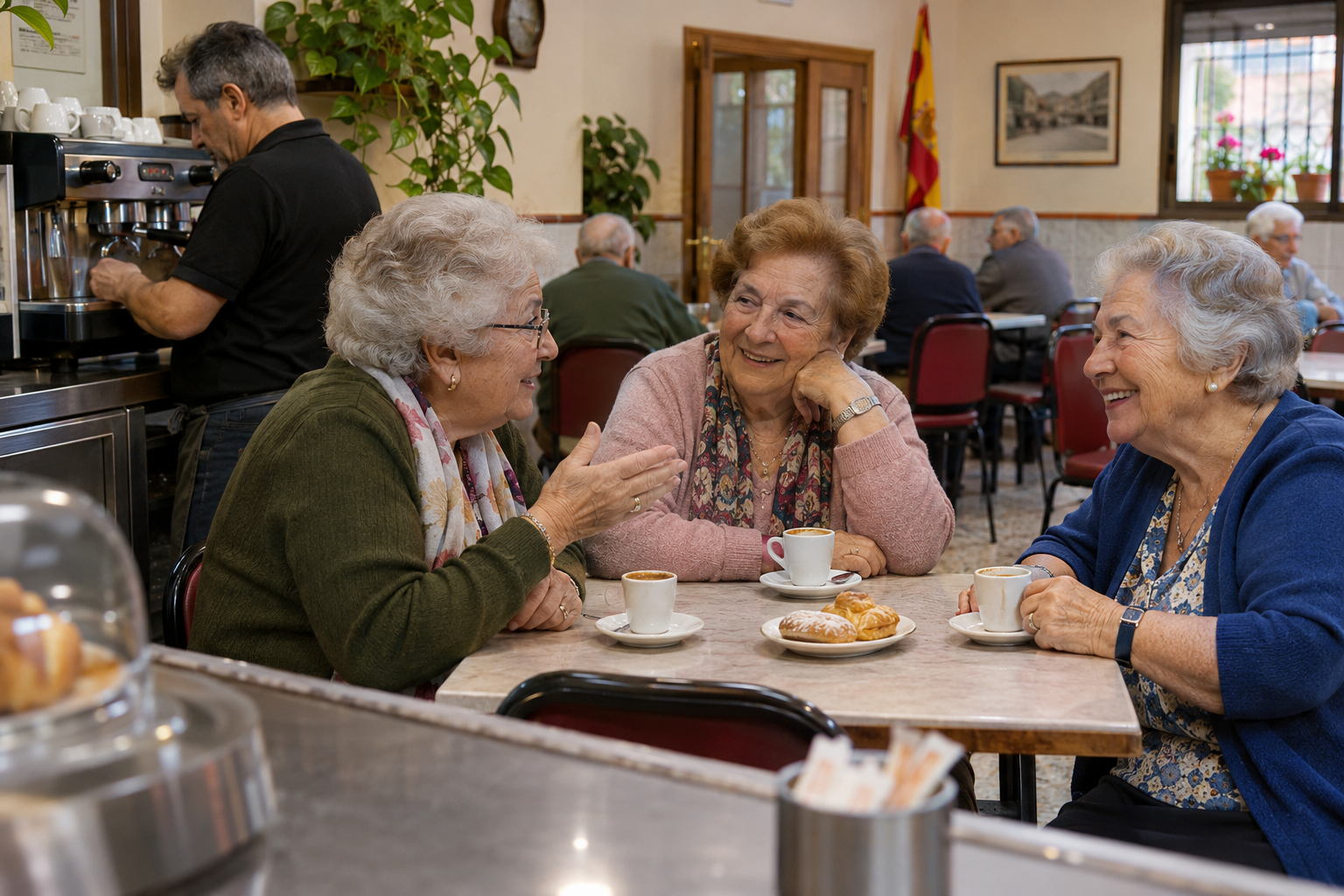
The distinction from an American nursing home could not be sharper, and it matters because it reflects a completely different idea of what old age should look like. An American nursing home is a residential facility for people who can no longer fully care for themselves, a place of beds, staff, and medical care, where frail elders live out their last years under supervision. It is, however well run, a place of dependency and decline, and the very word carries a weight of sadness and finality for most Americans.
The hogar del jubilado is the opposite in almost every way. Its members are independent, healthy-enough, community-dwelling old people who live on their own and come to the hogar by choice for pleasure and company. It is not about care, it is about connection, not about managing decline but about sustaining a full social life into old age. Where the nursing home is where you go when you can no longer manage, the hogar is where you go precisely because you still can, and want to spend your time well.
This difference reflects a different cultural vision of aging. The hogar is built on the assumption that old people are full members of the community who deserve a vibrant daily social life, somewhere to go, friends to see, things to do, rather than people to be either left isolated at home or eventually warehoused in a facility. It treats the active, independent years of old age as something to be enriched and enjoyed in company, and it provides the public infrastructure to make that possible. That assumption, more than the building itself, is what America never really built.
Why So Many Are Women
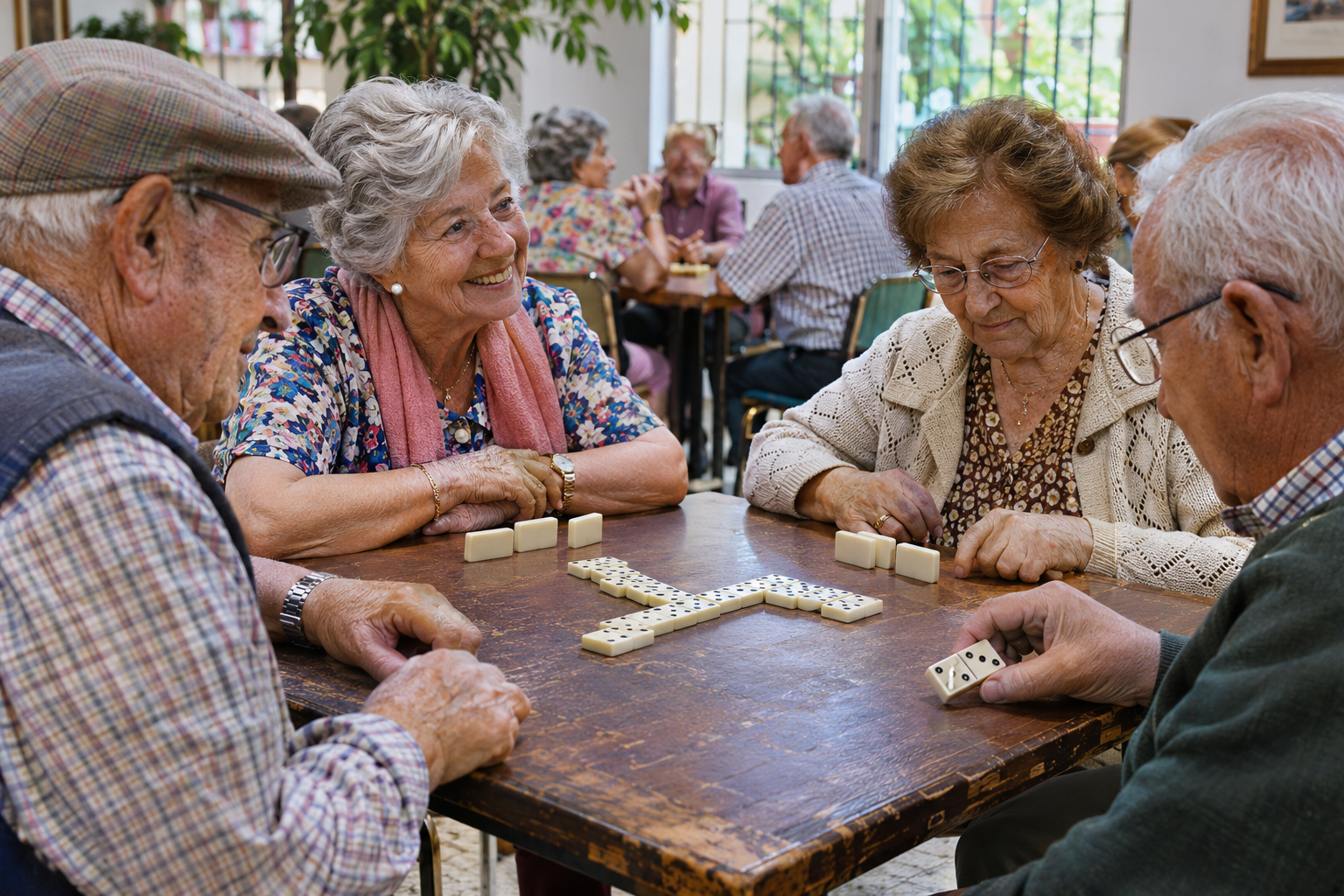
The afternoon crowd at a hogar often tilts noticeably female, and there is a simple, poignant reason for it. Women outlive men, in Spain as nearly everywhere, by a margin of several years on average, which means the oldest cohorts of any community are disproportionately women, and many of them are widows. For a woman who has lost her husband, the hogar can be a lifeline, a place where the quiet of a now-empty home gives way every afternoon to company, routine, and friendship.
That is part of what makes the institution so valuable rather than merely pleasant. The very people most at risk of isolation in old age, women living alone after outliving their husbands, are the ones the hogar most reliably gathers in, giving them a daily reason to dress, go out, and be among others. The widow who might otherwise spend her afternoons alone instead spends them at a card table surrounded by friends who are in the same situation and understand it completely.
There is a real solidarity in that, a community of women who have reached the far end of long lives and found, in the hogar, a place to go on living them fully. They are not defined by their losses there but by their friendships, their games, their gossip, and their dancing, and the hogar gives that whole social world a home. It is one of the kinder things a town can offer the women who tend to be its longest-lived members.
The Thing America Never Built
The United States has senior centers, and some are good, but they rarely rise to the ubiquity, the daily vitality, or the central social role of the Spanish hogar, and the gap says something. In much of America, the default experience of the active retirement years, for someone still living independently, is a degree of isolation, the long days at home, the shrinking social circle, the lack of an obvious, cheap, lively place to simply go and be among others. The infrastructure of easy daily sociability for the old is thin.
Spain built that infrastructure deliberately and keeps it running, a network of subsidized hogares in virtually every town and neighborhood, so that no pensioner need spend their afternoons alone for lack of somewhere to go. This is a public choice, an investment in the social lives of old people as a matter of course, and it produces a visibly different old age, one spent in company rather than solitude. The contrast is not about Spanish families being warmer or American families being colder, it is about one society building a particular institution and the other not.
The consequences of that choice reach into wellbeing in ways worth taking seriously, if carefully. Researchers increasingly link social connection to health and longevity in older people, and loneliness to real harm, and while a social club is not medicine and I do not want to overstate it, a society that keeps its old people connected and active is plausibly doing something good for them beyond the obvious pleasure of it. The hogar full of women over seventy playing cards and dancing is not just charming, it may be quietly protective, a daily dose of the connection that isolation steals. At the very least, it is a happier way to grow old than alone at home.
Can a Newcomer Join
For an American retiring in Spain, the natural question is whether this world is open to them, and the encouraging answer is that it generally is. The hogares and centros de mayores are run by town halls and regional governments for local residents of pensionable age, so a foreign retiree who is legally resident and old enough can usually register at their local center like anyone else, often for a small annual fee or nothing at all.
The real barrier is not bureaucracy but language and nerve, since these are thoroughly Spanish spaces where little English is spoken and the social codes are local. But that is also the opportunity, because few places will immerse you more quickly in real Spanish life, or do more to build a genuine local community around you, than a daily table at the hogar. Walk in, order a cheap coffee, and the rest tends to follow.
What It Looks Like From Inside an Aging Life
For an American contemplating retirement in Spain, or simply trying to understand how the Spanish grow old, the hogar is one of the most revealing things to notice, because it makes the abstract concrete. Here is what an engaged, connected, dignified old age can look like when a community builds for it, old people with somewhere to go every single day, with friends and routines and fun, independent in their own homes but never isolated in them. It reframes what the later years can be.
It also quietly reframes the fear of aging that haunts so much of American life, the dread of becoming isolated, irrelevant, or shut away. The hogar offers a different picture, of old age as a sociable, active, ongoing life among peers, neither lonely nor institutionalized, and of a community that makes a place for its elders as a matter of course. The women over seventy filling the hogar every afternoon are not waiting for anything, they are living, and the institution around them is what makes that possible.
So if you find yourself in a Spanish town in the late afternoon and you hear that warm roar coming from a plain municipal building, look in. What you are seeing is one of the quiet triumphs of Spanish social life, a pensioners’ club at the heart of the community, cheap, lively, and full of old people enjoying each other’s company. It is not a nursing home, it is the opposite of one, and it is the kind of thing that, once you have seen it, you rather wish your own country had built too.

About the Author: Ruben, co-founder of Gamintraveler.com since 2014, is a seasoned traveler from Spain who has explored over 100 countries since 2009. Known for his extensive travel adventures across South America, Europe, the US, Australia, New Zealand, Asia, and Africa, Ruben combines his passion for adventurous yet sustainable living with his love for cycling, highlighted by his remarkable 5-month bicycle journey from Spain to Norway. He currently resides in Spain, where he continues sharing his travel experiences with his partner, Rachel, and their son, Han.