
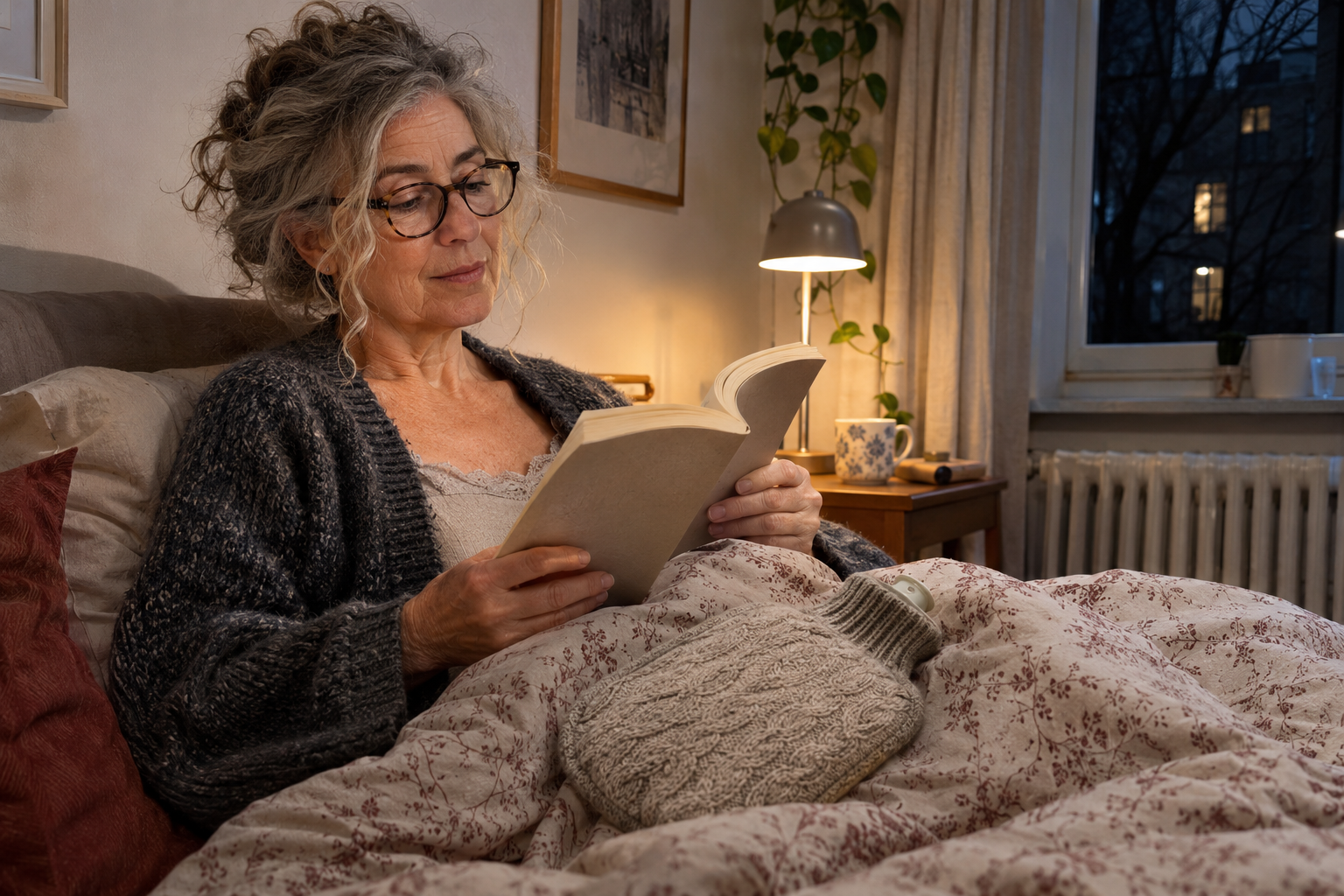
Somewhere around the first genuinely cold week of November, a quiet ritual begins in millions of European homes. As the evening draws in and the house cools, someone fills the kettle, and instead of walking over to the thermostat and turning up the heat, they pour the hot water into a soft rubber hot water bottle, screw the stopper tight, and tuck it into the bed or hold it against their lap under a blanket. It costs about eight euros to buy and a few cents of hot water to use, and it is one of the small, telling habits that explains why European homes are kept so much cooler than American ones, and why European heating bills are so much lower.
To an American, raised on the idea that you keep the whole house at a comfortable temperature all winter by simply paying for it, the hot water bottle can look almost quaint, a relic of a colder, poorer past. But it is nothing of the sort. It is a smart, cheap, deliberate piece of the European approach to staying warm, which is built on a completely different principle from the American one: you heat the person, not the building. Here is what the hot water bottle actually is, the thermostat philosophy behind it, why Europeans heat themselves rather than their houses, how to use one well and safely, and what the whole habit reveals about two different ways of dealing with winter.
The Humble Rubber Bottle
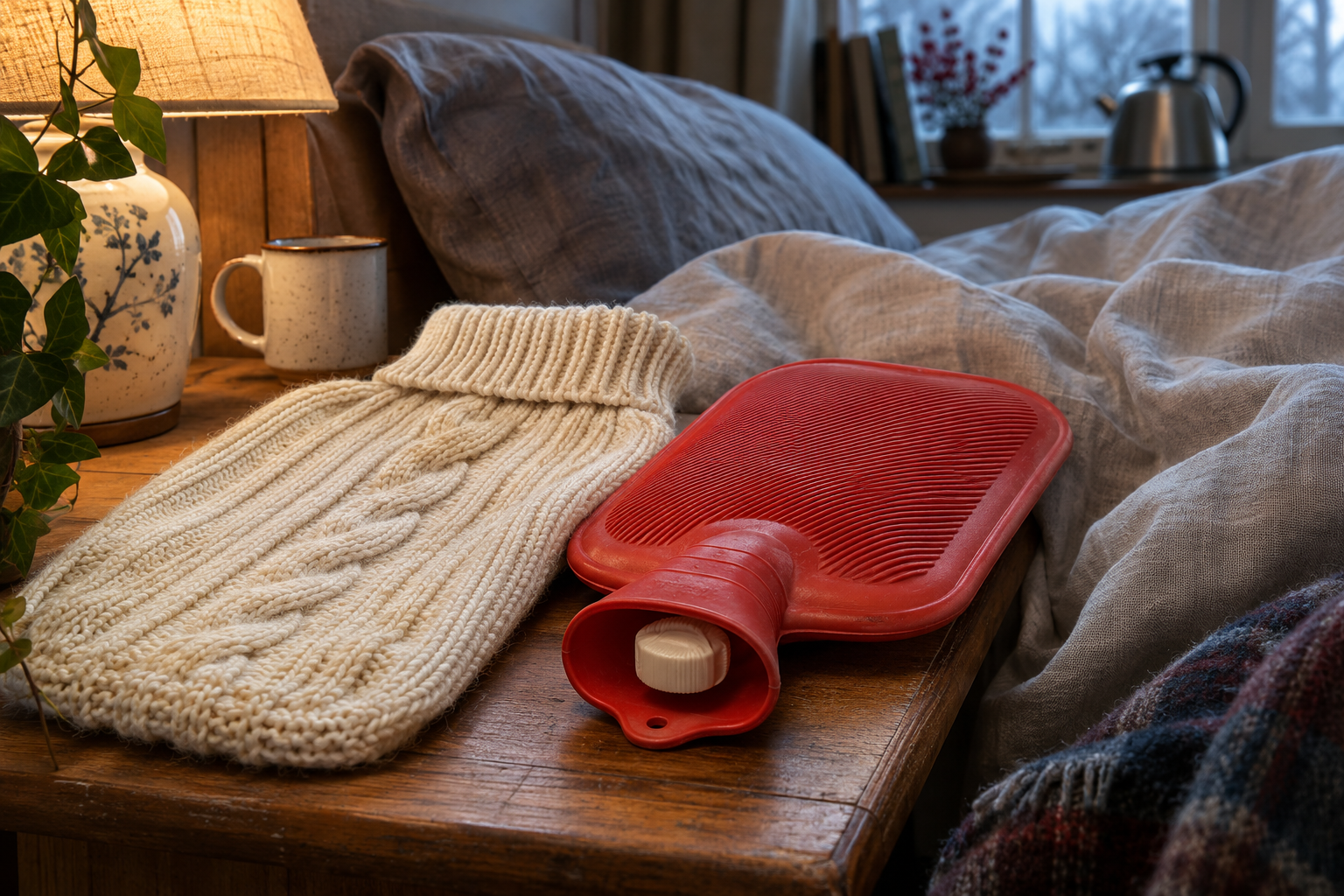
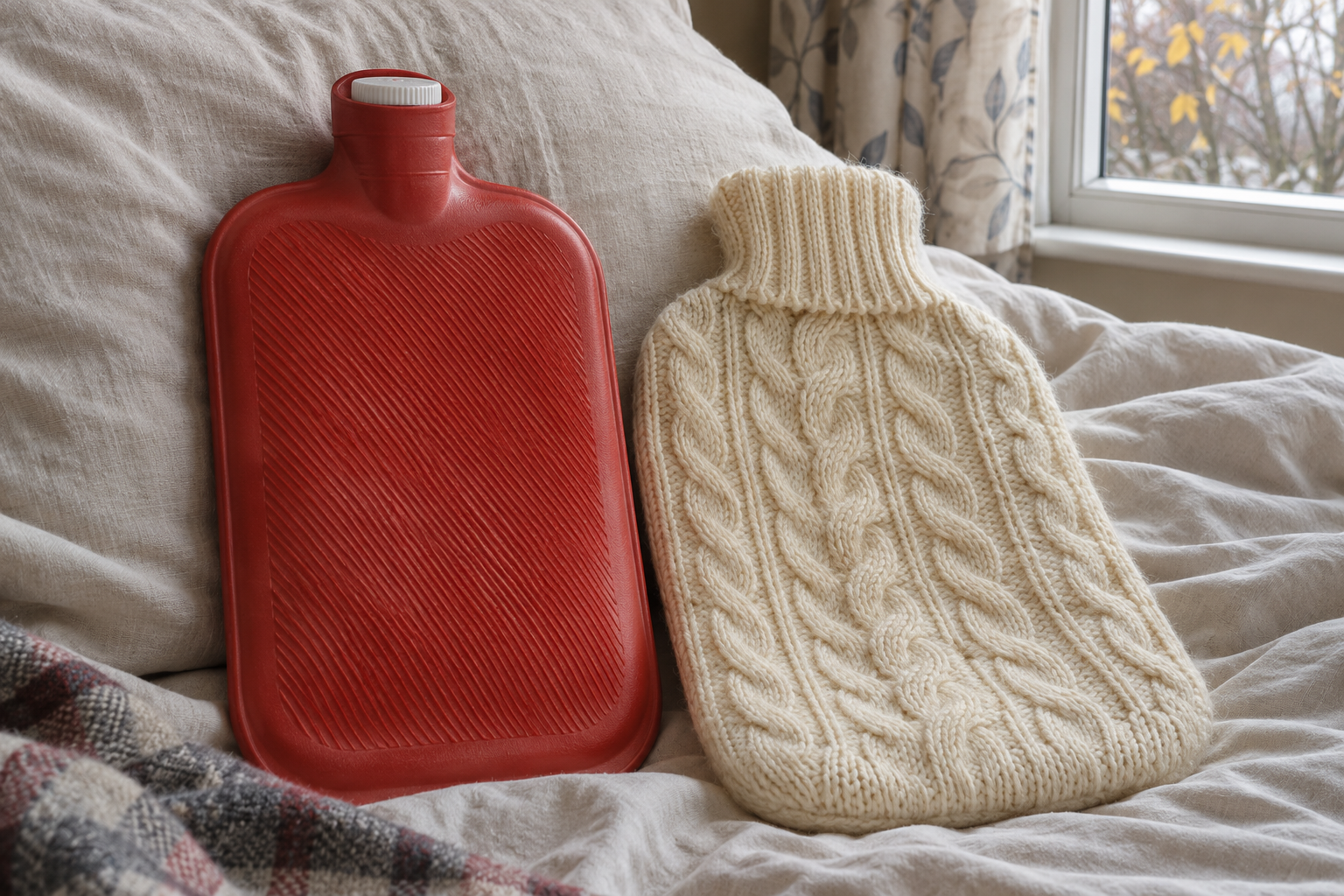
The hot water bottle itself is almost comically simple, a flattened bag made of rubber or soft plastic, with a screw stopper at one end, that you fill with hot water from the kettle or tap. Filled and sealed, it holds its warmth for hours, radiating a steady, gentle heat, and you place it wherever you want that heat, against your feet in bed, on your lap on the sofa, against an aching back, tucked into the blankets ahead of you to warm the sheets before you climb in. It is low technology at its finest, and it works exactly as well now as it did a century ago.
It goes by many names across the continent, the bouillotte in France, the Warmflasche in Germany, the borsa dell’acqua calda in Italy, and it is a completely normal, unremarkable household object across Europe, found in most homes and sold in every pharmacy and supermarket. Often it comes with a soft knitted or fleece cover, partly for comfort against the skin and partly to slow the heat loss so it stays warm longer, and these covers have become a small cozy fashion of their own, in wool and cables and cheerful colors. The object is humble, but it is cherished, a reliable small comfort against the cold.
The economics of it are the quiet revelation. A hot water bottle costs around eight euros, give or take, a one-time purchase that lasts for years, and using it costs only the trifling amount of energy to boil a bit of water in the kettle. Against the cost of heating a whole house, or even a whole bedroom, all night, that is almost nothing, and that enormous gap in cost is precisely the point. The hot water bottle delivers warmth exactly where a cold body needs it, in bed, for a few cents, while central heating warms the entire empty volume of a house to warm the same body at vastly greater expense.
Heat the Person, Not the House
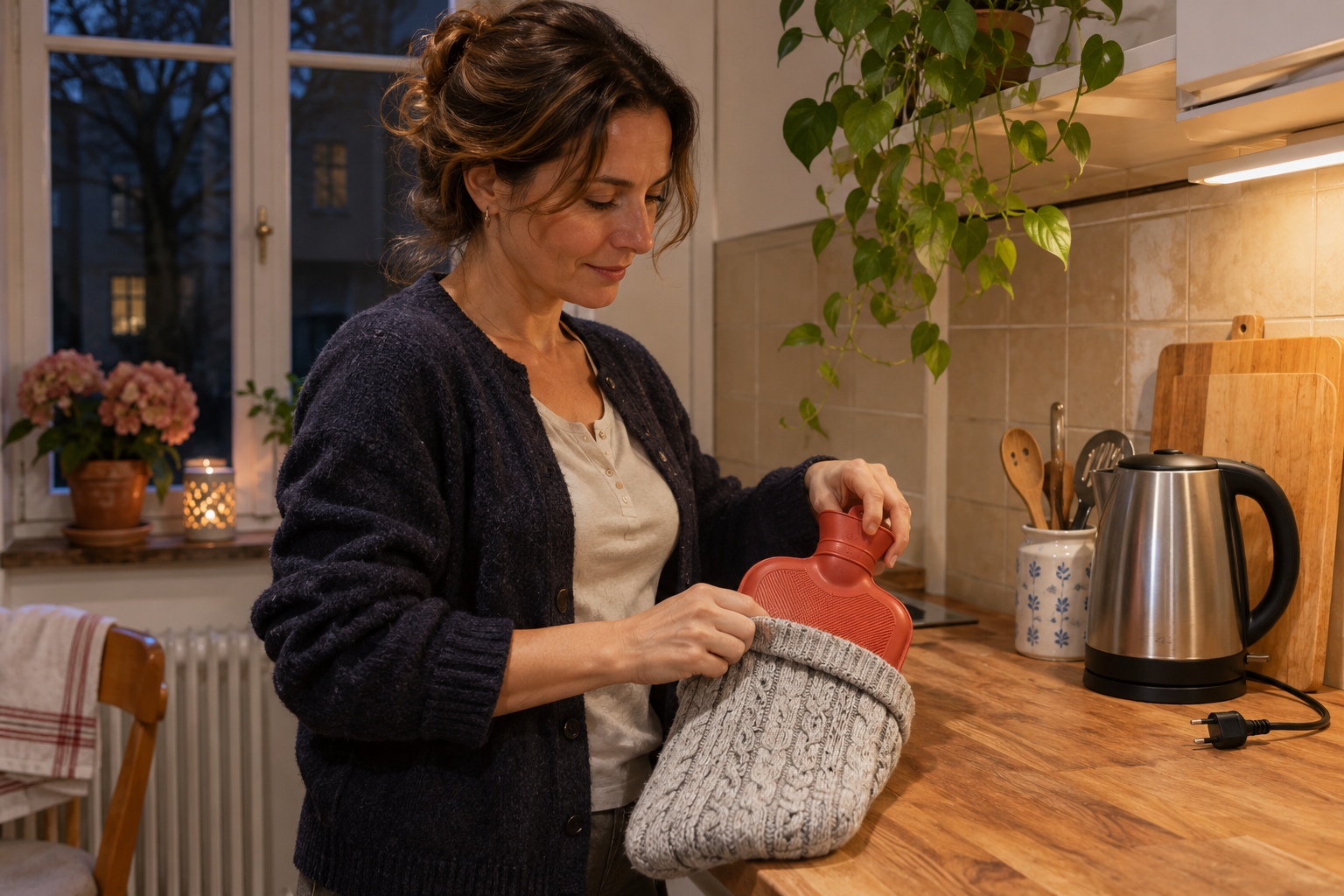
The hot water bottle is really the clearest expression of a whole philosophy, the fundamental difference between how Americans and Europeans think about staying warm in winter. The American instinct is to heat the space, to keep the entire house at a constant comfortable temperature, say seventy degrees, all day and all night, every room, whether occupied or not, so that the ambient air is always warm and the body is warmed by simply being in it. Warmth, in this model, is a property of the building, bought wholesale and maintained constantly.
The European instinct, shaped by expensive energy and older, harder-to-heat houses, is to heat the person instead, to accept a cooler house and warm the individual body directly and locally where and when the warmth is actually needed. You do not warm the whole bedroom all night to be comfortable in bed, you warm the bed, with a hot water bottle, and let the room stay cold. You do not heat an empty house, you warm yourself where you are sitting, with a blanket and a bottle and a sweater, and let the rooms you are not in stay cool. The warmth is targeted, local, and cheap, applied to the body rather than the air.
This is a genuinely different model, and once you see it, a lot of European domestic habits fall into place. The cooler houses that surprise American visitors, the sweaters worn indoors, the blankets on every sofa, the lower thermostats, the heating of only the rooms in use, and yes, the hot water bottle in the bed, are all expressions of the same underlying logic, that it is cheaper and often cosier to warm the body than the building. The hot water bottle is the single most charming and concrete piece of that logic, a little vessel of targeted warmth that makes a cold bedroom perfectly comfortable for a fraction of the cost of heating it.
Why Europeans Heat This Way
The European approach did not come from nowhere, and understanding its roots makes it look sensible rather than merely frugal. The first and biggest driver is energy cost, because heating is far more expensive in much of Europe than in much of America, with higher prices for gas and electricity, so the financial incentive to minimize heating has always been strong. When keeping a whole house warm all winter is genuinely costly, you find ways to stay warm that do not require it, and warming the body directly is the obvious answer.
The housing stock matters too, because much of Europe lives in older buildings, stone and brick houses centuries old, often harder to insulate and heat evenly than modern construction, so heating the whole space to a constant warm temperature can be both expensive and difficult. In a drafty old house, the idea of keeping every room uniformly warm all night is almost absurd, and the practical response is to heat the rooms you use when you use them and warm your body for the rest. The hot water bottle thrives in exactly these conditions, delivering reliable warmth where the building cannot.
And there is a cultural, almost moral, dimension of thrift and sense around energy that runs through much of European life, a resistance to waste that makes heating an empty house feel not just expensive but faintly wrong. Warming the body rather than the building appeals to that sensibility, using only the energy actually needed to keep a person comfortable rather than pouring heat into empty rooms. The hot water bottle fits this ethic perfectly, a small, sensible, unwasteful comfort, and its persistence into an age of central heating reflects how deeply that heat-the-person logic is embedded. Even homes with good heating keep the bottles, because the habit of sensible, targeted warmth outlived the necessity.
How to Use One Well
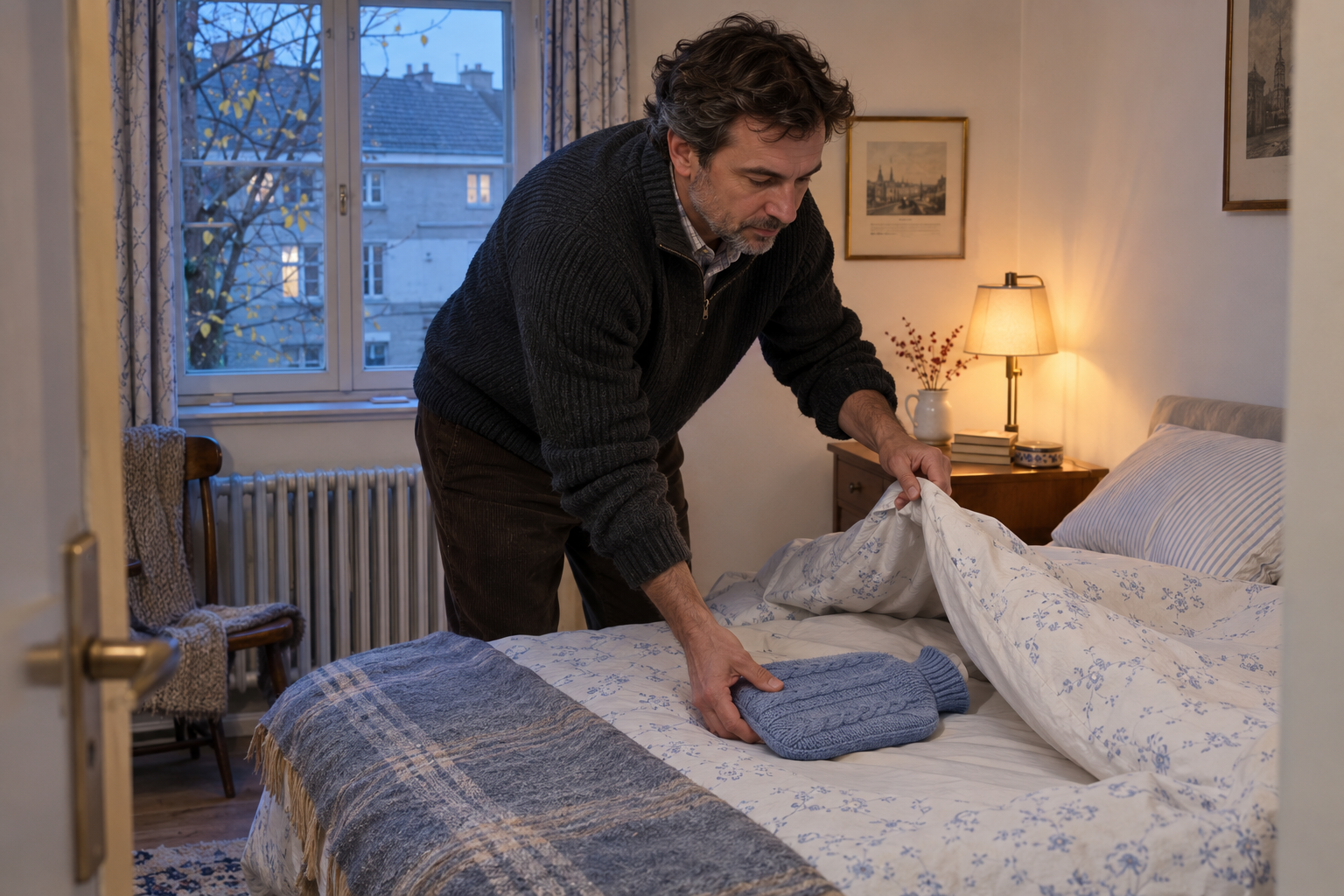
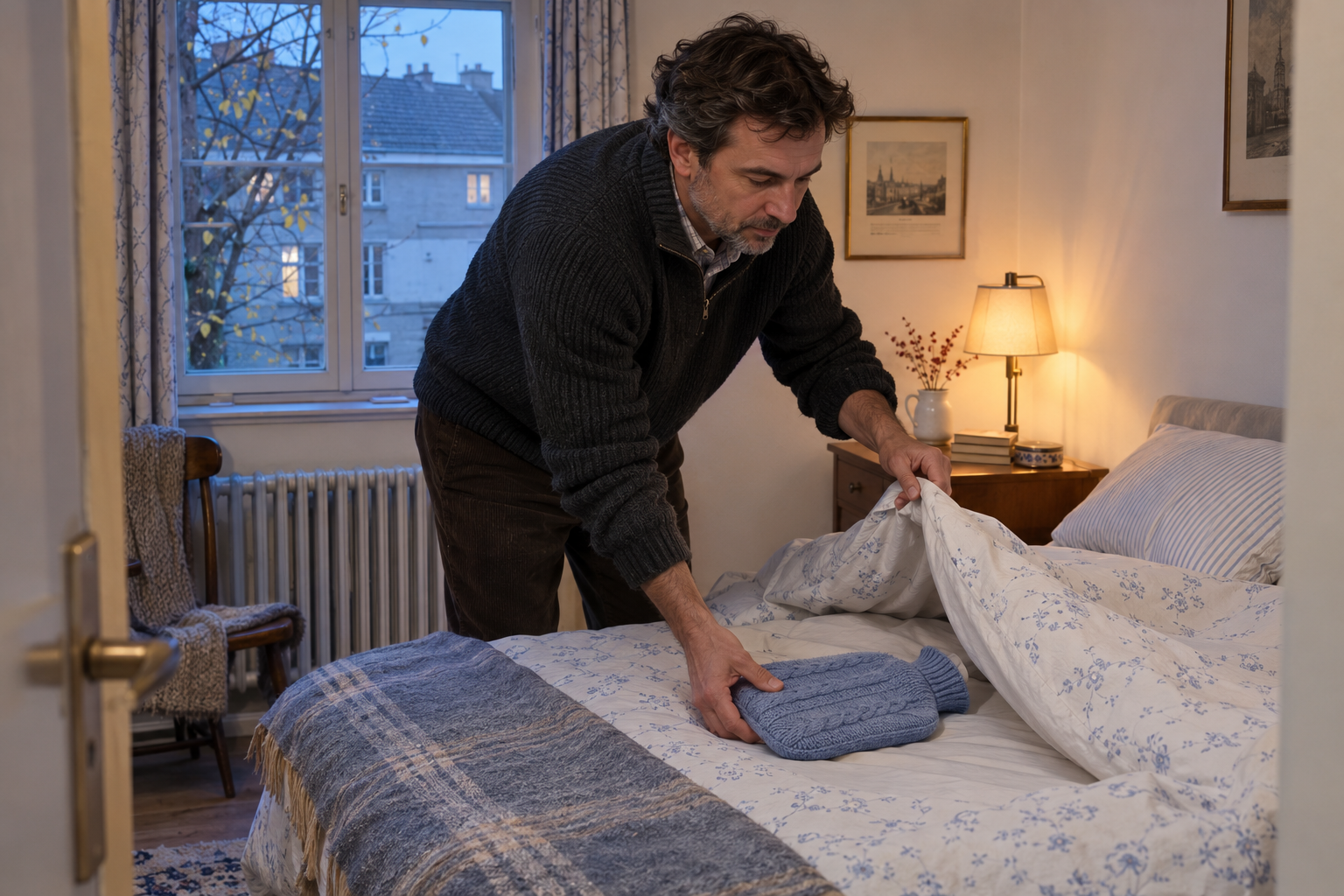
Getting real comfort from a hot water bottle is easy, but there are a few small tricks the habituated know that make all the difference. The classic move is to fill the bottle and put it in the bed ahead of you, slipping it between the sheets ten or fifteen minutes before you turn in, so that instead of climbing into a cold bed in a cold room, you climb into a patch of gentle warmth that takes all the shock out of the cold sheets. A pre-warmed bed is one of the great small pleasures of a European winter, and it costs almost nothing.
Through the evening, the bottle lives wherever you do. On the sofa under a blanket it warms your lap and hands while you read or watch television in a cool room, against your lower back it soothes winter aches, between your feet in bed it keeps the coldest part of you warm through the night. The soft cover makes it pleasant against the skin and extends its warmth, and a good bottle, well filled, stays usefully warm for hours, often right through until morning. It asks nothing of you but a kettle of hot water and a minute of filling.
The comfort is genuinely considerable, which is the thing skeptical Americans underestimate. A cold bedroom with a hot water bottle in the bed is not a hardship, it is cosy, arguably cosier than an overheated room, because there is a particular pleasure in being warm under the covers while the air around you is cool and fresh. Many people sleep better in a cool room, and the hot water bottle lets you have both, a cool, well-ventilated bedroom and a warm bed, which is a genuinely lovely combination and a large part of why the habit endures by preference and not just economy.
The Bottle Has Company
The hot water bottle does not work alone but as part of a whole small toolkit of body-warming habits, and seeing the rest of the kit makes the system clearer. Across Europe you will find heated throws and blankets on sofas, warming the person on the couch rather than the room, and in Spain the famous brasero under the mesa camilla, a round table draped with a heavy cloth and warmed from beneath, under which whole families tuck their legs on a winter evening while the room stays cool. All of it follows the same heat-the-person logic.
Layering plays its part too, the indoor sweaters, the thick socks, the shawls kept on the back of a chair, the good duvet on the bed, all of which let a person stay warm in a cooler house without heating the air. The hot water bottle is simply the most portable and personal member of this family, a movable source of warmth you carry to wherever your body is, and it slots neatly alongside the blanket, the brasero, and the extra layer. Together they make a cool house not just bearable but genuinely comfortable.
A Word on Safety
Because a hot water bottle holds hot water against the body, it deserves a few sensible precautions, especially for older people, whose skin can be thinner and whose sensation to heat can be reduced. Do not fill it with boiling water straight off a rolling boil, since very hot water can degrade the rubber and raises the burn risk; hot but not boiling is the rule, and let a boiled kettle sit for a moment first. Fill it only about two-thirds full and press out the air before sealing, which makes it softer and less likely to leak.
Keep a cover on it or wrap it in a cloth rather than placing very hot rubber directly against bare skin, particularly for prolonged contact or overnight use, to avoid burns, and never place it against skin that cannot feel heat properly. Check the bottle regularly for signs of wear, cracks, or perishing of the rubber, and replace it every couple of years or sooner if it looks old, because an old bottle can split and scald. These are simple precautions and the risk is low when they are followed, but they matter, and a few seconds of care makes the hot water bottle the safe, reliable comfort it is meant to be.
The Savings Add Up
For the budget-minded, it is worth spelling out how real the savings are, because the hot water bottle is not just a charming habit but a genuinely effective one. Heating is one of the larger line items in a winter household budget, and every degree you turn the thermostat down, and every hour you avoid heating the whole house, cuts the bill meaningfully. Turning the heating down at night and warming the bed with a bottle, rather than keeping the house warm while everyone sleeps, is one of the single easiest savings there is.
The logic scales. A person who adopts the whole heat-the-body approach, lower thermostat, heating only occupied rooms, a bottle in the bed, blankets on the sofa, can shave a substantial fraction off a heating bill over a winter, which across the cold months adds up to real money. None of it requires sacrifice once you have adjusted, because the body stays warm throughout; what changes is that you stop paying to heat empty air. For anyone feeling the cost of energy, the eight-euro bottle may be the best-value purchase of the winter.
The €8 That Explains a Continent
For an American trying to understand why European homes feel cooler, why the heating bills are lower, and why the thermostat sits at a temperature that seems almost spartan, the hot water bottle is the perfect small key. It makes concrete an entire philosophy of winter, that you do not need to heat the whole building to be warm, you need to warm the body, and you can do that cheaply, locally, and cosily with a few cents of hot water in a rubber bottle. The cool house is not deprivation, it is the other half of a system whose warm half is held against your feet in bed.
Adopting the habit is one of the easiest and most rewarding small changes a person settling in Europe, or just wanting to cut their heating bill anywhere, can make. Buy the cheap bottle, get a soft cover for it, and start warming your bed and your lap instead of your empty rooms, and you will likely find, as generations of Europeans have, that a cool house with a hot water bottle is not only cheaper but genuinely pleasant, cosy in a way an overheated house never quite is. The eight-euro bottle is a small object, but it carries a whole sensible, thrifty, comfortable way of meeting the winter, one that the rest of the world might do well to borrow.

About the Author: Ruben, co-founder of Gamintraveler.com since 2014, is a seasoned traveler from Spain who has explored over 100 countries since 2009. Known for his extensive travel adventures across South America, Europe, the US, Australia, New Zealand, Asia, and Africa, Ruben combines his passion for adventurous yet sustainable living with his love for cycling, highlighted by his remarkable 5-month bicycle journey from Spain to Norway. He currently resides in Spain, where he continues sharing his travel experiences with his partner, Rachel, and their son, Han.