Order an espresso in Italy, drink it standing at the counter, and it might cost you a euro and a bit. Order the identical espresso in the same bar, from the same machine, made by the very same barista, but carry it to a table and sit down, and the price can double, or in the wrong tourist piazza climb to five, six, even twelve euros for a single cup. Same cup, same coffee, the same machine, two completely different prices, and it is not a trick or a tourist scam but a fully legal, centuries-shaped feature of how Italy runs its cafes. To an American used to one price for a drink no matter where you happen to drink it, this can feel baffling or even like being cheated, but it is honestly neither, and once you understand the simple logic of standing versus sitting, you will never once be caught out by an Italian coffee bill again. Here is exactly why the same coffee costs two different prices, and how to make the system work for you instead of against you. It is one of those small but genuinely useful pieces of local knowledge that separates a smooth trip from a mildly bewildering one, and it takes about two minutes to learn.
What follows is how the two-price rule actually works, why sitting down costs more, where it turns into a genuine tourist trap, how Italians themselves navigate it, and what it all means for your trip.
The Same Cup, Two Prices
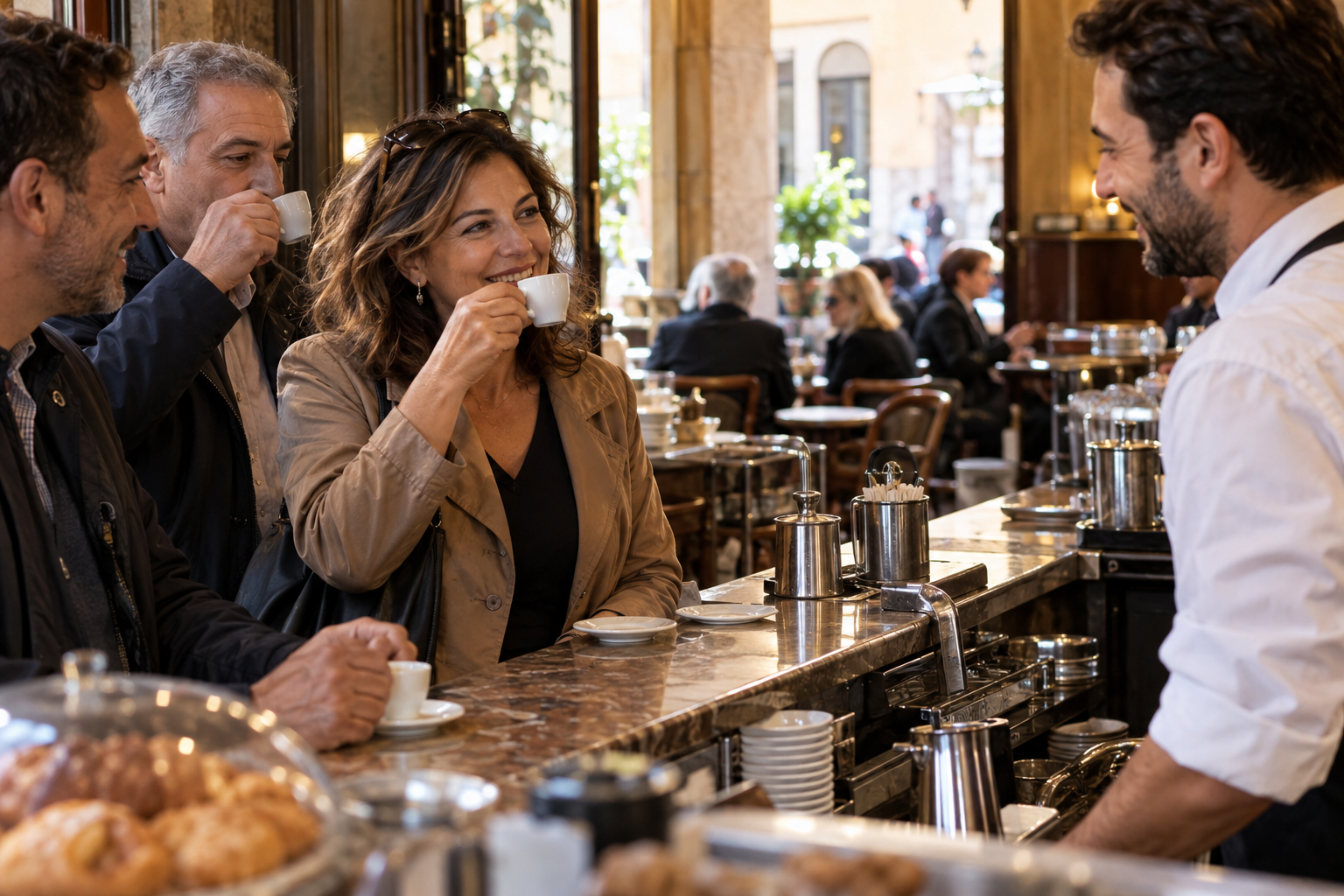
The core of the system is a simple distinction that every Italian bar runs on: al banco, meaning at the counter, and al tavolo, meaning at the table. Drink your coffee al banco, standing at the bar where it is served, and you pay the lower price, the everyday local rate that keeps Italy’s coffee culture moving. Sit down at a table to drink the same thing, al tavolo, and you pay a higher price for the privilege of the seat and the service. The two prices are not a secret, and in fact Italian law requires bars to display both, so the information is always there for anyone who thinks to look.
The gap between the two is real and often large. A counter espresso across Italy now averages around a euro and a quarter, creeping upward toward a euro fifty as prices rise, and remaining cheapest in the south, so the standing price stays modest almost everywhere. Table service, by contrast, typically runs at least double that, and in busy or scenic spots considerably more, so the same simple espresso can cost a euro standing and four or five sitting only a few steps away, with nothing about the coffee itself having changed at all.
The important thing to grasp is that this is one price structure applied to one product, chosen by you at the moment you decide whether to stand or sit, rather than two different qualities of coffee or any kind of bait and switch. The espresso is the same espresso. What you are really pricing is not the drink at all but the manner of drinking it. That is the mental shift an American has to make, from thinking of a coffee as a product with a single price to thinking of it as a product plus, optionally, a seat and some service, each with its own cost.
Why Sitting Down Costs More
The reason for the surcharge is straightforward once you see it, and it has to do with what a table actually costs the cafe to provide. When you drink standing at the counter, you order, you are served, you drink, and you leave, all in the space of a few minutes, so the bar turns over its space quickly and needs no one to wait on you. When you sit at a table, you occupy that space for as long as you like, and someone has to come to take your order, bring your coffee, and clear up, which is real labor and real real estate that the higher price pays for.
This shows up on the bill in a couple of named forms worth recognizing. Many places apply a coperto, a per-person cover charge for the table setting and the seat, and some add a servizio, a service charge that is a percentage of the total, both of which fund the cost of table service in a country where tipping is not the custom. These are not sneaky add-ons but standard practice, and by law they must be indicated rather than sprung on you, so the servizio in Italy takes the place of the tip an American would leave, built into the posted price instead of added by the customer afterward. There is history behind the whole arrangement too, dating to an era when the Italian government once capped the price of coffee as a daily necessity, which squeezed the bars’ margins and led them to recover the difference through table charges. The low standing price is, in a sense, a protected everyday right, and the table price is where the bar makes its living. That balance is why the counter espresso has stayed so remarkably cheap for so long even as almost everything else has grown dearer, since keeping it affordable is treated almost as a point of national principle.
The Tourist Trap in the Piazza
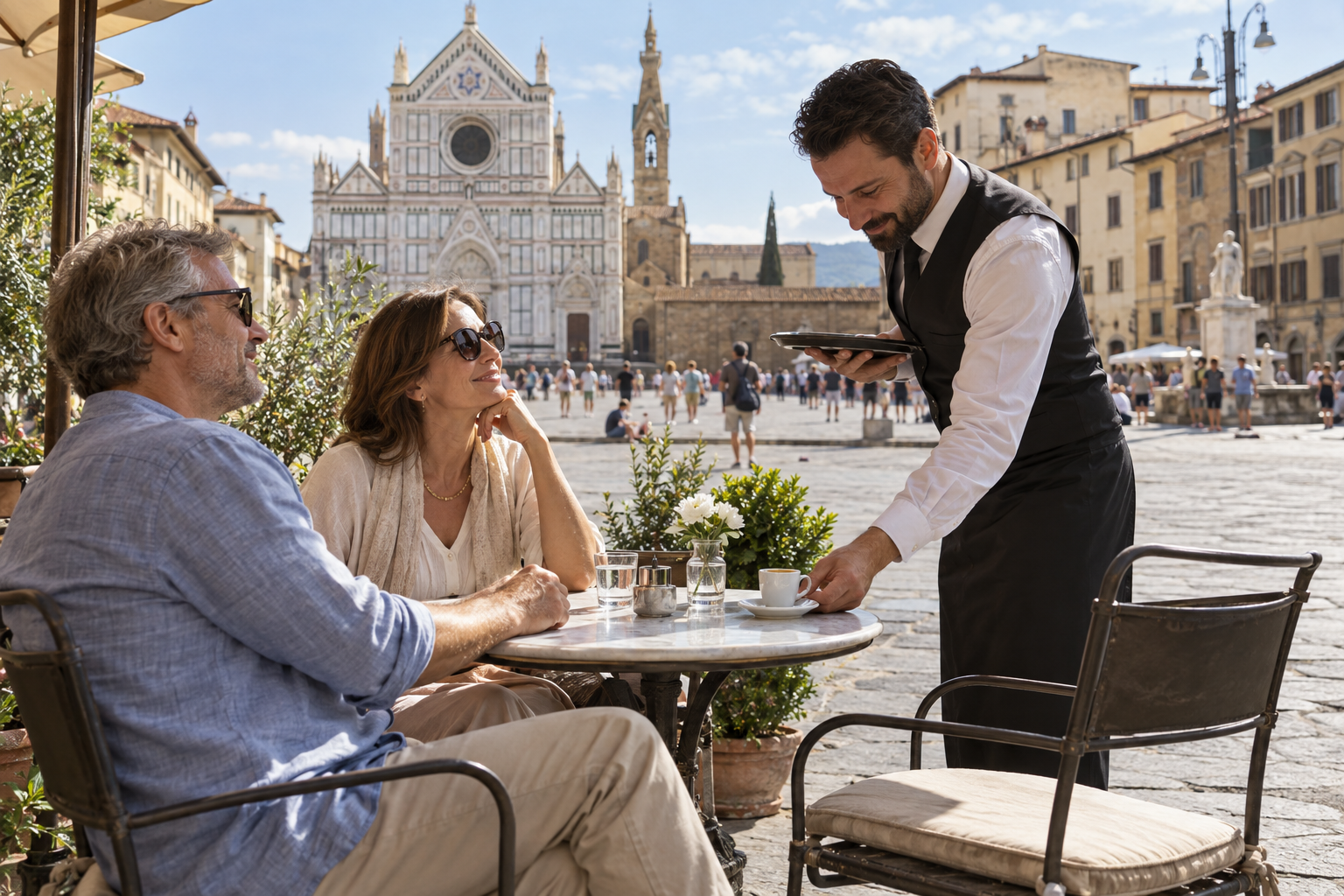
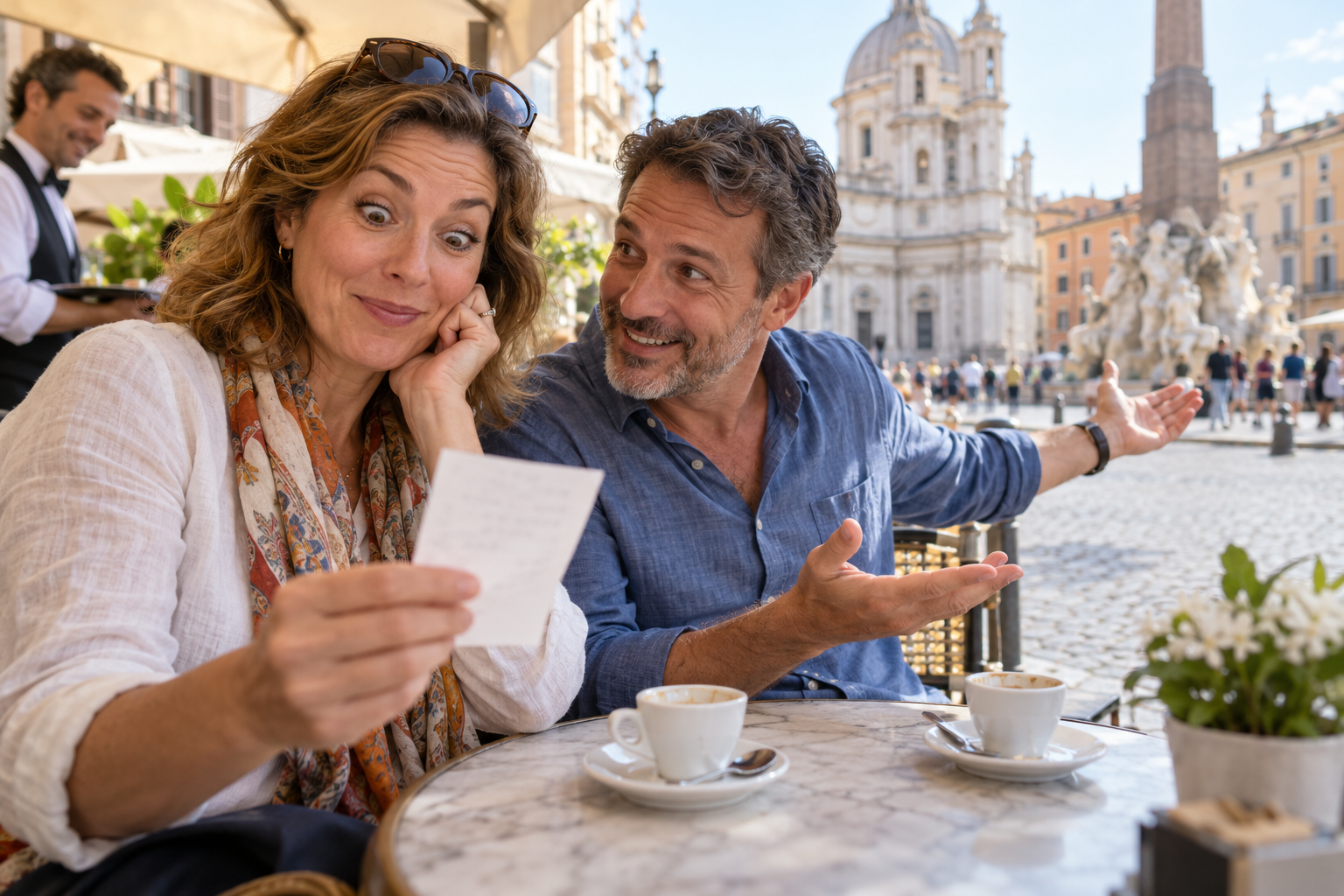
Where this system genuinely catches people out is in the beautiful, touristy heart of the famous cities, and it is worth being clear-eyed about it. In a picturesque square in Venice, Rome, or Florence, sitting down at a cafe table with a view can turn a coffee that costs barely more than a euro at the counter into one costing five, six, or more, and at the most storied establishments the numbers climb higher still. At the legendary Caffe Florian on Venice’s St Mark’s Square, for instance, a cappuccino that is already several euros at the counter roughly doubles again the moment you take it to a table, and an unwary tourist can end up paying a small fortune for a coffee and a sit-down without ever having done anything wrong.
The crucial point is that none of this is illegal or even, strictly speaking, unfair, provided the prices are posted, which they are required to be.
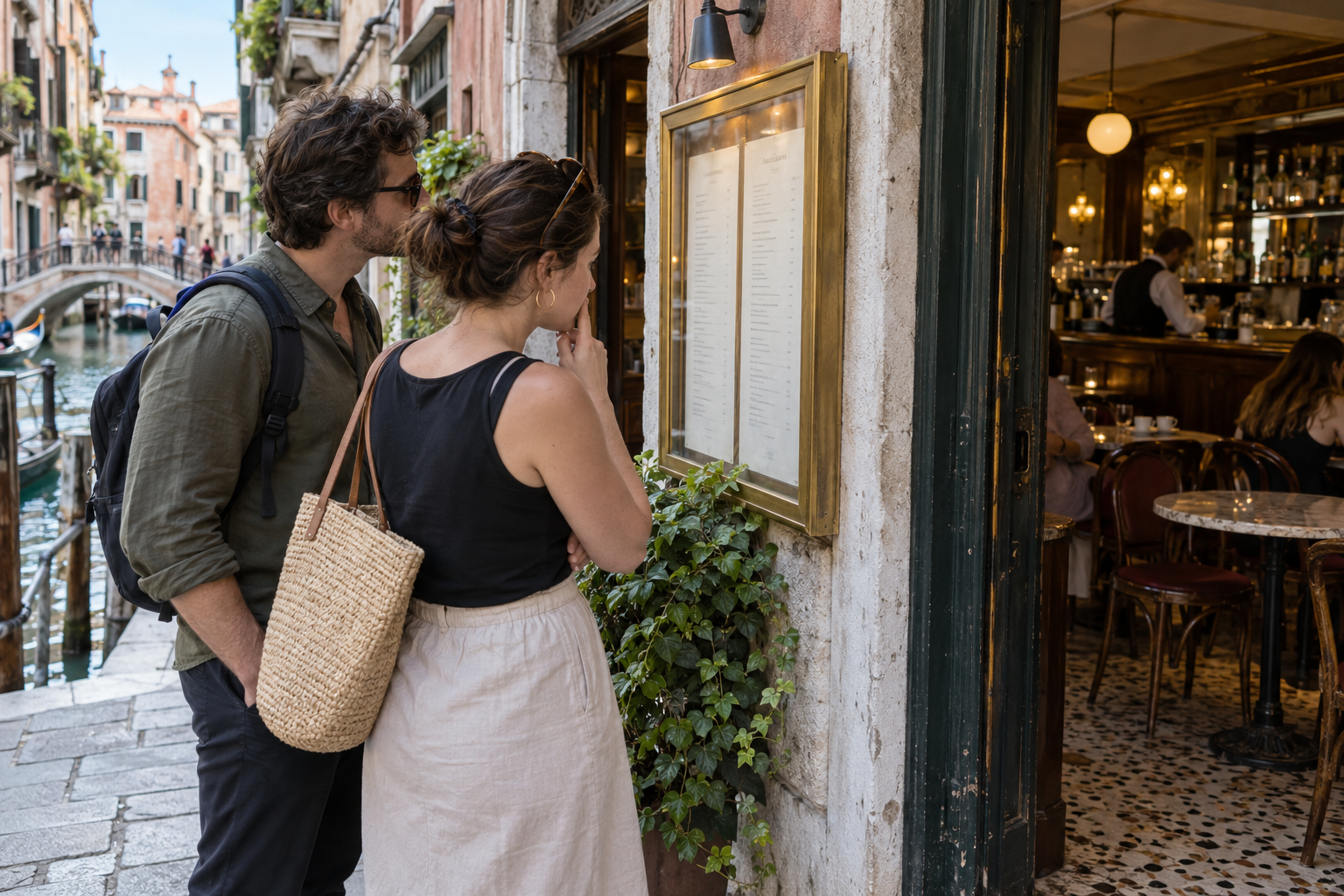
The deal is transparency, not a cap: Italy does not stop a cafe in a famous square from charging a fortune for a seat with a view, it only insists that the cafe tell you the number before you sit, which puts the choice, and the responsibility, squarely in your hands. A cafe in Florence was fined a thousand euros in a recent case, but the fine was not for charging a high price, it was for failing to display that price properly, which tells you exactly where the law draws its line. Italy lets a bar charge almost anything it likes for a seat in a spectacular location, so long as it tells you first, which means the responsibility falls on you to look before you sit. That famous view over the canal or the piazza is genuinely worth paying for on occasion, and there is nothing wrong with deciding a memorable hour at a historic cafe is worth twelve euros. Some of travel’s best memories are made exactly this way, nursing a single overpriced coffee at a marble table while a beautiful city goes about its morning around you, and that is money well spent if you chose it knowingly. The trap is only a trap if you sit down without checking, assume the counter price applies, and get a shock when the bill arrives.
How Italians Actually Do It
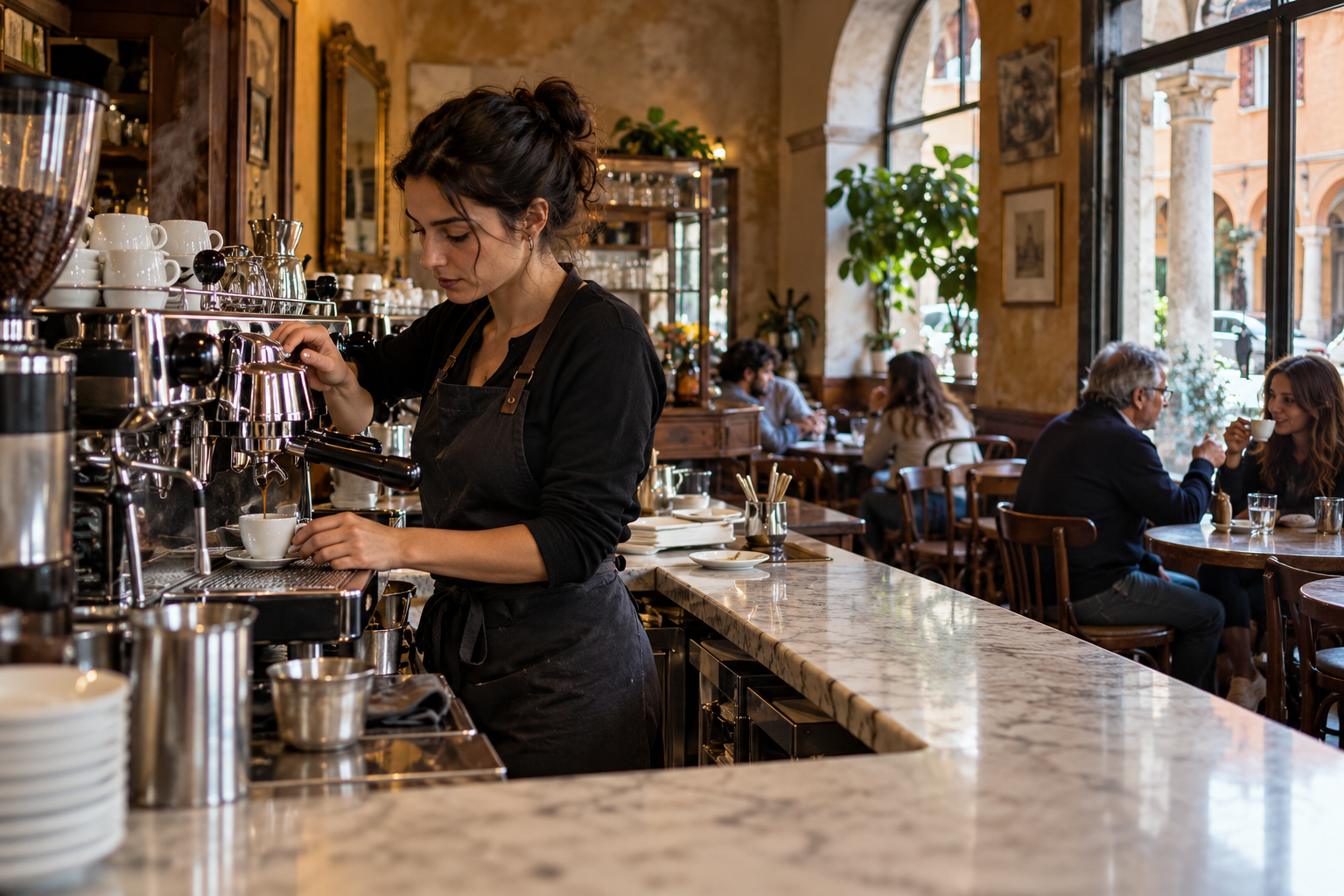
To understand the system fully, it helps to watch how Italians themselves treat it, because for them there is often no decision to make at all: they stand. The Italian relationship with coffee is built around the quick espresso taken al banco, drunk in a matter of seconds while standing at the bar, perhaps with a word to the barista or the person beside them, before getting on with the day. Coffee in Italy is a punctuation mark rather than an event, taken many times a day and rarely lingered over, and the standing bar is the natural home of that habit. The numbers are staggering: nearly every Italian adult drinks coffee daily, the country has a coffee bar for roughly every few hundred residents, and billions of cups are downed at those counters every year, almost all of them standing up.
The typical sequence is fast and worth knowing, because doing it the local way is both cheaper and smoother.
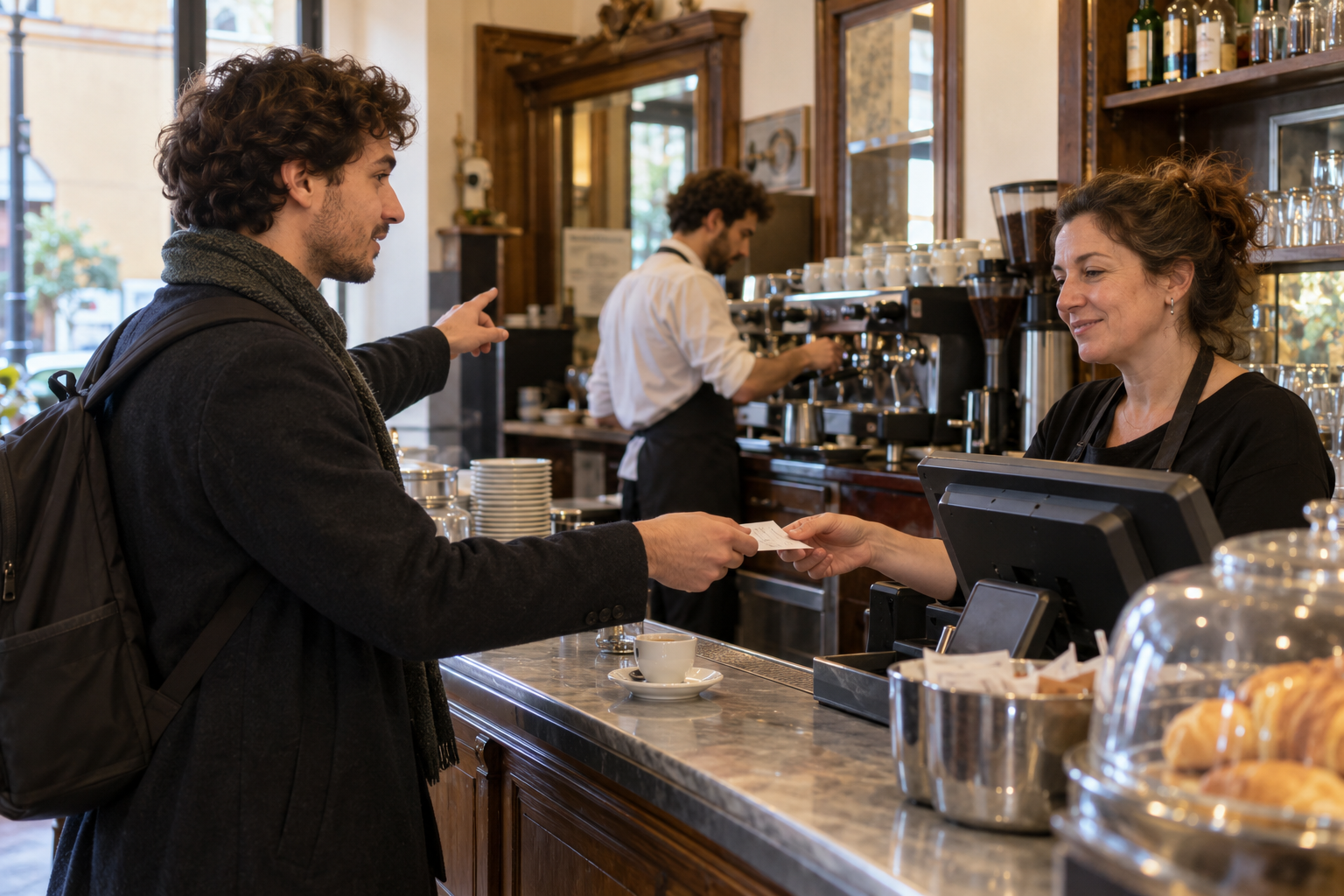
In many bars you pay first at the till, the cassa, then carry your receipt to the counter and give your order to the barista, who makes your espresso on the spot for you to drink right there. There is no expectation that you will sit, no pressure to linger, and no tip to calculate, just a small, cheap, efficient ritual repeated millions of times a day across the country.
It is a strikingly democratic little institution, the same low price and the same quick service for the banker and the bricklayer standing shoulder to shoulder at the same counter, which is part of why Italians guard the cheap standing coffee so fiercely. When Italians do sit down at a table, it is a deliberate choice to relax and socialize, a Sunday morning with the paper or a catch-up with a friend, and they accept the higher price as the fair cost of that time and comfort. The table is for lingering, the bar is for living, and Italians move between the two without ever feeling that either is a rip-off, because each is priced honestly for what it is. The two prices, in other words, are not a puzzle to Italians but simply two different ways of having a coffee, the quick and cheap or the slow and dearer, each appropriate to its moment. An Italian would no more feel cheated by the table price than an American feels cheated that a restaurant meal costs more than the same ingredients from the supermarket; you are paying for a different thing.
A Few Other Rules Worth Knowing
While you are learning the two-price system, it is worth picking up a handful of the other unwritten rules of the Italian bar, since they travel together and getting them right marks you as someone who understands the place. The most famous is about timing: a cappuccino, or any milky coffee, is considered strictly a morning drink in Italy, taken with breakfast and essentially never after a meal, so ordering one after lunch or dinner is the surest way to flag yourself as a tourist. An espresso, by contrast, is welcome at any hour, and a small one after a meal is the norm, which is why you see Italians finishing dinner with a quick caffe rather than a foaming cup of milk.
The other conventions follow the same fast, unfussy logic as the standing ritual. Coffee to go, clutched in a paper cup as you walk, is barely a thing in Italy, where the whole point is the brief pause at the bar rather than the caffeine on the move, so do not expect the giant takeaway cups of home. The order of operations can catch newcomers out too, since in many bars you pay first at the till and then present your receipt at the counter, rather than ordering and paying at the end. And tipping, as the whole price structure implies, is simply not expected, with any service already built into the al tavolo price, so you can leave a few coins if you had a lovely time but no one is waiting for a percentage. None of these are rules anyone will scold you for breaking, but knowing them lets you move through an Italian bar with the easy fluency of someone who belongs there.
What It Means for Your Trip
The practical upshot for a visitor is genuinely simple, and it comes down to matching how you pay to what you actually want. If you just want your caffeine and a taste of the real Italian ritual, do as the locals do and take it standing at the bar, where you will pay the low local price and get the quick, authentic experience into the bargain. It is the cheapest coffee in Italy and often the most enjoyable, a small daily immersion in how the country really runs on its espresso, and it costs almost nothing. There is a real pleasure in the speed and sociability of it, the quick exchange with the barista, the shot downed in a few seconds, the coin left on the counter, the whole thing over in the time it takes to read this sentence.
If, on the other hand, you want to sit down, rest your feet, watch the world go by, and soak in a beautiful square, then do that with your eyes open, glancing at the posted table prices first so you know what you are agreeing to, and treating the higher cost as the fair price of the seat and the view rather than a swindle. Both choices are completely valid, and the whole secret is simply to choose on purpose rather than by accident. Read the two prices, decide whether this is a stand-and-go moment or a sit-and-savor one, and you turn what trips up so many tourists into a small piece of local knowledge that makes every Italian coffee, whether a euro at the bar or a leisurely one in the piazza, feel like exactly the deal you meant to make. That, in the end, is the whole trick to the two-price system, not avoiding the higher price but understanding it, so that you pay it only when the seat and the view are what you actually came for.

About the Author: Ruben, co-founder of Gamintraveler.com since 2014, is a seasoned traveler from Spain who has explored over 100 countries since 2009. Known for his extensive travel adventures across South America, Europe, the US, Australia, New Zealand, Asia, and Africa, Ruben combines his passion for adventurous yet sustainable living with his love for cycling, highlighted by his remarkable 5-month bicycle journey from Spain to Norway. He currently resides in Spain, where he continues sharing his travel experiences with his partner, Rachel, and their son, Han.