
Somewhere past about forty-five, nearly everyone joins the same club, the one where you find yourself holding the menu at arm’s length and still squinting, and sooner or later the optometrist says the word: progressives. Progressive lenses, the ones that let you see far, middle, and near through a single lens with no visible line, are the standard fix for aging eyes once reading glasses alone stop being enough, and in the United States they are expensive. A pair of progressive glasses, frames plus the lenses, routinely runs several hundred dollars, and once you add the better coatings and a brand-name lens it is easy to walk out of an American optical shop six hundred dollars lighter, often more.
Now cross the Atlantic. In Spain, and much of Europe, a comparable pair of progressive glasses can be had for something in the region of €150, sometimes less, from an ordinary high-street optician. The gap is so large that a quietly growing number of Americans, the ones who travel to Europe anyway or who have family there, have started doing something that sounds slightly mad until you run the numbers: they schedule an optician visit into their trip, and come home seeing better and hundreds of dollars richer. Here is why progressives cost what they do, why Europe is so much cheaper, how the trip-plus-glasses math actually works, and the real cautions to keep in mind before you try it.
Why Progressives Are the Expensive Ones
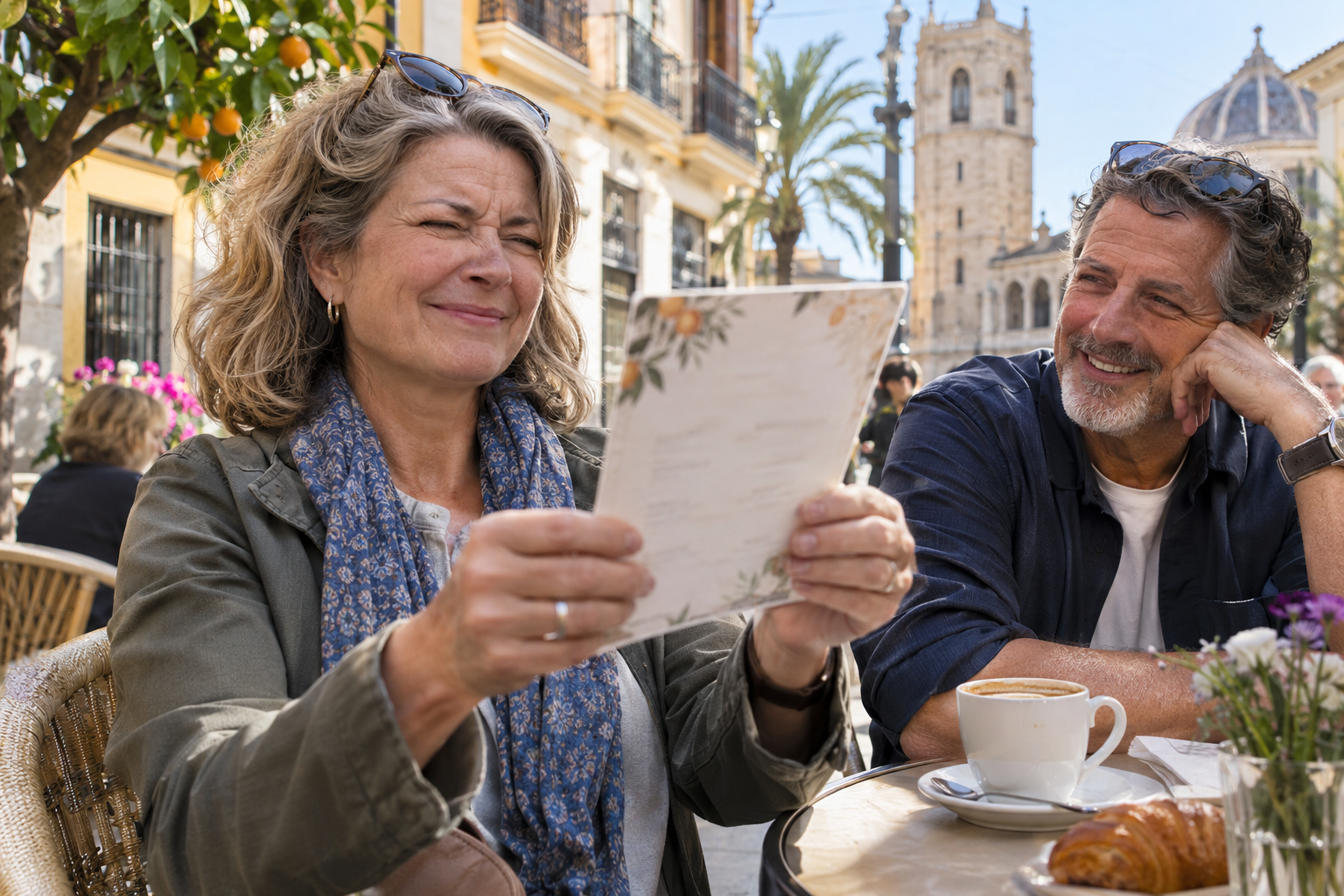
To understand the savings, you have to understand why progressives in particular hit the wallet so hard. A progressive lens is genuinely a more complex piece of engineering than a simple single-vision lens, with a smooth gradient of focusing power built into it, strong at the bottom for reading, weak at the top for distance, blended seamlessly in between. That complexity is real, and it is why progressives have always cost more than basic lenses everywhere, including in Europe.
In the American pricing system, though, that extra complexity becomes the hook for a great deal of added cost. On top of the base progressive lens come layer after layer of upcharges, for anti-reflective coatings, for scratch resistance, for blue-light filtering, for thinner high-index materials, for a premium brand name, each presented as a small addition until the total has doubled or tripled. The progressive lens is where the American optical shop makes its margin, and the menu of add-ons is designed to climb, which is how an ordinary pair ends up near six hundred dollars.
This matters because it means the high American price is not simply the cost of good progressive lenses. It is the cost of good progressive lenses plus a pricing structure built to maximize what each customer spends, in a market with relatively concentrated supply, as we explored in our broader piece on who really makes your glasses. The lenses themselves, even the fancy ones, do not cost what you pay. The system around them does, and that is exactly the part that falls away when you buy the same category of lens somewhere with a different market.
Why Europe Is So Much Cheaper
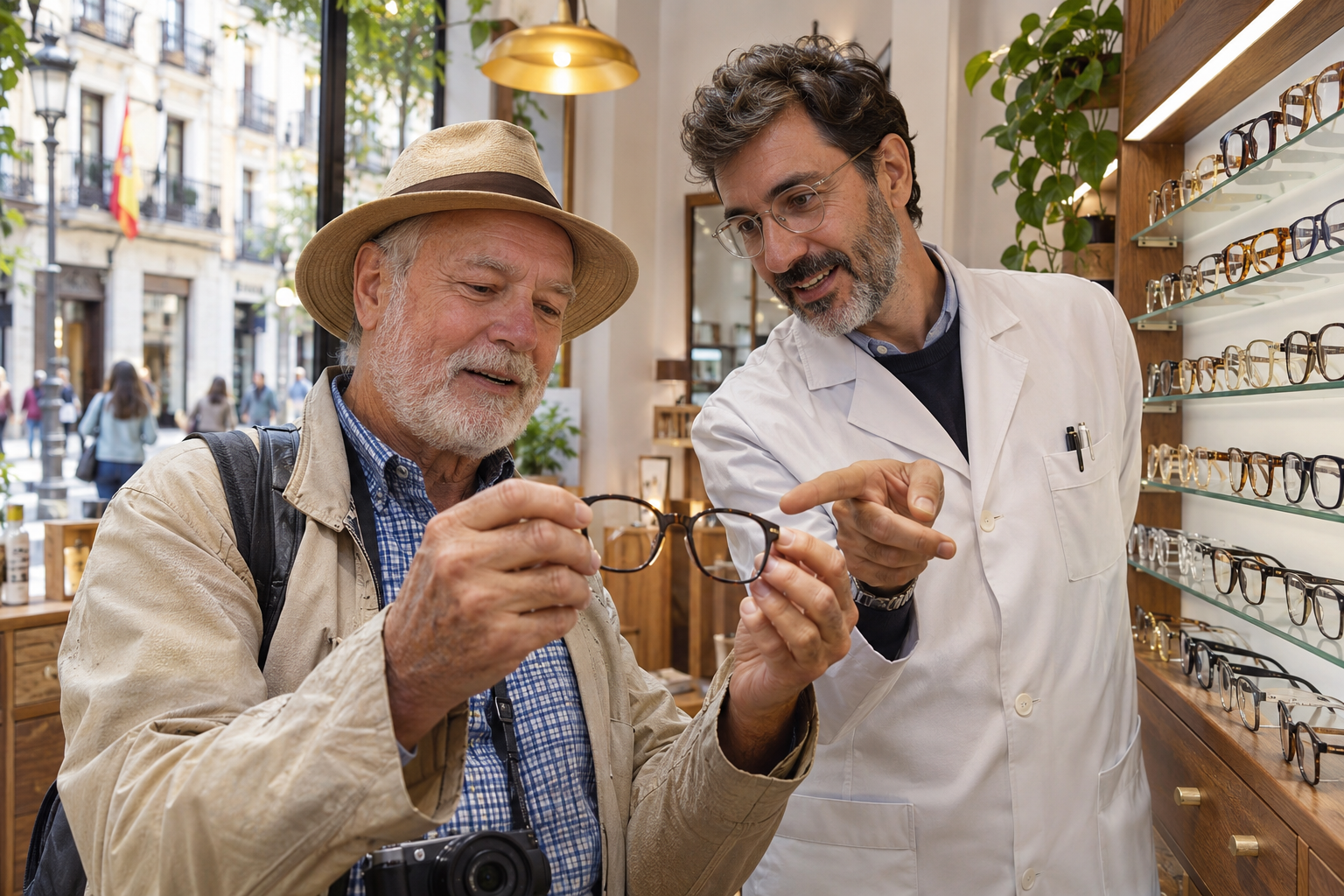
Step into a Spanish optician and the first thing you notice is that progressive glasses are priced as a normal consumer good rather than a semi-medical luxury. Many European opticians, including big chains across Spain, advertise complete progressive glasses, frame and lenses together, at flat, modest prices, often with the coatings and the thinning included rather than piled on as extras. The whole pricing culture is different, more transparent, more competitive, and far less built around the upsell.
Several things drive the gap. European optical markets tend to be more competitive at the retail level, with chains and independents openly advertising all-in prices that customers compare directly, which pushes prices down toward the actual cost of the product.
The culture of medical and optical care is generally less geared toward maximizing per-customer revenue. And the base prices of the lenses themselves, bought and sold in these more price-competitive markets, simply sit lower. The result is that the same kind of progressive lens that is a several-hundred-dollar proposition in the States is a modest, everyday purchase in Spain.
It is important to be clear that cheaper does not mean worse, and this is the crux of the whole thing. The progressive lenses sold in European opticians are made to the same optical standards, often by the very same global manufacturers that supply the American market, and a €150 pair of progressives from a reputable Spanish optician is a genuinely good product, not a flimsy knockoff. You are not trading quality for price. You are escaping a pricing structure, buying the same category of well-made lens in a market that charges far less for it, which is why the savings feel almost too good to be real but hold up under scrutiny.
The Trip That Pays for Itself
This is where it gets interesting for the traveler, because the arithmetic can genuinely tilt a decision. If you are already coming to Spain, or anywhere in Europe with similar optical pricing, the difference between buying your next progressives at home and buying them on the trip can be several hundred dollars, enough to cover a meaningful slice of the vacation itself. For a couple who both wear progressives, the combined saving on two pairs can run well over five hundred dollars, which is real money against the cost of flights or a hotel.
So a practical habit has emerged among Americans who travel to Europe regularly or who are spending extended time here. They time their eye care to the trip. They get their eyes checked, or carry a recent prescription, and they build in an afternoon to visit a local optician, choose frames, order their progressives, and collect them before they fly home. A visit that would be an expensive errand at home becomes a cheap, easy, almost pleasant task abroad, folded into a trip they were taking anyway, and the savings help pay for the holiday.
The turnaround is usually quick, which is what makes it realistic on a trip of a week or two. Many opticians can have progressives ready within a few working days, and some offer faster service, so you simply order near the start of your stay and collect toward the end. The trick is to front-load it rather than leave it to the final day, choosing your frames early in the visit so the glasses are waiting for you with time to spare before the flight home.
For those who live part of the year in Europe, or are considering a move, the logic is even stronger, because the local optician simply becomes where you buy your glasses from now on. What was a dreaded several-hundred-dollar expense at home turns into a routine, affordable purchase, and the fear of needing new glasses, or a second pair, or prescription sunglasses, largely evaporates.
Many expats describe stocking up, finally getting the backup pair and the prescription sunglasses they always wanted but could never justify at American prices. The affordability does not just save money on the glasses you would have bought. It lets you buy the ones you actually wanted.
Why Not Just Buy Online at Home?
A fair objection is that Americans do not have to fly anywhere to find cheap glasses, because online sellers at home advertise strikingly low prices too. And for simple single-vision glasses, the online route genuinely is cheap and often perfectly good. The trouble is that progressives are the one kind of lens where buying blind, without a person fitting them to your face, carries real risk.
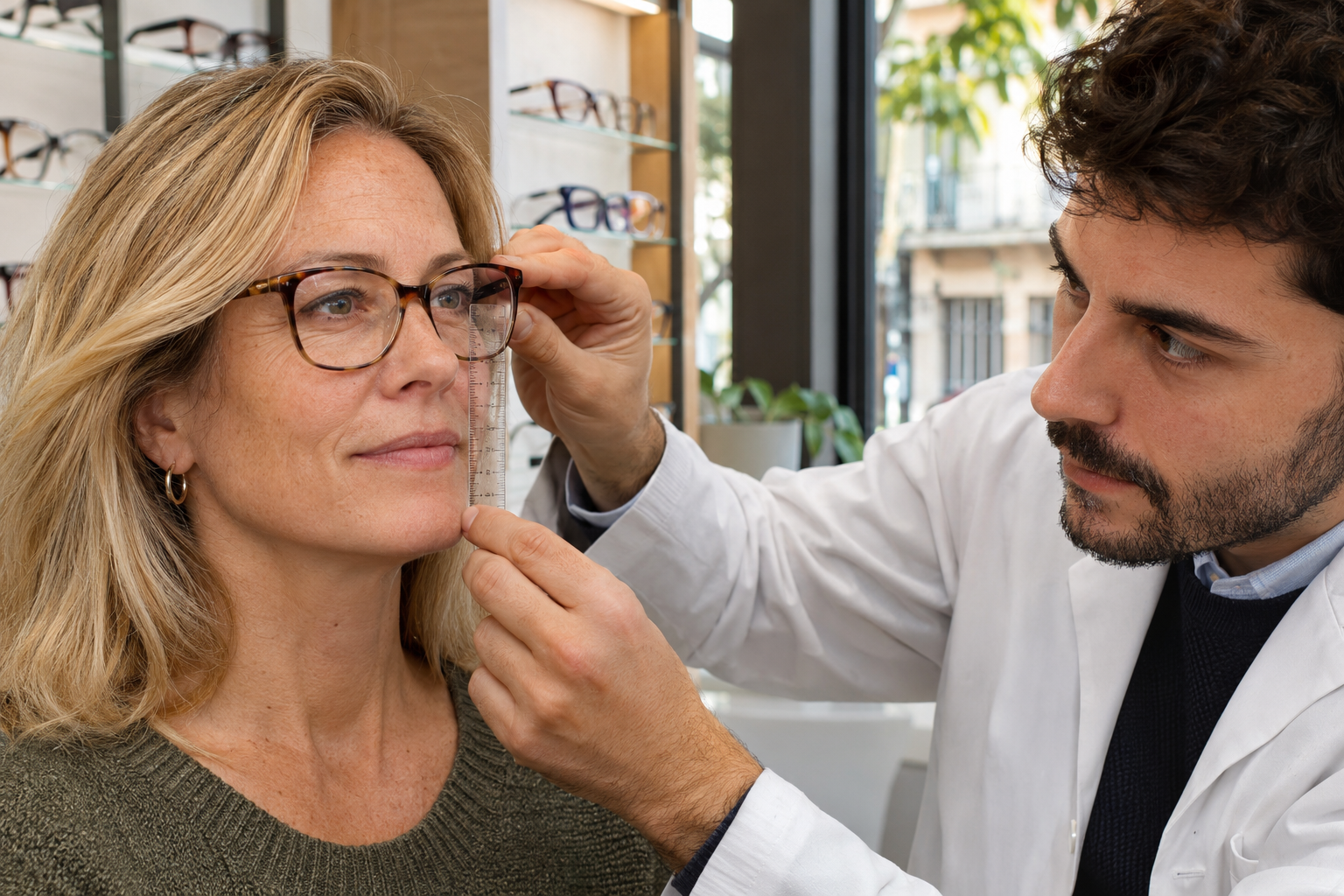
A progressive lens only works if it is positioned precisely in front of your eye, which depends on measurements that are hard to take accurately yourself at a kitchen table. Order progressives online with slightly wrong numbers and you can end up with lenses you simply cannot adapt to, the reading zone in the wrong place, the whole thing giving you headaches. The European optician sits in a sweet spot between the two: prices nearly as low as buying online, but with a real professional taking the measurements and fitting the frame in person.
That combination is the actual reason the trip-and-buy habit makes sense specifically for progressives. You get the low price of a competitive market and the hands-on fitting that progressives need, which is exactly the pairing American buyers struggle to get at home, where the cheap option is often online and unfitted, and the fitted option is often expensive. Abroad, for once, you do not have to choose between the two.
What You Actually Get for the Price
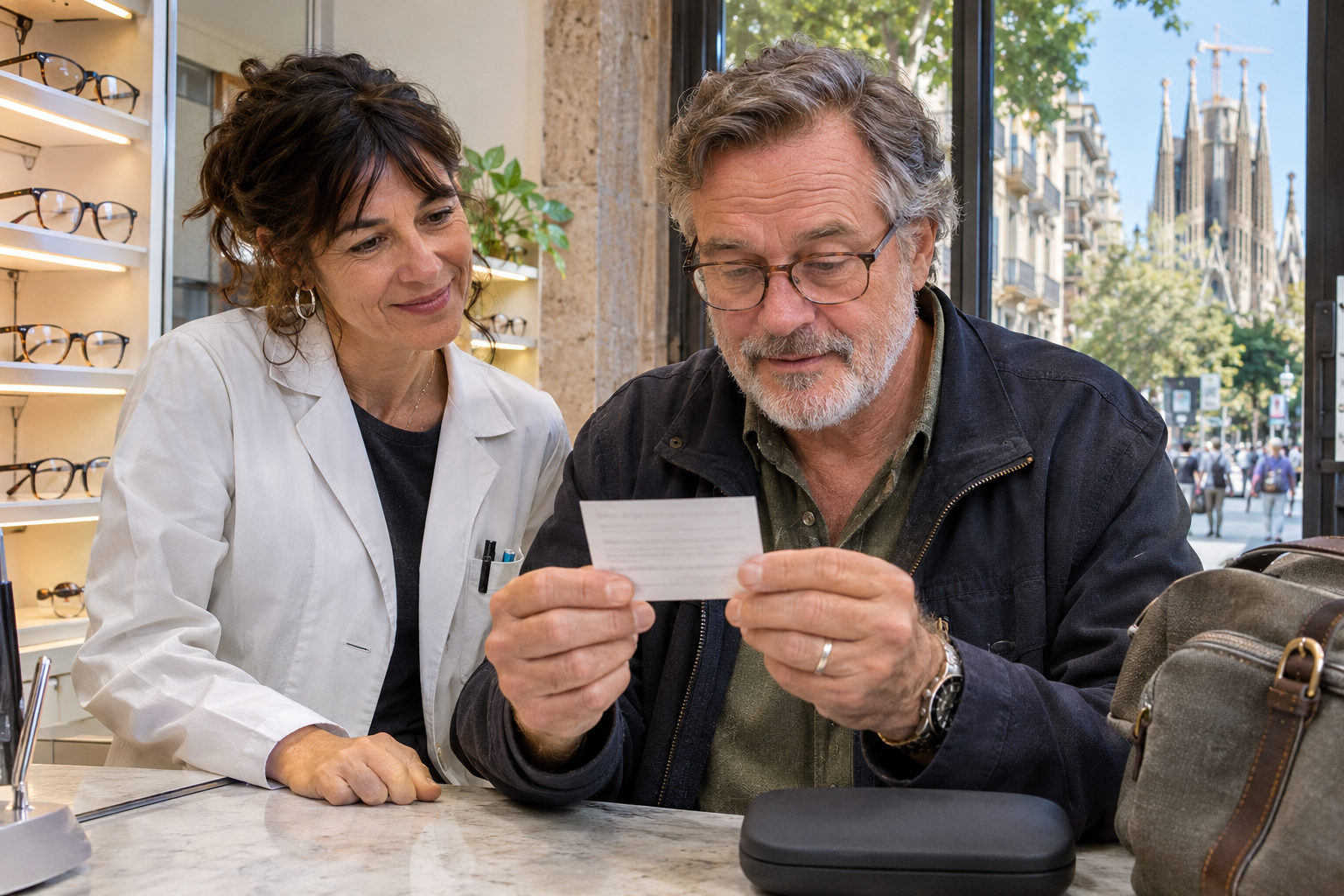
It helps to be concrete about what that roughly €150 buys, because American readers braced for a catch keep expecting one. At a reputable Spanish optician, that kind of price typically covers a complete pair: a frame from a wide selection, the progressive lenses themselves, and the common coatings and lens-thinning that would be pricey add-ons back home, often bundled in rather than tacked on. It is the finished glasses on your face, not a stripped-down base price waiting to climb.
The knock-on effect is the part people enjoy most, which is that a second or third pair stops being a luxury. At American prices, most people own exactly one pair of progressives and wince at replacing them. At European prices, the prescription sunglasses you always wanted, the backup pair to keep in the car or the drawer, the spare in case one breaks, all become genuinely affordable, so people finally buy them. The math that forced you into a single precious pair simply no longer applies.
None of this means grabbing the very cheapest option in the window without thought, since quality and service still vary between shops as they do anywhere. But the broad picture holds, and it is a cheerful one: the money that buys a single grudging pair of progressives in the United States buys, in Spain, the full set you actually wanted, fitted properly, with change to spare. For the whole over-forty-five crowd who all wear these lenses, that is one of the more satisfying pieces of money knowledge a European trip can hand you.
Getting the Prescription Right
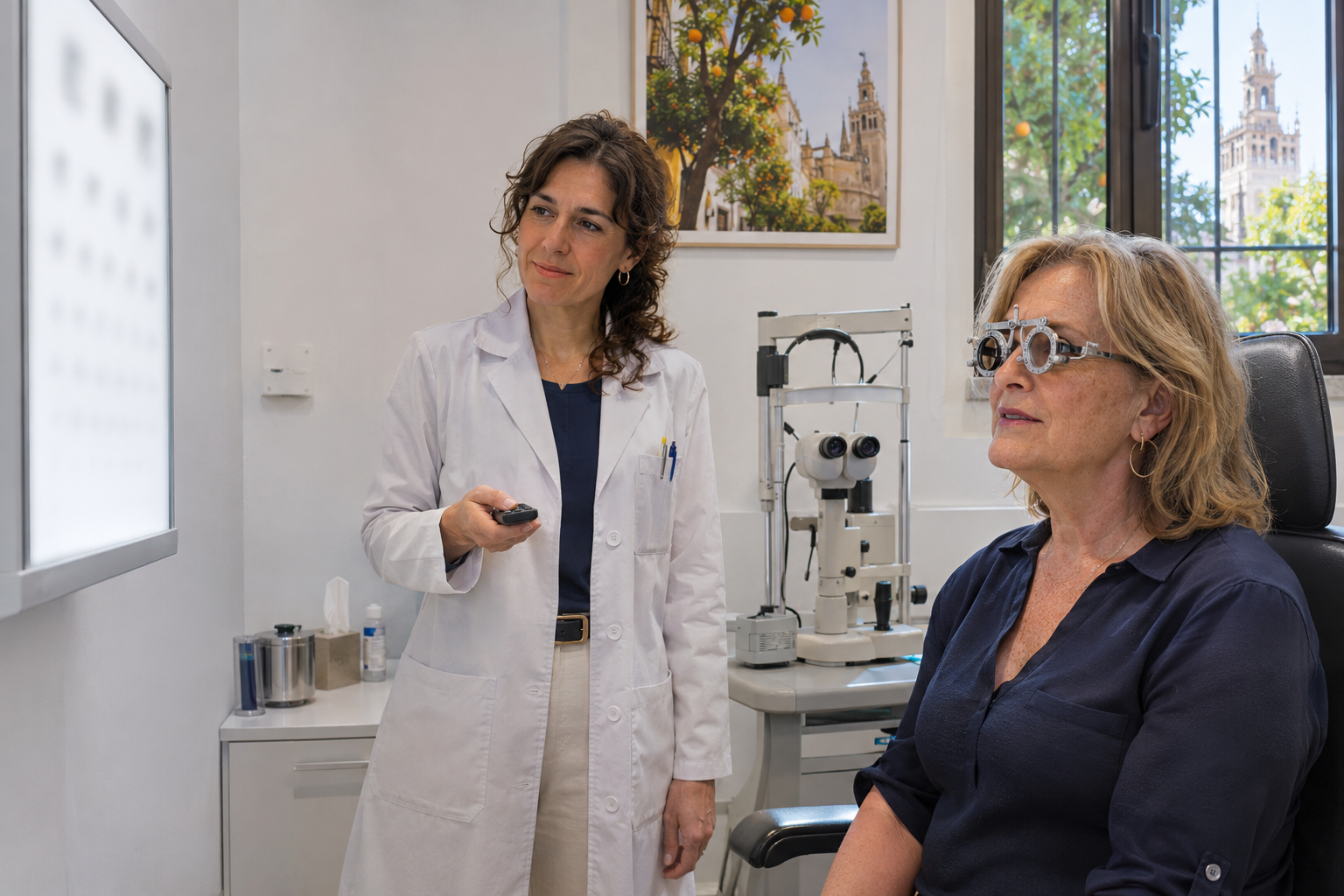
None of this works without the foundation, which is an accurate, current prescription, and this is the first thing to get sorted. Progressive lenses are only as good as the prescription and the measurements behind them, and buying a cheap pair ground to the wrong numbers is no bargain at all. You have two basic options, and both are workable. You can carry a recent prescription from your eye doctor at home, making sure it is current and complete, or you can have your eyes examined locally, since European opticians can typically perform an eye test as part of the service.
If you bring a prescription from home, make sure it is genuinely up to date and that it includes everything the optician needs, and be aware that for progressives in particular, the fitting measurements matter enormously. A progressive lens has to be positioned correctly in front of your eye, which requires precise measurements of things like the distance between your pupils and the height of your eyes within the chosen frame. These are taken at the shop when you choose the frame, so they are handled wherever you buy, but it means the frame selection and fitting is a real part of the process, not an afterthought.
If you have your eyes tested locally, a reputable optician will do a proper job of it, but do give yourself time, because progressives are not a rush purchase. You want an unhurried appointment, a careful fitting, and ideally a day or two of buffer before you leave in case anything needs adjusting. The whole thing is still quick and cheap by American standards, but it rewards a little planning, and treating it as a proper errand rather than a last-minute airport dash is the way to come home with progressives that actually work well.
The Real Cautions

Honesty requires flagging the genuine cautions, because this is health as well as shopping, and progressives especially can go wrong if rushed. The biggest one is fit and adaptation. Progressive lenses require your eye to learn to use different zones of the lens for different distances, and a poor fit, lenses sitting at the wrong height or built on sloppy measurements, can make them hard or even impossible to adapt to, leaving you with headaches, distortion, or a swimmy feeling. This is true at any price, but it means you should buy from a reputable, careful optician who takes proper measurements, not the cheapest possible corner.
The second caution is about leaving enough time. Because progressives sometimes need a tweak, a frame adjustment, or occasionally a remake if something is off, buying them at the very end of a short trip is risky. If there is a problem, you want to be able to go back to the shop before you fly home, so build in a buffer of several days, and do not order your glasses the afternoon before your flight. Give the process room to breathe.
Finally, keep your eye health itself in the picture, because this is a consumer-savings article and not medical advice. An eye exam is not only about the prescription number but about the health of your eyes, and the regular professional eye care you get at home has value beyond the glasses that come out of it.
Buying affordable glasses abroad is a fine way to save money on the eyewear, but it should sit alongside proper ongoing eye care, not replace it. Use the savings as a bonus on top of looking after your eyes, not as a reason to skip the medical side of vision care. Seen that way, the cheap European progressives are a genuine and sensible win, one that a great many older travelers have quietly been enjoying for years.

About the Author: Ruben, co-founder of Gamintraveler.com since 2014, is a seasoned traveler from Spain who has explored over 100 countries since 2009. Known for his extensive travel adventures across South America, Europe, the US, Australia, New Zealand, Asia, and Africa, Ruben combines his passion for adventurous yet sustainable living with his love for cycling, highlighted by his remarkable 5-month bicycle journey from Spain to Norway. He currently resides in Spain, where he continues sharing his travel experiences with his partner, Rachel, and their son, Han.