
The first time an American hears what a Yorkshire pudding actually is, there is usually a pause, because nothing about the description matches the word pudding. It is not sweet, not soft, not a dessert. It is a thin batter, essentially the same batter you would make for pancakes, poured into a tin of smoking hot fat and baked in a fierce oven until it erupts into a tall, crisp, hollow, golden puff. It belongs not at the end of the meal but in the middle of it, alongside the roast beef, soaking up the gravy, and it is one of the proudest things in British cooking.
What makes a Yorkshire pudding extraordinary is not the ingredients, which could not be plainer, but the drama of the transformation. Three humble things, flour, eggs, and milk, become, through nothing but heat and fat and a little technique, a dish that puffs up to several times its starting height with a crisp shell and an airy, almost hollow inside. And it all hinges on one rule that, if you break it, leaves you with a sad flat disc instead of a towering puff. Here is what a Yorkshire pudding really is, where it comes from, the one rule that makes it rise, the mistakes that flatten it, and how to make them rise tall in your own oven.
Pancake Batter, Essentially
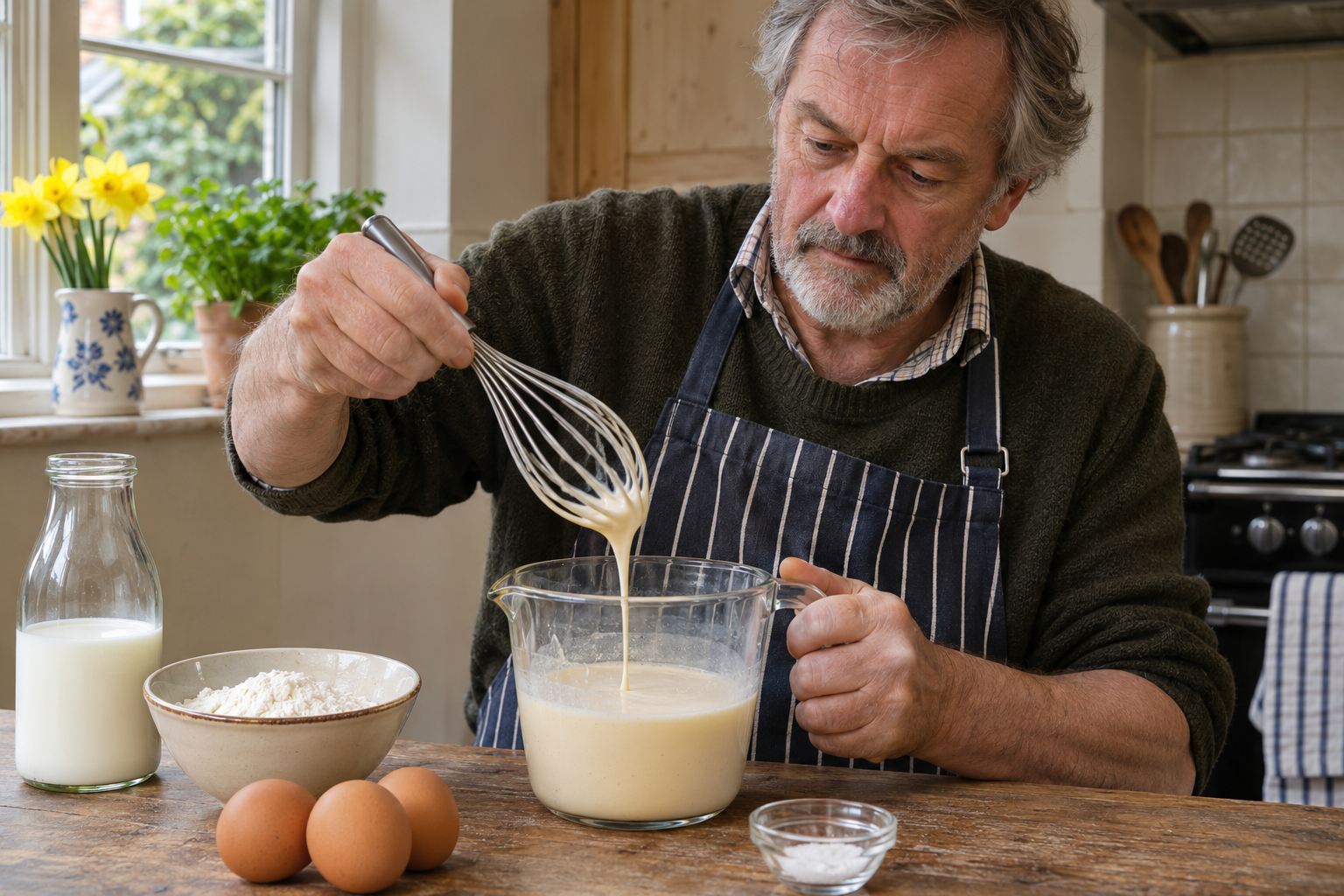
Strip a Yorkshire pudding down to its parts and it really is astonishingly simple. The batter is made from flour, eggs, and milk, in roughly equal measure, with a pinch of salt, whisked together into a smooth, thin, pourable batter that is close kin to a pancake or crepe batter. There is no raising agent, no baking powder, no yeast, nothing clever added. The lift comes entirely from the physics of what happens when that thin batter meets ferocious heat.
The equal-parts logic is the traditional cook’s shortcut: a common approach is to measure the eggs by volume and then match that same volume of flour and of milk, so the three balance. The batter should be thin, pourable, the consistency of cream, not a thick pancake batter, because a thin batter puffs far more dramatically than a heavy one. Whisked smooth and left to rest, that modest mixture is all you need, which is part of why Yorkshire puddings are at once so humble and so impressive. The ingredients cost almost nothing, and the result looks like a magic trick.
The dish comes from the north of England, from Yorkshire as the name says, and it has a practical history behind it. In poorer times, the puddings were cooked in the fat dripping from roasting meat and served first, before the meat itself, often with gravy, specifically so that people would fill up on the cheap, filling batter and need less of the expensive roast. That origin as a canny, frugal way to stretch a Sunday joint is written into the dish, and it still carries a faint echo of that thrift even now that it is served as a beloved treat rather than a belly-filler.
The One Rule: Smoking Hot Fat
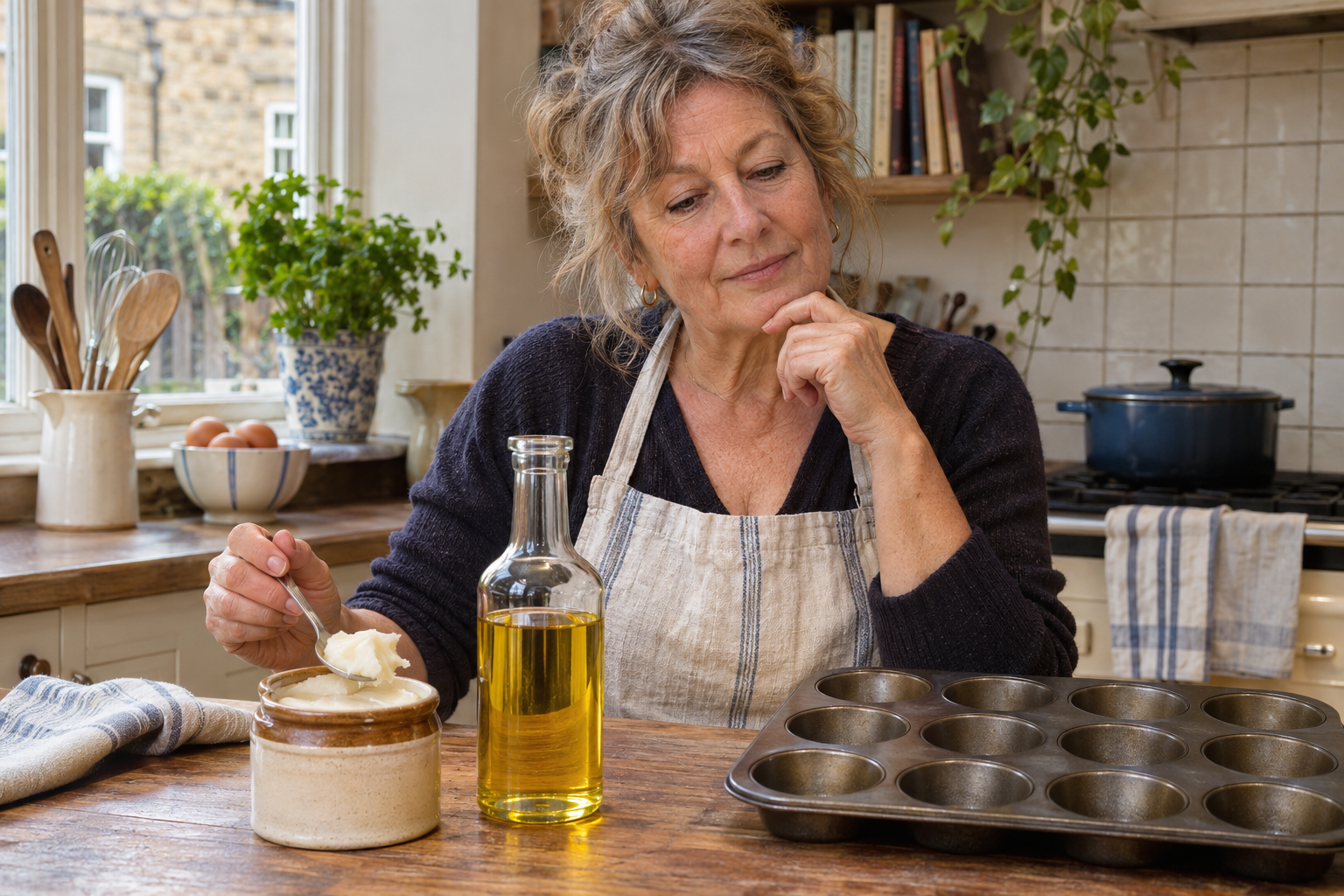
If there is a single secret to a good Yorkshire pudding, it is this, and everything else is detail: the fat in the tin must be smoking hot before the batter goes in. You heat a little fat, traditionally beef dripping but oil works, in the compartments of the tin in a very hot oven until it is shimmering and just beginning to smoke, genuinely fiercely hot, and only then do you pour in the cold batter. The contrast between the scorching fat and the cool batter is what makes the whole thing work.
The science is worth understanding, because once you grasp it the rule stops feeling like superstition. When the cold, wet batter hits the smoking fat, the water in the batter flashes instantly to steam, and that burst of steam, trapped inside the setting batter, is what inflates the pudding, pushing it up and out into its tall, hollow shape. The intense heat sets the outside into a crisp shell fast enough to hold that puff in place. No smoking fat means no instant steam, which means no rise, which is why this one step matters more than any other.
This is why a Yorkshire pudding is really a lesson in heat and timing rather than in ingredients. The batter is nothing special. What performs the magic is the violent heat of the fat and the oven acting on the water in that batter, and your entire job as the cook is to maximize that heat and get the batter into it fast.
Get the fat properly smoking and the oven properly hot, and even a plain batter will rise beautifully. Fail to, and the best batter in the world will sit there flat. The heat is the recipe.
The Mistakes That Flatten It
Because the rise depends on heat and steam, the classic failures are all the things that bleed heat away at the crucial moment. The most common is fat that is not hot enough, taking the tin out too soon or not getting the oven hot enough in the first place, so the batter never gets its instant blast of steam and just bakes slowly into a dense, flat pancake. If your puddings come out flat and heavy, lukewarm fat is almost always the culprit.
The second great sin is opening the oven door while they bake. Yorkshire puddings rise in a hot, sealed environment, and opening the door partway through lets out a rush of heat and can cause the half-risen puddings to collapse before their structure has set.
You have to resist the powerful temptation to peek, leaving the door shut until they are tall, golden, and firmly set. Only then is it safe to open up. The discipline of not looking is one of the hardest parts for an anxious first-timer.
A few other things help. Letting the batter rest before cooking, even half an hour, lets the flour hydrate and the gluten relax, which many cooks swear gives a better rise, and some like the batter at room temperature rather than fridge-cold. Not overfilling the compartments matters too, since a little batter in a very hot, well-greased tin puffs better than a lot.
But these are refinements. The two cardinal rules are the ones to burn into memory: get the fat smoking hot, and do not open that door.
Dripping or Oil
A gentle argument runs through British kitchens about what fat to use, and it is worth knowing both sides. The traditional choice is beef dripping, the rendered fat from roasting beef, and it is traditional for good reason, because it adds a deep, savory, beefy flavor that ties the pudding to the roast beside it and crisps up beautifully at high heat. For a proper Sunday roast, dripping is the connoisseur’s pick.
But you do not need it, and this is the reassuring part for anyone who does not keep a jar of beef fat on hand. A neutral oil with a high smoke point, such as vegetable or sunflower oil, works perfectly well and produces puddings that rise just as tall, if with a little less of that savory depth. The fat’s main job, after all, is to get screaming hot, and any fat that can do that without burning will give you the rise. Flavor is a bonus; heat is the requirement, so use what you have and do not let the lack of dripping stop you.
More Than a Side Dish
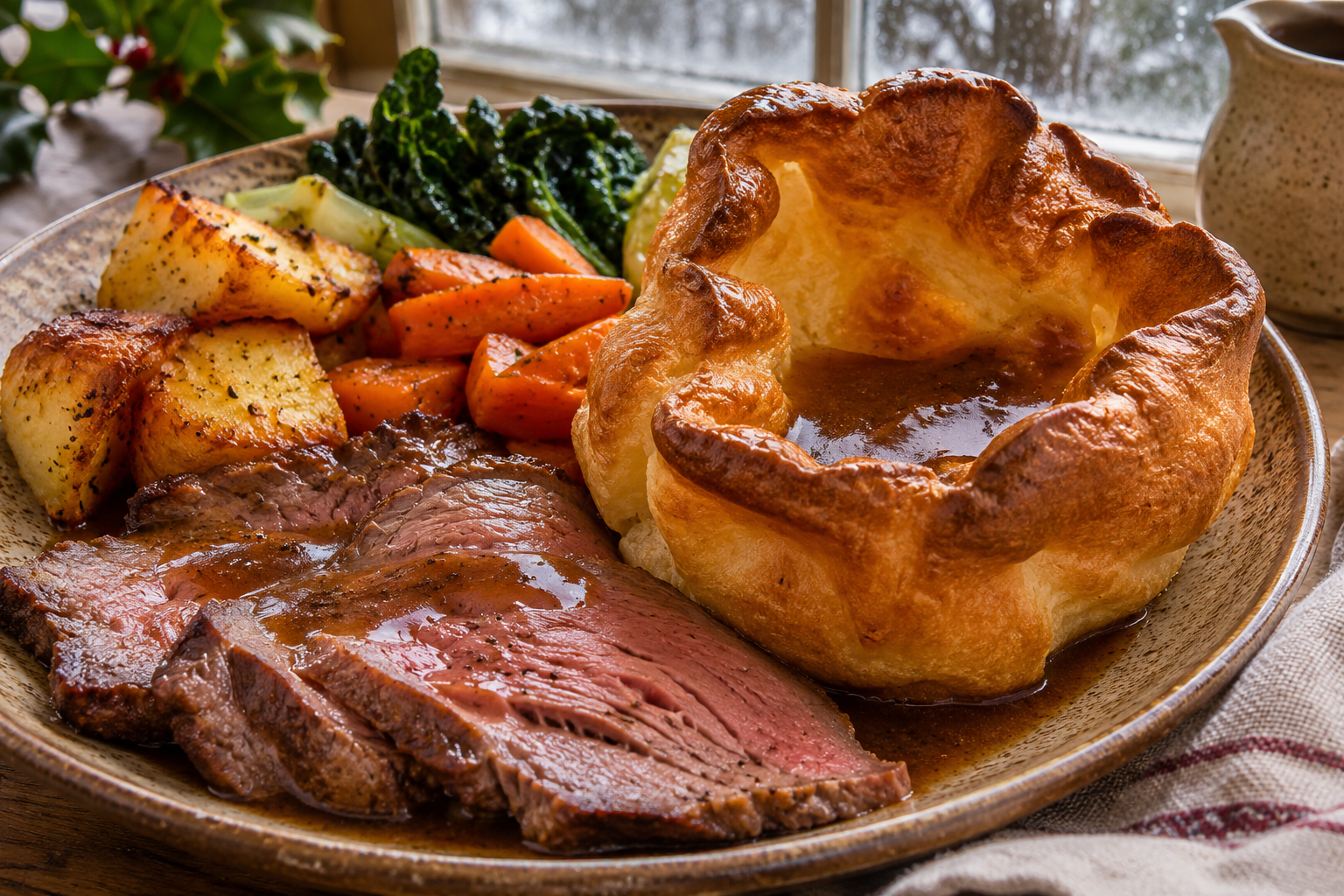
In Britain, the Yorkshire pudding is inseparable from the Sunday roast, the great weekly ritual of roasted meat, potatoes, vegetables, and gravy that anchors the British week. The puddings sit on the plate beside the beef, and their job is to catch and soak up the gravy, their crisp shells and hollow centers acting as little edible vessels for all that rich, savory sauce. A roast beef dinner without a Yorkshire pudding strikes most Britons as simply incomplete, a plate missing its crown.
The dish has grown beyond the plate in cheerful ways, too. There is toad in the hole, where sausages are baked into a large Yorkshire pudding batter, turning the side dish into a whole meal.
There are giant Yorkshire puddings used as bowls to hold an entire roast dinner, a modern pub indulgence. And the batter even has a sweet afterlife, as leftover puddings are sometimes eaten with jam or syrup, a nod to the dish’s distant pancake cousins. From a frugal belly-filler it has become a genuinely versatile and beloved thing.
For an American wanting to understand British food, or to cook a proper roast for British friends, the Yorkshire pudding is one of the most rewarding things to master, because the gap between how simple it is and how impressive it looks is so wide. Nail the hot fat and the closed oven and you will pull a tray of towering, golden, crisp puddings from the oven that look like they took real skill, when in truth they took three cheap ingredients and one firmly kept rule. Few dishes give back so much drama for so little effort, which is exactly why the British are so fond of them.
Make It: Yorkshire Puddings
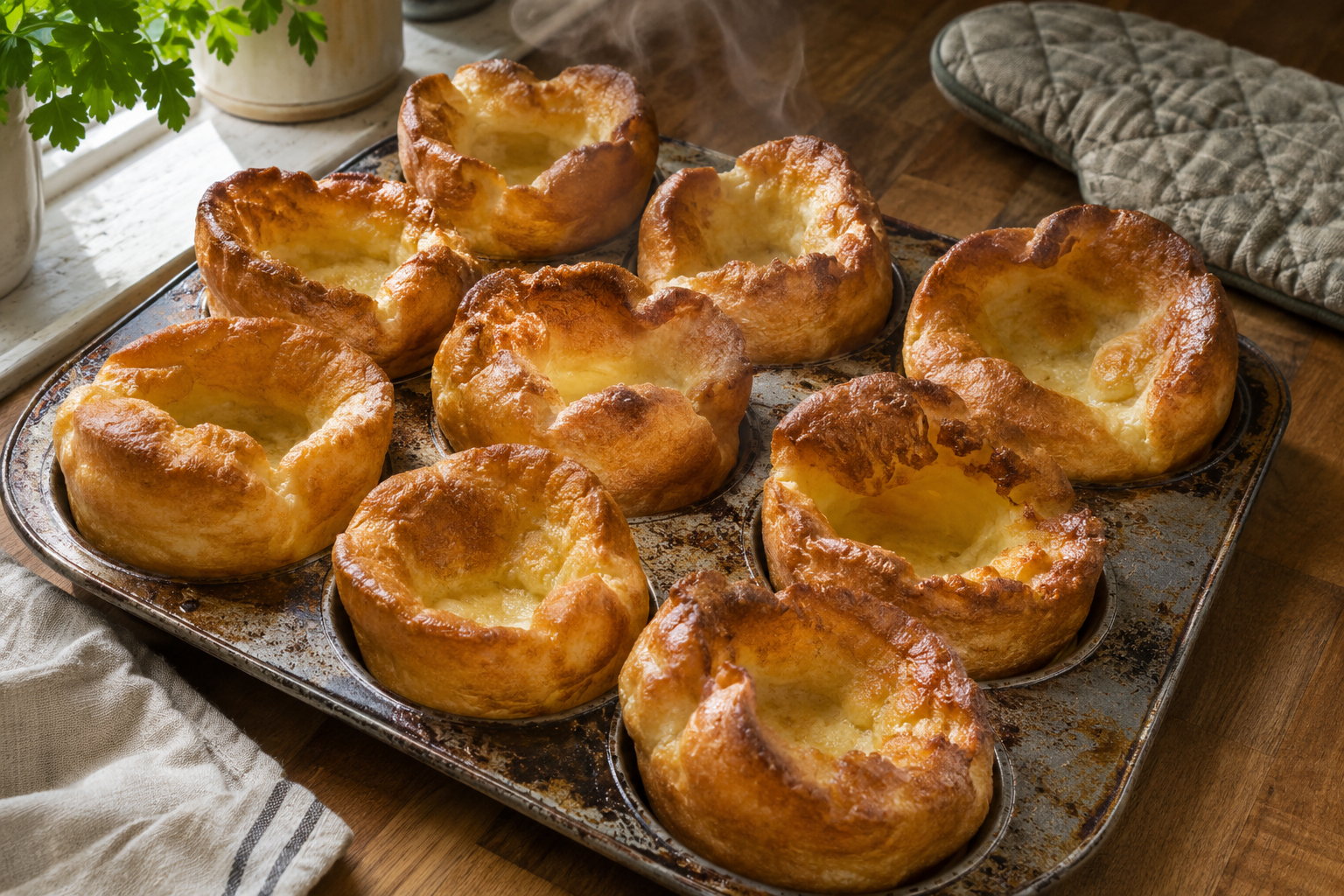
This makes about eight to twelve puddings in a muffin tin, enough for a roast dinner for four with seconds. The two rules are everything: smoking hot fat, and do not open the oven. Beef dripping gives the most traditional flavor, but a neutral oil works well.
Ingredients
- 3 eggs
- the same volume of plain flour (roughly 140g)
- the same volume of milk (roughly 175ml)
- a good pinch of salt
- beef dripping, lard, or neutral oil, for the tin
Instructions
Make the batter first and ideally ahead. Crack the eggs into a measuring jug and note the volume, then whisk in the same volume of flour and the same volume of milk along with the salt, beating until completely smooth and lump-free. The batter should be thin and pourable, like cream. Let it rest for at least 30 minutes, or longer in the fridge, bringing it back toward room temperature before baking if you can.
Heat the oven as hot as it will go, around 230 degrees Celsius (450 Fahrenheit). Put a small amount of dripping or oil into each compartment of a muffin tin or the sections of a Yorkshire pudding tin, then place the tin in the hot oven and heat it until the fat is shimmering and just beginning to smoke. This is the crucial step, so give it time to get genuinely, fiercely hot.
Working quickly, pull the tin out, and carefully pour the batter into each compartment, filling each about halfway. The batter should sizzle the instant it hits the fat, which tells you the fat is hot enough. Get the tin back into the oven fast, before the heat escapes.
Bake for about 20 to 25 minutes, and here is the hard part: do not open the oven door. Watch through the glass if you must, but keep it shut while the puddings rise and set, or they may collapse. They are done when they are tall, deeply golden, and crisp, with hollow risen centers.
Serve them at once, straight from the oven, because they are at their most spectacular in the first few minutes and will soften as they sit. Pile them onto the plate beside roast beef, potatoes, and vegetables, and pour plenty of gravy over and into them. They wait for no one, so get them to the table while they stand tall.

About the Author: Ruben, co-founder of Gamintraveler.com since 2014, is a seasoned traveler from Spain who has explored over 100 countries since 2009. Known for his extensive travel adventures across South America, Europe, the US, Australia, New Zealand, Asia, and Africa, Ruben combines his passion for adventurous yet sustainable living with his love for cycling, highlighted by his remarkable 5-month bicycle journey from Spain to Norway. He currently resides in Spain, where he continues sharing his travel experiences with his partner, Rachel, and their son, Han.