
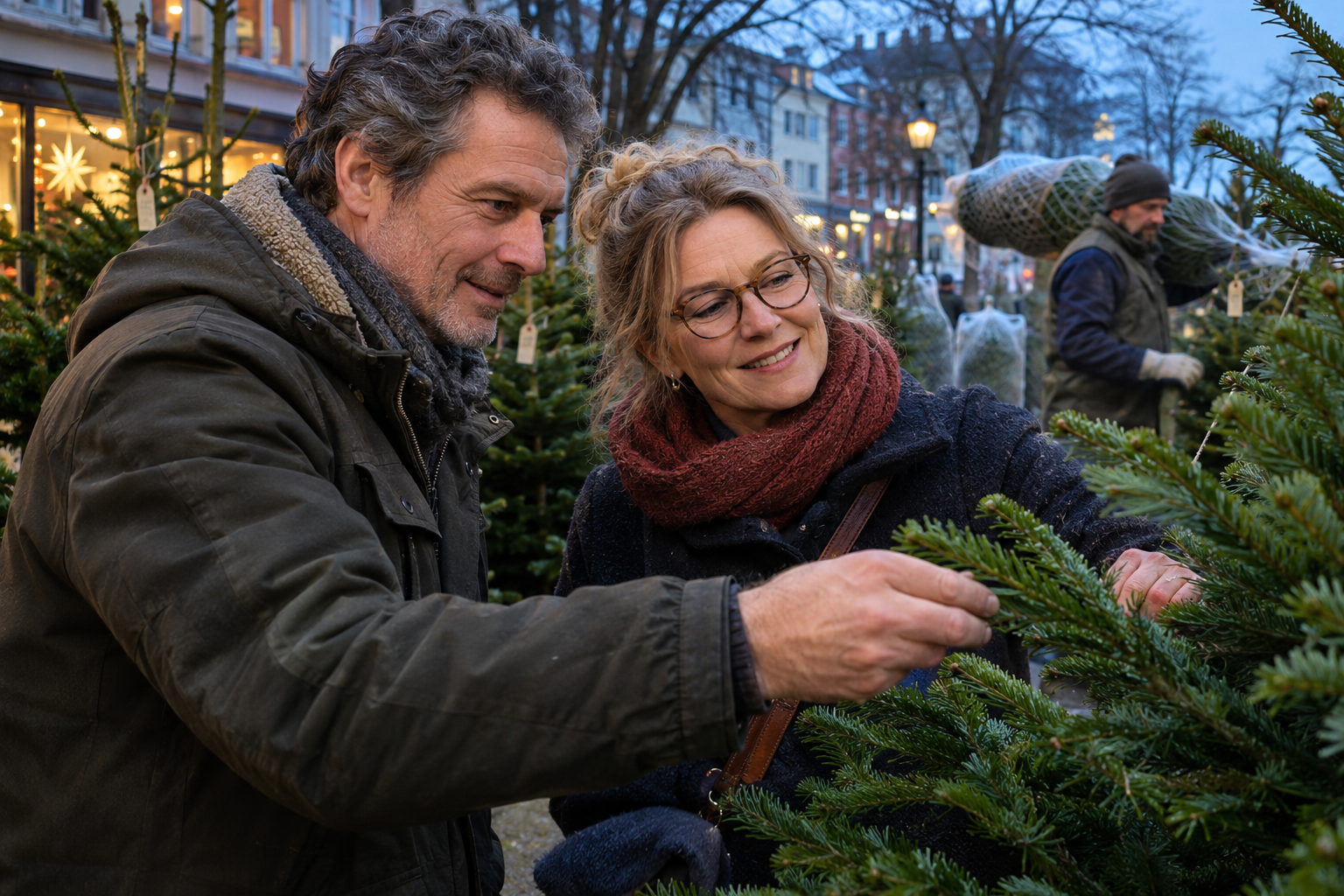
An American who moves to Europe and goes looking for a Christmas tree in early December often comes home puzzled and empty-handed. The lots are not really set up yet, the neighbors’ windows are dark of any tree, and when they mention it to a local, they get a slightly bemused look, as if they had gone looking for fireworks in October.
In much of Europe the tree does not go up when Americans expect it to, right after Thanksgiving, but late, often only a few days before Christmas, and then, in the part that truly surprises newcomers, it stays up well into January, until the sixth, the day of the Three Kings.
The whole rhythm is shifted, the mirror image of the American one in a way. Americans tend to put the tree up early and take it down fast, often hauling it to the curb the day after Christmas. Many Europeans do the opposite, putting it up late and keeping it long, so that the tree arrives near the peak and lingers through the quiet days that follow. Here is how the European calendar of the tree actually works, why it runs so differently from the American one, what happens on January 6 that explains the long goodbye, and how to adjust if you are spending your first Christmas on this side of the Atlantic.
Late Up, Not Early

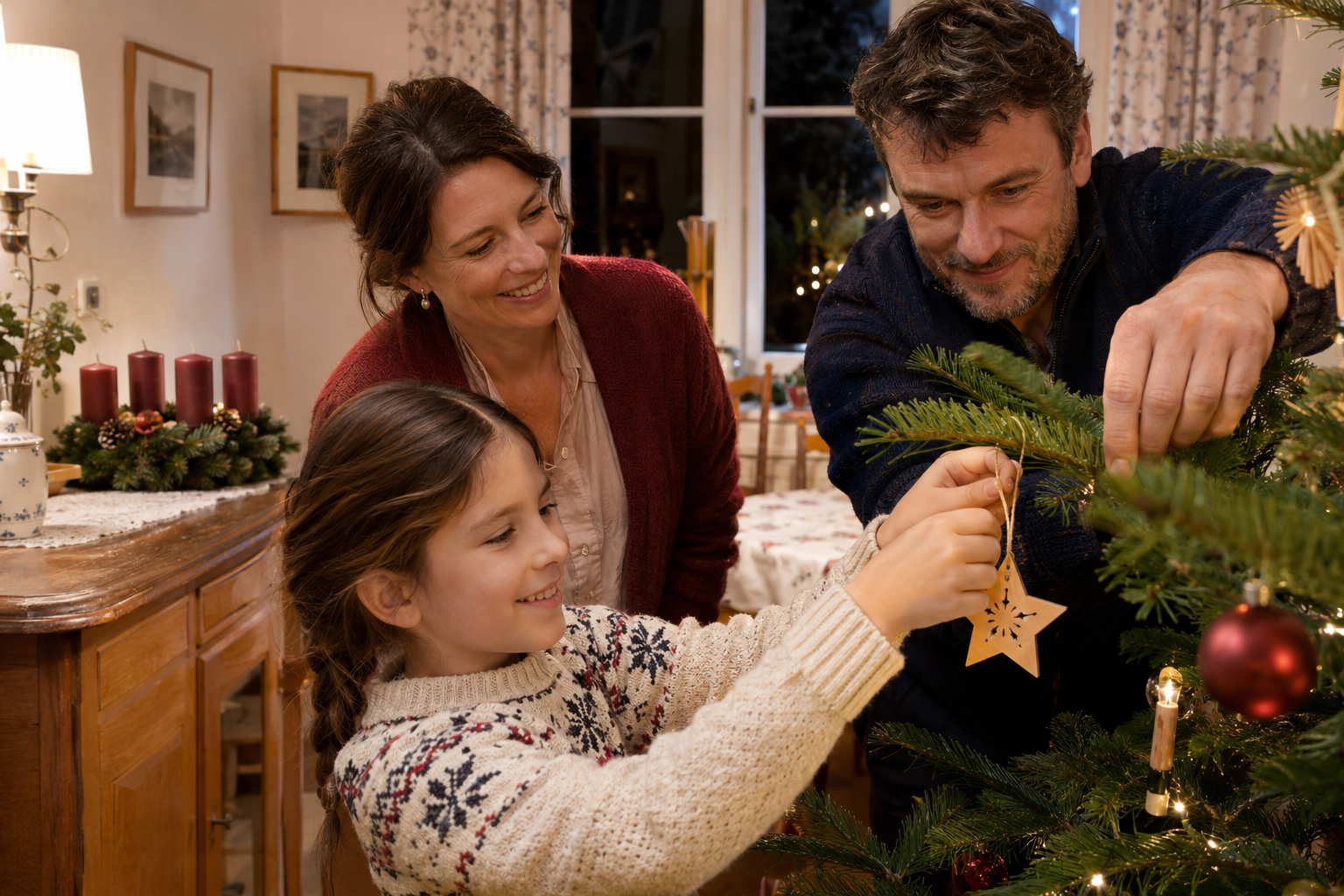
The first half of the difference is the setup date. In the older European pattern, the Christmas tree is not a late-November arrival but a late-December one, and in the most traditional version it goes up on Christmas Eve itself, December 24, sometimes decorated by parents behind closed doors to be revealed to the children that evening. The idea of a tree standing in the living room for all of December, as is normal in the United States, would strike a traditional German or Austrian household as oddly premature, the main event dragged out for weeks before it arrives.
The reason sits in the structure of the season we have written about elsewhere, the long slow approach of Advent. In the traditional view, the weeks before Christmas are a time of waiting and preparation, marked by the Advent wreath and its four candles, with the celebration itself held back until Christmas actually comes. The tree belongs to the celebration, not to the waiting, so it appears near the end rather than at the start. You count down through Advent with candles, and the tree is part of what the counting is counting toward.
In practice, modern life has softened this a good deal, and plenty of Europeans now put their trees up earlier in December than their grandparents would have, pulled forward by the same commercial currents that shape the season everywhere. A tree going up around the middle of December, or in the week before Christmas, is now common and unremarkable in many homes. But the deep instinct still runs late by American standards, and the very early tree, the one blazing away in the window on the first of December, remains more an American habit than a European one. If you put yours up right after your version of Thanksgiving, you may be weeks ahead of your street.
Long Down, Not Fast
The second half of the difference is the one that really catches newcomers out, because it runs the opposite way from what the late setup might suggest. You might expect a late tree to come down quickly too, but it does not. The European tree, put up late, then stays up long, often right through to January 6, the feast of the Epiphany, known in much of the Catholic world as the day of the Three Kings or Three Wise Men.
This is the logic of the Twelve Days of Christmas, the stretch from Christmas Day to Epiphany that the old song counts out. In the traditional calendar, Christmas is not a single day but a season, and the celebration runs from December 25 all the way to January 6, twelve days later. The decorations, the tree included, belong to the whole of that season, so they stay up for its full length rather than being cleared away the moment Christmas Day is over. Taking the tree down on December 26, as many Americans do, would in the traditional view be cutting the celebration off almost before it had begun.
January 6 is the hinge, and in countries like Spain it is not a minor date but one of the biggest days of the entire holiday. The Three Kings, the Reyes Magos, are the figures who in Spanish tradition bring the children their gifts, not Santa on Christmas morning but the Kings on the morning of the sixth, after their grand parades, the cabalgatas, roll through the towns on the evening of the fifth. The whole season builds toward that date rather than away from it, so of course the tree stays up until then. It would make no sense to dismantle Christmas just before its climax.
Why January 6 Changes Everything
To understand the long European tree, you have to understand how much weight sits on Epiphany. In the American imagination, Christmas peaks on December 25 and everything after is anticlimax, the slow deflation toward New Year and the taking down of the lights. In much of Catholic Europe, and Spain above all, the season has a second and in some ways greater peak at the far end, on January 6, which keeps the whole structure alive and decorated right through to that day.
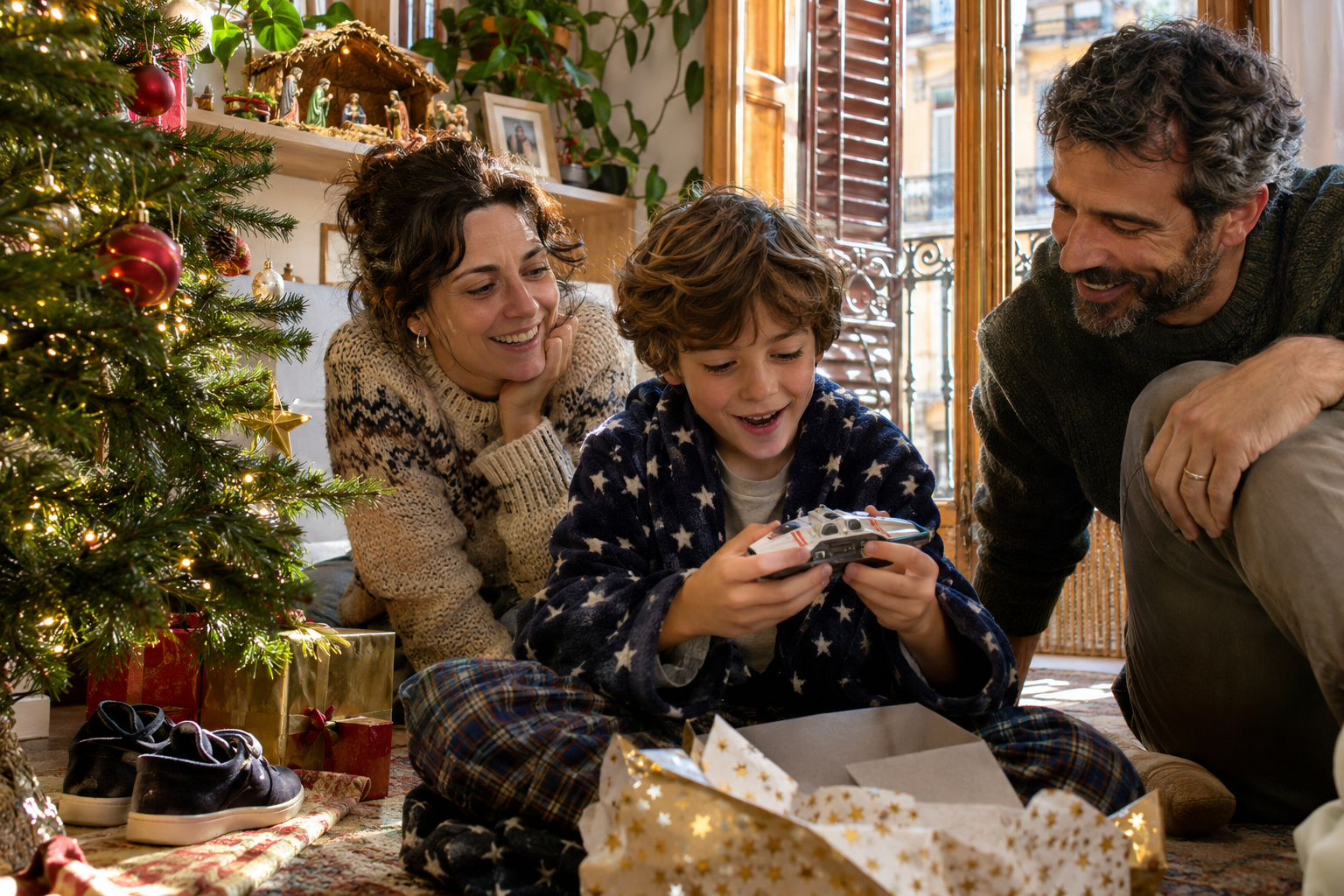
The gift-giving is the clearest sign of it. In Spain, as we have touched on in our piece on the Tio de Nadal and the Catalan traditions, the main presents traditionally come from the Three Kings on January 6, not from Santa on the 25th. Children write to the Kings rather than to Santa, leave out shoes to be filled, and set out food and water for the Kings and their camels on the night of the fifth. The morning of the sixth is the great unwrapping, the Spanish equivalent of Christmas morning, and it falls almost two weeks after the American version.
With the emotional center of the season sitting on January 6, everything upstream of it stays in place. The tree, the lights, the nativity scene known as the belen, all remain up and lit because the season is genuinely still running. Only after the Kings have come and gone does the household begin to put things away, which is why the first week of January in Spain still looks thoroughly Christmassy to an American who assumed it would all be over. The calendar simply runs on a different clock, one that treats early January as the heart of the holiday rather than its aftermath.
New Year’s Eve itself falls right in the middle of this stretch, which only reinforces the point. In Spain it is Nochevieja, the night of the twelve grapes eaten on the strokes of midnight, and it lands squarely inside the still-decorated season rather than at its tail end. Far from signaling that the holidays are winding down, the turn of the year in a Spanish home is one more lit-up celebration on the road to the Kings, with the tree standing through all of it.
The American Rhythm, and Why It Feels Wrong Here
Set the two patterns side by side and the contrast is stark. The American tree goes up around late November, often the weekend after Thanksgiving, and comes down in the days right after December 25, giving it a long run before Christmas and almost none after. The European tree, in its traditional form, goes up close to Christmas and comes down around January 6, giving it a short run before and a long one after. The totals are not so different, but the placement is nearly reversed.
Neither is wrong, but each can feel wrong from inside the other. To an American in Europe, the early December streets can look strangely bare, the trees slow to appear, the big push held back in a way that reads as a lack of Christmas spirit until you understand the Advent logic behind it. Then, having adjusted to the late arrival, the same American is startled to find the whole country still decorated in early January, long after they would have cleared everything away, as if the party refused to end.
To a European in America, the surprise runs the other way, the trees up impossibly early and then, more jarringly, torn down with what looks like indecent haste the moment Christmas Day is done, the curbs lined with discarded firs on December 26 while, back home, the season would still have ten days to run. Each pattern makes complete sense on its own terms and looks slightly scandalous from the other side. The deep point is that Christmas is a single day in one tradition and a long season in the other, and the tree simply follows whichever shape its culture gives the holiday.
Across the Continent, the Same Late Clock
Spain’s Three Kings are the most dramatic example, but the late end of the season shows up across Europe in different costumes, all of them keeping the tree up past New Year. In Italy, the gift-bringer of January 6 is not a king at all but La Befana, a kindly old witch who flies in on her broom the night before Epiphany and fills children’s stockings, which is reason enough for Italian homes to stay decorated to the sixth. The Italian season genuinely runs to Befana, and the tree with it.
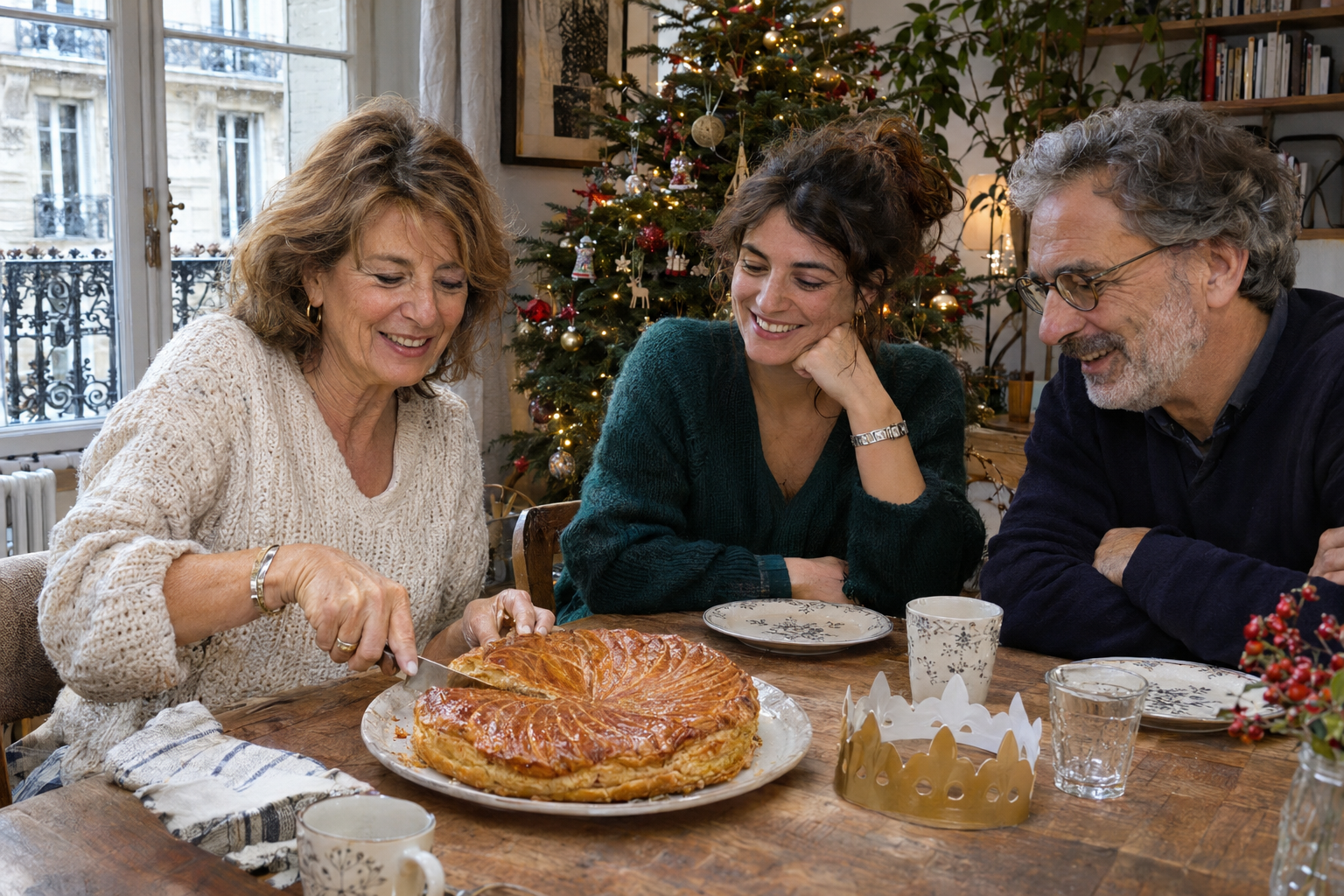
In France, Epiphany is marked by the galette des rois, the king cake with a hidden charm and a paper crown, eaten through the first part of January, another sign of a season that does not simply stop on December 25. Across much of the Catholic continent, in other words, the first week of January is still holiday time, and the decorations stay to match.
Even in Britain, where the gift-giving stays on Christmas morning in the American style, the taking-down of the tree clusters around the same date, because of an old superstition that leaving decorations up past Twelfth Night, the evening of January 5 into the 6th, brings bad luck for the year. So the British tree, too, tends to come down around Epiphany, pulled by folklore rather than by a second gift day. The particular reason changes from country to country, but the clock is remarkably consistent, and it is not the American one.
What About the Real Trees
There is a practical dimension to all of this too, because much of Europe still favors real trees over artificial ones in a way that reinforces the late timing. A cut fir has a limited life indoors, and a tree bought in late November and kept until January would be a dry, needle-dropping fire hazard long before the Kings arrived. Buying late, around the third week of December, and keeping it until the sixth is roughly the lifespan a fresh tree can actually manage, so the tradition and the biology line up neatly.
The tree lots reflect this. In many European towns the serious selling of trees does not begin in earnest until December is well underway, and the busiest days are the ones close to Christmas, not the post-Thanksgiving weekend that anchors the American season. If you go looking too early you may genuinely find slim pickings, not because nobody sells trees but because the demand, and therefore the supply, is timed to a later peak. Arriving at the lot around the twentieth, rather than the first, puts you in step with everyone else.
For a newcomer this is worth planning around rather than fighting. If you want a real tree that is still green and holding its needles on January 6, you are far better buying it in the third week of December than clinging to the American instinct to have it up for the whole month. The late purchase is not just custom, it is the sensible way to get a living tree to last through a season that ends at Epiphany rather than at Christmas. The calendar and the tree’s own lifespan happen to want the same thing.
Adjusting Your First Year
If this is your first Christmas in Europe, the tree timing is one of the easier adjustments to make, and leaning into the local rhythm tends to make the season richer rather than poorer. The simplest approach is to let go of the American calendar entirely and follow the place you are in. Put the tree up later than feels natural, somewhere in the second half of December, and resist the urge to take it down the moment Christmas Day is over.
The reward is the back half of the season, the part Americans miss. Keeping the tree and the lights up through the first days of January, toward the Three Kings, means you get to experience the European second peak rather than sliding into the flat post-Christmas emptiness that American timing produces. In a country like Spain, that means your home still looks and feels festive right up to the great day of the Reyes, in step with the parades and the gift-giving and the whole national mood, rather than oddly cleared out while everyone else is still celebrating.
You can, of course, keep whatever traditions you brought with you, and nobody will stop you putting a tree up in November if that is what makes home feel like home. But the small act of shifting to the local clock, late up and long down, is one of the more rewarding ways to actually inhabit a European Christmas rather than importing an American one onto foreign soil. Buy the tree around the twentieth, keep it until the sixth, and let the season end where it ends here, at the feet of the Three Kings rather than on the curb the day after Christmas.

About the Author: Ruben, co-founder of Gamintraveler.com since 2014, is a seasoned traveler from Spain who has explored over 100 countries since 2009. Known for his extensive travel adventures across South America, Europe, the US, Australia, New Zealand, Asia, and Africa, Ruben combines his passion for adventurous yet sustainable living with his love for cycling, highlighted by his remarkable 5-month bicycle journey from Spain to Norway. He currently resides in Spain, where he continues sharing his travel experiences with his partner, Rachel, and their son, Han.