
There is a number that stops Americans cold when they first hear it. At its peak, the average Greek got through something like twenty liters of olive oil a year, person for person, the highest consumption on earth, and nobody in Greece thought that was remarkable or alarming. An American, raised to treat fat as something to measure out by the teaspoon, hears that figure and assumes it must be a recipe for ill health. And yet the Greeks, pouring olive oil over everything with a generous hand, have long been among the healthier populations in Europe, which is a large part of why the doctors eventually stopped arguing about olive oil and started recommending it.
That contradiction, enormous consumption of a pure fat alongside good health, is one of the most instructive things about the Mediterranean table, and it turns on the fact that not all fats are the same. Olive oil is not butter and not the fryer oil of American fast food, it is something the evidence has come to treat as genuinely good for you, and the Greeks have been proving it at the scale of a whole country for generations. Here is the truth behind that staggering number, the big household can of oil that sits in every Greek kitchen, why the medical argument largely ended in olive oil’s favor, and the classic Greek recipe that uses the most oil of all.
About That Twenty Liters
First, the number, honestly handled, because it deserves a clear-eyed look. Greece has long had the highest per-capita olive oil consumption in the world, and at its height the figure was genuinely around twenty liters per person per year, which works out to roughly eighteen kilos, since olive oil is a little lighter than water. That is an astonishing amount, several times what most countries use, and it reflects a culture where olive oil is not a special-occasion ingredient but the basic fat of daily life, used for cooking, for dressing, for finishing, for everything.
It is worth being accurate that the figure has eased in recent years, as it has across much of the Mediterranean, with more recent consumption closer to the mid-teens of kilos per person, pushed down by rising prices and changing habits. But even at the lower modern figure, Greece remains at or near the top of the world for olive oil consumption per head, far ahead of Spain and Italy, which themselves are heavy users. The twenty-liter peak is real, the number has come down somewhat, and Greece is still the olive oil capital of the world by this measure.
What that consumption means in practice is a diet where olive oil is simply everywhere, poured rather than measured. Greeks cook their vegetables in it generously, dress their salads in it lavishly, finish their dishes with a raw drizzle of it, dip their bread in it, and use it in quantities that would make an American calorie-counter faint. It is the defining fat of the cuisine, treated as a wholesome staple rather than an indulgence, and the health of the population that eats this way is exactly what forced the nutrition world to take olive oil seriously.
The Household Can
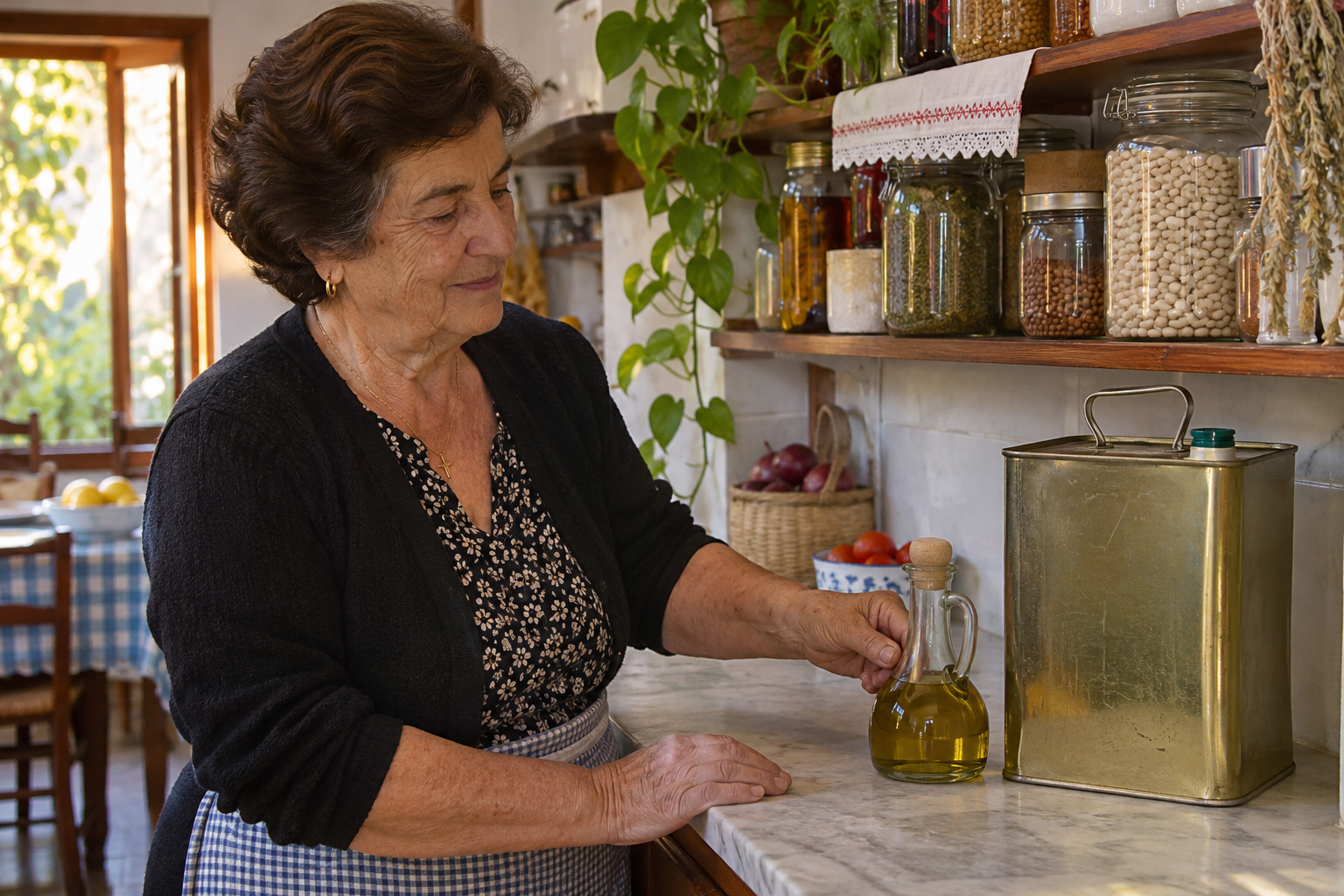
To understand how a person gets through that much olive oil, you have to know about the can. In a traditional Greek household, olive oil is not bought in the small, precious bottles Americans know, it is bought in bulk, often in a large metal tin or can holding many liters at once, which sits in the kitchen or the pantry as a basic household fixture. From that big can, the cook decants oil into a smaller bottle or cruet for daily use and refills it again and again, the way an American kitchen keeps a canister of flour or sugar.
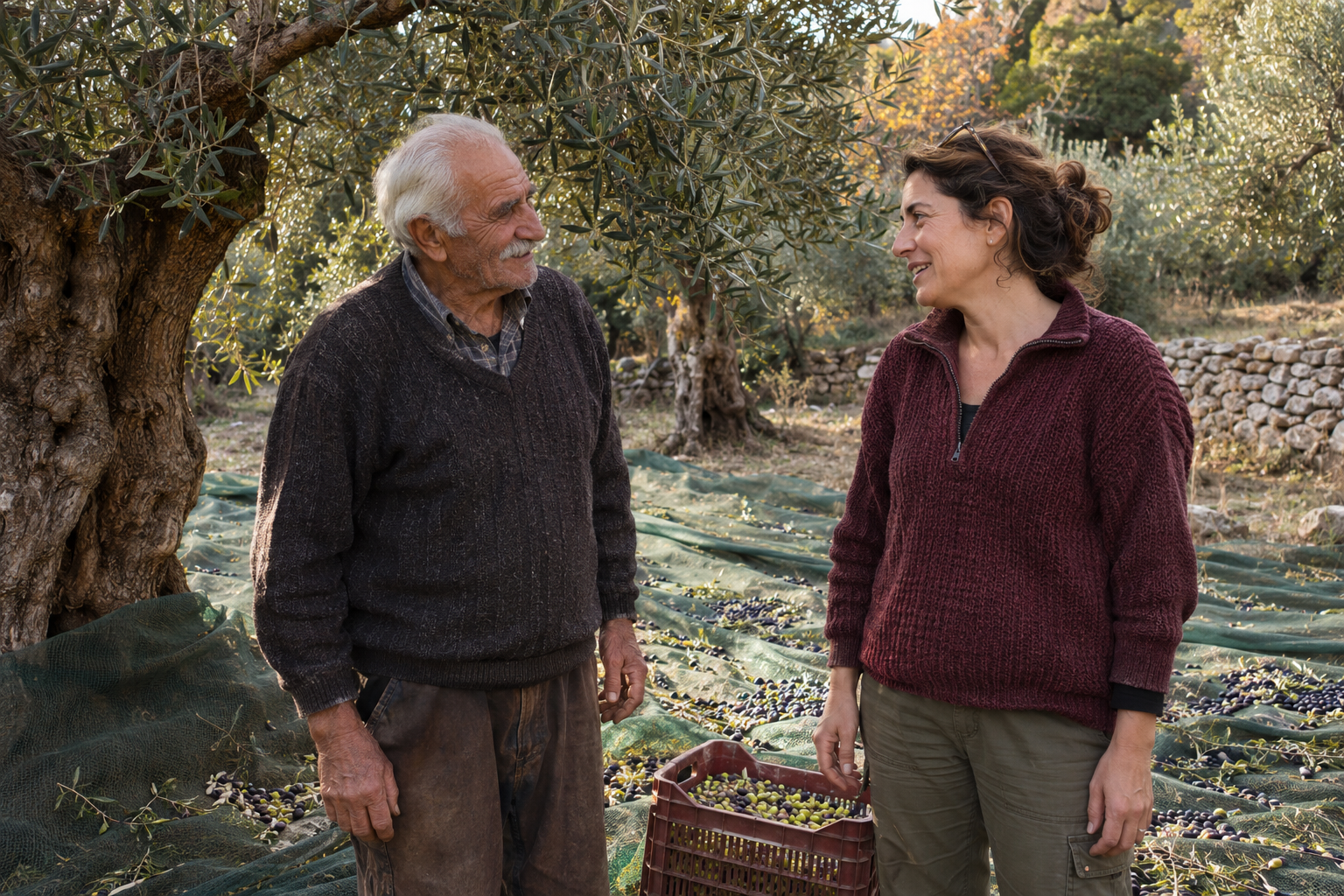
Very often that oil comes from the family’s own olive trees, or from a relative’s grove, or from a specific producer the family has used for generations, pressed fresh each harvest and laid in for the year. Olive oil in Greece is frequently a direct, personal, almost agricultural thing, not an anonymous supermarket product but the output of trees the family knows, and the big can is how a year’s supply is stored. This connection to the source is part of why the oil is used so freely and valued so highly, because it is genuinely theirs, a product of their own land and labor rather than something anonymous off a shelf, and you pour a thing like that with pride rather than restraint.
The big can also tells you something about the mindset, which is that olive oil is a staple to be used generously, not a costly extra to be rationed. When you have a large can of good oil laid in for the year, you pour without anxiety, you cook vegetables in a generous pool of it, you do not think twice about the amount, and that abundance is built right into the cooking. The dishes of Greece assume plenty of olive oil, because the household can assumes it too, and the whole cuisine flows from that generosity.
Why the Doctors Stopped Arguing
For a long time, the sheer quantity of fat in the Greek diet puzzled the nutrition world, because the old thinking lumped all fats together as things to limit, and by that logic the oil-drenched Greek diet should have been a disaster. It was not, and the long, healthy lives of people eating this way, especially in places like Crete, became one of the founding puzzles of modern diet research. The resolution was the recognition that olive oil is a different kind of fat, and a beneficial one.
Olive oil, particularly extra virgin olive oil, is rich in monounsaturated fat and in protective compounds called polyphenols, and a large body of evidence has come to associate it with better heart health, among other benefits. The research on the broader Mediterranean diet, of which generous olive oil use is a defining feature, has been strong and consistent enough that the old argument has largely ended, with olive oil now widely recommended rather than restricted. The doctors stopped arguing because the weight of evidence came down clearly on the side of the oil the Greeks were already drinking.
This does not make olive oil a medicine, and the honest version keeps some perspective. Olive oil is still calorie-dense, the benefits are tied to extra virgin oil and to the whole dietary pattern rather than to oil poured on a junk diet, and no single food is magic. But within a sane, vegetable-and-legume-rich diet like the Greek one, abundant olive oil is now firmly regarded as part of why that way of eating is so good for you, not a problem to be managed. The Greeks, pouring from their big cans, were right all along, and the science eventually caught up to the kitchen.
The Dishes That Swim in It
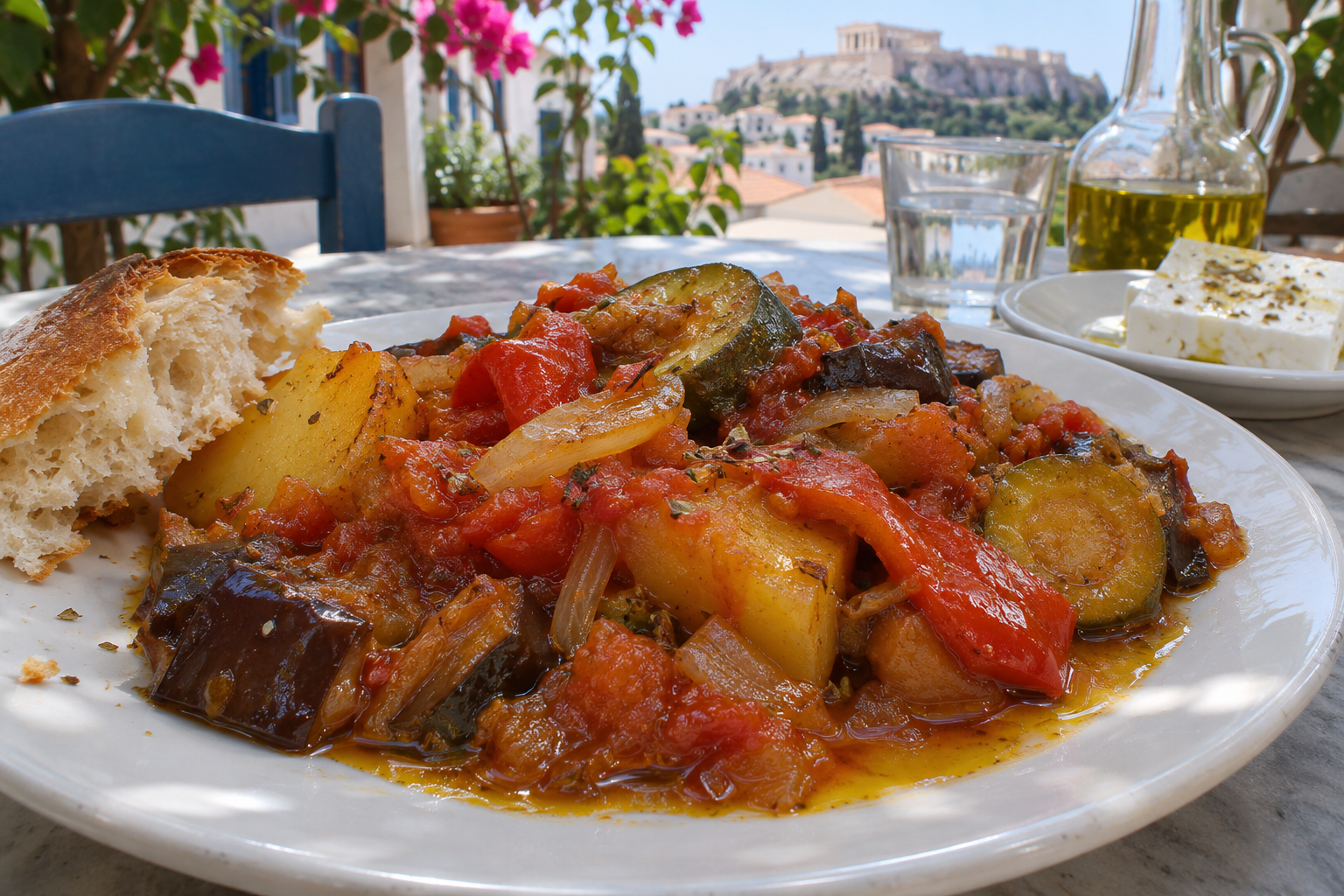
The clearest expression of the Greek love of olive oil is a whole category of dishes the Greeks call ladera, which comes from the word for oil and means, roughly, the oily ones. These are vegetable dishes cooked slowly in a generous amount of olive oil, often with tomato, until the vegetables are meltingly soft and sitting in a rich, flavorful pool of oil and their own juices. They are eaten warm or at room temperature, with bread to mop up the oil, and they are among the glories of Greek home cooking.
The ladera are where that twenty liters a year actually goes, because these dishes use olive oil not as a cooking medium to be drained away but as a central ingredient that stays in the finished dish. The oil, infused with the flavor of the vegetables and tomato and herbs, becomes a sauce in its own right, and mopping it up with bread is half the pleasure. This is olive oil as food rather than as mere fat, and it is the beating heart of why Greeks eat so much of it, because dishes like these are built to be swimming in it.
Briam is far from the only one, and the ladera family is large enough to carry a cook through the year. There is fasolakia, green beans braised in olive oil and tomato until soft, gigantes, giant beans baked in oil and tomato, gemista, vegetables stuffed with rice and baked in a generous pool of oil, and many more, each built on the same principle of vegetables and plenty of good oil cooked slowly together. They are the everyday backbone of Greek home cooking, humble, cheap, and deeply satisfying.
The most famous and generous of them all is briam, the Greek roasted vegetable dish, which is essentially a medley of summer vegetables, zucchini, potato, eggplant, pepper, onion, and tomato, baked slowly in a great deal of olive oil until everything collapses into soft, sweet, oil-glossed tenderness. It is the recipe that uses the most oil, unapologetically, and it is one of the best possible introductions to the Greek way with vegetables and oil. Make it once and you will understand the household can.
Make It: Briam, the Greek Dish That Uses the Most Olive Oil
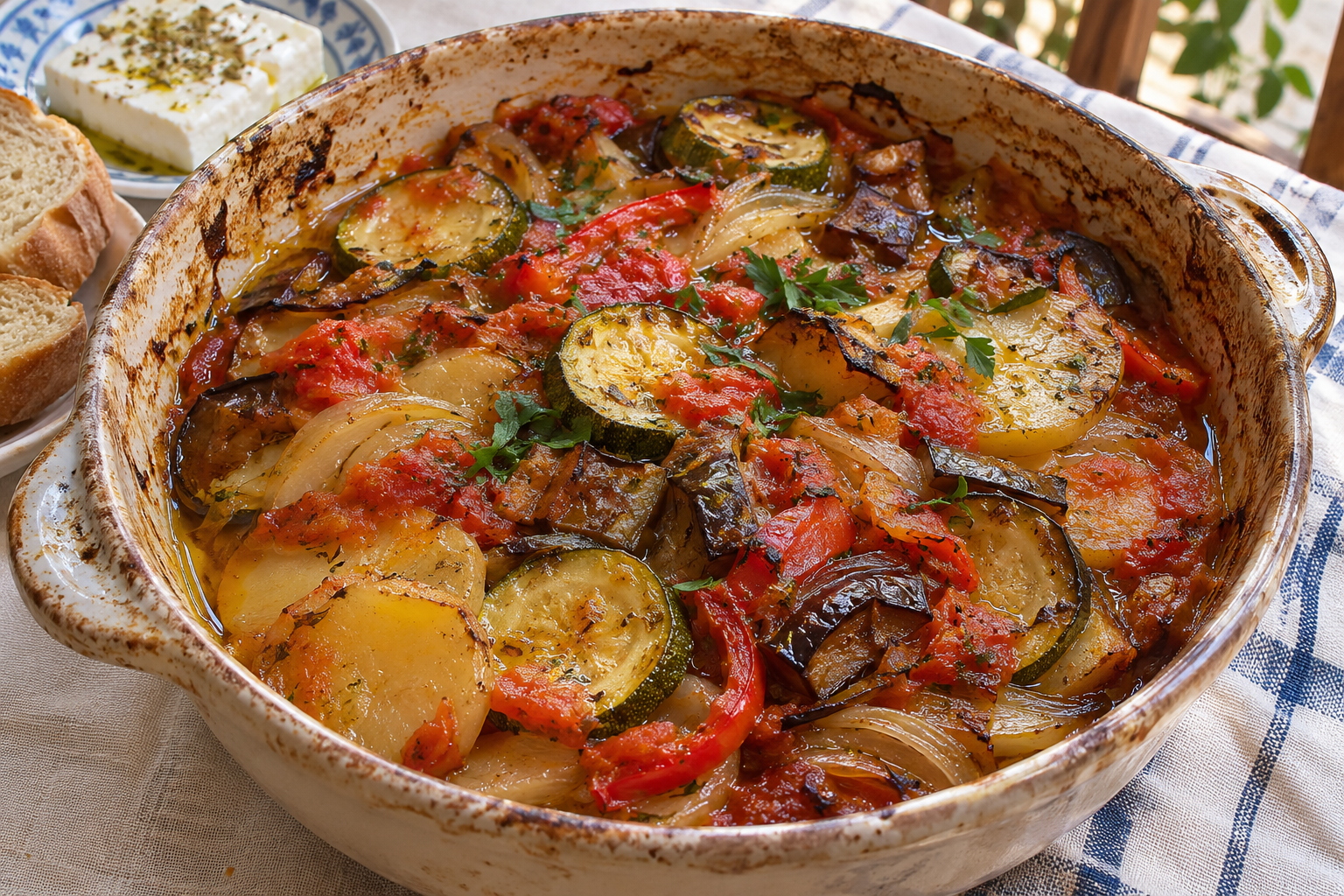
This serves four to six as a main or a generous side, and it uses a lot of olive oil, which is the entire point, so do not skimp. Eat it warm or at room temperature with crusty bread and a piece of feta, and mop up the oil at the bottom of the dish, which is the best part.
Ingredients
- 2 medium potatoes, peeled and thinly sliced
- 2 zucchini, sliced into rounds
- 1 eggplant, cut into chunks
- 1 red pepper, sliced
- 1 large onion, sliced
- 3 cloves garlic, chopped
- 3 ripe tomatoes, grated or chopped (or 400g chopped tomatoes)
- 150ml extra virgin olive oil, or more
- a handful of parsley, chopped
- 1 teaspoon dried oregano
- salt and pepper
Instructions
Heat the oven to 200 degrees Celsius (400 Fahrenheit). Put all the prepared vegetables, the potatoes, zucchini, eggplant, pepper, onion, and garlic, into a large baking dish, spreading them out in a deep, generous layer.
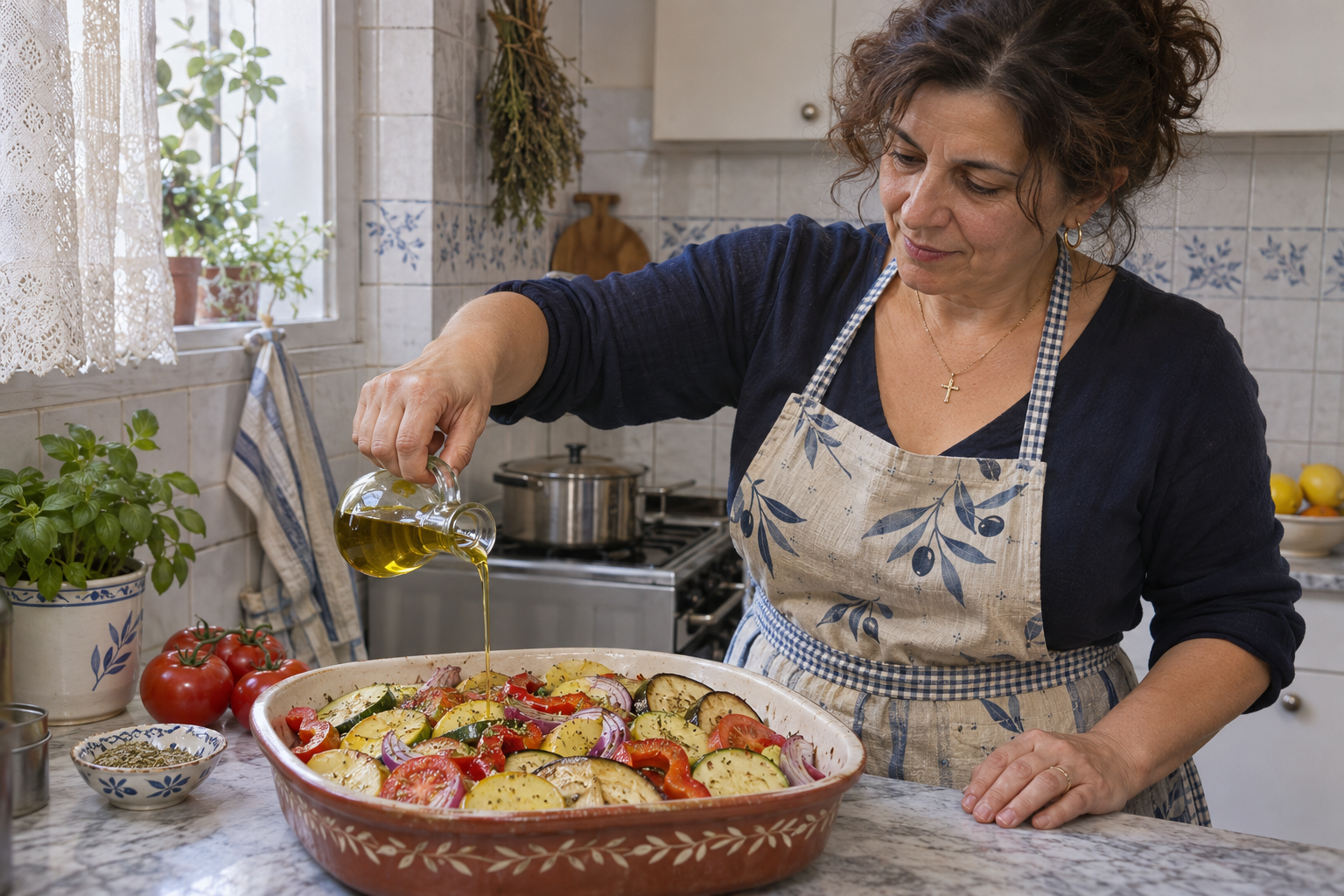
Add the grated or chopped tomatoes, the oregano, the parsley, and a good seasoning of salt and pepper, and then pour over the olive oil, all of it, so the vegetables are thoroughly coated and there is a real pool of oil in the dish. This is a ladero dish, so the generous oil is not optional, it is what makes it. Toss everything together with your hands until well mixed and glistening.
Spread the vegetables out evenly and cover the dish with foil. Bake for about 45 minutes, then remove the foil, stir gently, and return it to the oven uncovered. Continue baking for another 45 minutes to an hour, stirring once or twice, until the vegetables are completely soft, collapsing, and lightly caramelized at the edges, sitting in a rich pool of oil and tomato.
The briam is done when everything is meltingly tender and the potatoes are soft, and it should look glossy and oily, not dry. If it looks dry at any point, add a splash more olive oil. Let it cool for a while, since briam is best eaten warm or at room temperature rather than piping hot, which lets the flavors settle.
Serve it with plenty of crusty bread for mopping up the oil at the bottom of the dish, and a slice of feta alongside if you like. It keeps well and tastes even better the next day, once the vegetables have sat in the oil overnight, which is how a lot of Greek cooks prefer to eat it.

About the Author: Ruben, co-founder of Gamintraveler.com since 2014, is a seasoned traveler from Spain who has explored over 100 countries since 2009. Known for his extensive travel adventures across South America, Europe, the US, Australia, New Zealand, Asia, and Africa, Ruben combines his passion for adventurous yet sustainable living with his love for cycling, highlighted by his remarkable 5-month bicycle journey from Spain to Norway. He currently resides in Spain, where he continues sharing his travel experiences with his partner, Rachel, and their son, Han.