
Americans have a complicated relationship with pasta, treating it as either a guilty indulgence or a forbidden carb, the thing you give up when you are trying to eat better. Italians, who eat more pasta than almost anyone on earth, treat it completely differently, and they are not, as a population, heavier for it.
The difference is not the pasta. It is where the pasta sits in the meal, and how much of it there is. So for thirty days I ate pasta the Italian way, as a small first course followed by a protein and vegetables, rather than as a giant American main event, and I paid attention to what happened.
I want to say at the outset that this is a piece about structure and culture, not a diet plan, and I am going to be careful not to turn it into one. I did lose a bit of weight over the month, which surprised me given that I ate pasta every single day, and I will talk about that honestly. But the interesting part is not a number on a scale, it is the simple, sane way an entire food culture fits pasta into a balanced meal without fear, and what happened when I borrowed that structure for a few weeks. The account is lightly smoothed from my own month, so take it as one real experience, not a prescription, and certainly not as advice about your own body or health.
How Italians Actually Eat Pasta
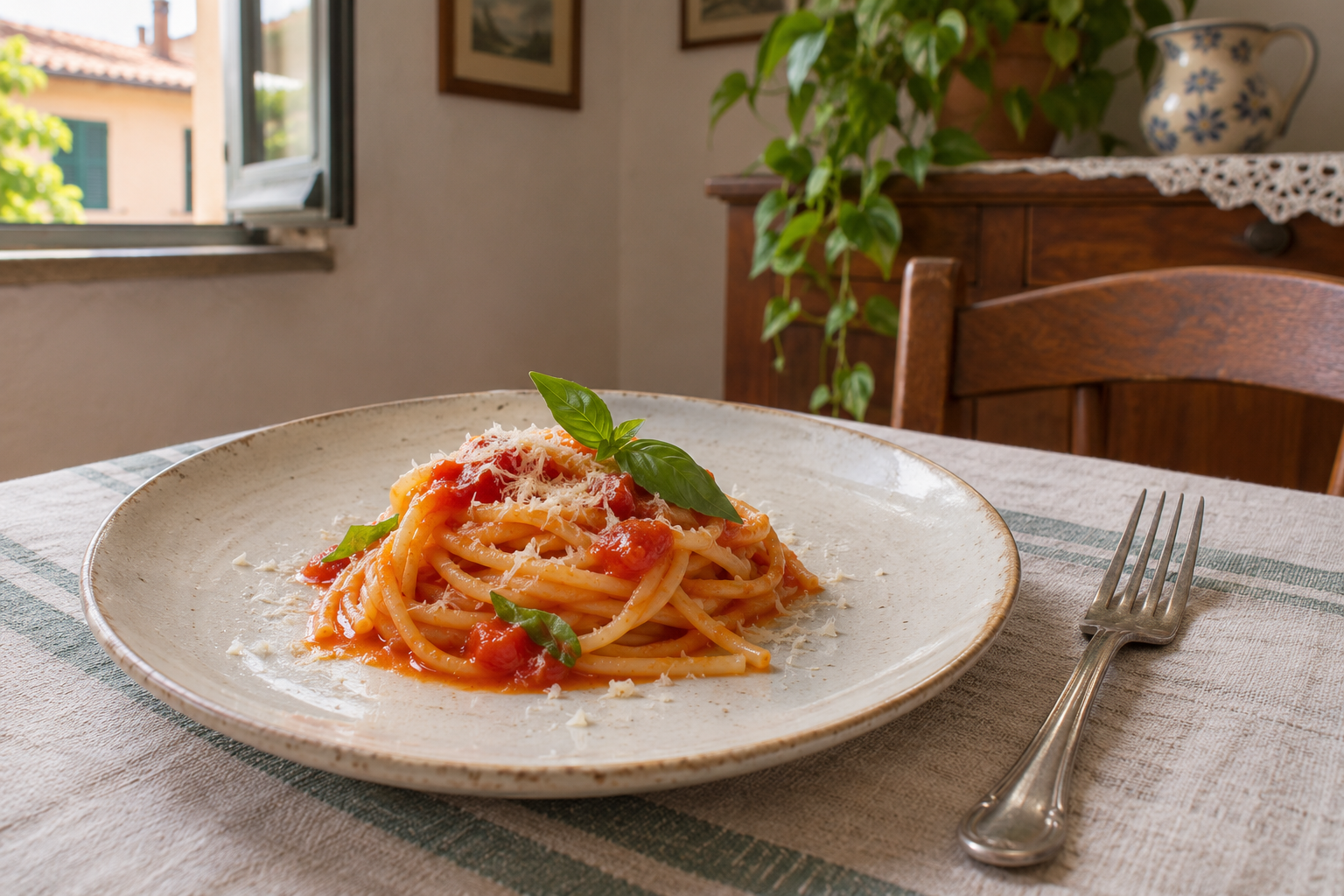
The thing most Americans get wrong about Italian eating is the portion and the position. In the American mind, pasta is the whole dinner, a huge bowl of spaghetti and meatballs or a heaping plate of fettuccine alfredo, often the entire meal with maybe some garlic bread on the side. That is simply not how a traditional Italian meal is built, and understanding the difference is the whole point of this experiment.
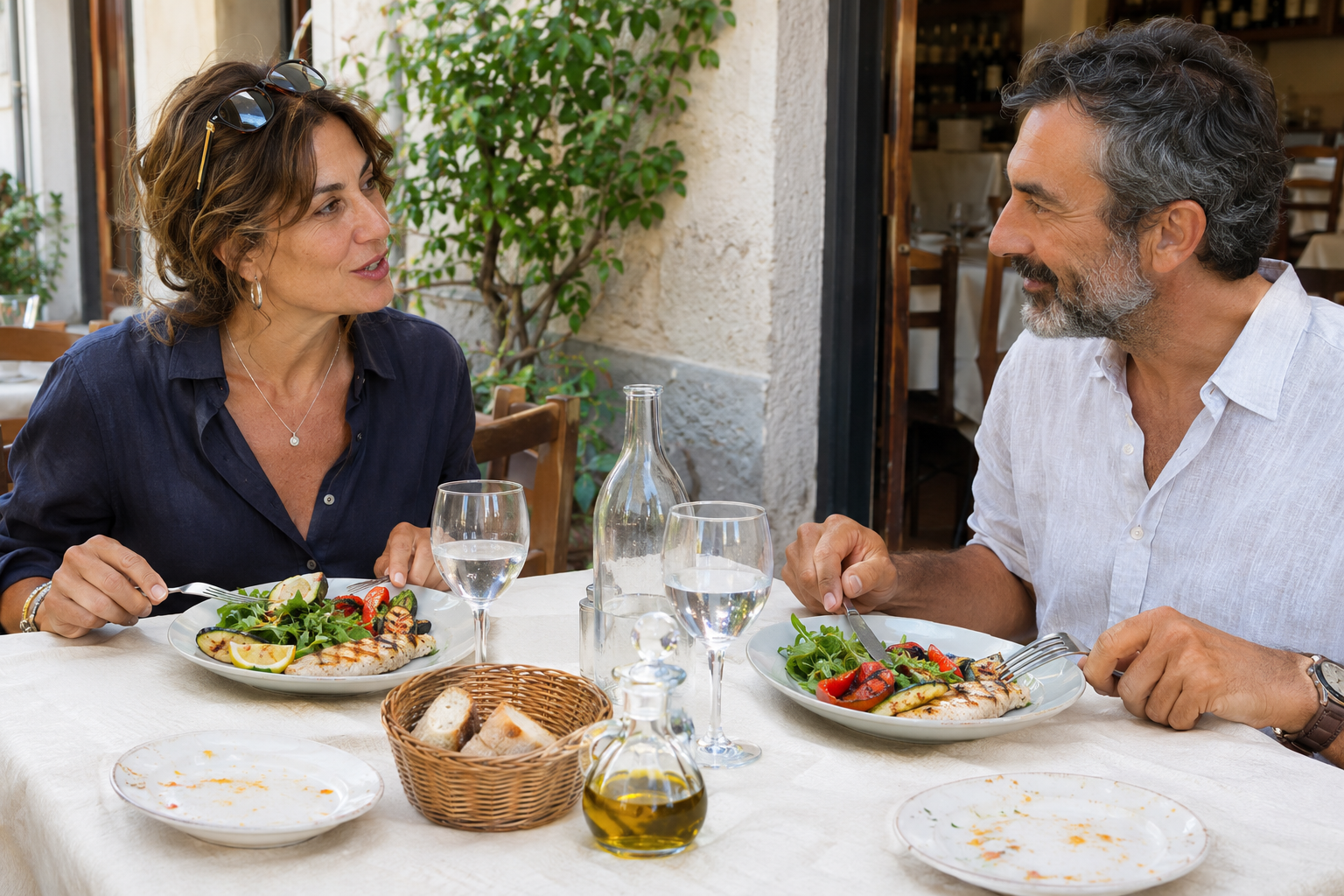
In the classic Italian structure, pasta is the primo, the first course, and it is modest in size, a small plate meant to open the meal rather than to be the meal. It is followed by the secondo, the second course, which is the protein, a piece of fish, chicken, or meat, served with a vegetable or a simple salad, the contorno. The pasta is not the star but the opening act, a well-judged small portion that leads into a protein-and-vegetable course. The whole meal is balanced across courses rather than piled onto one plate, and no single element dominates.
That structure changes everything about how pasta functions in the diet. A small first-course portion of pasta, followed by protein and vegetables, is a completely different nutritional proposition from an enormous bowl of pasta eaten alone as the entire dinner. The Italians are not eating less food overall, they are distributing it differently, leading with a modest portion of carbohydrate and then filling out the meal with protein and vegetables that satisfy and slow things down. It is balance by sequence, built into the culture, and it is the opposite of the American all-pasta plate.
The Experiment I Set Myself
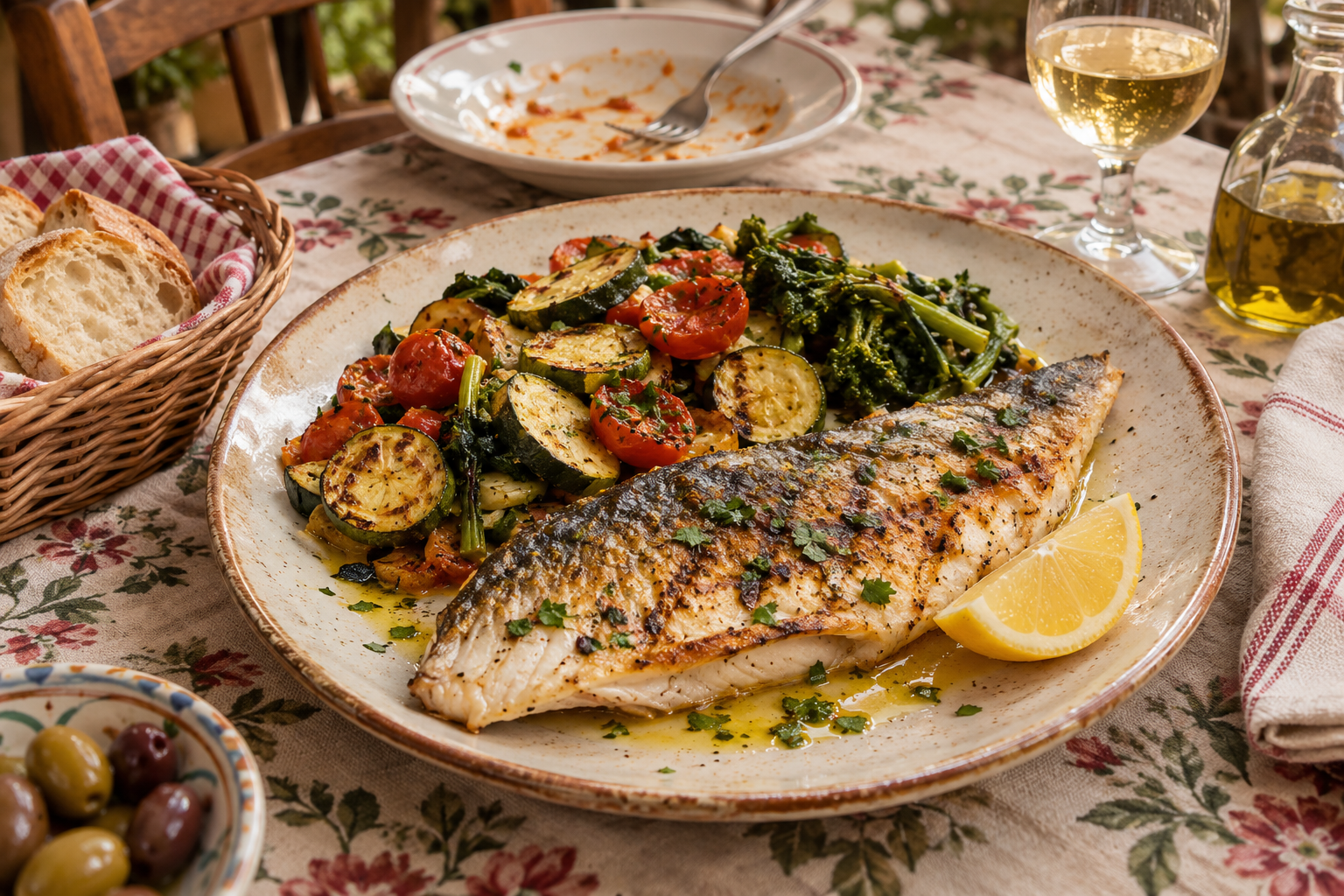
My rule for the month was simple and drawn straight from that structure. Every day, I would eat pasta, but always as a small first course, a modest portion, followed by a proper second course of protein and vegetables. No giant bowls of pasta as the whole dinner, no pasta eaten alone, just the Italian sequence of a little pasta and then a real protein-and-vegetable course after it. I was not counting anything or restricting anything, I was simply reordering and resizing, borrowing the Italian meal shape wholesale.
The point I was testing was not whether pasta is fattening, which is the wrong question, but whether the structure around it matters more than the food itself. My suspicion, from watching how Italians eat, was that the same beloved pasta behaves very differently depending on how much of it you eat and what comes with it, and that a culture can eat it daily without harm because of the frame it sits in. Thirty days seemed long enough to feel the difference in how I ate and how I felt, and to notice any effect on the scale, without being some grand undertaking.
I also wanted to see whether I would feel deprived, because the American instinct is that a small portion of anything delicious leaves you wanting more. That was the quiet worry going in, that a modest first-course plate of pasta would just make me hungry for a second helping. What I found was more interesting than I expected, and it had everything to do with what came after the pasta.
What the Small-Plate Structure Did
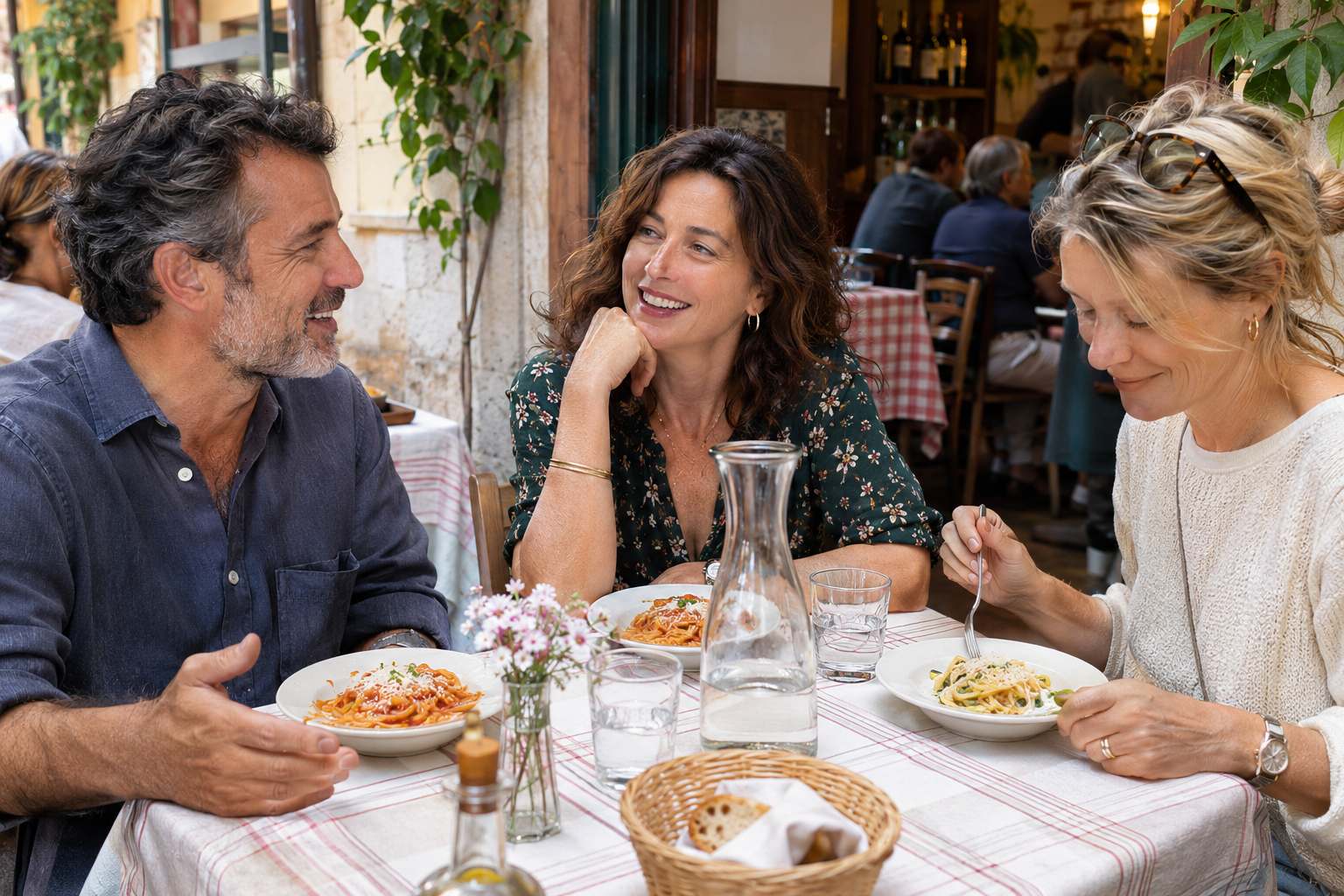
The first thing I noticed was that I did not, in fact, feel deprived, and the reason was the second course. A small plate of pasta on its own might leave you reaching for more, but a small plate of pasta followed by a satisfying course of protein and vegetables leaves you comfortably full, because the protein and the vegetables do the work of satiety that a mountain of plain pasta never quite does. By the end of the two courses I was genuinely satisfied, often more so than after a huge single bowl of pasta, which tends to leave you heavy and then weirdly hungry again later.
This is the quiet genius of the structure, and it became obvious within the first week. Leading with a modest portion of pasta and then eating protein and vegetables produces a meal that is more filling and more balanced than the same calories delivered as a giant plate of pasta alone. The protein satisfies in a way carbohydrate does not, the vegetables add bulk and slow the meal down, and the small pasta course scratches the pasta itch without dominating. I was eating pasta every day and feeling better fed than I had on my old all-in-one-plate habits.
The other thing that shifted was the pace and attention of eating. A meal in courses is naturally slower than a single plate, because there is a pause, a change, a second act, and that slower pace gave my body time to register fullness before I had overeaten. I found myself eating more mindfully simply because the structure demanded it, and that unhurried, sequenced way of eating felt more civilized and more satisfying than shoveling through one big bowl. The structure did not just change what I ate, it changed how I ate, and that turned out to matter as much as anything.
The Weight, Reported Honestly
Now to the part that will draw the most attention, which I want to handle carefully. Over the thirty days, I lost some weight, around eleven pounds, which genuinely surprised me given that I ate pasta every single day and never felt like I was dieting. I want to report that honestly because it happened, but I also want to immediately surround it with caveats, because a number like that is easy to misread and easy to misuse.
Here is the honest explanation, as best I understand it. I almost certainly ended up eating somewhat less overall, not because I restricted but because the small-pasta-then-protein structure is naturally more filling and harder to overeat than my old habit of enormous single plates. When a modest first course and a protein-and-vegetable second course leave you satisfied, you simply do not go back for the third helping you might have had before, and over a month that adds up without any sense of deprivation. The weight change was a byproduct of a more balanced, better-paced way of eating, not the goal of a diet and not the result of counting anything.
I also have to be clear about what this number does not mean. Eleven pounds in a month is at the higher end of what is typical, a lot of it is very likely the ordinary early shifts in water and so on that come with any change in eating, and my result is my own, shaped by my particular starting point, body, and habits. Yours would almost certainly be different, possibly much smaller or nothing at all, and the figure is not a promise or a target.
I am reporting one person’s byproduct, not prescribing an outcome, and if you take anything from this it should be the sane structure, not the number. This is emphatically not a weight-loss plan, and if your relationship with food or your weight is a fraught or painful area, this is a conversation for you and a professional, not a blog experiment.
What a Day Actually Looked Like
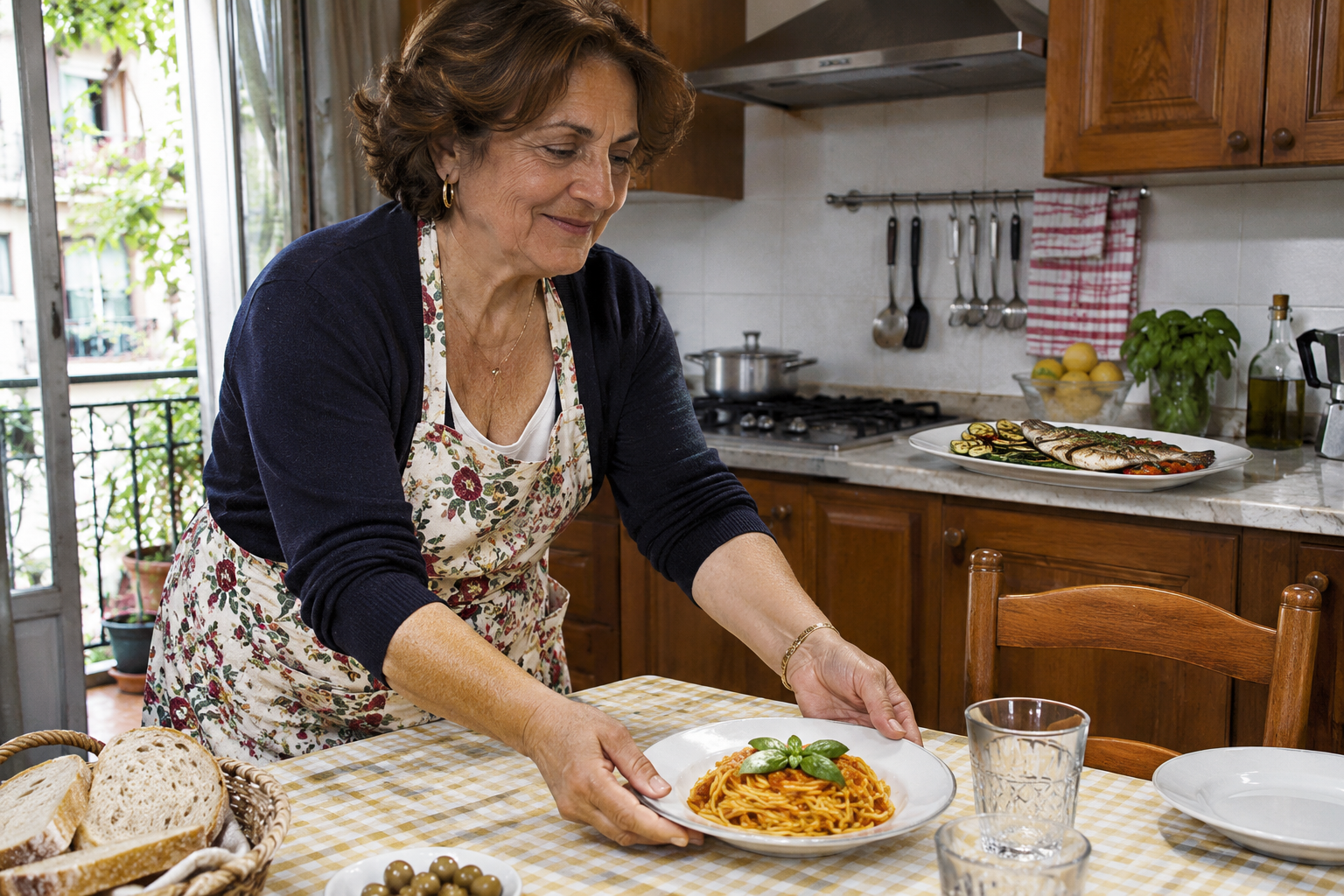
To make this concrete rather than abstract, here is the shape a typical day took, because the structure is easier to picture than to describe. Lunch, the bigger meal in the Italian rhythm, might open with a small plate of pasta, perhaps spaghetti with a simple tomato and basil sauce or a little bowl of pasta with beans, a modest portion rather than a trough. Then came the second course, a piece of grilled fish or chicken, or sometimes eggs or a bit of cheese, with a generous pile of vegetables or a salad dressed in olive oil alongside.
The pasta was never skimped on in flavor, only in size, and that mattered, because a small plate of really good pasta is deeply satisfying in a way a large plate of mediocre pasta is not. Dinner, in the Italian style, was often lighter, sometimes just a soup and vegetables, or a smaller version of the same two-course idea. Nothing was weighed, nothing was forbidden, and I never once sat down to a sad diet plate. I simply ate pasta as the opening of a balanced meal rather than as the entire meal, every single day, and that was the whole of it.
The Same Trick Beyond Pasta
What I came to see is that the lesson is not really about pasta at all, but about where any starch sits in a meal. The Italian primo can be risotto or a soup or gnocchi just as easily as pasta, and the same structure holds: a modest, carbohydrate-led opening, followed by protein and vegetables that fill out the meal and carry the satiety. The carbohydrate is present and enjoyed, but it is framed rather than featured.
That reframing travels to almost any cuisine and any starch you like. A smaller portion of rice, bread, or potatoes, led into with and followed by protein and vegetables, behaves very differently from the same starch eaten as a towering main. You do not have to fear or forbid the carbohydrate, you just have to stop letting it be the whole plate, which is a far easier and more durable change than cutting it out. Pasta was simply the most vivid and enjoyable way to learn a lesson that applies to the whole table.
Why the Structure Beats the Restriction
What struck me most, stepping back, is how different this felt from an American-style diet, and why that difference is the real lesson. A typical diet works by restriction and denial, cutting out foods, counting and limiting, treating something like pasta as the enemy to be eliminated. This was the opposite. I ate the supposed enemy every single day, with pleasure and without guilt, and the balance came not from forbidding anything but from a sensible structure that let everything have its place in the right proportion.
That is why the Italian approach is sustainable in a way that restrictive dieting rarely is. Nothing is forbidden, nothing is a cheat, there is no willpower being spent white-knuckling past a craving, because the craving is satisfied in a modest, well-placed portion and then the meal moves on. You are not fighting your food, you are simply eating it in a saner order and size, which is a thing you could plausibly do for the rest of your life rather than for a grim six weeks. The Italians prove this at the scale of an entire nation, eating their beloved pasta daily within a structure that keeps it in balance.
The deeper point is that how you eat may matter as much as what you eat, and that a food culture’s structure carries a wisdom that no single rule can. The Italians did not design their meal sequence as a health intervention, it simply evolved as the civilized way to eat, and it happens to build in balance and portion control without anyone having to think about calories. Borrowing that structure felt less like going on a diet and more like adopting a better set of table manners, and that, more than any number, is what I took from the month.
What I Kept Afterward
When the thirty days ended, I did not go back to my old giant single plates of pasta, because the new way was simply more pleasant and I saw no reason to. I kept eating pasta as a small first course followed by a protein and vegetables, not as a rule I was enforcing but as a habit that had quietly become my default, because it leaves me better fed and better feeling. That it also kept the weight off was a bonus, but the real reason it stuck was that it is a nicer way to eat.
If there is one thing worth taking from this, it is not the eleven pounds, which is mine and not yours, but the idea that you can eat the foods you love without fear if you give them a sane structure. Pasta is not the problem, and you do not have to give it up to eat in a balanced way, you simply have to let it be a modest first course rather than the whole show, and let protein and vegetables round out the meal. The Italians have been doing exactly that for generations, eating pasta every day and treating it as a normal, joyful, unfrightening part of a balanced meal, and borrowing their structure for a month taught me more about sane eating than any diet ever did.

About the Author: Ruben, co-founder of Gamintraveler.com since 2014, is a seasoned traveler from Spain who has explored over 100 countries since 2009. Known for his extensive travel adventures across South America, Europe, the US, Australia, New Zealand, Asia, and Africa, Ruben combines his passion for adventurous yet sustainable living with his love for cycling, highlighted by his remarkable 5-month bicycle journey from Spain to Norway. He currently resides in Spain, where he continues sharing his travel experiences with his partner, Rachel, and their son, Han.