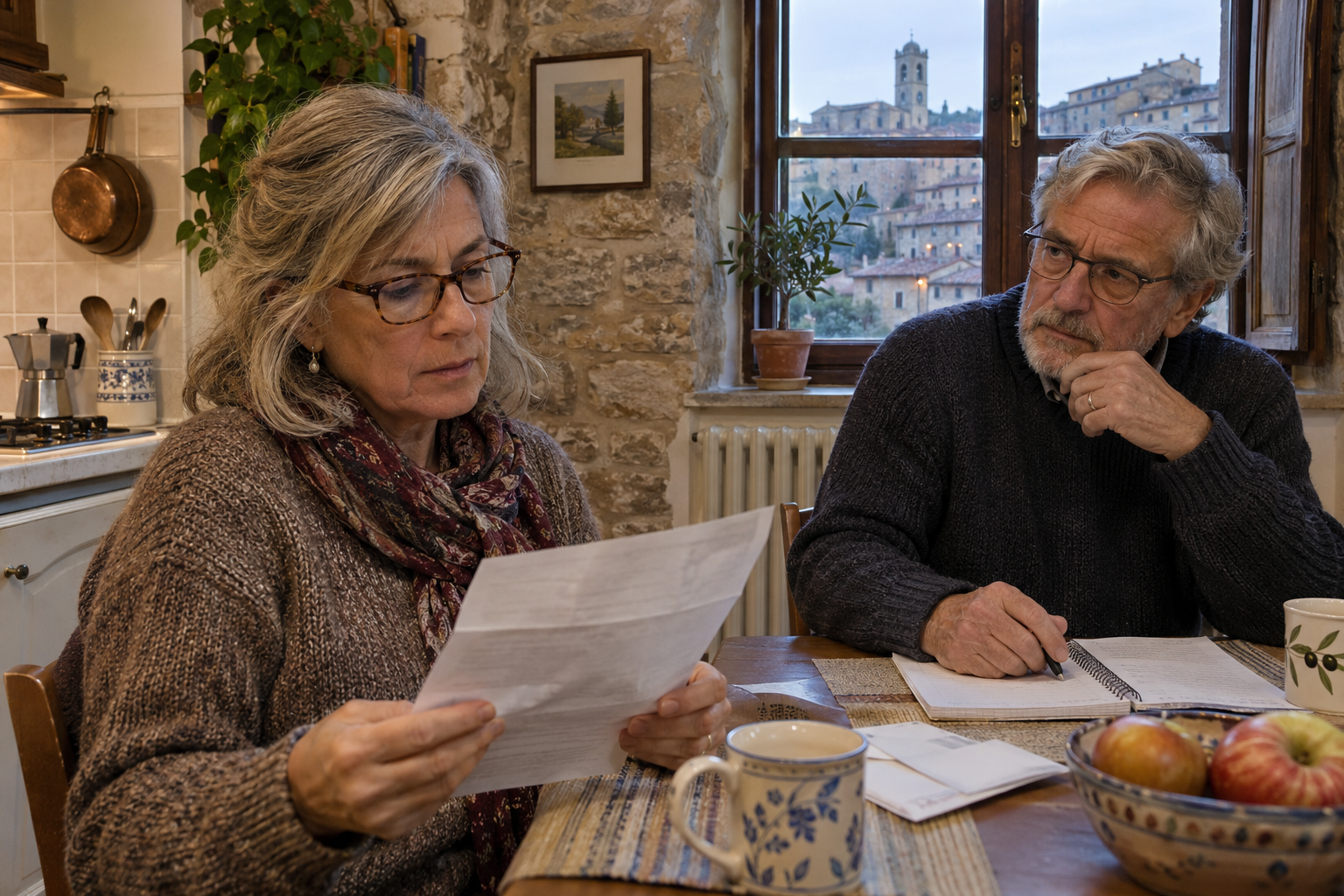
The letter that broke the spreadsheet did not come from a landlord or a utility. It came from the health system, and it said that to register with Italy’s national health service for the year, the couple would owe a contribution with a minimum of around €2,000, not the few hundred euros they had vaguely penciled in from an old forum post. It arrived in October, in month four, just as the first cold was creeping into their stone-walled flat in a hill town in central Italy, and it was the moment the Marshes understood that the plan they had built was describing a different Italy from the one they were living in.
The Marshes are a composite, assembled from the figures several couples shared with us in the year after they moved, and their plan said $2,500 a month, which that autumn converted to roughly €2,300. It was a careful plan, built over a year of daydreaming and spreadsheet-tweaking, and it was wrong in the specific, instructive way these plans are always wrong.
It did not break on rent or pasta or wine. It broke on the Italian costs that live on other people’s bills, in government offices, and in the fine print of what being a resident actually costs, and month four was simply when they all came due at once. Here is where the plan broke, and why. This is general information, not financial advice, and the figures are illustrative of where budgets tend to fail rather than a quote for your own.
The Number Quoted From a Sunny Month
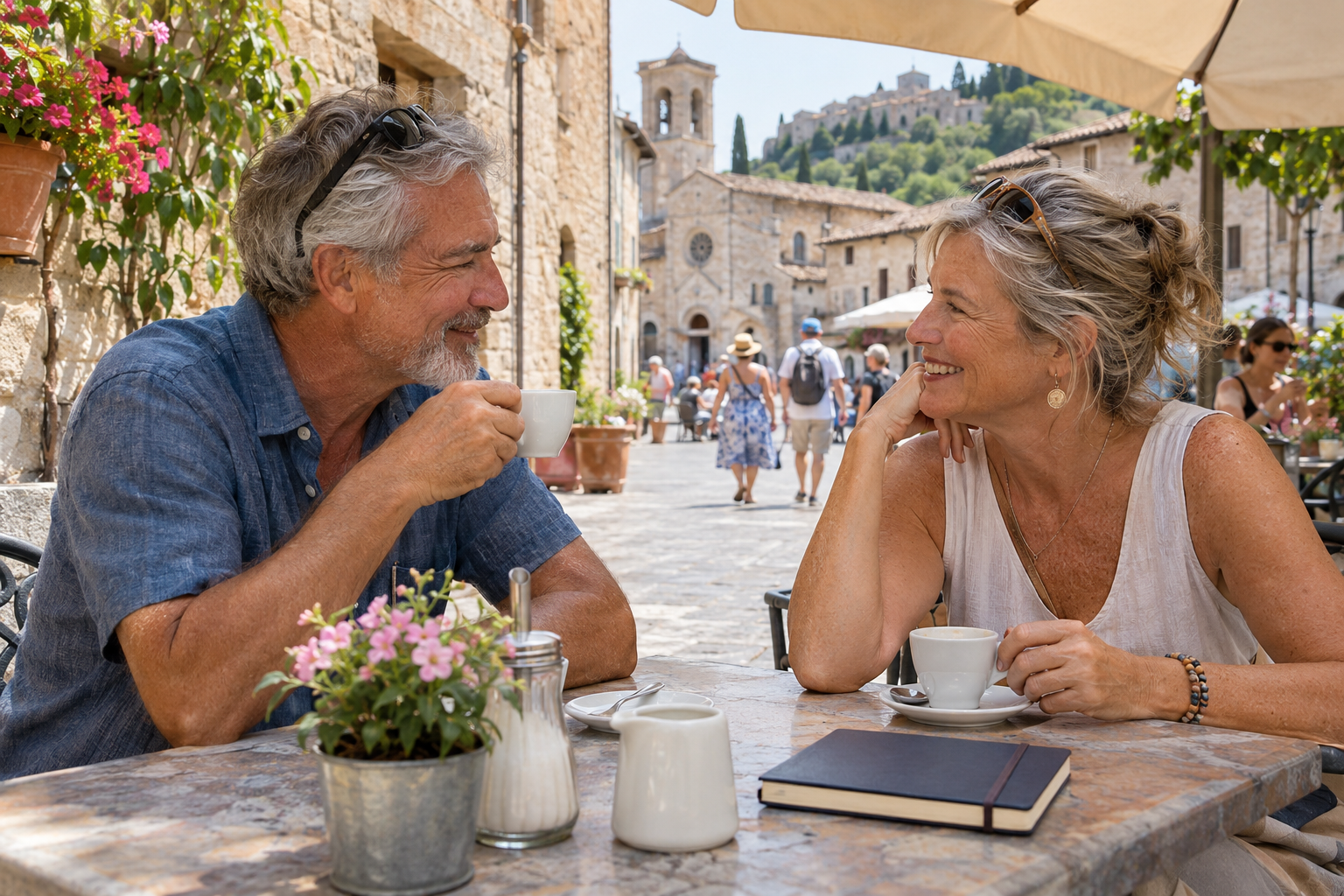
Every couple has a first number, and it is always the one they told their friends back home, quoted from a month when Italy was at its most generous. For the Marshes it was about $2,000, calculated in August, their second month, when the evenings were warm, the flat needed no heating, and life felt like the long holiday it partly was. That figure was real, and it was also a summer figure dressed up as an annual one, which is the oldest mistake in the book.
A year in Italy is not twelve Augusts. It is a few months of paying to stay warm, a stretch of tourist-season prices if you have settled anywhere scenic, the lumpy months when annual taxes and permit renewals fall due, and the ordinary months in between that actually match the fantasy. The Marshes had also, without quite meaning to, chosen a desirable central location, a pretty town within reach of the art cities, where rents and restaurant prices carried a tourist premium that the same budget would not have met but which the deep south or a less-famous region would have handled easily. Where you land in Italy changes the number as much as how you live, and a plan that quotes a sunny month in a pretty town is quoting the most expensive version of the country as if it were the average.
The Winter in a Stone House
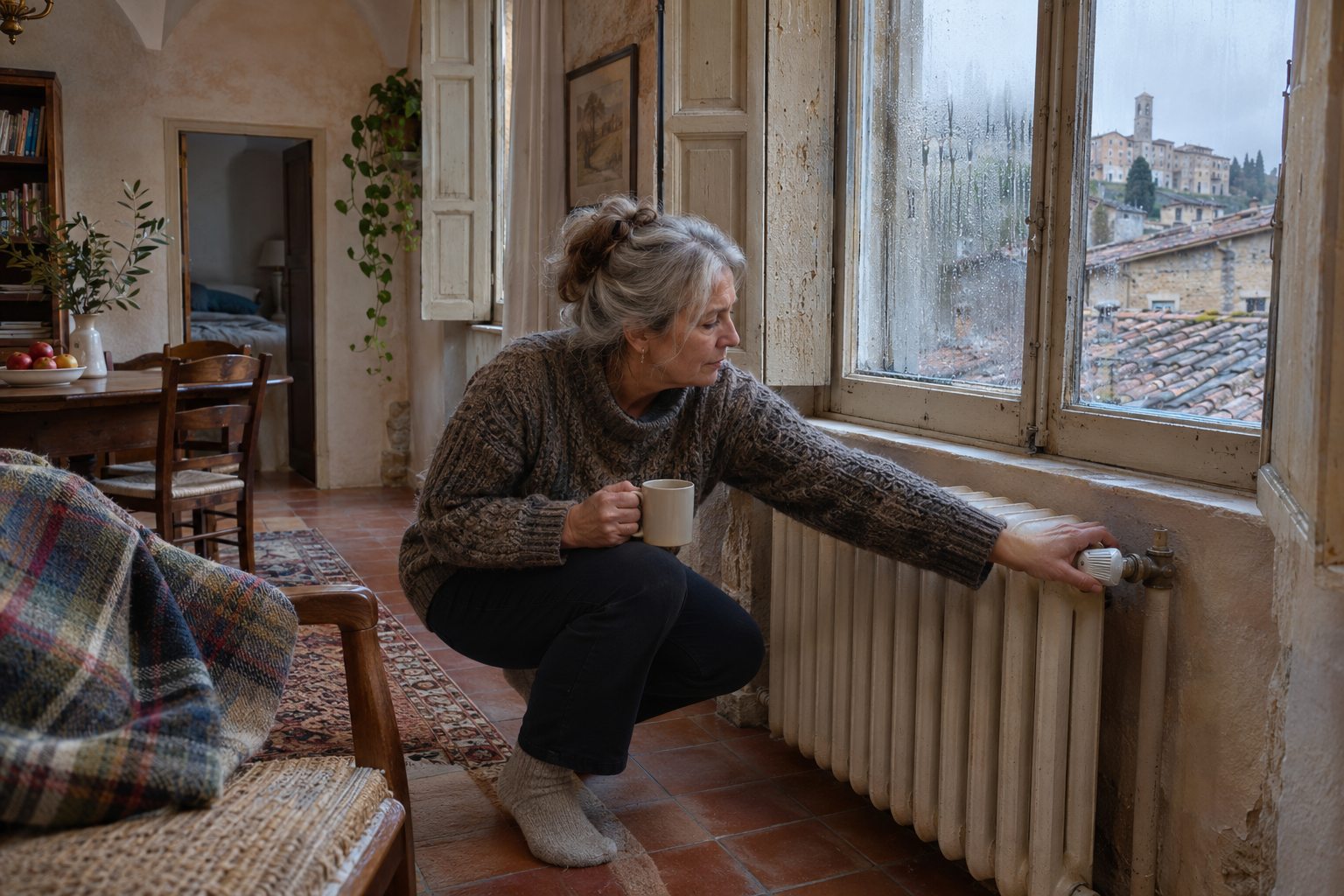
Italian houses in the old towns are built of stone and masonry, thick-walled and cool, designed over centuries to fight the summer heat rather than the winter cold, and the result is that a Mediterranean winter can feel bitter indoors in a way that surprises Americans expecting Italy to be warm. The Marshes’ charming flat, with its tile floors and high ceilings and lovely old windows, became, in November, a cold box that took real money to heat, and central Italy away from the coast gets properly cold, with frosts and the occasional snow.
Their heating ran on gas, the metano piped to the building, and the bills through the cold months climbed to a couple of hundred euros in the deepest weeks, a line the summer plan had set near zero. Many older Italian buildings run riscaldamento centralizzato, a shared central heating system switched on and off on fixed civic dates and billed through the building, which removes your control over when the heat comes on and folds a large seasonal cost into the condominio charge whether you are cold or not. Either way, the winter is a cost the architecture guarantees, and the only real defense is to ask, before signing, exactly how a flat is heated and what the last tenant actually paid, because the listing photos never show the gas bill.
The Health Line That Became €2,000
The biggest single break was health, and it is the one that most repays attention, because it changed sharply and recently in a way old advice completely misses. Italy’s national health service, the SSN, is genuinely good and genuinely affordable to use once you are in it, but for non-EU residents who are not working, the Americans on elective-residence and similar permits, joining is no longer the token cost it once was. A 2024 reform replaced the old flat annual fee of a few hundred euros with an income-based contribution, set at a percentage of income with a minimum of around €2,000 a year for many in exactly the Marshes’ situation.
That is a jump from roughly €388 under the old rules to a minimum near €2,000, and it caught a whole wave of arrivals who had planned around the old number, which still circulates in forums and guides written before the change. For a couple, registering both can mean a four-figure annual cost that the plan had treated as a rounding error, and it is not optional for most residents who want access to the system. The alternative, private insurance, is itself a real cost for a couple in their sixties, so there is no free door here, only two priced ones.
The timing is what made it a month-four crisis rather than a line in a spreadsheet. The registration comes due as part of settling into residency, which for a summer arrival lands in the autumn, exactly when the heating bills start and the permit paperwork churns, so a cost the Marshes had under-costed by well over a thousand euros arrived in the same weeks as everything else. Health is the line where costing it at zero is not optimism but denial, and in Italy specifically it is the line that changed most and that old budgets get most wrong.
The Taxes That Hide on Other Bills

Italy funds itself partly through a scattering of small taxes that attach themselves to other bills and never appear on a newcomer’s spreadsheet. The strangest to American eyes is the canone RAI, the television license fee of around €90 a year, which is collected by adding it to your electricity bill, so that the power invoice quietly carries a tax for the state broadcaster whether you watch it or not. Nobody warns you, and it simply appears, a small permanent puzzle on the utility bill.
There is more. The TARI, the waste-collection tax, is a real annual municipal charge based on the size of the home and the number of occupants, often a few hundred euros, and it falls on the people living in the property.
If a couple owns rather than rents, and especially if the Italian place is not their sole registered residence, the property tax IMU can apply, and there is the bollo auto, the annual car tax, for anyone who buys a vehicle. None of these is enormous on its own, but they are all annual, all easy to forget, and they arrive in lumps that a monthly budget never anticipated, so together they add a few hundred euros a year that the plan had nowhere to put. The lesson is that the Italian cost of living is not just rent and food but a quiet layer of annual civic charges that you have to go looking for before they find you.
The Spese Condominiali
The rent was one number, and the spese condominiali, the monthly fee for the building’s shared costs, was another the Marshes had budgeted at nothing, because the concept did not map onto anything in their American renting life. In an Italian apartment building the fee covers the shared stairwell, the lift, the cleaning, often a portiere if the building has one, and frequently the centralized heating, and it can run from modest to genuinely significant depending on the building and its services. A building with a doorman and central heating can carry a condominio fee that rivals a serious line in the budget.
As in any such system, the fee can also move, because when the building votes to repair the roof or overhaul the lift or redo the facade, the owners face an extraordinary assessment, and a tenant lives downstream of every one of those votes even without paying the bill directly, in the form of the next rent negotiation. A cheap rent in a grand but aging palazzo is not as cheap as it looks, because the building’s maintenance is a liability hanging over the lease, and the only way to see it coming is to ask about the condominio fee and any planned works before signing. The Marshes had not thought to ask, and the fee was simply a new monthly number they discovered after they arrived.
The Fines That Arrive by Mail
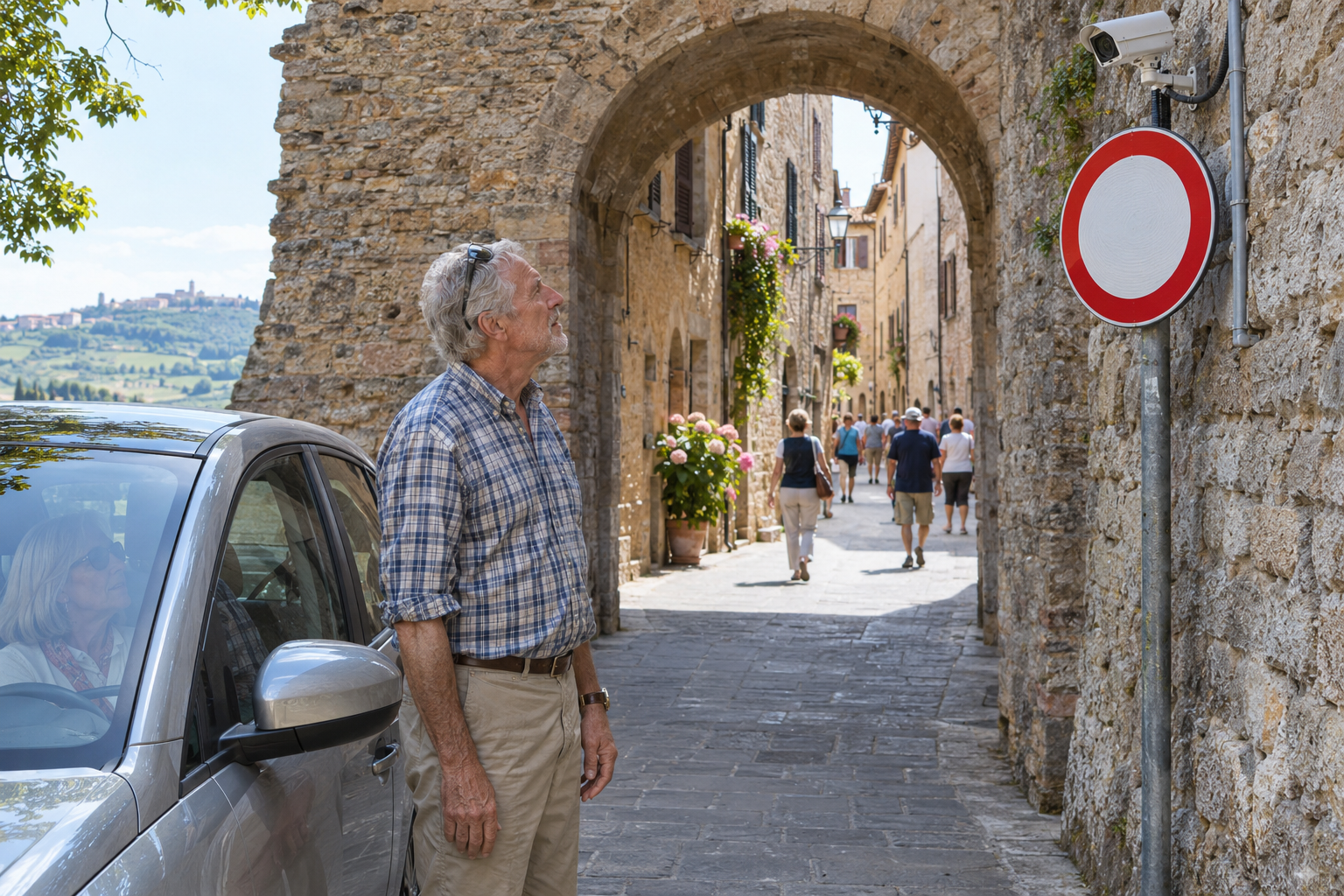
Transport brought its own distinctly Italian trap, the ZTL, the zona a traffico limitato, the restricted zones that ring the historic center of nearly every Italian town, into which you may not drive without a permit during posted hours. The cameras do not stop you, they simply photograph your plate, and the fine arrives by mail weeks or months later, often several of them if you drove through the same zone repeatedly before the first one landed. The Marshes, who had rented a car for the freedom of it, accumulated a small stack of ZTL fines in their early months without ever realizing they were doing anything wrong, each one a surprise bill long after the drive.
Owning or renting a car in Italy carries the rest of the usual weight too, the expensive fuel, the autostrada tolls that turn a long drive into a metered expense, the insurance, the annual inspection. The ZTL fines are the uniquely Italian piece, the cost that arrives late and bewildering, and the defense is simply to understand the zones, never drive into a historic center without knowing the rules, and treat the car as a tool for the open road and the countryside rather than for the town, where it is a liability on wheels waiting to be photographed.
The Week the Questura Eats
Residency in Italy is not a single event but a recurring appointment with the state, and the permesso di soggiorno, the residence permit, renews on a cycle that eats time and money the monthly plan never sees. Each dealing with the questura, the police headquarters that handles immigration, means an appointment that can sit weeks out, a sheaf of documents, the strange small ritual of the marca da bollo tax stamps you must buy to make paperwork official, and often the paid help of a lawyer or a patronato to get it through. It is less a morning at a counter than a period of your life.
Italian bureaucracy is famous for a reason, and the honest budget treats it as a recurring annual line of fees, stamps, translations, and occasional professional help, plus a reserve of patience, rather than a one-time cost at the start. For a couple, across a year, it averages out to something real even though it arrives in lumps and in lost weeks. Leave it off the plan, as the Marshes did, and it becomes one more thing that falls due in month four, when the autumn turns out to be when Italy sends all its bills at once.
What Would Have Held the Plan Together
None of this makes Italy a mistake, and it is worth saying plainly that the couples who hand us these numbers mostly stayed and mostly do not regret it. The Marshes are still there, year two cost more than they had promised their friends and less than they feared in that October, and they would not trade the life back. The country worked. The spreadsheet failed, and a spreadsheet is cheap to fix once you know where it tore.
What would have held it together was not a bigger fantasy but a truer accounting. A health line built from the current SSN contribution, not a pre-2024 forum figure, which alone was off by well over a thousand euros a year.
A winter heating line drawn from an actual bill for an actual old building. A condominio line with a reserve for the works an old palazzo eventually needs. The small annual taxes, the canone RAI and the TARI and the bollo, each given a line instead of a surprise. And a reserve of a few hundred euros for the permit renewals and the ZTL fines that Italy will certainly send.
Add those honestly and the Marshes’ real figure sat closer to €2,900 a month than the €2,300 the plan promised, and €2,900 is a number they could have lived inside without the October reckoning. The couples who arrive with the honest figure spend year one enjoying Italy, and the couples who arrive with the sunny-August figure spend it doing arithmetic at the kitchen table while the stone house gets cold around them.
Count the Health Line and the Winter Before You Sign
If you take one thing from the Marshes into your own move, make it this: before you commit to Italy, get the real, current number for SSN registration for your exact situation, from an Italian source and not an old guide, because it changed in 2024 and it is now one of the largest surprises an American retiree meets. For a non-working resident couple it can be a four-figure annual cost, and knowing it in advance turns the single biggest break in this story into just another planned line.
Then do the same with the winter, asking what the last tenant paid to heat any flat you are considering between November and March, and treat a vague answer as a cold answer and price it in. Hold all these figures loosely, because the SSN contribution, the tax rules, and the exchange rate all move from year to year, and your true number depends on the region, the building, and the winter far more than on any brochure. Treat this as a map of where Italian budgets tend to tear rather than a quote for your own, and build the plan around €2,900, not €2,300, so that month four is just another month rather than the month the spreadsheet stopped describing your life. For a fuller version of the same lesson in a different country, our piece on a couple who budgeted $2,800 for Portugal breaks down the same traps as they appear across the border.

About the Author: Ruben, co-founder of Gamintraveler.com since 2014, is a seasoned traveler from Spain who has explored over 100 countries since 2009. Known for his extensive travel adventures across South America, Europe, the US, Australia, New Zealand, Asia, and Africa, Ruben combines his passion for adventurous yet sustainable living with his love for cycling, highlighted by his remarkable 5-month bicycle journey from Spain to Norway. He currently resides in Spain, where he continues sharing his travel experiences with his partner, Rachel, and their son, Han.