
Germans have a word for their evening meal that tells you exactly what it is: Abendbrot, which means, quite literally, “evening bread.” It is not a cooked dinner in the American sense at all. It is a cold spread of good bread, cheese, sliced cold cuts, pickles, and a few raw vegetables, laid out on the table and assembled on your own plate, eaten in the early evening without a stove ever being turned on. For thirty days I gave up my hot, heavy American dinners and ate the German way instead, a cold, light Abendbrot in the early evening, and the thing I did not expect was what it did to my sleep.
I have written separately about dinner timing, about eating early versus late, but this experiment was really about something different, the composition of the meal rather than just the clock. A cold plate of bread and cheese is a fundamentally lighter thing to put in your body at the end of the day than a plate of hot cooked food, and I was curious whether that lightness, more than the hour, was what mattered. This is an honest account of what the Abendbrot actually is, what thirty days of cold evening meals felt like, what happened with my sleep, and the honest caveats around all of it. It is lightly smoothed from my own month, so read it as one experience, not a prescription or medical advice.
What Abendbrot Actually Is
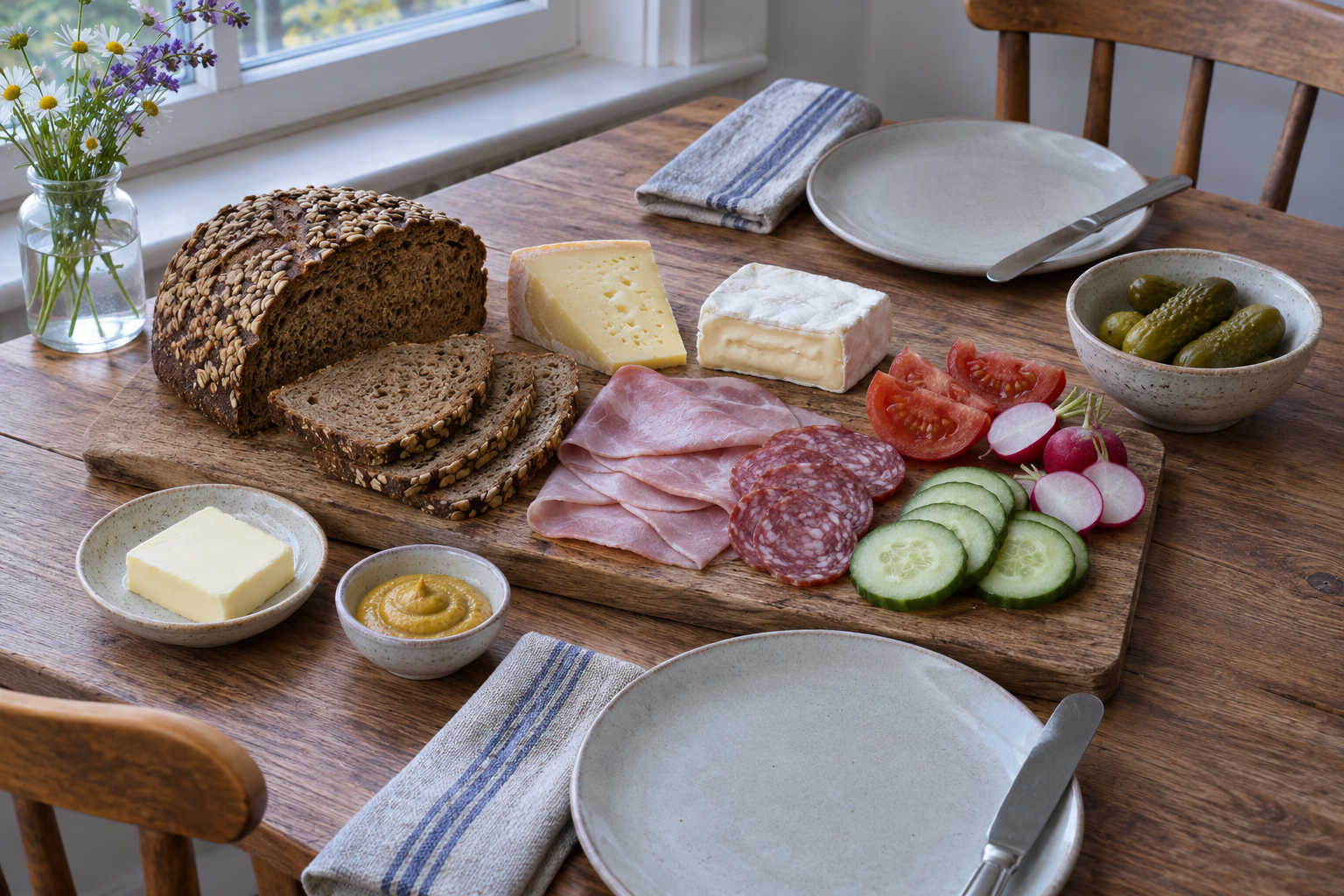
To understand the experiment you have to understand how genuinely different the traditional German evening meal is from the American one. In the classic German rhythm, the main hot meal of the day is lunch, Mittagessen, eaten in the middle of the day, while the evening meal is deliberately light and cold. Abendbrot is that light evening meal, and its very name, evening bread, signals that bread is the center of it rather than a hot cooked dish.
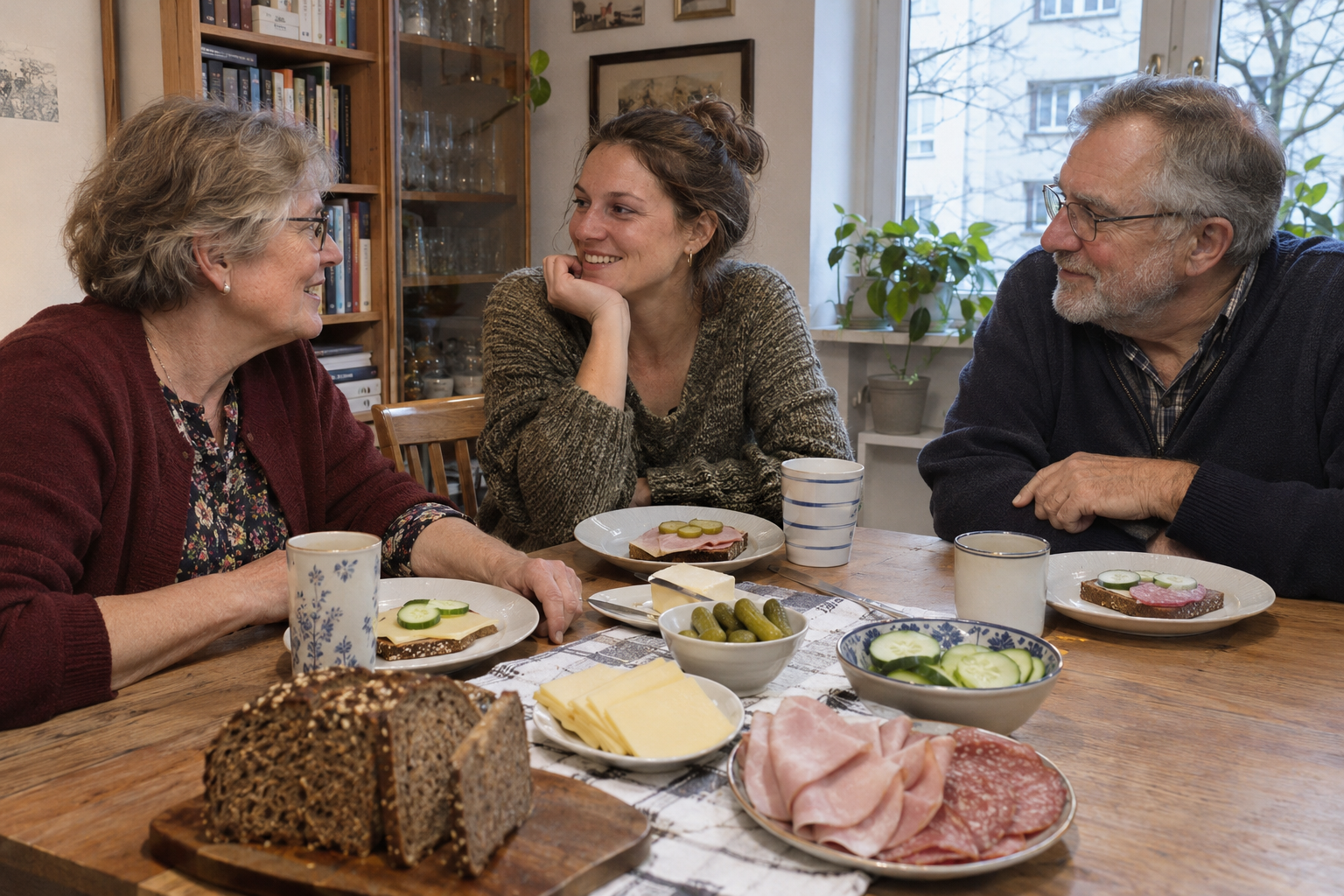
A typical Abendbrot is a simple, uncooked spread. There is good, hearty German bread, often dark and dense, and around it an assortment of cheeses, sliced cold cuts and cured meats, pickles, and perhaps some sliced tomato, cucumber, or radish. You sit down to this little array and build your own plate, open-faced bread topped with cheese or meat, a pickle on the side, eaten calmly and without ceremony. Nothing is cooked, nothing is hot, and the whole meal might take ten minutes to put on the table because there is no cooking involved at all.
That simplicity is the heart of its appeal, and it is a genuine cultural institution rather than a sign of laziness or poverty. Germans eat this way by preference and tradition, treating the cold evening spread as the natural, civilized end to a day whose big meal already happened at lunch. For an American used to the evening meal being the large, hot, cooked centerpiece of the day, the idea of dinner as a cold plate of bread and cheese is genuinely novel, and that novelty was exactly what I wanted to live inside for a month.
Why I Wanted to Try It
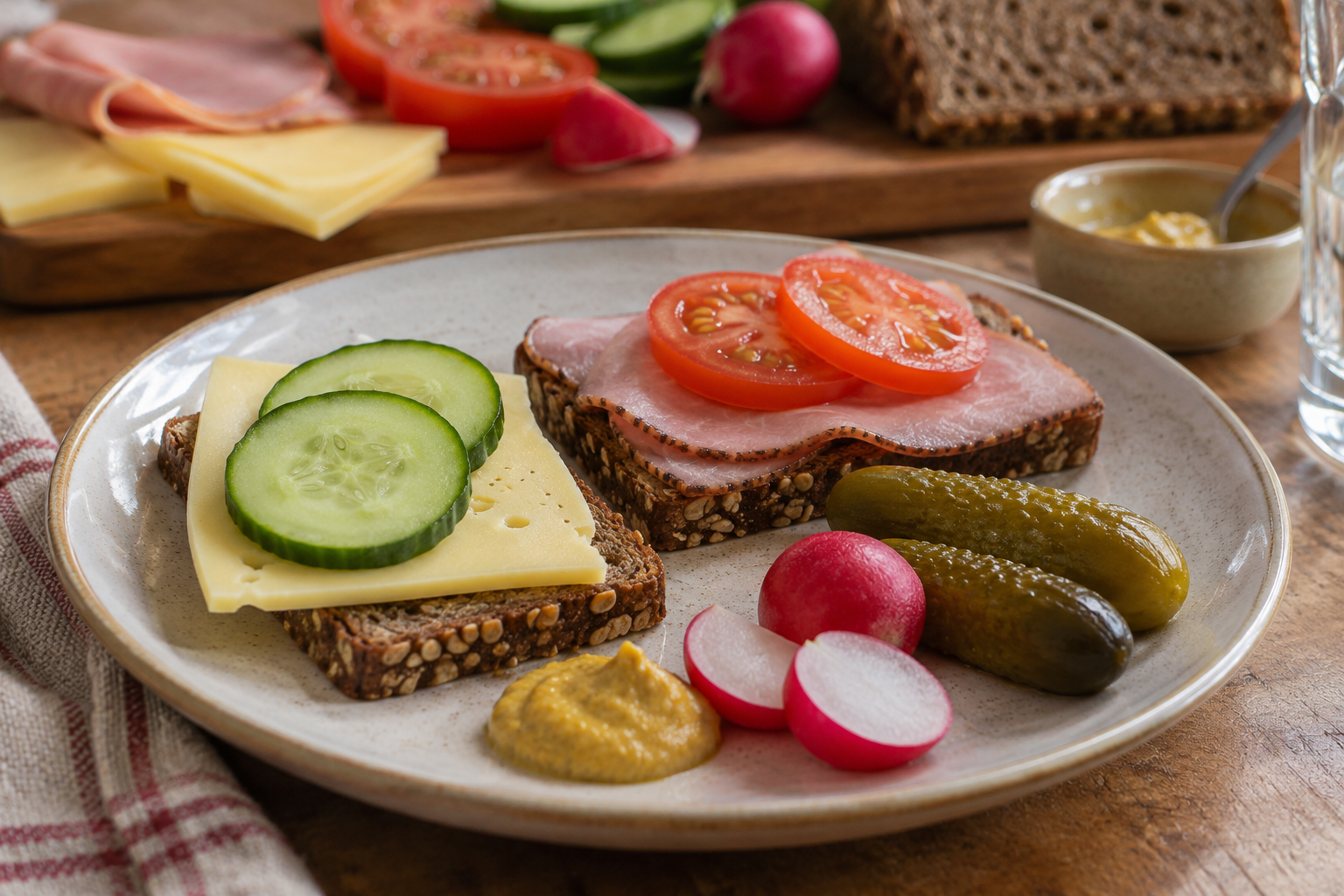
Two things drew me to the experiment. The first was simply the lightness of it, the appeal of ending the day on something gentle and uncooked rather than a heavy hot meal sitting in my stomach as I headed toward bed. I had a long-standing, half-formed suspicion that my big American dinners were not doing my sleep any favors, that going to bed with a belly full of hot, rich, recently cooked food was leaving me restless, and the Abendbrot seemed like the perfect natural experiment to test that.
The second draw was the sheer ease of it. The idea of not cooking at the end of a tired day, of dinner being a matter of putting a few good things on a board rather than standing over a stove, was deeply attractive. So much of the exhaustion of evenings, I suspected, came from the obligation to produce a hot meal when I was already spent, and the Abendbrot promised to simply remove that obligation. I wanted to know whether a cold, light, assembled dinner would leave me hungry and unsatisfied, or whether it would quietly improve my evenings in ways I had not anticipated.
I kept the rule simple: for thirty days, my evening meal would be a cold Abendbrot in the early evening, good bread, cheese, cold cuts, pickles, and raw vegetables, with nothing cooked. I would eat the way Germans do, light and cold at the end of the day, and pay attention to how I felt, how I slept, and whether I missed the hot dinner I had always assumed was non-negotiable. The timing drifted earlier naturally, but the real variable I was watching was the lightness, not the hour.
What the Cold Dinners Were Like
The first surprise was how genuinely satisfying a cold spread turned out to be, because I had assumed bread and cheese would leave me hungry an hour later. It did not. A plate of hearty dark bread, good cheese, a few slices of cured meat, and a sharp pickle is more filling than it sounds, and the variety of a spread, the choosing and assembling of different little combinations, made the meal feel generous rather than meager. I ate until comfortably full, just on cold food, and the fullness held.
The second surprise was the calm of it. Because there was no cooking, the evening meal stopped being a production and became a simple, pleasant pause. I would lay out the board, sit down, and eat without the preceding half-hour of chopping and stirring and the following pile of pots to wash.
The whole evening felt lighter, not just the food, because the labor and mess of a hot dinner had vanished, and what replaced it was a short, civilized, low-effort meal that left the evening open. I had not realized how much the nightly cooking had been weighing on my evenings until it was gone.
What a Good Board Looks Like
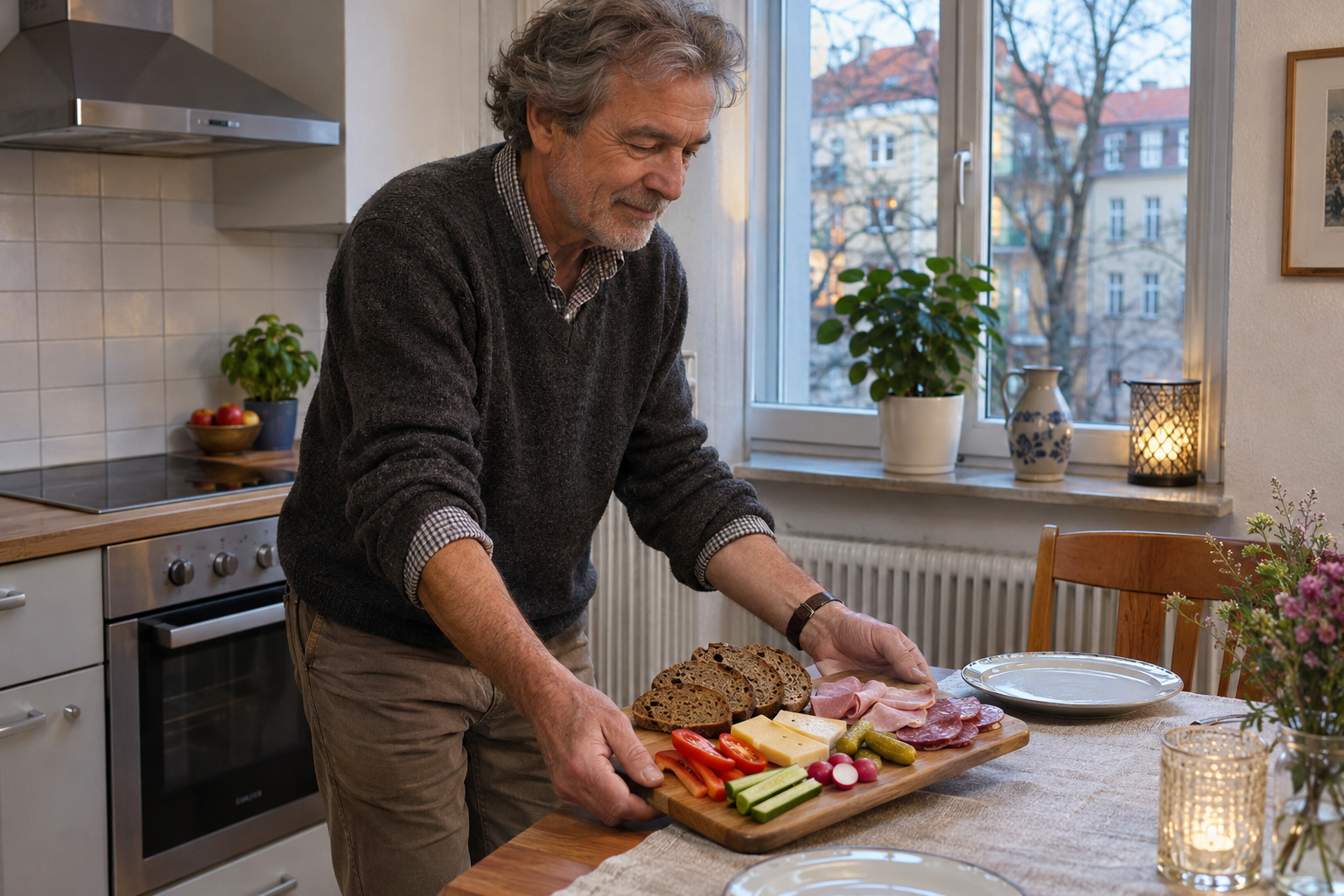
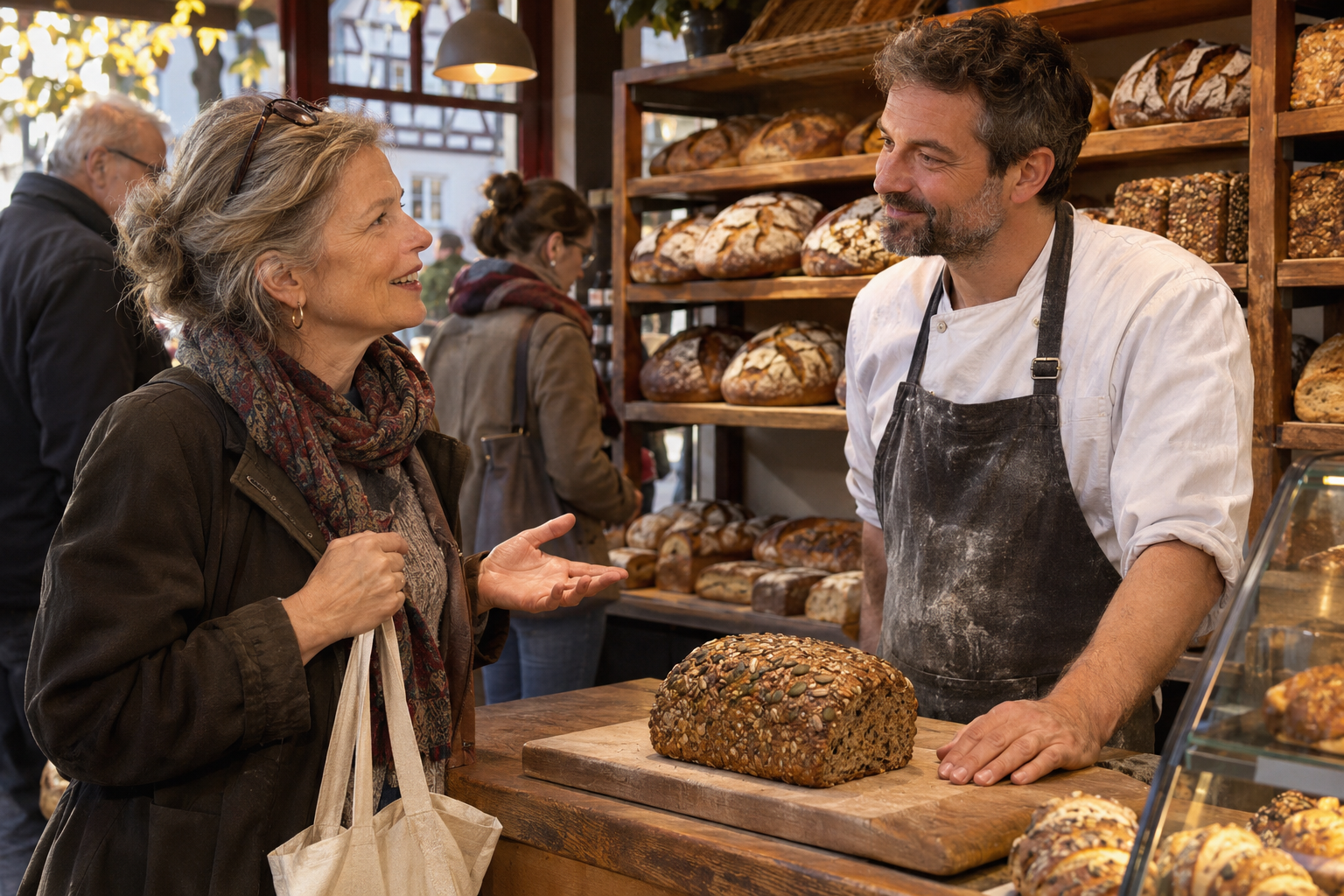
Because the quality of an Abendbrot lives entirely in its components, it is worth saying what a good one actually holds, since there is no recipe to follow, only an assembly. The base is bread, and good bread matters more here than anywhere, so I leaned on hearty, dense, dark German-style loaves, whole grain and seedy, the kind with real chew and flavor rather than soft white slices. That bread carries everything else.
Around it goes the spread. A couple of cheeses, something mild and something sharper, a few slices of good cold cut or cured meat, and then the sharp, bright things that lift the whole plate: pickles, pickled onions, and plenty of raw vegetables, sliced tomato, cucumber, radish, and peppers. A little butter or a soft cheese to spread, some mustard, maybe a boiled egg.
You build small open-faced combinations on the bread as you go, a slice of cheese and a pickle here, a bit of meat and a tomato there, and the variety keeps it interesting all the way through. Lean it toward good whole-grain bread and plenty of real vegetables, and the board is as genuinely nourishing as it is easy to put together.
Why Germans Eat This Way
The cold evening meal makes complete sense once you see the shape of the whole German day, which runs on a different rhythm from the American one. The main hot meal is lunch, Mittagessen, taken properly in the middle of the day, often as the largest and most substantial meal, cooked and warm and full. With the big eating already done at midday, the evening simply does not need another heavy production.
So Abendbrot is not a smaller dinner so much as a sensible counterweight to a large lunch, the light end of a day whose heavy eating happened hours earlier. This midday-centered rhythm was long tied to how work and school were structured, with a real pause for a hot lunch, and the cold evening bread grew naturally out of it. Even as modern schedules have shifted, the preference for a light cold supper has stuck, because generations have found it a calm, civilized, unburdensome way to end the day, which is exactly how it felt to me.
There was an adjustment, to be honest. The first several days, some part of me kept expecting the hot meal, feeling that a dinner without something cooked and warm was somehow incomplete, a cultural reflex more than a real hunger. That faded within a week or so, as the cold spread became normal and I stopped missing the hot plate, but it was real at first, the deep American assumption that dinner must be hot and cooked quietly protesting. Once it passed, I genuinely preferred the lightness, and the old heavy dinners started to seem like a lot of work for a result that sat less comfortably.
The Sleep That Came Back
Now to the part in the title, which I want to report carefully and without overclaiming. Over the course of the month, my sleep improved, noticeably enough that it became the most striking result of the whole experiment. I was falling asleep more easily and sleeping more soundly, waking less in the night, and the most plausible explanation was the obvious one, that going to bed on a light, cold, early meal rather than a heavy hot late one was simply easier on my body.
The logic is not mysterious, and it lines up with general, well-worn advice about eating and sleep. A large, heavy meal eaten close to bedtime gives the body a lot of digestive work to do just as it is trying to wind down, and that can make sleep lighter and more restless. A lighter meal, eaten earlier and made of simpler cold food, leaves the body with far less to process by the time you lie down, so sleep comes more easily and runs deeper. I was not doing anything exotic, I was just stopping the nightly habit of asking my digestion to run a marathon right before sleep.
But I have to be honest about the limits of this. I changed more than one thing at once, the lightness of the food, the earlier timing, the reduced evening stress of not cooking, and I cannot cleanly separate which of those helped my sleep or by how much. It was one person over one month with no controls and no sleep lab, just my own sense of resting better, which is exactly the kind of subjective result that can be shaped by expectation. I genuinely slept better, but I cannot tell you with any authority that it was the cold bread specifically, and you should treat my experience as a prompt to pay attention to your own evenings rather than as proof of anything.
The Honest Trade-offs
The Abendbrot month was not without friction, and the honest version includes the parts that did not fit neatly. The biggest was social, because a cold early light dinner does not mesh easily with a dining culture, or a social life, built around hot evening meals and later eating. Having people over, or going out, or any occasion that centered on a proper cooked dinner, meant stepping outside the experiment, and the cold spread is not what you serve guests expecting a real meal. It is an everyday, private, family way of eating, not an entertaining one.
There was also the matter of craving a hot meal sometimes, especially on cold evenings, when something warm genuinely appeals in a way a cold plate cannot satisfy. On a chilly night, the body wants warmth, and a board of cold cuts and bread, however good, does not give it, which is one honest reason the strict cold version is easier to love in milder weather than in deep winter. Many German households do allow something warm in the mix, a hot soup or a warm dish now and then, and I came to think a little flexibility there is sensible rather than a betrayal of the idea.
And of course, the nutritional quality of an Abendbrot depends entirely on what you put on the board. A spread heavy on processed cold cuts and white bread is a different thing from one built on good whole-grain bread, real cheese, and plenty of vegetables, and the cold-and-light principle is no guarantee of healthy if the components are poor. I tried to lean toward good bread, real cheese, and lots of raw vegetables, but it is worth saying that Abendbrot is a structure, not automatically a health food, and the contents are what decide its quality.
What I Kept
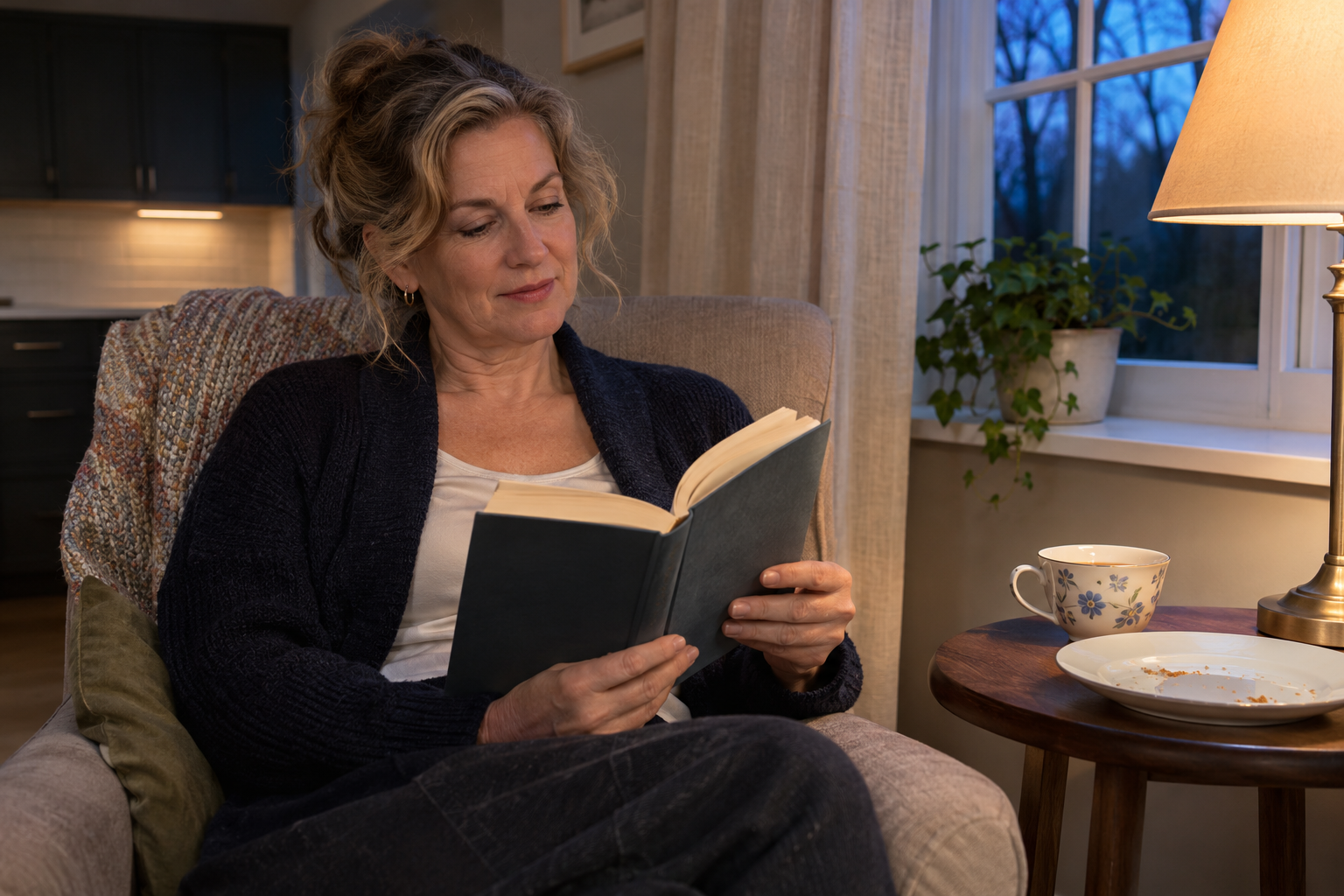
When the thirty days ended, I did not go back to a hot cooked dinner every single night, because the lightness and the ease had won me over too thoroughly. I kept the Abendbrot as a frequent default, especially on tired weeknights, eating a cold light spread in the early evening most days and saving the hot cooked dinner for when I actually wanted it, on weekends or when the mood or the weather called for it. The rigid all-cold version softened into a flexible habit, which is how most of these experiments sensibly end.
The real gift of the month was not any single result but a questioning of an assumption I had never examined, that dinner must be the big, hot, cooked meal of the day. The Germans quietly prove otherwise, and living their way for a month showed me that a light cold evening meal can be satisfying, calming, easy, and, in my own unmeasured experience, kinder to sleep. If you have always assumed your heavy evening dinner is simply how things must be, the Abendbrot is a gentle, low-stakes thing to try, a plate of good bread and cheese and pickles at the end of the day, and a chance to notice what your own evenings and nights do in response.

About the Author: Ruben, co-founder of Gamintraveler.com since 2014, is a seasoned traveler from Spain who has explored over 100 countries since 2009. Known for his extensive travel adventures across South America, Europe, the US, Australia, New Zealand, Asia, and Africa, Ruben combines his passion for adventurous yet sustainable living with his love for cycling, highlighted by his remarkable 5-month bicycle journey from Spain to Norway. He currently resides in Spain, where he continues sharing his travel experiences with his partner, Rachel, and their son, Han.