
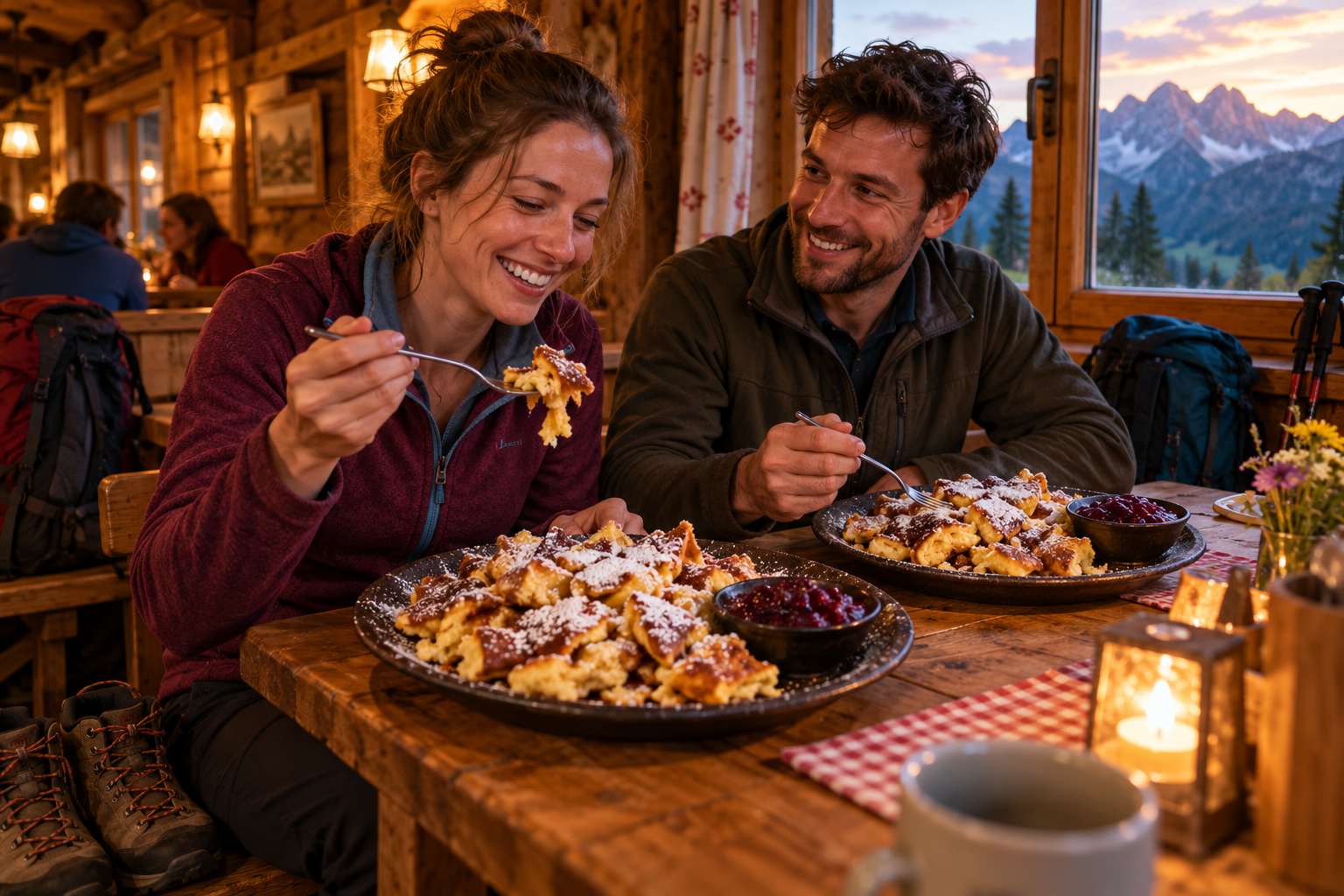
Walk into an alpine lodge in Austria after a morning on the slopes and you will see tables of people happily eating what looks like a big plate of torn-up, golden, sugar-dusted pancake, and eating it not as a small sweet at the end of a meal but, quite happily and without apology, as the entire meal itself. This is Kaiserschmarrn, one of Austria’s most beloved dishes, a fluffy pancake ripped into bite-size pieces, caramelized in butter, showered with powdered sugar, and served with a generous spoonful of fruit compote on the side. Its name means, more or less, the Emperor’s Mess, and the mess is entirely the point, because this is a dish that is meant to look rustic and torn rather than neat. It is, in short, comfort food of the very highest order, equally at home as a proper dessert or, in the grand Austrian tradition of the sweet main course, as dinner itself. Here is the story behind the emperor’s pancake and exactly how to make it.
What follows is where the imperial name comes from, the one technique that makes it fluffy, the tearing that gives it its character, why Austrians eat it as a meal, and the full recipe.
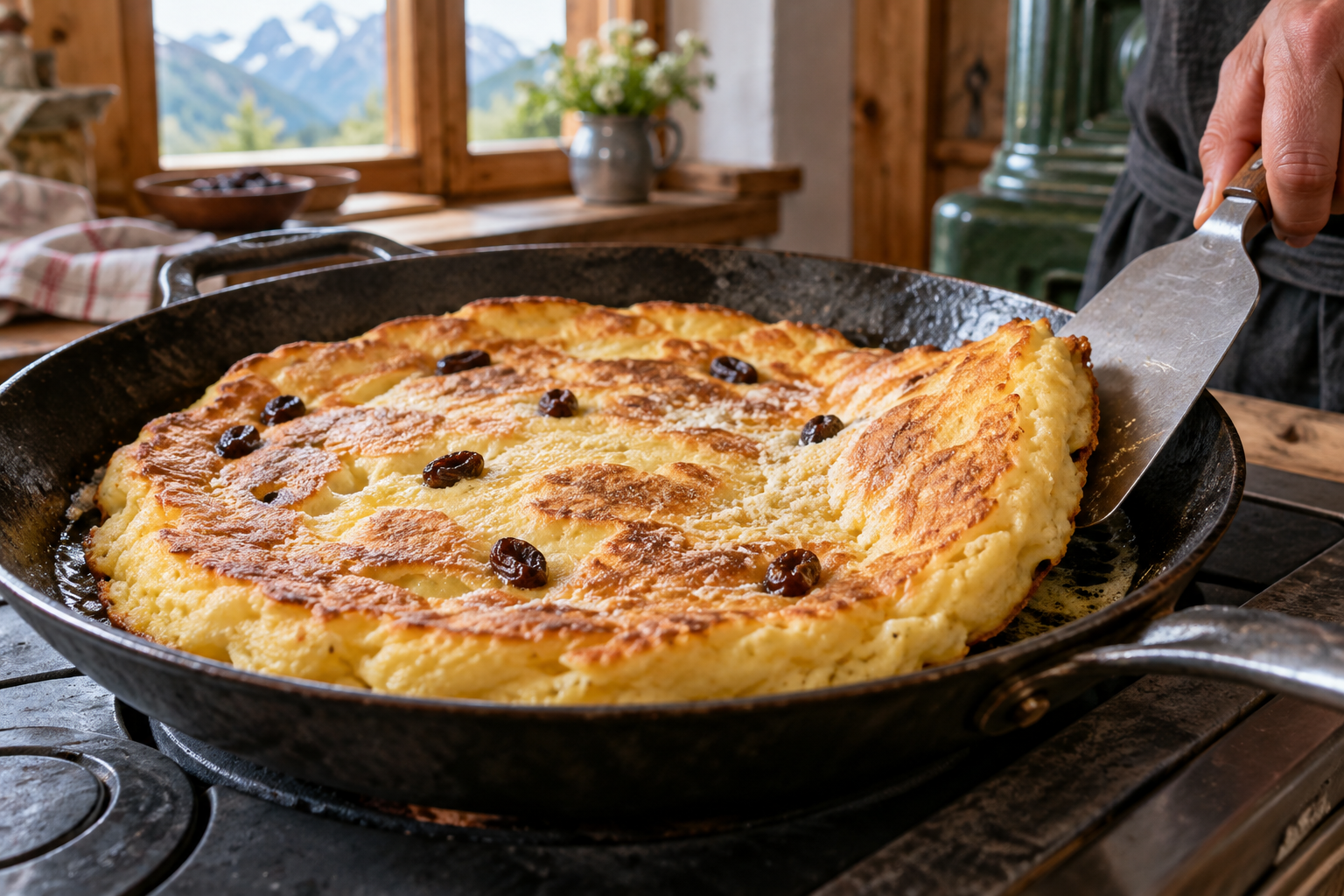
The Emperor’s Mess
The name Kaiserschmarrn is a wonderful little phrase that tells you almost everything about the dish. It combines Kaiser, meaning emperor, with Schmarrn, an Austrian word that means something torn or shredded, but also, colloquially, mess or nonsense. Put together, it comes out as something like the Emperor’s Mess, a name that captures perfectly the dish’s rustic, deliberately ragged appearance, a far cry indeed from the tidy round pancake most people picture when they hear the word.
The emperor in question was Franz Joseph I, who ruled Austria for most of the nineteenth century and well into the twentieth, and who was, by all accounts, very fond of this humble sweet. The dish is named for him, and the legends about exactly how that came to be are half the fun.
In the most popular version, a palace cook was trying to make a delicate, refined pancake for the emperor, panicked, and accidentally tore the thing to pieces, then covered his mistake with sugar and fruit and served it anyway, only for Franz Joseph to declare it delicious. Another tale has the emperor out hunting, growing hungry, and stopping at a farmer’s cottage where the nervous host’s pancake fell apart in the pan. Whichever story you prefer, the through-line running through them is the same and rather charming: a kitchen mistake, embraced rather than hidden, became a dish fit for an emperor and beloved by a whole country ever since. It is a nice reminder that a good deal of the food we treasure began as improvisation or accident, rescued by someone unwilling to waste it, and turned by time into tradition. The mess was the making of it. There is something quietly reassuring in that origin for any nervous home cook, since the single most beloved version of this dish is, by its own founding legend, a pancake that simply fell apart, which means you genuinely cannot ruin it by being clumsy.
The Secret Is in the Egg Whites
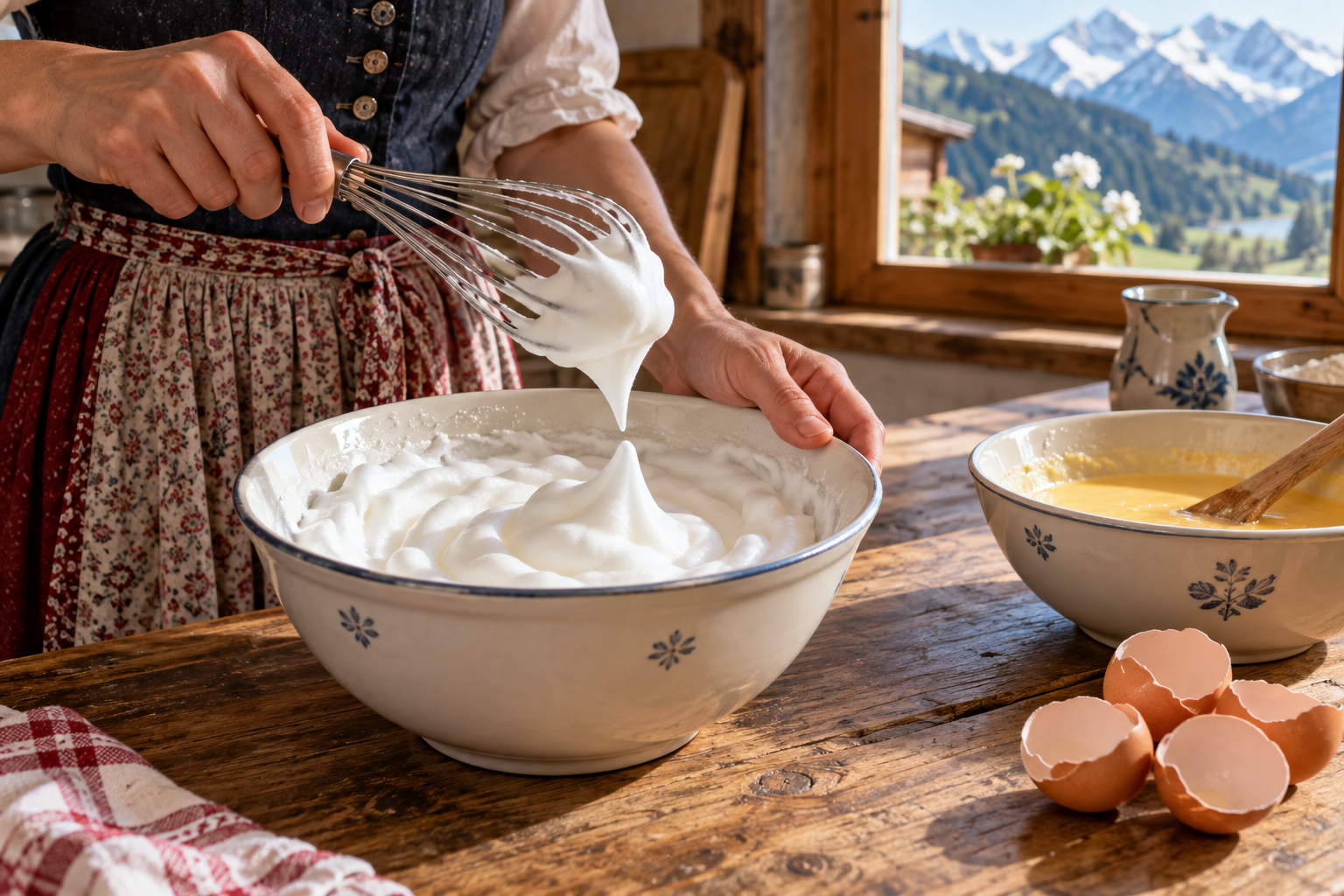
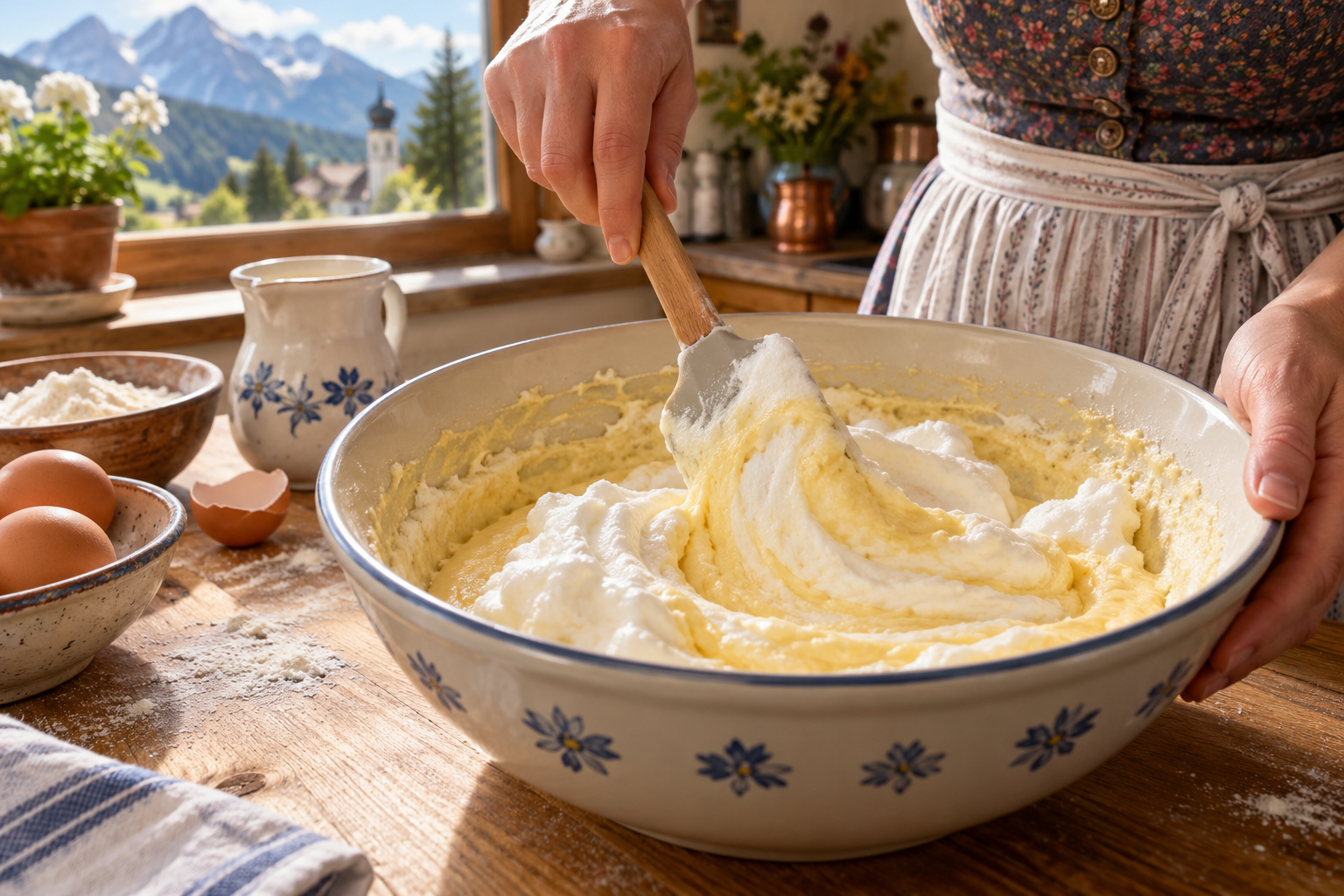
For all its rustic appearance, Kaiserschmarrn has one genuine technique at its heart, and getting it right is the difference between a dense, heavy pancake and the light, cloud-like texture the dish is famous for. The secret is to separate the eggs and whip the whites. Rather than simply stirring whole eggs into the batter as you would for an ordinary pancake, you beat the egg whites separately until they are stiff and airy, and then fold them gently into the rest of the batter at the end, and that trapped air is what gives Kaiserschmarrn its signature fluffiness, almost like a souffle.
Everything else about the batter is simple, just flour, milk, egg yolks, sugar, and a little vanilla, the sort of thing you can throw together from what is very likely already sitting in the kitchen. But the whipped whites are non-negotiable if you want the real, pillowy result, so this is the step to take care over.
A couple of related tips help too. Fold the whites in gently rather than stirring vigorously, because the whole point is to keep the air you just beat into them, and stirring hard would knock every bit of it back out. And cook the pancake over medium heat rather than high, since too hot a pan will brown and set the outside before the fluffy inside has cooked through. Respect the egg whites and the gentle heat, and you are most of the way to a proper Kaiserschmarrn before you have torn a single piece. Everything after that point is where the fun and the forgiveness come in, so the care all goes into the batter and the patience into the pan.
Tear It, Don’t Flip It Neatly
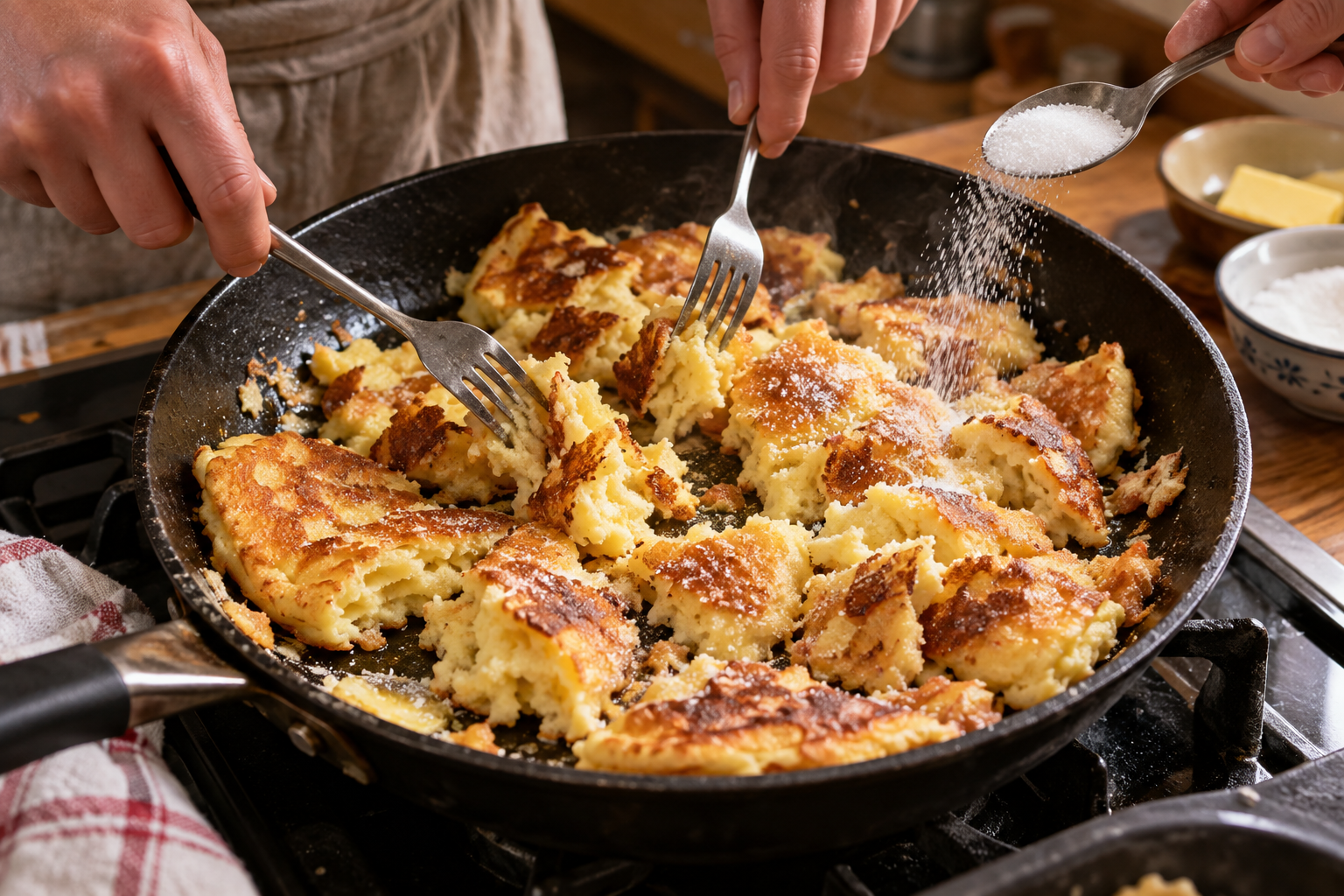
The step that gives the dish its name and its character is the tearing, and it is where you get to abandon any anxiety about making a perfect pancake. You pour the fluffy batter into a buttered pan and cook it like a thick pancake until the bottom is set and golden, then flip it, which can be a messy business in itself and does not need to be tidy at all. If it breaks as you turn it, so much the better, since you are about to tear it apart anyway, and half the battle of cooking this dish is letting go of the urge to keep it neat. Once the second side is cooking, you take two forks and simply tear the whole pancake apart into rough, bite-size pieces right there in the pan, embracing the mess exactly as the emperor’s cook was forced to.
Then comes the finishing touch that lifts it from torn pancake to Kaiserschmarrn, which is the caramelizing. You sprinkle a little sugar over the torn pieces and let them cook on a bit longer, tossing them in the buttery pan, so that the sugar melts and caramelizes and the edges of the pieces turn deep golden and slightly crisp and sweet.
This caramelized finish is the step that most defines the dish and the one people most often skip, and it is what gives Kaiserschmarrn its distinctive flavor and texture, the contrast between the soft, fluffy interior and the sweet, golden, caramelized edges. It is the opposite of the careful, uniform cooking most recipes demand, a dish that actively rewards roughness and improvisation, and it is genuinely freeing to make something where tearing it up and letting the sugar catch is not a failure but the whole technique. For anyone who finds precise baking stressful, this is the antidote, a recipe where the messier hand often gets the better result. Dust the finished pieces generously with powdered sugar, and it is ready. The snowfall of white sugar over the golden, caramelized pieces is part of the pleasure, both to look at and to taste, so be generous with it the way an Austrian would.
The Dessert That’s Also Dinner
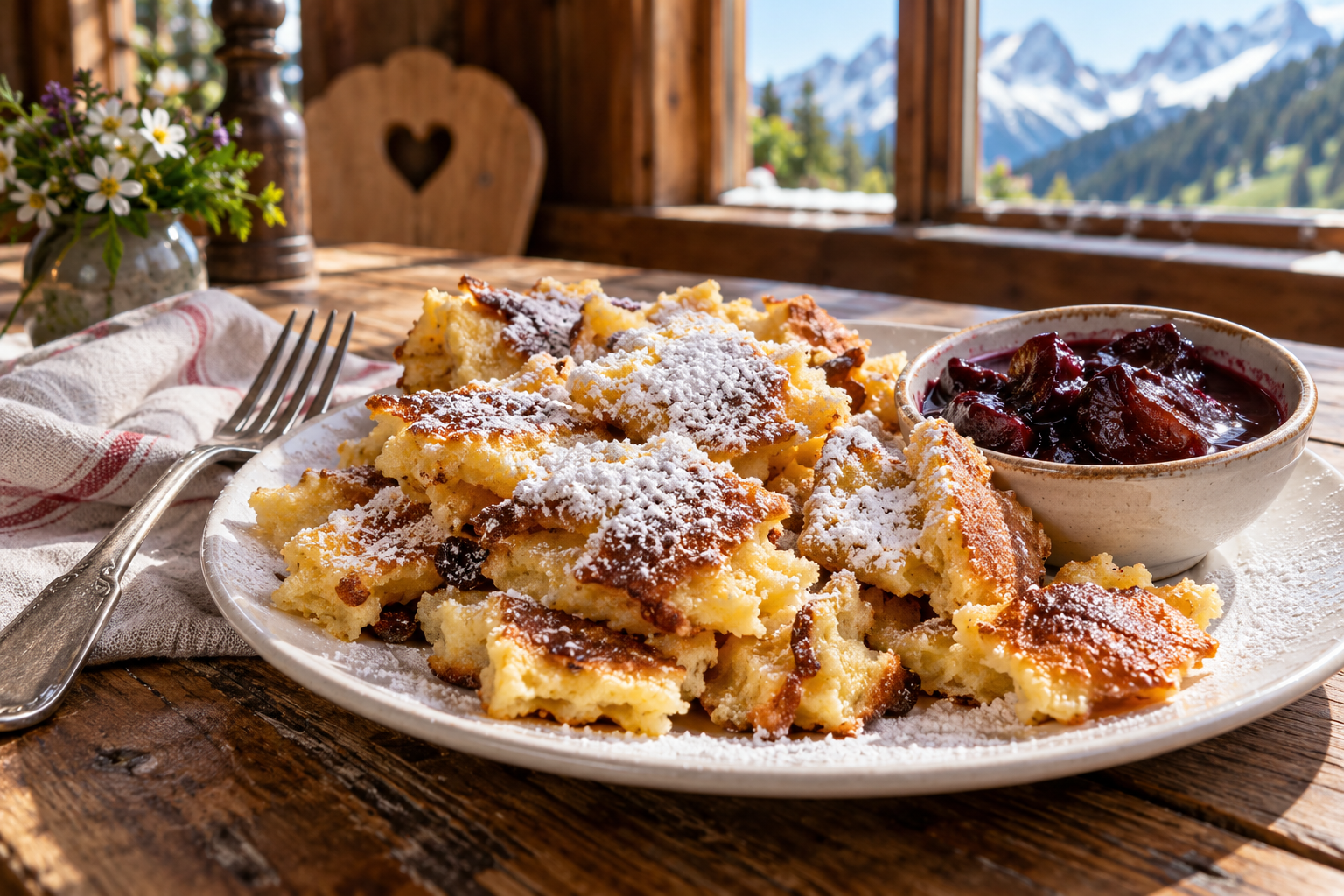
One of the things that most surprises visitors is when and how Austrians eat this. To most outsiders, a sweet, sugar-dusted torn pancake is obviously a dessert, and it certainly can be one, served after a meal or as an indulgent brunch. But in Austria and the wider Alpine region, Kaiserschmarrn occupies a category that barely exists in some other food cultures, the sweet dish eaten as a main course, a proper lunch or dinner in its own right rather than a treat that follows one.
This tradition of the sweet main meal runs deep in Austrian cooking, and Kaiserschmarrn is its most famous ambassador.
It is hearty and filling enough to stand comfortably as a meal in its own right, and it is especially beloved as sustenance after physical exertion, which is why you find it on the menu of every mountain hut and ski lodge, a warm, sweet, restoring plate for hungry hikers and skiers coming in from the cold. Served that way, it comes with its traditional accompaniments, most classically a plum compote called Zwetschkenroster or a simple applesauce, whose gentle tartness cuts beautifully through the sweet, rich, buttery pancake. The one enduring debate, as with so many old dishes, is the raisins, since traditional recipes fold rum-soaked raisins into the batter, though plenty of people, in Austria included, prefer it without them, so that is a matter of taste rather than orthodoxy. Dessert or dinner, with raisins or without, Kaiserschmarrn is pure alpine comfort on a plate, and once you have made it torn and caramelized and piled with sugar, you will understand exactly why an emperor loved his mess. It is the kind of dish that turns a cold evening warm and a small kitchen happy, asking little and giving a great deal, which is really all anyone wants from comfort food.
Making Kaiserschmarrn
Here is a classic Kaiserschmarrn, serving four. Whip the egg whites for fluff, tear it with abandon, and serve with plum compote or applesauce.
Ingredients
- 4 eggs, separated
- 250 ml milk
- 150 g flour
- 2 tablespoons sugar, plus more for caramelizing
- 1 teaspoon vanilla
- A pinch of salt
- 50 g butter
- Raisins, optional, soaked in a little rum
- Powdered sugar, to finish
- Plum compote or applesauce, to serve
Instructions
- Whisk the egg yolks with the milk, flour, the 2 tablespoons of sugar, vanilla, and salt into a smooth batter.
- In a clean bowl, whip the egg whites with a pinch of salt until stiff, then gently fold them into the batter, keeping it airy.
- Melt some of the butter in a large pan over medium heat. Pour in the batter, scatter over the raisins if using, and cook until the bottom is set and golden.
- Flip the pancake, messily is fine, and cook the other side briefly.
- Using two forks, tear the pancake into rough, bite-size pieces right in the pan.
- Sprinkle a little sugar over the pieces, add a knob more butter, and continue cooking, tossing, until the sugar caramelizes and the edges turn golden and slightly crisp.
- Dust generously with powdered sugar and serve at once, with plum compote or applesauce on the side.
And do not fret about making it look neat, since the whole soul of Kaiserschmarrn is its cheerful raggedness, so whip your whites, tear it into pieces without a second thought, let the sugar caramelize, and serve the emperor’s mess exactly as messy as it is meant to be.

About the Author: Ruben, co-founder of Gamintraveler.com since 2014, is a seasoned traveler from Spain who has explored over 100 countries since 2009. Known for his extensive travel adventures across South America, Europe, the US, Australia, New Zealand, Asia, and Africa, Ruben combines his passion for adventurous yet sustainable living with his love for cycling, highlighted by his remarkable 5-month bicycle journey from Spain to Norway. He currently resides in Spain, where he continues sharing his travel experiences with his partner, Rachel, and their son, Han.